


Oxo-biodegradable Plastic Packaging Market Outlook
The oxo-biodegradable plastic packaging market was valued at $3.2 billion in 2024 and is projected to reach $5.6 billion by 2033, growing at a CAGR of 6.5% during the forecast period 2025-2033. This market is witnessing significant growth due to increasing environmental concerns and the rising demand for sustainable packaging solutions. The shift towards eco-friendly packaging materials is driven by stringent government regulations and consumer awareness about the environmental impact of traditional plastics. The food and beverage industry, in particular, is a major contributor to the demand for oxo-biodegradable plastic packaging, as it seeks to reduce its carbon footprint and comply with sustainability standards.
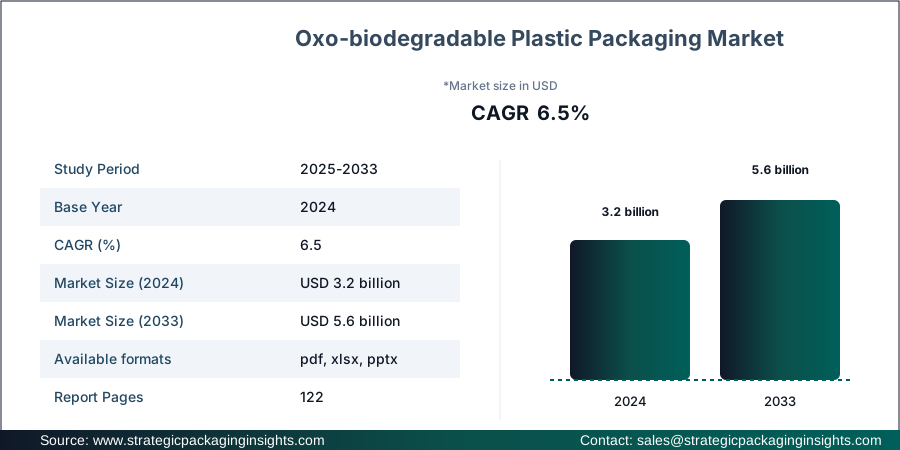
Despite the promising growth prospects, the market faces challenges such as the high cost of production and the availability of alternative biodegradable materials. Regulatory frameworks across different regions also pose a challenge, as they vary significantly, affecting the adoption rate of oxo-biodegradable plastics. However, advancements in technology and increasing investments in research and development are expected to overcome these hurdles, providing lucrative opportunities for market players. The market's potential is further enhanced by the growing trend of circular economy practices, which emphasize recycling and waste reduction.
Report Scope
| Attributes | Details |
| Report Title | Oxo-biodegradable Plastic Packaging Market Size, Future Growth and Forecast 2033 |
| Material Type | Polyethylene, Polypropylene, Polystyrene, Others |
| Application | Food & Beverage, Healthcare, Personal Care, Industrial, Others |
| End-User | Retail, Institutional, Others |
| Region | Asia Pacific, North America, Latin America, Europe, Middle East & Africa |
| Base Year | 2024 |
| Historic Period | 2017-2023 |
| Forecast Period | 2025-2033 |
| Number of Pages | 122 |
| Customization Available | Yes* |
Opportunities & Threats
The oxo-biodegradable plastic packaging market presents numerous opportunities, primarily driven by the increasing demand for sustainable packaging solutions. As consumers become more environmentally conscious, there is a growing preference for products that minimize environmental impact. This trend is particularly evident in the food and beverage industry, where companies are actively seeking packaging solutions that align with their sustainability goals. Additionally, the healthcare sector is also exploring oxo-biodegradable options to reduce medical waste, further expanding the market's potential. The development of innovative materials and technologies that enhance the performance and cost-effectiveness of oxo-biodegradable plastics is another key opportunity for market growth.
Another significant opportunity lies in the regulatory landscape, as governments worldwide implement stricter regulations to curb plastic pollution. These regulations are encouraging the adoption of biodegradable alternatives, creating a favorable environment for the growth of the oxo-biodegradable plastic packaging market. Companies that can navigate these regulatory frameworks and offer compliant products are likely to gain a competitive edge. Furthermore, partnerships and collaborations between packaging manufacturers and end-user industries can drive innovation and accelerate the adoption of oxo-biodegradable solutions.
However, the market also faces threats, particularly from the availability of alternative biodegradable materials such as PLA and PHA, which are gaining popularity due to their compostability and renewable nature. The high cost of production associated with oxo-biodegradable plastics is another challenge, as it can limit their adoption, especially in price-sensitive markets. Additionally, the lack of consumer awareness and understanding of oxo-biodegradable technology can hinder market growth. To address these challenges, companies need to invest in education and marketing efforts to highlight the benefits and applications of oxo-biodegradable packaging.
Market Share Analysis
The competitive landscape of the oxo-biodegradable plastic packaging market is characterized by the presence of several key players who are actively engaged in product development and innovation. These companies are focusing on expanding their product portfolios and enhancing their production capabilities to meet the growing demand for sustainable packaging solutions. The market is moderately fragmented, with a mix of established players and emerging companies striving to capture market share. Strategic partnerships, mergers, and acquisitions are common strategies adopted by these companies to strengthen their market position and expand their geographical reach.
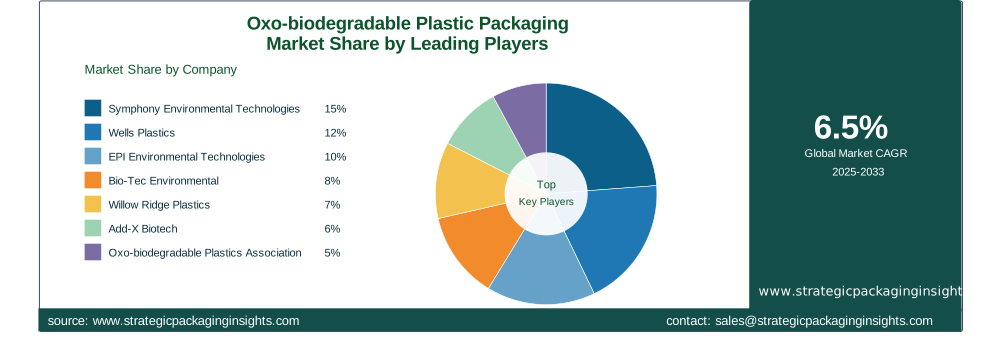
Among the leading companies in the oxo-biodegradable plastic packaging market is Symphony Environmental Technologies, which holds a significant market share due to its extensive product offerings and strong distribution network. The company is known for its innovative d2w technology, which enhances the biodegradability of plastics. Another major player is Wells Plastics, which specializes in the development of oxo-biodegradable additives and has a strong presence in the European market. The company's focus on research and development has enabled it to offer high-performance solutions that meet regulatory standards.
Other notable companies in the market include EPI Environmental Technologies, which is recognized for its proprietary TDPA technology that accelerates the degradation of plastics. The company has a strong global presence and collaborates with various industries to promote sustainable packaging solutions. Bio-Tec Environmental is another key player, offering a range of biodegradable additives that enhance the environmental performance of plastics. The company's commitment to sustainability and innovation has positioned it as a leader in the market.
Furthermore, companies like Willow Ridge Plastics and Add-X Biotech are also making significant contributions to the market with their advanced additive technologies. These companies are focused on expanding their product offerings and entering new markets to capitalize on the growing demand for oxo-biodegradable packaging. The competitive landscape is expected to intensify as more companies enter the market and existing players continue to innovate and expand their capabilities.
Key Highlights
- The oxo-biodegradable plastic packaging market is projected to grow at a CAGR of 6.5% from 2025 to 2033.
- Increasing environmental concerns and regulatory pressures are driving the demand for sustainable packaging solutions.
- The food and beverage industry is a major contributor to the market's growth, seeking eco-friendly packaging options.
- Technological advancements and R&D investments are enhancing the performance of oxo-biodegradable plastics.
- Regulatory frameworks vary across regions, impacting the adoption rate of oxo-biodegradable packaging.
- Partnerships and collaborations between manufacturers and end-user industries are driving innovation.
- Alternative biodegradable materials pose a threat to the market's growth.
- Consumer awareness and education are crucial for the widespread adoption of oxo-biodegradable packaging.
- The market is moderately fragmented, with key players focusing on product development and expansion.
- Strategic mergers and acquisitions are common strategies to strengthen market position.
Top Countries Insights
In the oxo-biodegradable plastic packaging market, the United States stands out as a key player, with a market size of $1.2 billion and a CAGR of 5%. The country's growth is driven by stringent environmental regulations and a strong emphasis on sustainability in the packaging industry. The demand for eco-friendly packaging solutions is further fueled by consumer awareness and the presence of major food and beverage companies seeking to reduce their environmental impact.
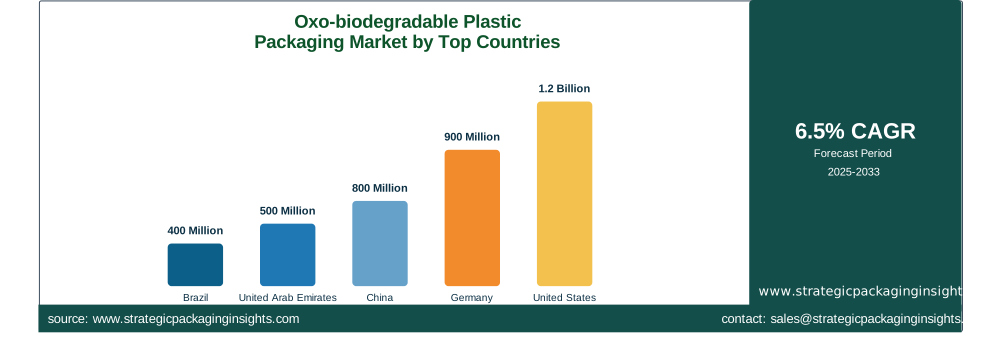
In Europe, Germany is a leading market with a size of $900 million and a CAGR of 6%. The country's robust regulatory framework and commitment to reducing plastic waste are significant growth drivers. Germany's focus on innovation and technological advancements in biodegradable materials is also contributing to the market's expansion. The presence of key players and a strong industrial base further support the market's growth.
China, with a market size of $800 million and a CAGR of 7%, is a rapidly growing market for oxo-biodegradable plastic packaging. The country's large population and increasing consumer awareness about environmental issues are driving demand. Government initiatives to reduce plastic pollution and promote sustainable practices are also playing a crucial role in market growth. China's manufacturing capabilities and cost advantages make it a significant player in the global market.
In the Middle East, the United Arab Emirates is emerging as a key market with a size of $500 million and a CAGR of 8%. The country's focus on sustainability and environmental conservation is driving the adoption of oxo-biodegradable packaging solutions. The UAE's strategic location and strong trade links further enhance its market potential. The government's initiatives to promote green practices and reduce plastic waste are also contributing to market growth.
Brazil, with a market size of $400 million and a CAGR of 6%, is a growing market in Latin America. The country's increasing environmental awareness and regulatory measures to curb plastic pollution are driving demand for biodegradable packaging solutions. Brazil's large agricultural sector and food industry are key contributors to the market's growth, as they seek sustainable packaging options to meet consumer demands.
Evolving Market Dynamics (2018-2024) and Strategic Foresight (2025-2033)
| Metrics | 2018-2024 | 2025-2033 |
|---|---|---|
| CAGR | 5.2% | 6.5% |
| Market Size Evolution | $2.5 billion to $3.2 billion | $3.2 billion to $5.6 billion |
| Segment Distribution Shifts | Food & Beverage Dominance | Diversification into Healthcare |
| Regional Contribution Changes | North America & Europe Lead | Asia Pacific & Middle East Growth |
| Technological Impact Factors | Basic Additives | Advanced Biodegradable Technologies |
| Client Demand Transformations | Eco-Friendly Focus | Circular Economy Practices |
Oxo-biodegradable Plastic Packaging Market Segments Insights

Material Type Analysis
The material type segment of the oxo-biodegradable plastic packaging market is primarily dominated by polyethylene, which is widely used due to its versatility and cost-effectiveness. Polyethylene's ability to be easily processed and its compatibility with various additives make it a preferred choice for manufacturers. The demand for polyethylene-based oxo-biodegradable packaging is driven by its extensive use in the food and beverage industry, where it is used for packaging perishable goods. Polypropylene is another significant material type, known for its strength and durability, making it suitable for packaging applications that require higher resistance to wear and tear. The market for polypropylene-based oxo-biodegradable packaging is expected to grow as industries seek more robust and sustainable packaging solutions.
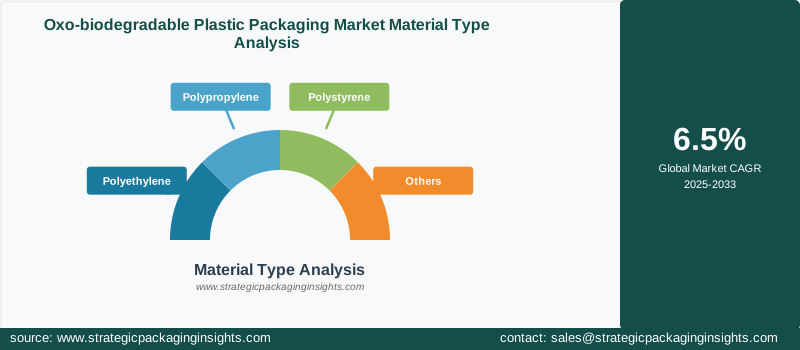
Polystyrene, although less commonly used, is gaining traction in specific applications such as disposable cutlery and food containers. Its lightweight nature and insulating properties make it ideal for packaging hot and cold food items. However, the environmental concerns associated with polystyrene have led to increased research and development efforts to enhance its biodegradability. Other materials, including biodegradable blends and composites, are also being explored to offer customized solutions for various packaging needs. The material type segment is witnessing continuous innovation as companies strive to develop materials that offer improved performance and environmental benefits.
Application Analysis
The application segment of the oxo-biodegradable plastic packaging market is diverse, with the food and beverage industry being the largest contributor. The demand for oxo-biodegradable packaging in this sector is driven by the need to reduce plastic waste and comply with sustainability standards. Packaging solutions such as bags, wraps, and containers are widely used to preserve the freshness and quality of food products. The healthcare industry is another significant application area, where oxo-biodegradable packaging is used for medical disposables and pharmaceutical products. The industry's focus on reducing medical waste and enhancing patient safety is driving the adoption of biodegradable packaging solutions.
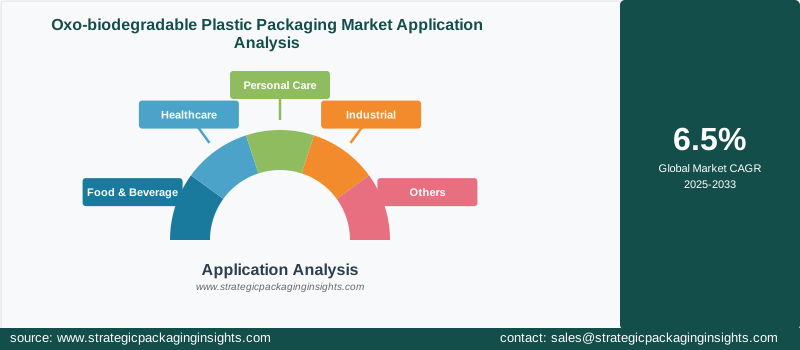
Personal care and cosmetics are also emerging as key application areas, as consumers increasingly prefer eco-friendly packaging for their beauty products. The demand for sustainable packaging in this sector is driven by the growing awareness of environmental issues and the desire for products that align with ethical and sustainable values. Industrial applications, including packaging for chemicals and automotive parts, are also contributing to market growth. The need for durable and environmentally friendly packaging solutions in these sectors is driving innovation and the development of advanced oxo-biodegradable materials.
End-User Analysis
The end-user segment of the oxo-biodegradable plastic packaging market is primarily divided into retail and institutional users. The retail sector is a major end-user, driven by the increasing demand for sustainable packaging solutions from consumers. Retailers are adopting oxo-biodegradable packaging to enhance their brand image and meet consumer expectations for environmentally friendly products. The institutional sector, which includes healthcare facilities, educational institutions, and government organizations, is also a significant end-user. The focus on sustainability and waste reduction in these institutions is driving the adoption of biodegradable packaging solutions.
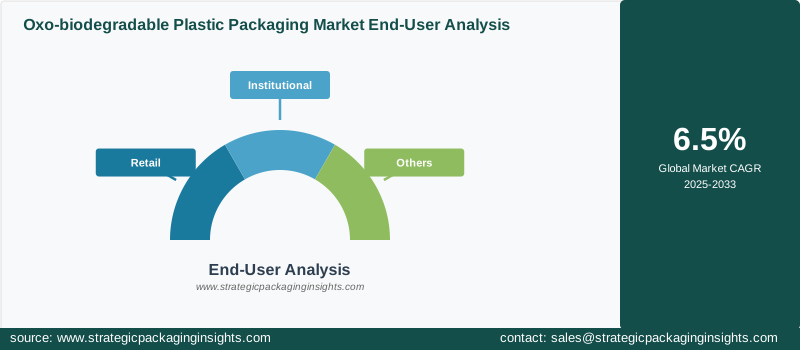
Within the retail sector, supermarkets and hypermarkets are key contributors to the demand for oxo-biodegradable packaging. These establishments are increasingly using biodegradable bags and packaging materials to reduce their environmental impact and comply with regulatory requirements. The institutional sector is also witnessing growth, as hospitals and healthcare facilities seek to reduce medical waste and enhance patient safety through the use of biodegradable packaging. The end-user segment is expected to continue growing as more industries recognize the benefits of sustainable packaging solutions and adopt oxo-biodegradable materials.
Region Analysis
The regional analysis of the oxo-biodegradable plastic packaging market reveals significant growth opportunities across various regions. North America and Europe are currently leading the market, driven by stringent environmental regulations and a strong emphasis on sustainability. The presence of key players and advanced manufacturing capabilities in these regions further support market growth. However, the Asia Pacific region is expected to witness the highest growth rate, driven by increasing consumer awareness and government initiatives to reduce plastic pollution. The region's large population and growing industrial base are also contributing to market expansion.
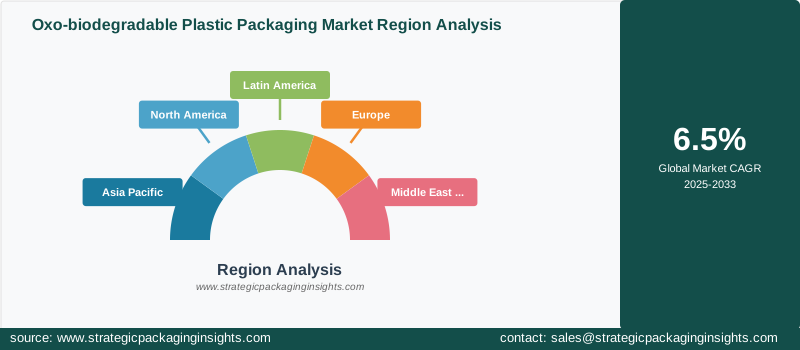
In Latin America, countries like Brazil are emerging as key markets due to increasing environmental awareness and regulatory measures to curb plastic pollution. The Middle East and Africa region is also witnessing growth, driven by government initiatives to promote sustainable practices and reduce plastic waste. The region's strategic location and strong trade links further enhance its market potential. Overall, the regional analysis highlights the diverse growth opportunities and challenges faced by the oxo-biodegradable plastic packaging market across different regions.
Oxo-biodegradable Plastic Packaging Market Segments
The Oxo-biodegradable Plastic Packaging market has been segmented on the basis ofMaterial Type
- Polyethylene
- Polypropylene
- Polystyrene
- Others
Application
- Food & Beverage
- Healthcare
- Personal Care
- Industrial
- Others
End-User
- Retail
- Institutional
- Others
Region
- Asia Pacific
- North America
- Latin America
- Europe
- Middle East & Africa




