


Foodservice Disposables Market Outlook
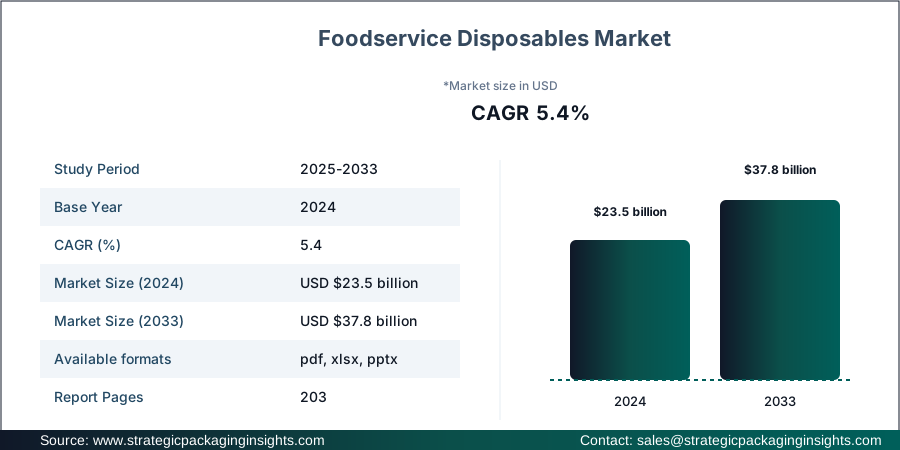
The foodservice disposables market was valued at $23.5 billion in 2024 and is projected to reach $37.8 billion by 2033, growing at a CAGR of 5.4% during the forecast period 2025-2033. This market is driven by the increasing demand for convenient and hygienic food packaging solutions, especially in urban areas where the fast-paced lifestyle necessitates quick and easy meal options. The rise of online food delivery services has further propelled the need for disposable foodservice products, as they offer a practical solution for packaging and transporting food items. Additionally, the growing awareness of food safety and hygiene standards has led to a surge in demand for single-use foodservice disposables, which help in minimizing the risk of contamination.
However, the market faces challenges due to environmental concerns associated with the disposal of single-use products. Regulatory bodies across the globe are imposing stringent regulations on the use of plastic disposables, which is pushing manufacturers to innovate and develop eco-friendly alternatives. Despite these challenges, the market holds significant growth potential, driven by the increasing adoption of biodegradable and compostable disposables. The shift towards sustainable packaging solutions is expected to open new avenues for market players, as consumers and businesses alike are becoming more environmentally conscious. The ongoing advancements in material science and technology are also expected to play a crucial role in shaping the future of the foodservice disposables market.
Report Scope
| Attributes | Details |
| Report Title | Foodservice Disposables Market Size, Future Growth and Forecast 2033 |
| Material | Plastic, Paper, Aluminum, Others |
| Product Type | Cups, Plates, Trays, Cutlery, Bowls, Others |
| End-User | Restaurants, Catering, Institutions, Others |
| Region | North America, Europe, Asia Pacific, Latin America, Middle East & Africa |
| Base Year | 2024 |
| Historic Period | 2017-2023 |
| Forecast Period | 2025-2033 |
| Number of Pages | 203 |
| Customization Available | Yes* |
Opportunities & Threats
The foodservice disposables market presents numerous opportunities for growth, primarily driven by the increasing demand for sustainable and eco-friendly products. As consumers become more environmentally conscious, there is a growing preference for disposables made from biodegradable and compostable materials. This shift in consumer behavior is encouraging manufacturers to invest in research and development to create innovative products that meet these demands. Additionally, the rise of online food delivery services and the expansion of the foodservice industry in emerging markets are creating new opportunities for market players. The increasing urbanization and changing lifestyles in these regions are driving the demand for convenient and hygienic food packaging solutions, further boosting the market growth.
Another significant opportunity lies in the development of advanced materials and technologies that enhance the functionality and performance of foodservice disposables. Innovations such as heat-resistant and microwave-safe disposables are gaining popularity, as they offer added convenience to consumers. Moreover, the integration of smart packaging solutions, such as QR codes and RFID tags, is expected to revolutionize the market by providing enhanced traceability and information to consumers. These technological advancements are likely to create new growth avenues for market players, as they cater to the evolving needs of consumers and businesses alike.
Despite the promising opportunities, the foodservice disposables market faces several threats, primarily due to the increasing regulatory pressure on the use of single-use plastics. Governments and environmental organizations worldwide are advocating for the reduction of plastic waste, leading to the implementation of stringent regulations on the production and disposal of plastic disposables. This regulatory landscape poses a significant challenge for market players, as they need to comply with these regulations while maintaining profitability. Additionally, the rising raw material costs and the volatility in supply chains can impact the market dynamics, posing further challenges for manufacturers.
Market Share Analysis
The competitive landscape of the foodservice disposables market is characterized by the presence of several key players, each striving to gain a significant share of the market. The market is highly fragmented, with numerous regional and international players competing based on product quality, innovation, and pricing strategies. The leading companies in the market are focusing on expanding their product portfolios and enhancing their distribution networks to strengthen their market position. Additionally, strategic collaborations and partnerships are becoming increasingly common, as companies seek to leverage each other's strengths and capabilities to gain a competitive edge.
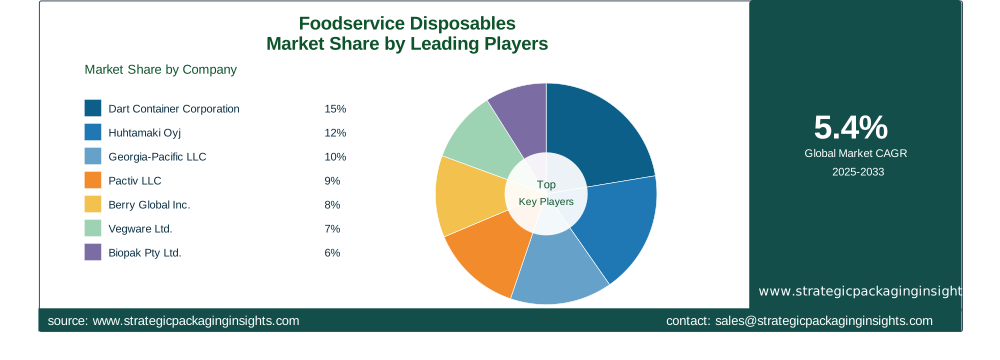
Some of the major companies operating in the foodservice disposables market include Dart Container Corporation, Huhtamaki Oyj, Georgia-Pacific LLC, Pactiv LLC, and Berry Global Inc. These companies are investing heavily in research and development to create innovative and sustainable products that cater to the evolving needs of consumers. For instance, Huhtamaki Oyj is focusing on developing eco-friendly packaging solutions, while Dart Container Corporation is expanding its product range to include biodegradable and compostable disposables. These strategic initiatives are helping these companies to maintain their competitive edge in the market.
In addition to the established players, several emerging companies are making their mark in the foodservice disposables market. These companies are leveraging advanced technologies and innovative materials to create unique products that stand out in the market. For example, Vegware Ltd. is gaining popularity for its compostable disposables, while Biopak Pty Ltd. is known for its sustainable packaging solutions. These companies are focusing on expanding their presence in emerging markets, where the demand for eco-friendly disposables is on the rise.
Overall, the foodservice disposables market is witnessing intense competition, with companies vying for market share through product innovation, strategic partnerships, and expansion into new markets. The increasing focus on sustainability and eco-friendly products is expected to drive further competition, as companies strive to meet the growing demand for environmentally responsible packaging solutions. As the market continues to evolve, companies that can effectively adapt to changing consumer preferences and regulatory requirements are likely to emerge as leaders in the industry.
Key Highlights
- The foodservice disposables market is projected to grow at a CAGR of 5.4% from 2025 to 2033.
- Increasing demand for sustainable and eco-friendly disposables is driving market growth.
- Online food delivery services are significantly boosting the demand for disposable packaging solutions.
- Regulatory pressures on single-use plastics are pushing manufacturers to innovate.
- Technological advancements in material science are enhancing product functionality.
- Strategic collaborations and partnerships are becoming common among market players.
- Emerging markets offer significant growth opportunities for eco-friendly disposables.
- Companies are focusing on expanding their product portfolios to cater to diverse consumer needs.
- Integration of smart packaging solutions is expected to revolutionize the market.
- Rising raw material costs pose a challenge to market dynamics.
Top Countries Insights
In the foodservice disposables market, the United States holds a significant share, with a market size of $6.5 billion and a CAGR of 4%. The country's robust foodservice industry and the increasing trend of takeout and delivery services are major growth drivers. Additionally, the growing awareness of hygiene and food safety standards is boosting the demand for disposable products. However, the market faces challenges due to stringent regulations on single-use plastics, prompting manufacturers to focus on sustainable alternatives.
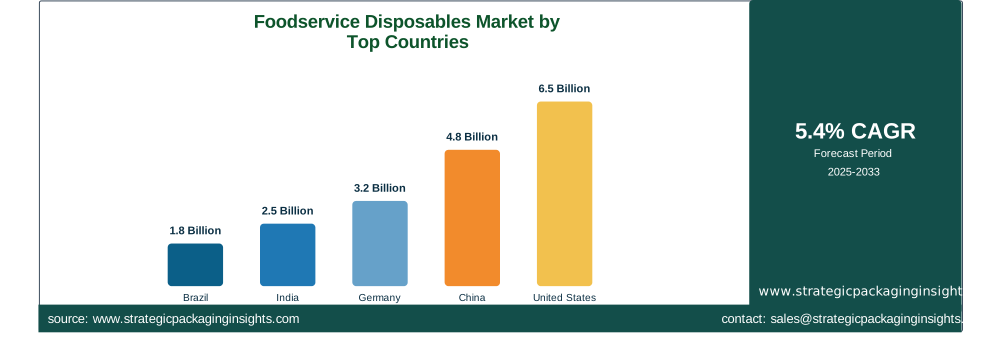
China is another key player in the market, with a market size of $4.8 billion and a CAGR of 6%. The rapid urbanization and the booming food delivery sector are driving the demand for foodservice disposables in the country. The government's initiatives to promote sustainable packaging solutions are also contributing to market growth. However, the market faces challenges due to the high cost of eco-friendly materials and the lack of consumer awareness about sustainable options.
In Europe, Germany is a leading market for foodservice disposables, with a market size of $3.2 billion and a CAGR of 5%. The country's strong emphasis on sustainability and environmental protection is driving the demand for eco-friendly disposables. The increasing popularity of online food delivery services is also contributing to market growth. However, the market faces challenges due to the stringent regulations on plastic disposables and the high cost of sustainable alternatives.
India is emerging as a significant market for foodservice disposables, with a market size of $2.5 billion and a CAGR of 7%. The country's growing urban population and the increasing trend of eating out are driving the demand for disposable products. The government's initiatives to promote sustainable packaging solutions are also contributing to market growth. However, the market faces challenges due to the lack of infrastructure for waste management and recycling.
Brazil is another key market for foodservice disposables, with a market size of $1.8 billion and a CAGR of 5%. The country's expanding foodservice industry and the increasing trend of takeout and delivery services are major growth drivers. However, the market faces challenges due to the high cost of eco-friendly materials and the lack of consumer awareness about sustainable options.
Evolving Market Dynamics (2018-2024) and Strategic Foresight (2025-2033)
| Metrics | 2018-2024 | 2025-2033 |
|---|---|---|
| CAGR | 4.2% | 5.4% |
| Market Size Evolution | $18.7 billion to $23.5 billion | $23.5 billion to $37.8 billion |
| Segment Distribution Shifts | Plastic dominance | Shift towards eco-friendly materials |
| Regional Contribution Changes | North America and Europe lead | Asia Pacific gains prominence |
| Technological Impact Factors | Basic disposables | Smart and sustainable packaging |
| Client Demand Transformations | Convenience focus | Sustainability focus |
Foodservice Disposables Market Segments Insights

Material Analysis
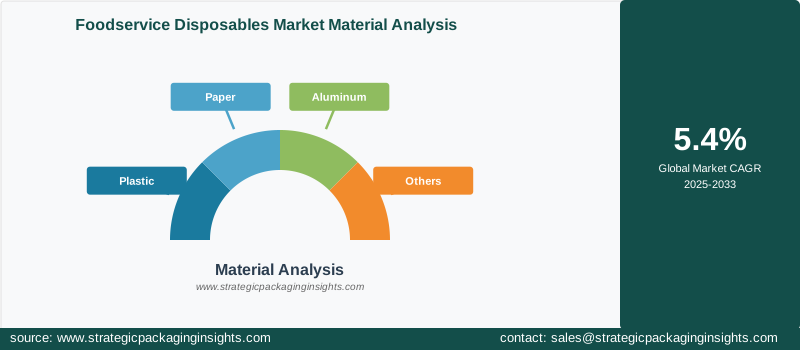
The material segment of the foodservice disposables market is primarily dominated by plastic, owing to its cost-effectiveness and versatility. However, the increasing environmental concerns and regulatory pressures are driving a shift towards eco-friendly materials such as paper, aluminum, and biodegradable plastics. The demand for paper disposables is rising due to their recyclability and biodegradability, making them a preferred choice for environmentally conscious consumers. Aluminum disposables are gaining popularity for their durability and ability to withstand high temperatures, making them suitable for a variety of foodservice applications. The market is witnessing significant investments in research and development to create innovative materials that offer enhanced functionality and sustainability.
Biodegradable and compostable materials are emerging as a key trend in the material segment, as consumers and businesses alike are becoming more environmentally conscious. These materials offer a sustainable alternative to traditional plastics, helping to reduce the environmental impact of disposable products. The increasing adoption of biodegradable disposables is expected to drive significant growth in this segment, as manufacturers focus on developing innovative products that meet the evolving needs of consumers. The ongoing advancements in material science and technology are expected to play a crucial role in shaping the future of the material segment in the foodservice disposables market.
Product Type Analysis
The product type segment of the foodservice disposables market includes cups, plates, trays, cutlery, bowls, and others. Cups and plates are the most widely used disposable products, driven by their convenience and versatility. The increasing demand for on-the-go beverages and meals is boosting the demand for disposable cups and plates, as they offer a practical solution for packaging and serving food items. Trays and cutlery are also gaining popularity, as they provide added convenience for consumers and businesses alike. The market is witnessing significant innovation in product design and functionality, as manufacturers focus on creating products that offer enhanced convenience and sustainability.
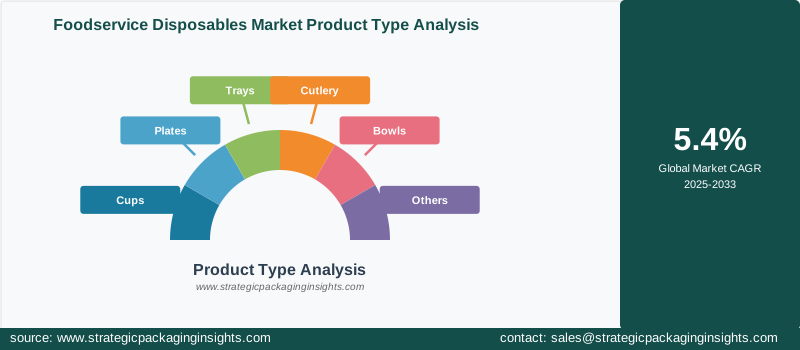
Bowls and other disposable products are also experiencing significant growth, driven by the increasing demand for convenient and hygienic food packaging solutions. The rise of online food delivery services is further boosting the demand for disposable bowls and other packaging solutions, as they offer a practical solution for packaging and transporting food items. The market is witnessing significant investments in research and development to create innovative products that cater to the evolving needs of consumers and businesses. The ongoing advancements in product design and functionality are expected to play a crucial role in shaping the future of the product type segment in the foodservice disposables market.
End-User Analysis
The end-user segment of the foodservice disposables market includes restaurants, catering, institutions, and others. Restaurants are the largest end-user segment, driven by the increasing demand for convenient and hygienic food packaging solutions. The rise of online food delivery services is further boosting the demand for disposable products in the restaurant segment, as they offer a practical solution for packaging and transporting food items. Catering services are also experiencing significant growth, driven by the increasing demand for disposable products for events and gatherings. The market is witnessing significant investments in research and development to create innovative products that cater to the evolving needs of end-users.
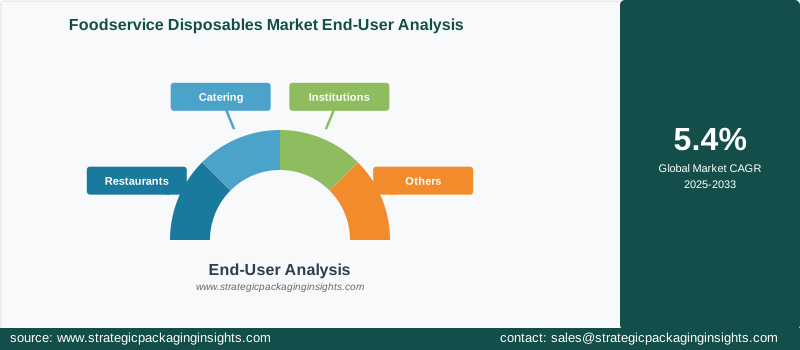
Institutions such as schools, hospitals, and corporate offices are also significant end-users of foodservice disposables, driven by the increasing demand for convenient and hygienic food packaging solutions. The market is witnessing significant innovation in product design and functionality, as manufacturers focus on creating products that offer enhanced convenience and sustainability. The ongoing advancements in product design and functionality are expected to play a crucial role in shaping the future of the end-user segment in the foodservice disposables market.
Region Analysis
The regional segment of the foodservice disposables market includes North America, Europe, Asia Pacific, Latin America, and the Middle East & Africa. North America and Europe are the largest markets for foodservice disposables, driven by the robust foodservice industry and the increasing trend of takeout and delivery services. The growing awareness of hygiene and food safety standards is also boosting the demand for disposable products in these regions. However, the market faces challenges due to stringent regulations on single-use plastics, prompting manufacturers to focus on sustainable alternatives.
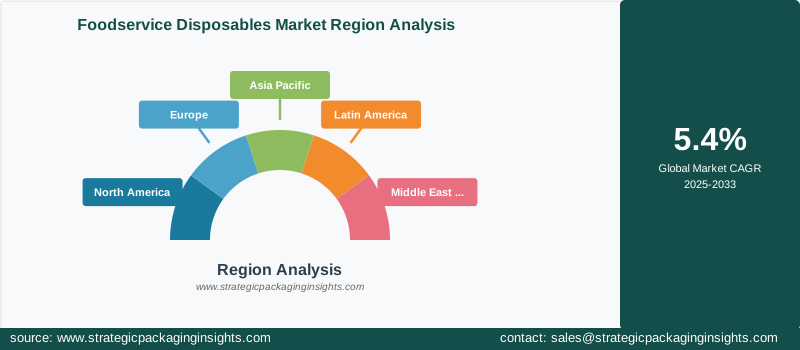
Asia Pacific is emerging as a significant market for foodservice disposables, driven by the rapid urbanization and the booming food delivery sector. The increasing demand for convenient and hygienic food packaging solutions is boosting the market growth in this region. The market is witnessing significant investments in research and development to create innovative products that cater to the evolving needs of consumers and businesses. The ongoing advancements in material science and technology are expected to play a crucial role in shaping the future of the regional segment in the foodservice disposables market.
Foodservice Disposables Market Segments
The Foodservice Disposables market has been segmented on the basis ofMaterial
- Plastic
- Paper
- Aluminum
- Others
Product Type
- Cups
- Plates
- Trays
- Cutlery
- Bowls
- Others
End-User
- Restaurants
- Catering
- Institutions
- Others
Region
- North America
- Europe
- Asia Pacific
- Latin America
- Middle East & Africa




