


In Mould Label Film Market Outlook
The In Mould Label Film market was valued at $1.42 billion in 2025 and is projected to reach $2.98 billion by 2034, growing at a CAGR of 8.6% during the forecast period 2026-2034. This market is witnessing significant growth due to the increasing demand for visually appealing and durable labeling solutions in various industries. The adoption of in mould label films is driven by their ability to offer high-quality graphics and resistance to moisture and scratches, making them ideal for packaging applications. The market is also benefiting from advancements in printing technologies, which enhance the aesthetic appeal and functionality of these labels. As industries such as food, beverage, and personal care continue to expand, the demand for in mould label films is expected to rise, further propelling market growth.
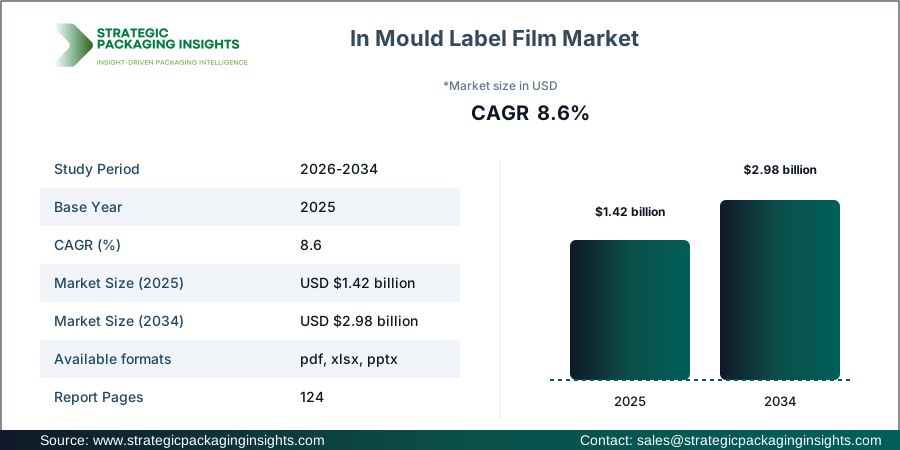
However, the market faces certain challenges that could hinder its growth potential. Regulatory constraints related to the use of plastics in packaging and the environmental impact of plastic waste are significant concerns. These factors are prompting manufacturers to explore sustainable alternatives and invest in eco-friendly materials. Additionally, the high initial cost of in mould labeling technology may deter small and medium-sized enterprises from adopting these solutions. Despite these challenges, the market holds substantial growth potential, driven by the increasing focus on product differentiation and branding. Companies are investing in research and development to create innovative and sustainable in mould label films, which is expected to open new avenues for market expansion.
Report Scope
| Attributes | Details |
| Report Title | In Mould Label Film Market Size, Future Growth and Forecast 2034 |
| By Material Type | PP films, PE films, BOPP films |
| By Application | Containers, Cups, Tubs, Pails |
| By Printing Type | Offset, Gravure, Flexographic |
| By End Use | Food, Beverage, Household, Personal Care |
| Region | Asia Pacific, North America, Latin America, Europe, Middle East & Africa |
| Base Year | 2025 |
| Historic Period | 2018-2024 |
| Forecast Period | 2026-2034 |
| Number of Pages | 124 |
| Customization Available | Yes* |
Opportunities & Threats
The In Mould Label Film market presents numerous opportunities for growth, particularly in emerging economies where the packaging industry is rapidly expanding. The increasing urbanization and rising disposable incomes in these regions are driving the demand for packaged goods, thereby boosting the need for advanced labeling solutions. Additionally, the growing awareness about the benefits of in mould labeling, such as enhanced durability and aesthetic appeal, is encouraging manufacturers to adopt these films. The shift towards sustainable packaging solutions is also creating opportunities for companies to develop eco-friendly in mould label films, which can cater to the evolving consumer preferences for environmentally responsible products.
Another significant opportunity lies in the technological advancements in printing techniques, which are enabling the production of high-quality and intricate label designs. This is particularly beneficial for industries such as food and beverage, where product differentiation and brand recognition are crucial. The integration of digital printing technologies with in mould labeling is expected to further enhance the customization capabilities, allowing brands to create unique and eye-catching packaging designs. As a result, companies that invest in innovative printing technologies and sustainable materials are likely to gain a competitive edge in the market.
Despite the promising opportunities, the In Mould Label Film market faces certain threats that could impact its growth trajectory. One of the primary challenges is the stringent regulations related to plastic usage and waste management. Governments across the globe are implementing policies to reduce plastic consumption and promote recycling, which could affect the demand for plastic-based in mould label films. Additionally, the volatility in raw material prices and the high initial investment required for in mould labeling technology could pose significant challenges for market players. Companies need to navigate these challenges by adopting sustainable practices and exploring cost-effective solutions to maintain their market position.
Drivers & Challenges
The In Mould Label Film market is primarily driven by the increasing demand for high-quality and durable labeling solutions across various industries. The food and beverage sector, in particular, is a major contributor to market growth, as manufacturers seek to enhance product appeal and shelf life through innovative packaging solutions. In mould label films offer superior resistance to moisture, chemicals, and abrasion, making them ideal for packaging applications in these industries. Additionally, the growing trend of product differentiation and branding is encouraging companies to invest in advanced labeling technologies, further driving the demand for in mould label films.
Another key driver of the market is the advancements in printing technologies, which are enabling the production of intricate and visually appealing label designs. The integration of digital printing with in mould labeling is enhancing the customization capabilities, allowing brands to create unique packaging solutions that stand out on the shelves. This is particularly important in competitive markets where brand recognition and consumer engagement are crucial for success. As a result, companies that leverage these technological advancements are likely to gain a competitive advantage and capture a larger market share.
However, the market also faces several challenges that could hinder its growth. One of the primary challenges is the environmental concerns associated with plastic waste and the regulatory constraints on plastic usage. Governments worldwide are implementing policies to reduce plastic consumption and promote recycling, which could impact the demand for plastic-based in mould label films. Additionally, the high initial cost of in mould labeling technology may deter small and medium-sized enterprises from adopting these solutions. Companies need to address these challenges by investing in sustainable materials and exploring cost-effective solutions to maintain their market position.
Market Share Analysis
The In Mould Label Film market is characterized by a competitive landscape with several key players vying for market share. Innovia Films, Taghleef Industries, Jindal Films, Cosmo Films, and UPM Raflatac are some of the prominent companies operating in this market. These companies are focusing on product innovation, strategic partnerships, and mergers and acquisitions to strengthen their market position and expand their product offerings. The competitive rivalry in the market is intense, with companies striving to differentiate their products through advanced technologies and sustainable solutions.
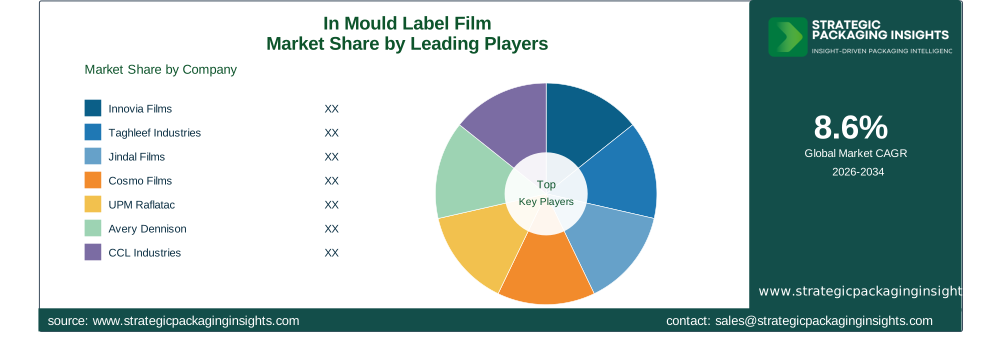
Innovia Films holds a significant market share, leveraging its expertise in high-performance films and sustainable packaging solutions. The company is known for its innovative product portfolio and commitment to environmental sustainability, which has helped it maintain a strong presence in the market. Taghleef Industries is another major player, offering a wide range of in mould label films with a focus on quality and performance. The company's strategic acquisitions and collaborations have enabled it to expand its global footprint and enhance its product offerings.
Jindal Films and Cosmo Films are also key players in the market, known for their extensive product range and focus on research and development. These companies are investing in advanced technologies and sustainable materials to cater to the evolving consumer preferences and regulatory requirements. UPM Raflatac, with its strong emphasis on sustainability and innovation, is gaining traction in the market by offering eco-friendly in mould label films that meet the stringent environmental standards.
Avery Dennison, Multi-Color Corporation, CCL Industries, and MCC Verstraete are other notable companies contributing to the competitive landscape of the In Mould Label Film market. These companies are focusing on expanding their product portfolios and enhancing their production capabilities to meet the growing demand for in mould label films. The market is witnessing a trend of consolidation, with companies engaging in mergers and acquisitions to strengthen their market position and achieve economies of scale.
Key Highlights
- The In Mould Label Film market is projected to grow at a CAGR of 8.6% from 2026 to 2034.
- Innovia Films, Taghleef Industries, and Jindal Films are among the leading players in the market.
- Technological advancements in printing techniques are enhancing the customization capabilities of in mould label films.
- The food and beverage sector is a major contributor to the demand for in mould label films.
- Environmental concerns and regulatory constraints are significant challenges for market growth.
- Companies are focusing on sustainable materials and eco-friendly solutions to address environmental concerns.
- The market is witnessing a trend of consolidation, with companies engaging in mergers and acquisitions.
- Emerging economies present significant growth opportunities for the market.
- The integration of digital printing with in mould labeling is enhancing the aesthetic appeal of packaging solutions.
- Product differentiation and branding are key drivers of market growth.
Top Countries Insights
In the In Mould Label Film market, the United States holds a significant position, with a market size of approximately $450 million and a CAGR of 7%. The country's robust packaging industry and the increasing demand for innovative labeling solutions are key growth drivers. The focus on sustainability and eco-friendly packaging is also influencing market dynamics, with companies investing in research and development to create environmentally responsible products. However, regulatory constraints related to plastic usage pose challenges for market players.
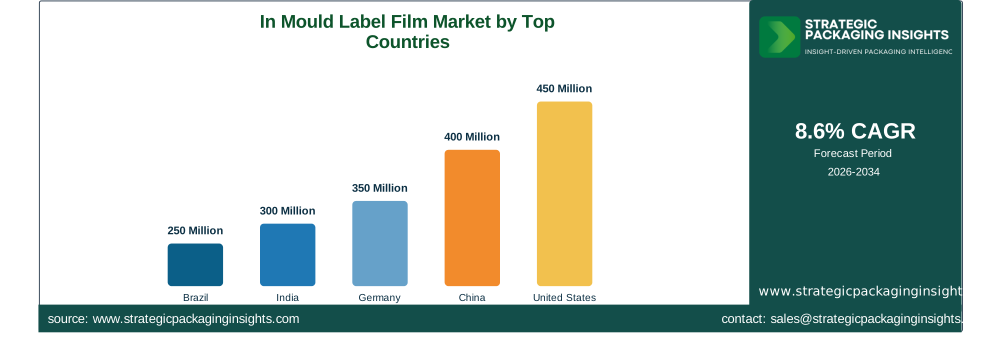
China is another major player in the market, with a market size of around $400 million and a CAGR of 10%. The rapid industrialization and urbanization in the country are driving the demand for packaged goods, thereby boosting the need for advanced labeling solutions. The government's initiatives to promote sustainable packaging and reduce plastic waste are encouraging companies to develop eco-friendly in mould label films. The growing middle-class population and rising disposable incomes are also contributing to market growth.
Germany, with a market size of approximately $350 million and a CAGR of 8%, is a key market for in mould label films in Europe. The country's strong manufacturing sector and the emphasis on product differentiation and branding are driving the demand for high-quality labeling solutions. The focus on sustainability and the stringent environmental regulations are prompting companies to invest in sustainable materials and technologies. The integration of digital printing with in mould labeling is also enhancing the customization capabilities, allowing brands to create unique packaging designs.
India, with a market size of around $300 million and a CAGR of 12%, presents significant growth opportunities for the In Mould Label Film market. The country's expanding packaging industry and the increasing demand for packaged goods are key growth drivers. The government's initiatives to promote sustainable packaging and reduce plastic waste are encouraging companies to develop eco-friendly in mould label films. The rising middle-class population and the growing awareness about the benefits of in mould labeling are also contributing to market growth.
Brazil, with a market size of approximately $250 million and a CAGR of 9%, is a key market in Latin America. The country's growing packaging industry and the increasing demand for innovative labeling solutions are driving market growth. The focus on sustainability and the government's initiatives to reduce plastic waste are encouraging companies to invest in eco-friendly in mould label films. The rising disposable incomes and the growing awareness about the benefits of in mould labeling are also contributing to market growth.
In Mould Label Film Market Segments Insights

By Material Type Analysis
The In Mould Label Film market is segmented by material type into PP films, PE films, and BOPP films. PP films are widely used due to their excellent clarity, moisture resistance, and durability, making them ideal for various packaging applications. The demand for PP films is driven by their cost-effectiveness and versatility, which allow them to be used in a wide range of industries, including food, beverage, and personal care. PE films, on the other hand, are known for their flexibility and toughness, making them suitable for applications that require high impact resistance. The growing demand for sustainable packaging solutions is encouraging manufacturers to develop eco-friendly PE films that meet the evolving consumer preferences.
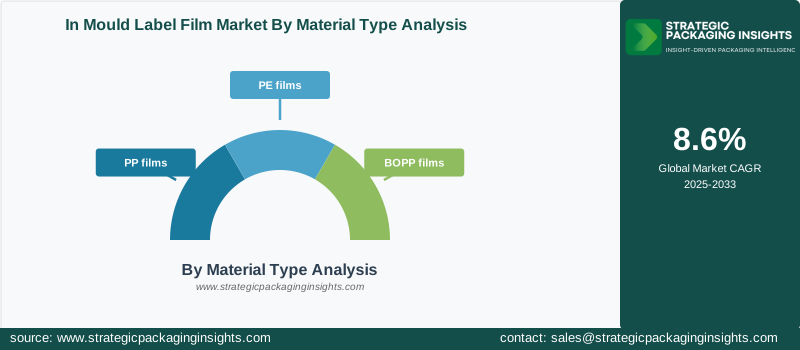
BOPP films are gaining traction in the market due to their superior barrier properties and excellent printability. These films are widely used in the food and beverage industry, where product differentiation and branding are crucial. The advancements in printing technologies are enhancing the aesthetic appeal of BOPP films, allowing brands to create unique and eye-catching packaging designs. The increasing focus on sustainability is also driving the demand for BOPP films, as they are recyclable and environmentally friendly. Companies are investing in research and development to create innovative BOPP films that cater to the evolving market demands.
By Application Analysis
The In Mould Label Film market is segmented by application into containers, cups, tubs, and pails. Containers are the largest application segment, driven by the increasing demand for durable and visually appealing packaging solutions in the food and beverage industry. The use of in mould label films in containers enhances the product's shelf appeal and provides excellent resistance to moisture and abrasion. The growing trend of product differentiation and branding is encouraging manufacturers to adopt in mould label films for containers, further driving market growth.
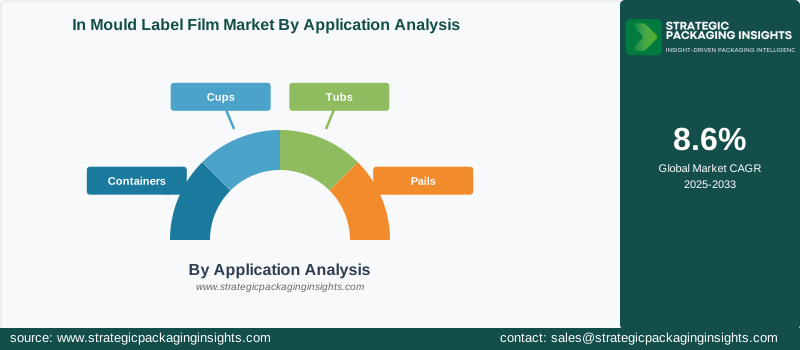
Cups and tubs are also significant application segments, with the demand driven by the increasing consumption of packaged food and beverages. The use of in mould label films in cups and tubs provides a seamless and high-quality finish, enhancing the product's aesthetic appeal. The advancements in printing technologies are enabling the production of intricate and visually appealing label designs, further boosting the demand for in mould label films in these applications. Pails, on the other hand, are used in industrial and household applications, where durability and resistance to harsh conditions are crucial. The use of in mould label films in pails provides excellent resistance to chemicals and abrasion, making them ideal for these applications.
By Printing Type Analysis
The In Mould Label Film market is segmented by printing type into offset, gravure, and flexographic printing. Offset printing is widely used due to its ability to produce high-quality and detailed label designs. The advancements in offset printing technologies are enhancing the customization capabilities, allowing brands to create unique and eye-catching packaging solutions. The demand for offset printing is driven by the increasing focus on product differentiation and branding, particularly in the food and beverage industry.
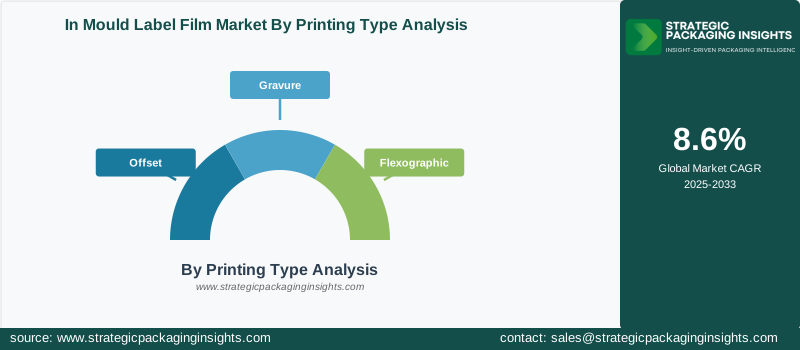
Gravure printing is known for its ability to produce high-quality and consistent label designs, making it ideal for large-scale production runs. The use of gravure printing in in mould label films provides excellent print quality and durability, enhancing the product's aesthetic appeal. The demand for gravure printing is driven by the increasing consumption of packaged goods and the growing trend of product differentiation. Flexographic printing, on the other hand, is gaining traction due to its cost-effectiveness and versatility. The advancements in flexographic printing technologies are enabling the production of high-quality and intricate label designs, further boosting the demand for in mould label films in this segment.
By End Use Analysis
The In Mould Label Film market is segmented by end use into food, beverage, household, and personal care. The food industry is the largest end-use segment, driven by the increasing demand for durable and visually appealing packaging solutions. The use of in mould label films in food packaging enhances the product's shelf appeal and provides excellent resistance to moisture and abrasion. The growing trend of product differentiation and branding is encouraging manufacturers to adopt in mould label films for food packaging, further driving market growth.
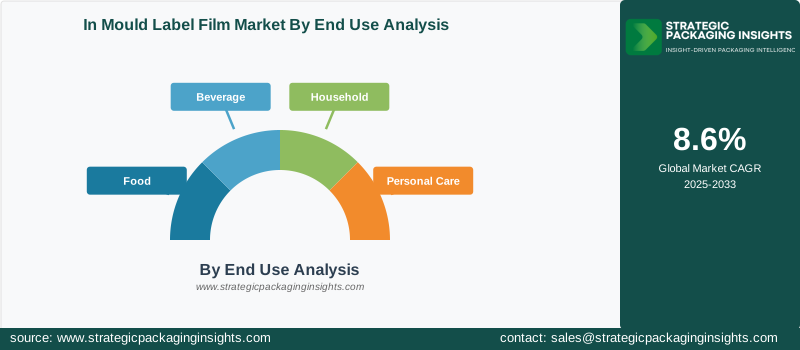
The beverage industry is also a significant end-use segment, with the demand driven by the increasing consumption of packaged beverages. The use of in mould label films in beverage packaging provides a seamless and high-quality finish, enhancing the product's aesthetic appeal. The advancements in printing technologies are enabling the production of intricate and visually appealing label designs, further boosting the demand for in mould label films in this segment. The household and personal care industries are also significant end-use segments, with the demand driven by the increasing focus on product differentiation and branding. The use of in mould label films in these industries provides excellent resistance to chemicals and abrasion, making them ideal for packaging applications.
In Mould Label Film Market Segments
The In Mould Label Film market has been segmented on the basis ofBy Material Type
- PP films
- PE films
- BOPP films
By Application
- Containers
- Cups
- Tubs
- Pails
By Printing Type
- Offset
- Gravure
- Flexographic
By End Use
- Food
- Beverage
- Household
- Personal Care
Region
- Asia Pacific
- North America
- Latin America
- Europe
- Middle East & Africa




