


Bottle Sticker Labelling Machine Market Outlook
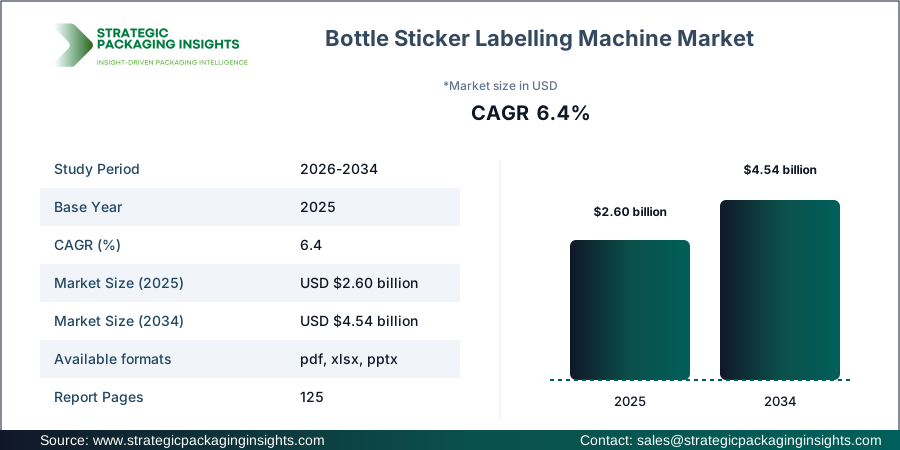
The Bottle Sticker Labelling Machine market was valued at $2.60 billion in 2025 and is projected to reach $4.54 billion by 2034, growing at a CAGR of 6.4% during the forecast period 2026-2034. This market is witnessing significant growth due to the increasing demand for efficient and high-speed labeling solutions across various industries. The rise in consumer goods production, especially in the beverage and pharmaceutical sectors, is driving the need for advanced labeling machines that can handle large volumes with precision. Additionally, the trend towards automation in manufacturing processes is further propelling the demand for automatic and semi-automatic labelers, which offer enhanced productivity and reduced labor costs.
However, the market faces challenges such as high initial investment costs and the need for regular maintenance of these machines, which can be a deterrent for small and medium enterprises. Despite these challenges, the market holds immense potential for growth, driven by technological advancements and the increasing adoption of smart labeling solutions. The integration of IoT and AI in labeling machines is expected to offer new opportunities for market players, enabling them to provide more efficient and customizable solutions to their clients. Moreover, the growing focus on sustainability and eco-friendly packaging is likely to spur innovations in labeling technologies, further boosting market growth.
Report Scope
| Attributes | Details |
| Report Title | Bottle Sticker Labelling Machine Market Size, Future Growth and Forecast 2034 |
| By Machine Type | Automatic Labelers, Semi-Automatic Labelers, Wraparound Labelers |
| By Bottle Type | Glass Bottles, Plastic Bottles, Metal Containers |
| By Application | Beverages, Pharmaceuticals, Cosmetics, Chemicals |
| By End Use | Bottling Plants, Pharma Firms, FMCG Brands, Co-Packers |
| Region | Asia Pacific, North America, Latin America, Europe, Middle East & Africa |
| Base Year | 2025 |
| Historic Period | 2018-2024 |
| Forecast Period | 2026-2034 |
| Number of Pages | 125 |
| Customization Available | Yes* |
Opportunities & Threats
The Bottle Sticker Labelling Machine market presents numerous opportunities, particularly with the increasing demand for automation in the packaging industry. As manufacturers strive to enhance efficiency and reduce operational costs, the adoption of automatic and semi-automatic labeling machines is on the rise. These machines not only improve labeling speed and accuracy but also minimize human error, making them an attractive investment for companies looking to streamline their production processes. Furthermore, the growing trend of personalized and customized packaging is creating a demand for versatile labeling machines that can handle a variety of bottle shapes and sizes, offering significant growth potential for market players.
Another opportunity lies in the expanding pharmaceutical and cosmetics industries, where precise and reliable labeling is crucial for regulatory compliance and brand integrity. As these industries continue to grow, the need for advanced labeling solutions that can ensure product safety and authenticity is becoming increasingly important. This is driving the development of innovative labeling technologies, such as smart labels and RFID tags, which offer enhanced traceability and security features. Additionally, the rise of e-commerce and online retailing is boosting the demand for efficient labeling solutions that can support high-volume packaging operations, further fueling market growth.
On the flip side, the market faces threats from the high costs associated with the purchase and maintenance of advanced labeling machines. Small and medium enterprises, in particular, may find it challenging to invest in these technologies due to budget constraints. Moreover, the rapid pace of technological advancements means that machines can quickly become obsolete, requiring companies to continuously upgrade their equipment to stay competitive. This can be a significant financial burden, especially for smaller players in the market. Additionally, the increasing focus on sustainability and environmental regulations may pose challenges for manufacturers, as they need to develop eco-friendly labeling solutions that comply with stringent standards.
Drivers & Challenges
One of the primary drivers of the Bottle Sticker Labelling Machine market is the growing demand for packaged consumer goods, particularly in emerging economies. As disposable incomes rise and consumer preferences shift towards convenience products, the need for efficient and high-speed labeling solutions is increasing. This is particularly evident in the beverage and food industries, where the ability to quickly and accurately label products is essential for meeting production targets and maintaining product quality. Additionally, the trend towards automation in manufacturing processes is driving the adoption of advanced labeling machines that offer improved efficiency and reduced labor costs.
Technological advancements are also playing a crucial role in driving market growth. The integration of IoT and AI in labeling machines is enabling manufacturers to offer more efficient and customizable solutions to their clients. These technologies allow for real-time monitoring and control of labeling processes, enhancing productivity and reducing downtime. Moreover, the development of smart labeling solutions, such as RFID tags and QR codes, is providing additional value to end-users by offering enhanced traceability and security features. This is particularly important in industries such as pharmaceuticals and cosmetics, where product safety and authenticity are paramount.
Despite these drivers, the market faces several challenges that could hinder its growth. One of the main challenges is the high initial investment required for purchasing advanced labeling machines. This can be a significant barrier for small and medium enterprises, which may not have the financial resources to invest in these technologies. Additionally, the need for regular maintenance and servicing of these machines can add to the overall cost of ownership, making it difficult for smaller players to compete with larger, more established companies. Furthermore, the rapid pace of technological advancements means that machines can quickly become obsolete, requiring companies to continuously upgrade their equipment to stay competitive.
Market Share Analysis
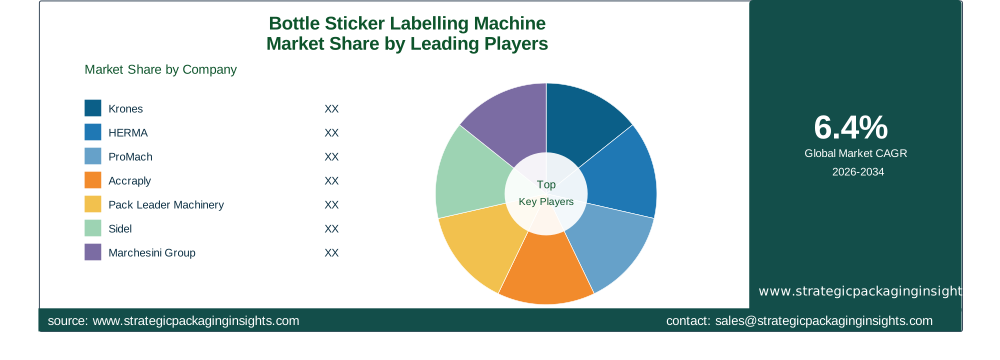
The competitive landscape of the Bottle Sticker Labelling Machine market is characterized by the presence of several key players, each vying for a significant share of the market. Companies such as Krones, HERMA, ProMach, and Accraply are among the leading players, known for their innovative labeling solutions and strong market presence. These companies have established themselves as leaders in the industry by offering a wide range of products that cater to various end-use applications, from beverages and pharmaceuticals to cosmetics and chemicals. Their ability to provide customized solutions and excellent after-sales support has helped them maintain a competitive edge in the market.
Krones, for instance, is a major player in the market, known for its comprehensive range of labeling machines that cater to different bottle types and applications. The company's focus on innovation and sustainability has enabled it to develop advanced labeling solutions that meet the evolving needs of its clients. Similarly, HERMA is recognized for its high-quality labeling systems that offer precision and reliability, making it a preferred choice for many industries. The company's commitment to research and development has resulted in the introduction of cutting-edge technologies that enhance the efficiency and performance of its machines.
ProMach is another key player in the market, offering a diverse portfolio of labeling solutions that cater to various industries. The company's focus on customer satisfaction and continuous improvement has helped it build a strong reputation in the market. Accraply, on the other hand, is known for its innovative labeling technologies that provide flexibility and versatility, allowing it to cater to a wide range of applications. The company's emphasis on quality and reliability has made it a trusted partner for many businesses looking for efficient labeling solutions.
Other notable players in the market include Pack Leader Machinery, Sidel, Marchesini Group, IMA Group, Nita Labeling Systems, and Maharshi. These companies have carved out a niche for themselves by offering specialized labeling solutions that cater to specific industry needs. Their ability to adapt to changing market trends and customer demands has enabled them to maintain a strong foothold in the market. Overall, the competitive landscape of the Bottle Sticker Labelling Machine market is dynamic, with companies constantly striving to innovate and differentiate themselves to capture a larger share of the market.
Key Highlights
- The Bottle Sticker Labelling Machine market is projected to grow at a CAGR of 6.4% from 2026 to 2034.
- Increasing demand for automation in packaging is driving the adoption of advanced labeling machines.
- Technological advancements, such as IoT and AI integration, are enhancing machine efficiency and customization.
- The rise of e-commerce is boosting the demand for efficient labeling solutions for high-volume packaging operations.
- High initial investment costs and maintenance requirements pose challenges for small and medium enterprises.
- Key players in the market include Krones, HERMA, ProMach, and Accraply, among others.
- The growing focus on sustainability is driving innovations in eco-friendly labeling technologies.
- Personalized and customized packaging trends are creating opportunities for versatile labeling machines.
- The pharmaceutical and cosmetics industries are key growth drivers due to the need for precise and reliable labeling.
Top Countries Insights
In the Bottle Sticker Labelling Machine market, the United States stands out as a key player, with a market size of approximately $1.2 billion and a CAGR of 5%. The country's robust manufacturing sector and the presence of major beverage and pharmaceutical companies drive the demand for advanced labeling solutions. Additionally, the trend towards automation and smart manufacturing is further boosting the adoption of high-speed labeling machines. However, regulatory challenges and the need for compliance with stringent labeling standards pose challenges for manufacturers.
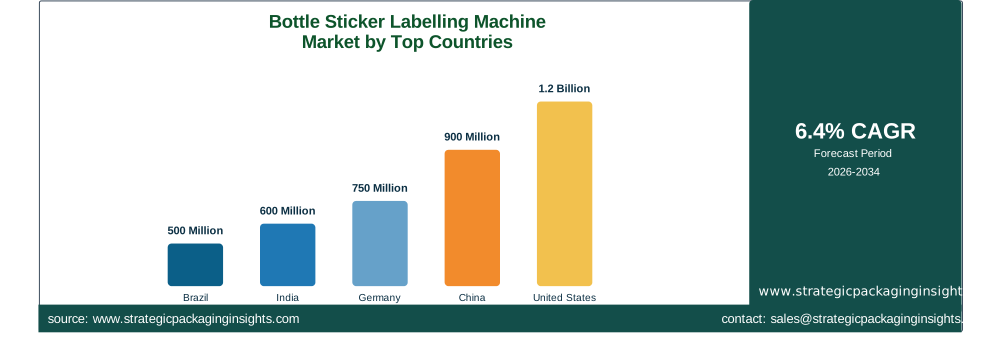
China is another significant market, with a market size of around $900 million and a CAGR of 8%. The country's booming consumer goods industry and the rapid growth of e-commerce are key drivers of market growth. The demand for efficient and high-speed labeling solutions is increasing as manufacturers strive to meet the growing demand for packaged goods. However, the market faces challenges from the high costs of advanced labeling machines and the need for continuous technological upgrades.
Germany, with a market size of approximately $750 million and a CAGR of 6%, is a leading market in Europe. The country's strong focus on innovation and sustainability is driving the development of eco-friendly labeling solutions. Additionally, the presence of major pharmaceutical and cosmetics companies is boosting the demand for precise and reliable labeling machines. However, the market faces challenges from the high costs of compliance with stringent environmental regulations.
India, with a market size of around $600 million and a CAGR of 9%, is an emerging market with significant growth potential. The country's growing middle class and increasing consumer spending are driving the demand for packaged goods, boosting the need for efficient labeling solutions. However, the market faces challenges from the high costs of advanced labeling machines and the need for skilled labor to operate them.
Brazil, with a market size of approximately $500 million and a CAGR of 7%, is a key market in Latin America. The country's expanding beverage and food industries are driving the demand for high-speed labeling solutions. However, the market faces challenges from economic instability and the need for compliance with stringent labeling standards.
Bottle Sticker Labelling Machine Market Segments Insights

Machine Type Analysis
The Bottle Sticker Labelling Machine market is segmented by machine type into automatic labelers, semi-automatic labelers, and wraparound labelers. Automatic labelers are gaining traction due to their ability to enhance productivity and reduce labor costs. These machines are particularly popular in large-scale manufacturing operations where speed and efficiency are critical. The integration of advanced technologies, such as IoT and AI, is further enhancing the capabilities of automatic labelers, allowing for real-time monitoring and control of labeling processes. Semi-automatic labelers, on the other hand, are preferred by small and medium enterprises due to their lower cost and ease of use. These machines offer a balance between automation and manual operation, making them suitable for businesses with limited production volumes. Wraparound labelers are also witnessing increased demand, particularly in the beverage and food industries, where they provide a seamless and aesthetically pleasing labeling solution.
Bottle Type Analysis
The market is also segmented by bottle type into glass bottles, plastic bottles, and metal containers. Glass bottles are widely used in the beverage and pharmaceutical industries due to their durability and ability to preserve product quality. The demand for labeling machines that can handle glass bottles is increasing as manufacturers seek to enhance their packaging processes. Plastic bottles, on the other hand, are popular in the FMCG and cosmetics industries due to their lightweight and cost-effective nature. The demand for labeling machines that can handle plastic bottles is driven by the need for efficient and high-speed labeling solutions. Metal containers are also gaining popularity, particularly in the chemical and food industries, where they offer superior protection and durability. The demand for labeling machines that can handle metal containers is increasing as manufacturers seek to enhance their packaging processes.
Application Analysis
The Bottle Sticker Labelling Machine market is segmented by application into beverages, pharmaceuticals, cosmetics, and chemicals. The beverage industry is a major driver of market growth, with the demand for high-speed labeling solutions increasing as manufacturers strive to meet production targets. The pharmaceutical industry is also a key growth driver, with the need for precise and reliable labeling solutions becoming increasingly important for regulatory compliance and product safety. The cosmetics industry is witnessing significant growth, with the demand for versatile labeling machines that can handle a variety of bottle shapes and sizes increasing. The chemical industry is also driving demand for labeling machines, with the need for durable and reliable labeling solutions becoming increasingly important.
End Use Analysis
The market is segmented by end use into bottling plants, pharma firms, FMCG brands, and co-packers. Bottling plants are a major end-user of labeling machines, with the demand for high-speed and efficient labeling solutions increasing as manufacturers strive to enhance their production processes. Pharma firms are also a key end-user, with the need for precise and reliable labeling solutions becoming increasingly important for regulatory compliance and product safety. FMCG brands are driving demand for versatile labeling machines that can handle a variety of bottle shapes and sizes, while co-packers are seeking efficient and cost-effective labeling solutions to enhance their packaging processes.
Bottle Sticker Labelling Machine Market Segments
The Bottle Sticker Labelling Machine market has been segmented on the basis ofBy Machine Type
- Automatic Labelers
- Semi-Automatic Labelers
- Wraparound Labelers
By Bottle Type
- Glass Bottles
- Plastic Bottles
- Metal Containers
By Application
- Beverages
- Pharmaceuticals
- Cosmetics
- Chemicals
By End Use
- Bottling Plants
- Pharma Firms
- FMCG Brands
- Co-Packers
Region
- Asia Pacific
- North America
- Latin America
- Europe
- Middle East & Africa




