


Labelling Machine Market Outlook
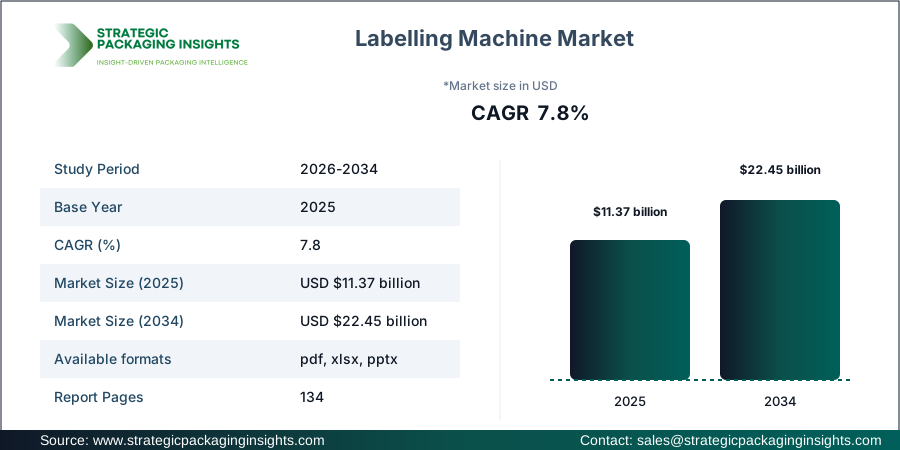
The labelling machine market was valued at $11.37 billion in 2025 and is projected to reach $22.45 billion by 2034, growing at a CAGR of 7.8% during the forecast period 2026-2034. This growth trajectory is driven by the increasing demand for efficient packaging solutions across various industries such as food, beverage, pharmaceuticals, and cosmetics. The rise in consumer awareness regarding product information and safety has further fueled the demand for advanced labelling technologies. Additionally, the integration of automation in labelling processes is enhancing operational efficiency, thereby propelling market growth. The market is also witnessing a surge in demand for eco-friendly and sustainable labelling solutions, aligning with global environmental concerns and regulations.
Despite the promising growth prospects, the labelling machine market faces certain challenges. Regulatory constraints and the high initial investment required for advanced labelling technologies can act as potential barriers to market entry for new players. However, the increasing adoption of smart labelling solutions, which offer real-time tracking and enhanced consumer engagement, presents significant growth opportunities. The market is also poised to benefit from technological advancements such as the development of digital labelling solutions, which offer greater flexibility and customization options. As industries continue to evolve, the demand for versatile and efficient labelling machines is expected to rise, driving market expansion.
Report Scope
| Attributes | Details |
| Report Title | Labelling Machine Market Size, Future Growth and Forecast 2034 |
| By Machine Type | Automatic Labeling Machines, Semi-Automatic Labeling Machines, Print-and-Apply Labelers |
| By Label Type | Pressure-Sensitive, Shrink Sleeve, Wrap-Around, In-Mold |
| By Application | Food, Beverage, Pharma, Cosmetics |
| By End Use | Manufacturers, Contract Packers, Logistics |
| Region | Asia Pacific, North America, Latin America, Europe, Middle East & Africa |
| Base Year | 2025 |
| Historic Period | 2018-2024 |
| Forecast Period | 2026-2034 |
| Number of Pages | 134 |
| Customization Available | Yes* |
Opportunities & Threats
The labelling machine market is ripe with opportunities, particularly in the realm of technological advancements. The integration of IoT and AI in labelling machines is revolutionizing the industry by enabling real-time data collection and analysis, which enhances operational efficiency and reduces downtime. This technological shift is particularly beneficial for industries such as pharmaceuticals and food, where precision and accuracy are paramount. Furthermore, the growing trend of personalized packaging is driving demand for labelling machines that offer customization capabilities, allowing brands to differentiate themselves in a competitive market. The rise of e-commerce and the need for efficient logistics solutions also present lucrative opportunities for the labelling machine market, as companies seek to streamline their supply chain operations.
Another significant opportunity lies in the increasing demand for sustainable and eco-friendly labelling solutions. As consumers become more environmentally conscious, there is a growing preference for products with minimal environmental impact. This has led to the development of biodegradable and recyclable labelling materials, which are gaining traction in the market. Companies that invest in sustainable labelling technologies are likely to gain a competitive edge, as they align with consumer values and regulatory requirements. Additionally, the expansion of the food and beverage industry, particularly in emerging markets, is expected to drive demand for labelling machines, as companies seek to comply with stringent labelling regulations and enhance product visibility.
However, the labelling machine market is not without its threats. One of the primary challenges is the high cost associated with advanced labelling technologies, which can be a deterrent for small and medium-sized enterprises. Additionally, the market is highly competitive, with numerous players vying for market share. This intense competition can lead to price wars, which may impact profit margins. Furthermore, the rapid pace of technological advancements means that companies must continuously innovate to stay relevant, which can be resource-intensive. The market is also susceptible to fluctuations in raw material prices, which can affect production costs and, consequently, pricing strategies.
Drivers & Challenges
The labelling machine market is primarily driven by the increasing demand for efficient and automated packaging solutions across various industries. The food and beverage sector, in particular, is a major contributor to market growth, as companies seek to enhance product visibility and comply with stringent labelling regulations. The rise in consumer awareness regarding product information and safety has further fueled the demand for advanced labelling technologies. Additionally, the integration of automation in labelling processes is enhancing operational efficiency, reducing labor costs, and minimizing human error, thereby propelling market growth. The market is also witnessing a surge in demand for eco-friendly and sustainable labelling solutions, aligning with global environmental concerns and regulations.
Another significant driver is the increasing adoption of smart labelling solutions, which offer real-time tracking and enhanced consumer engagement. These solutions are particularly beneficial for industries such as pharmaceuticals and logistics, where precision and accuracy are paramount. The development of digital labelling technologies, which offer greater flexibility and customization options, is also contributing to market expansion. As industries continue to evolve, the demand for versatile and efficient labelling machines is expected to rise, driving market growth. Furthermore, the expansion of the e-commerce sector and the need for efficient logistics solutions are expected to boost demand for labelling machines, as companies seek to streamline their supply chain operations.
Despite the promising growth prospects, the labelling machine market faces certain challenges. Regulatory constraints and the high initial investment required for advanced labelling technologies can act as potential barriers to market entry for new players. The market is also highly competitive, with numerous players vying for market share. This intense competition can lead to price wars, which may impact profit margins. Additionally, the rapid pace of technological advancements means that companies must continuously innovate to stay relevant, which can be resource-intensive. The market is also susceptible to fluctuations in raw material prices, which can affect production costs and, consequently, pricing strategies. Companies must navigate these challenges to capitalize on the growth opportunities in the labelling machine market.
Market Share Analysis
The labelling machine market is characterized by a competitive landscape with several key players vying for market dominance. Companies such as Krones, Sidel, and Marchesini Group hold significant market shares due to their extensive product portfolios and strong global presence. These companies have established themselves as leaders in the industry by consistently investing in research and development to innovate and enhance their product offerings. Their ability to provide customized solutions tailored to specific industry needs has further solidified their market positions. Additionally, strategic partnerships and collaborations with other industry players have enabled these companies to expand their market reach and strengthen their competitive edge.
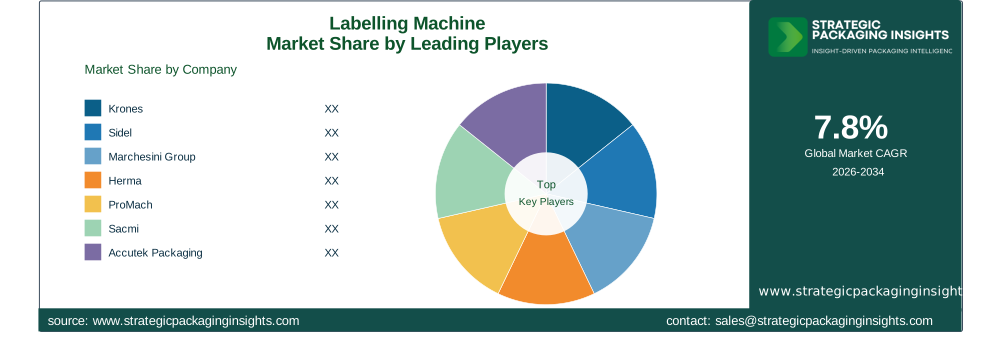
ProMach and Herma are also prominent players in the labelling machine market, known for their innovative solutions and commitment to quality. ProMach, in particular, has gained a competitive advantage through its comprehensive range of labelling solutions that cater to various industries, including food, beverage, and pharmaceuticals. The company's focus on customer-centric solutions and after-sales support has contributed to its strong market presence. Similarly, Herma's emphasis on precision and reliability has made it a preferred choice for industries that require high-quality labelling solutions. The company's continuous investment in technology and innovation has enabled it to maintain a competitive edge in the market.
Other notable players in the market include Sacmi, Accutek Packaging, Videojet Technologies, Markem-Imaje, and Weber Packaging. These companies have carved out their niches by offering specialized labelling solutions that cater to specific industry requirements. Sacmi, for instance, is known for its advanced labelling technologies that are widely used in the beverage industry. Accutek Packaging, on the other hand, has established itself as a leader in the packaging industry by providing versatile and efficient labelling solutions. Videojet Technologies and Markem-Imaje are recognized for their expertise in coding and marking solutions, which complement their labelling offerings. Weber Packaging's focus on sustainability and eco-friendly solutions has also contributed to its market success.
The competitive landscape of the labelling machine market is further intensified by the presence of numerous regional and local players. These companies often compete on price and offer cost-effective solutions to cater to the needs of small and medium-sized enterprises. However, the market leaders maintain their dominance through their strong brand reputation, extensive distribution networks, and continuous innovation. As the market continues to evolve, companies that can adapt to changing consumer preferences and technological advancements are likely to maintain their competitive positions and drive market growth.
Key Highlights
- The labelling machine market is projected to grow from $11.37 billion in 2025 to $22.45 billion by 2034, at a CAGR of 7.8%.
- Increasing demand for automated and efficient packaging solutions is driving market growth.
- Technological advancements, such as IoT and AI integration, are revolutionizing the labelling industry.
- There is a growing trend towards sustainable and eco-friendly labelling solutions.
- The food and beverage industry is a major contributor to market expansion.
- Smart labelling solutions offering real-time tracking are gaining traction.
- High initial investment and regulatory constraints pose challenges to market entry.
- The market is highly competitive, with key players like Krones, Sidel, and Marchesini Group leading the way.
- Emerging markets present significant growth opportunities for labelling machine manufacturers.
- Customization and personalization in labelling are becoming increasingly important for brand differentiation.
Top Countries Insights
In the labelling machine market, the United States stands out as a key player, with a market size of approximately $3.5 billion and a CAGR of 6%. The country's robust food and beverage industry, coupled with stringent labelling regulations, drives demand for advanced labelling solutions. The adoption of automation and smart technologies in manufacturing processes further fuels market growth. However, the high cost of advanced labelling technologies poses a challenge for small and medium-sized enterprises. Despite this, the U.S. market continues to thrive, supported by innovation and technological advancements.
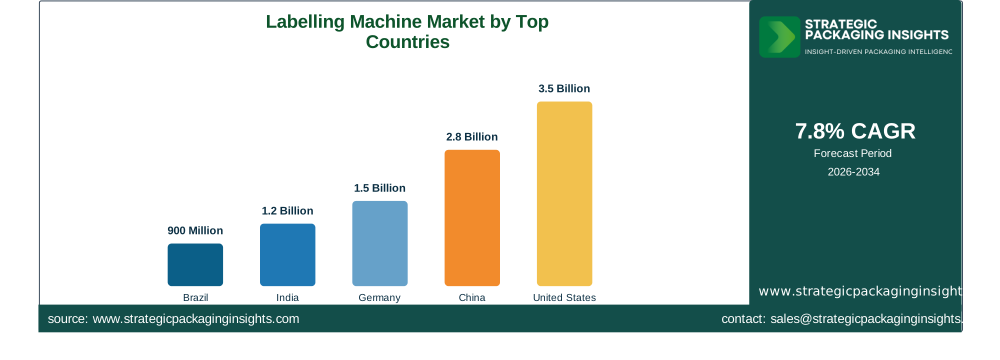
China is another significant market for labelling machines, with a market size of around $2.8 billion and a CAGR of 9%. The country's booming manufacturing sector and expanding e-commerce industry are key growth drivers. The demand for efficient and automated packaging solutions is on the rise, as companies seek to enhance operational efficiency and comply with international standards. However, the market faces challenges such as regulatory constraints and the need for continuous innovation to stay competitive. Despite these challenges, China's labelling machine market is poised for substantial growth, driven by technological advancements and increasing consumer demand.
Germany, with a market size of approximately $1.5 billion and a CAGR of 5%, is a leading market in Europe. The country's strong industrial base and emphasis on quality and precision drive demand for advanced labelling solutions. The adoption of Industry 4.0 technologies and the focus on sustainability further contribute to market growth. However, the market faces challenges such as high production costs and regulatory compliance. Despite these challenges, Germany remains a key player in the labelling machine market, supported by innovation and technological advancements.
India, with a market size of around $1.2 billion and a CAGR of 8%, is an emerging market for labelling machines. The country's growing food and beverage industry and expanding retail sector are key growth drivers. The demand for efficient and cost-effective labelling solutions is on the rise, as companies seek to enhance product visibility and comply with labelling regulations. However, the market faces challenges such as the high cost of advanced technologies and the need for skilled labor. Despite these challenges, India's labelling machine market is poised for significant growth, driven by increasing consumer demand and technological advancements.
Brazil, with a market size of approximately $900 million and a CAGR of 7%, is a key market in Latin America. The country's expanding food and beverage industry and growing consumer awareness drive demand for advanced labelling solutions. The adoption of automation and smart technologies in manufacturing processes further fuels market growth. However, the market faces challenges such as economic instability and regulatory constraints. Despite these challenges, Brazil's labelling machine market is expected to grow, supported by innovation and technological advancements.
Labelling Machine Market Segments Insights

Machine Type Analysis
The labelling machine market is segmented by machine type into automatic labeling machines, semi-automatic labeling machines, and print-and-apply labelers. Automatic labeling machines dominate the market due to their high efficiency and ability to handle large volumes with minimal human intervention. These machines are particularly favored in industries such as food and beverage, where speed and accuracy are crucial. The integration of advanced technologies such as IoT and AI in automatic labeling machines is further enhancing their capabilities, allowing for real-time monitoring and data analysis. This technological advancement is driving demand for automatic labeling machines, as companies seek to improve operational efficiency and reduce labor costs.
Semi-automatic labeling machines, while less prevalent than their automatic counterparts, still hold a significant market share. These machines are ideal for small and medium-sized enterprises that require flexibility and cost-effectiveness. The ability to handle a wide range of label sizes and shapes makes semi-automatic labeling machines a popular choice for industries such as cosmetics and pharmaceuticals. The market for semi-automatic labeling machines is expected to grow steadily, driven by the increasing demand for customized and personalized packaging solutions. Additionally, the development of user-friendly interfaces and enhanced features is making these machines more accessible to a broader range of users.
Print-and-apply labelers are gaining traction in the labelling machine market, particularly in the logistics and warehousing sectors. These machines offer the advantage of printing and applying labels in a single step, streamlining the labeling process and reducing the risk of errors. The demand for print-and-apply labelers is driven by the need for efficient and accurate labeling solutions in supply chain operations. As e-commerce continues to expand, the demand for these machines is expected to rise, as companies seek to enhance their logistics capabilities and improve order fulfillment processes. The integration of advanced technologies such as RFID and barcode scanning is further enhancing the functionality of print-and-apply labelers, making them an attractive option for a wide range of industries.
Label Type Analysis
The labelling machine market is segmented by label type into pressure-sensitive, shrink sleeve, wrap-around, and in-mold labels. Pressure-sensitive labels are the most widely used type, owing to their versatility and ease of application. These labels are suitable for a wide range of surfaces and are commonly used in industries such as food, beverage, and pharmaceuticals. The demand for pressure-sensitive labels is driven by the need for high-quality and durable labeling solutions that can withstand various environmental conditions. Additionally, the development of eco-friendly and recyclable pressure-sensitive labels is gaining traction, as companies seek to align with sustainability goals and consumer preferences.
Shrink sleeve labels are gaining popularity in the labelling machine market due to their ability to provide 360-degree coverage and enhance product visibility. These labels are particularly favored in the beverage industry, where they offer a unique and eye-catching packaging solution. The demand for shrink sleeve labels is driven by the growing trend of personalized and customized packaging, as brands seek to differentiate themselves in a competitive market. The development of advanced printing technologies and materials is further enhancing the appeal of shrink sleeve labels, making them an attractive option for a wide range of industries.
Wrap-around labels are commonly used in the food and beverage industry, where they provide a cost-effective and efficient labeling solution. These labels offer the advantage of covering a large surface area, allowing for more information to be displayed. The demand for wrap-around labels is driven by the need for compliance with stringent labeling regulations and the desire to enhance product visibility. In-mold labels, on the other hand, are gaining traction in the packaging industry due to their durability and resistance to moisture and abrasion. These labels are integrated into the packaging during the molding process, providing a seamless and long-lasting labeling solution. The demand for in-mold labels is expected to grow, driven by the increasing adoption of advanced packaging technologies and the need for high-quality labeling solutions.
Application Analysis
The labelling machine market is segmented by application into food, beverage, pharma, and cosmetics. The food industry is a major contributor to market growth, driven by the increasing demand for packaged and processed foods. The need for compliance with stringent labeling regulations and the desire to enhance product visibility are key drivers of demand for labelling machines in the food industry. Additionally, the growing trend of personalized and customized packaging is driving demand for advanced labelling solutions that offer flexibility and versatility.
The beverage industry is another significant market for labelling machines, driven by the need for high-quality and durable labeling solutions that can withstand various environmental conditions. The demand for shrink sleeve and wrap-around labels is particularly high in the beverage industry, as brands seek to differentiate themselves in a competitive market. The development of advanced printing technologies and materials is further enhancing the appeal of labelling machines in the beverage industry, making them an attractive option for a wide range of applications.
The pharmaceutical industry is a key market for labelling machines, driven by the need for precision and accuracy in labeling. The demand for smart labelling solutions that offer real-time tracking and enhanced consumer engagement is particularly high in the pharmaceutical industry, where compliance with stringent regulations is paramount. The cosmetics industry is also a significant market for labelling machines, driven by the growing trend of personalized and customized packaging. The demand for versatile and efficient labelling solutions that offer flexibility and customization options is expected to drive market growth in the cosmetics industry.
End Use Analysis
The labelling machine market is segmented by end use into manufacturers, contract packers, and logistics. Manufacturers are the primary end users of labelling machines, driven by the need for efficient and automated packaging solutions that enhance operational efficiency and reduce labor costs. The demand for labelling machines among manufacturers is driven by the need for compliance with stringent labeling regulations and the desire to enhance product visibility. Additionally, the growing trend of personalized and customized packaging is driving demand for advanced labelling solutions that offer flexibility and versatility.
Contract packers are another significant end user of labelling machines, driven by the need for cost-effective and efficient packaging solutions that cater to a wide range of industries. The demand for labelling machines among contract packers is driven by the need for flexibility and customization options, as they cater to the diverse needs of their clients. The development of user-friendly interfaces and enhanced features is making labelling machines more accessible to contract packers, driving market growth.
The logistics industry is a key market for labelling machines, driven by the need for efficient and accurate labeling solutions that enhance supply chain operations. The demand for print-and-apply labelers is particularly high in the logistics industry, as companies seek to streamline their operations and improve order fulfillment processes. The integration of advanced technologies such as RFID and barcode scanning is further enhancing the functionality of labelling machines in the logistics industry, making them an attractive option for a wide range of applications.
Labelling Machine Market Segments
The Labelling Machine market has been segmented on the basis ofBy Machine Type
- Automatic Labeling Machines
- Semi-Automatic Labeling Machines
- Print-and-Apply Labelers
By Label Type
- Pressure-Sensitive
- Shrink Sleeve
- Wrap-Around
- In-Mold
By Application
- Food
- Beverage
- Pharma
- Cosmetics
By End Use
- Manufacturers
- Contract Packers
- Logistics
Region
- Asia Pacific
- North America
- Latin America
- Europe
- Middle East & Africa




