


Tags Market Outlook
The Tags market size was valued at USD 12.25 billion in 2025 and is anticipated to reach USD 19.17 billion by 2034, growing at a CAGR of 5.1% during the forecast period according to Strategic Packaging Insights. Avery Dennison, a leading player in the market, has been instrumental in driving growth through innovative solutions and strategic partnerships. The increasing demand for efficient inventory management and product tracking in various industries is a significant factor contributing to the market's expansion. As businesses continue to prioritize operational efficiency, the adoption of advanced tagging solutions is expected to rise, further propelling market growth.
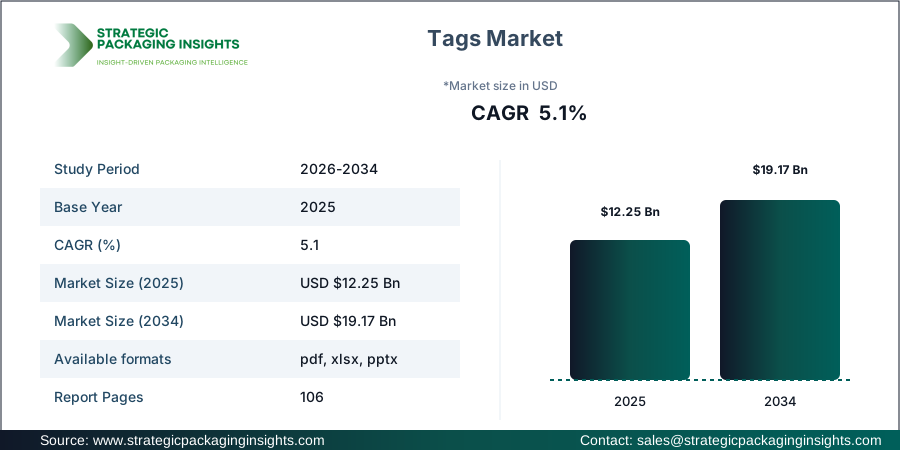
One of the most impactful drivers of the Tags market is the growing emphasis on supply chain transparency and security. With the rise of e-commerce and global trade, companies are increasingly investing in technologies that enhance product traceability and authenticity. According to a report by the World Economic Forum, the integration of digital tagging systems can significantly reduce counterfeiting and improve supply chain efficiency. This trend is expected to create substantial growth opportunities for companies like CCL Industries and SML Group, which are at the forefront of developing cutting-edge tagging solutions.
Report Scope
| Attributes | Details |
| Report Title | Tags Market Size, Future Growth and Forecast 2034 |
| Material Type | Paper, Plastic, Textile, Metal |
| Product Type | Hang Tags, Barcode Tags, RFID Tags, Security Tags |
| Application | Apparel, Retail, Logistics, Industrial Labeling |
| End Use | Retail, Fashion, Manufacturing, Logistics |
| Region | Asia Pacific, North America, Latin America, Europe, Middle East & Africa |
| Base Year | 2025 |
| Historic Period | 2018-2024 |
| Forecast Period | 2026-2034 |
| Number of Pages | 106 |
| Customization Available | Yes* |
Opportunities & Threats
The Tags market presents numerous opportunities, particularly in the realm of technological advancements. The integration of Internet of Things (IoT) technology with tagging systems is opening new avenues for real-time data collection and analysis. This development is particularly beneficial for industries such as logistics and retail, where real-time tracking and inventory management are crucial. Companies like Zebra Technologies are leveraging IoT to offer smart tagging solutions that provide enhanced visibility and control over supply chains. As IoT technology continues to evolve, the demand for advanced tagging solutions is expected to increase, offering significant growth potential for market players.
Another promising opportunity lies in the expansion of the e-commerce sector. As online shopping becomes increasingly popular, the need for efficient and reliable tagging systems to manage inventory and ensure timely delivery is growing. Retailers are investing in advanced tagging solutions to streamline their operations and enhance customer satisfaction. This trend is particularly evident in regions like Asia Pacific, where the e-commerce market is booming. Companies such as Checkpoint Systems are capitalizing on this opportunity by offering innovative tagging solutions tailored to the needs of online retailers.
Despite the promising opportunities, the Tags market faces certain restrainers, such as the high cost of advanced tagging technologies. While RFID and security tags offer numerous benefits, their implementation can be costly, particularly for small and medium-sized enterprises. Additionally, concerns regarding data privacy and security associated with digital tagging systems may hinder market growth. Companies need to address these challenges by developing cost-effective solutions and ensuring robust data protection measures to gain consumer trust and drive adoption.
Drivers & Challenges
One of the primary drivers of the Tags market is the increasing demand for efficient inventory management solutions across various industries. As businesses strive to optimize their supply chains and reduce operational costs, the adoption of advanced tagging systems is becoming essential. Companies like Brady Corporation are leading the way by offering innovative tagging solutions that enhance inventory accuracy and streamline operations. The growing focus on sustainability is also driving the demand for eco-friendly tagging materials, such as paper and textile, which are gaining popularity among environmentally conscious consumers.
Another significant driver is the rising need for product authentication and anti-counterfeiting measures. With the proliferation of counterfeit goods in the market, companies are investing in secure tagging solutions to protect their brand integrity and ensure product authenticity. RFID and security tags are particularly effective in combating counterfeiting, as they provide unique identifiers and enable real-time tracking. This trend is expected to drive the adoption of advanced tagging solutions, particularly in industries such as fashion and retail, where brand protection is paramount.
However, the Tags market also faces several challenges, including regulatory compliance and standardization issues. As tagging technologies evolve, companies must navigate a complex landscape of regulations and standards to ensure their products meet industry requirements. This can be particularly challenging for multinational companies operating in different regions with varying regulatory frameworks. Additionally, the rapid pace of technological advancements can make it difficult for companies to keep up with the latest developments and maintain a competitive edge. To overcome these challenges, companies need to invest in research and development and collaborate with industry stakeholders to drive innovation and standardization.
Market Growth Factors
- Accelerating RFID adoption by major retailers for item-level inventory visibility, with mandates now expanding beyond apparel into fresh food, beauty, and general merchandise categories. [Avery Dennison]
- Transition from traditional 1D barcodes to 2D barcodes and data-rich tagging under the GS1 global migration initiative, driving replacement demand across retail and logistics. [GS1]
- Growth of e-commerce and omnichannel retail, which requires accurate item-level identification for order fulfillment, returns management, and loss prevention.
- Rising demand for security and anti-theft tags (EAS) as retailers combat organized retail crime and shrinkage.
- Brand protection and anti-counterfeiting requirements in apparel, luxury goods, and pharmaceuticals, boosting demand for serialized and authenticated tags.
- Sustainability-driven innovation in tag substrates, including recycled paper, FSC-certified stock, and plastic-free hang tags demanded by fashion brands.
- Healthcare digitization and Unique Device Identification (UDI) compliance requirements, expanding RFID tag use for medical devices and surgical instruments.
Recent Developments
- February 2026: Avery Dennison launched its AD IdentiFresh™ RFID inlay series, built on Impinj M800 series ICs, enabling reliable RFID tagging of fresh food items (bakery, meat, deli, produce) for retailers, following its collaborations with Walmart and Kroger. [ Avery Dennison]
- March 2026: Avery Dennison introduced a sterilization-grade RFID inlay portfolio allowing medical devices and surgical instruments to be tagged at source and tracked through entire sterilization cycles, supporting UDI compliance with over 99% distribution accuracy.
- August 2025: Zebra Technologies entered a definitive agreement to acquire Elo Touch Solutions for .3 billion in cash, strengthening its connected frontline and retail identification ecosystem alongside its RFID printers, readers, and tag solutions. [Zebra Technologies]
- 2025: Avery Dennison announced RFID collaborations with Walmart and Kroger to extend item-level intelligent labels into grocery and fresh food categories, marking one of the largest expansions of retail RFID tagging programs to date.
Market Share Analysis
The Tags market is characterized by a highly competitive landscape, with several key players vying for market share. Companies such as Avery Dennison, CCL Industries, and SML Group are leading the market with their innovative solutions and strong global presence. These companies have established themselves as industry leaders by continuously investing in research and development and expanding their product portfolios to meet the evolving needs of their customers. The competitive landscape is further intensified by the presence of other prominent players like Checkpoint Systems, Brady Corporation, and Zebra Technologies, which are also making significant strides in the market.
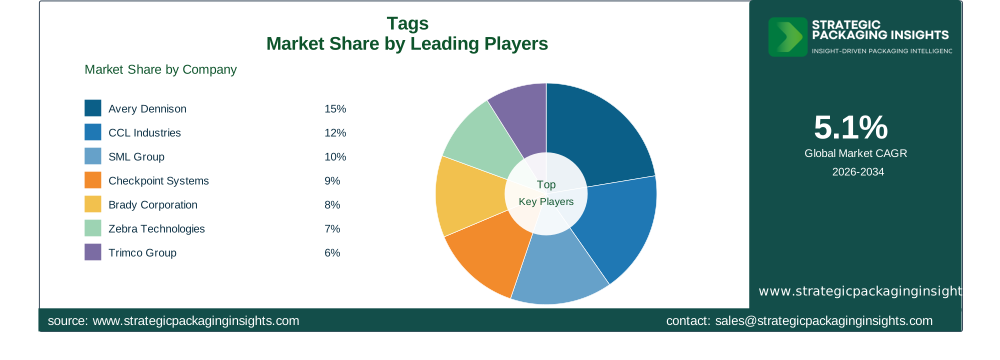
Avery Dennison is a major player in the Tags market, known for its comprehensive range of tagging solutions that cater to various industries. The company has a strong focus on sustainability and innovation, which has helped it maintain a competitive edge in the market. CCL Industries, another leading player, is renowned for its extensive product portfolio and global reach. The company has a strong presence in key markets such as North America and Europe, where it offers a wide range of tagging solutions tailored to the needs of different industries.
SML Group is a prominent player in the Tags market, known for its cutting-edge RFID solutions that enhance supply chain visibility and efficiency. The company has a strong focus on technology and innovation, which has enabled it to establish a significant presence in the market. Checkpoint Systems is another key player, offering a range of security tagging solutions that help retailers combat theft and improve inventory accuracy. The company's strong focus on customer satisfaction and innovation has helped it maintain a competitive position in the market.
Brady Corporation is a leading provider of industrial labeling and tagging solutions, known for its high-quality products and strong customer focus. The company has a robust global presence, with operations in key markets such as North America, Europe, and Asia Pacific. Zebra Technologies is another major player in the Tags market, offering a range of innovative tagging solutions that enhance supply chain efficiency and visibility. The company's strong focus on technology and innovation has helped it establish a significant presence in the market.
Key Highlights
- The Tags market is projected to grow from USD 12.25 billion in 2025 to USD 19.17 billion by 2034, at a CAGR of 5.1%.
- Key players in the market include Avery Dennison, CCL Industries, SML Group, and Checkpoint Systems.
- The integration of IoT technology with tagging systems is driving market growth.
- The e-commerce boom is creating significant opportunities for advanced tagging solutions.
- High costs and data privacy concerns are major restrainers in the market.
- Regulatory compliance and standardization are key challenges for market players.
- The demand for eco-friendly tagging materials is on the rise.
Tags Market Segments Insights

Material Type Analysis
The Tags market is segmented by material type into paper, plastic, textile, and metal. Paper tags are gaining popularity due to their eco-friendly nature and cost-effectiveness. As sustainability becomes a key focus for businesses, the demand for paper tags is expected to rise. Plastic tags, on the other hand, offer durability and versatility, making them suitable for various applications. Textile tags are particularly popular in the fashion industry, where they are used for branding and product information. Metal tags are known for their durability and are commonly used in industrial applications where harsh conditions are prevalent.
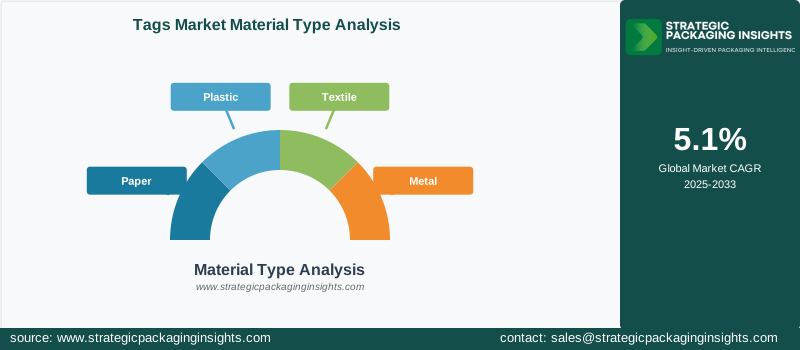
Companies like Avery Dennison and CCL Industries are leading the way in developing innovative tagging solutions using different materials. The growing emphasis on sustainability is driving the demand for eco-friendly materials, such as recycled paper and biodegradable plastics. This trend is expected to create significant growth opportunities for market players, particularly in regions like Europe, where environmental regulations are stringent. As businesses continue to prioritize sustainability, the demand for eco-friendly tagging solutions is expected to increase, offering significant growth potential for market players.
Product Type Analysis
The Tags market is segmented by product type into hang tags, barcode tags, RFID tags, and security tags. Hang tags are widely used in the fashion and retail industries for branding and product information. Barcode tags are essential for inventory management and product tracking, making them popular in industries such as logistics and retail. RFID tags offer advanced tracking capabilities and are increasingly being adopted in industries where real-time data collection is crucial. Security tags are used to prevent theft and ensure product authenticity, making them popular in the retail industry.
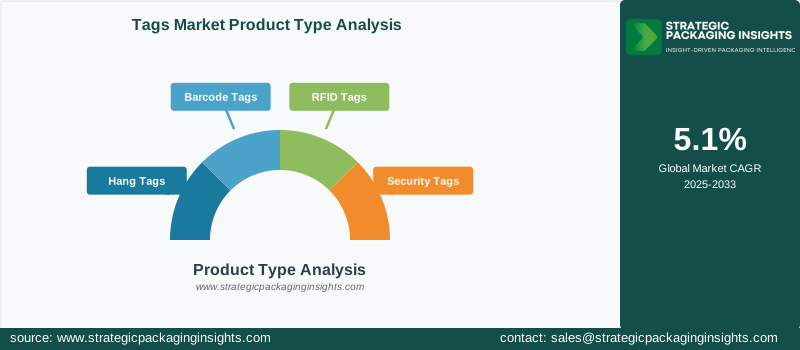
Companies like SML Group and Zebra Technologies are leading the way in developing innovative tagging solutions that cater to different product types. The growing demand for advanced tracking and inventory management solutions is driving the adoption of RFID and barcode tags. As businesses continue to prioritize operational efficiency, the demand for advanced tagging solutions is expected to rise, offering significant growth potential for market players. The increasing focus on security and product authentication is also driving the demand for security tags, particularly in the retail industry.
Application Analysis
The Tags market is segmented by application into apparel, retail, logistics, and industrial labeling. The apparel industry is a major consumer of tags, using them for branding, product information, and inventory management. The retail industry relies heavily on tagging solutions for inventory management and theft prevention. The logistics industry uses tags for tracking and managing shipments, ensuring timely delivery and efficient operations. Industrial labeling is another key application, where tags are used for product identification and tracking in manufacturing processes.
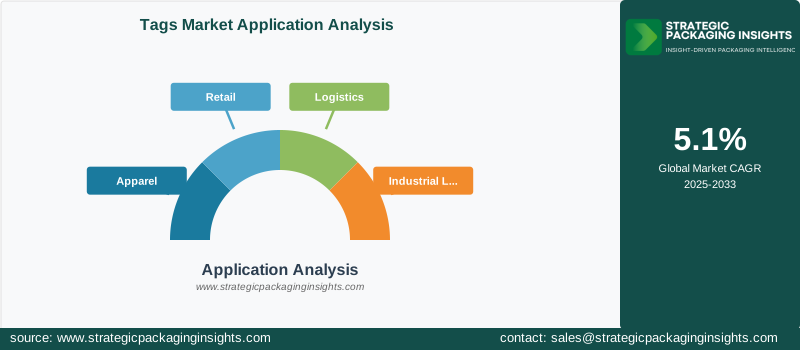
Companies like Checkpoint Systems and Brady Corporation are leading the way in developing innovative tagging solutions for different applications. The growing demand for efficient inventory management and product tracking is driving the adoption of advanced tagging solutions in various industries. As businesses continue to prioritize operational efficiency, the demand for advanced tagging solutions is expected to rise, offering significant growth potential for market players. The increasing focus on supply chain transparency and security is also driving the demand for tagging solutions in the logistics industry.
End Use Analysis
The Tags market is segmented by end use into retail, fashion, manufacturing, and logistics. The retail industry is a major consumer of tags, using them for inventory management, theft prevention, and product information. The fashion industry relies heavily on tagging solutions for branding and product information. The manufacturing industry uses tags for product identification and tracking in production processes. The logistics industry relies on tagging solutions for tracking and managing shipments, ensuring timely delivery and efficient operations.
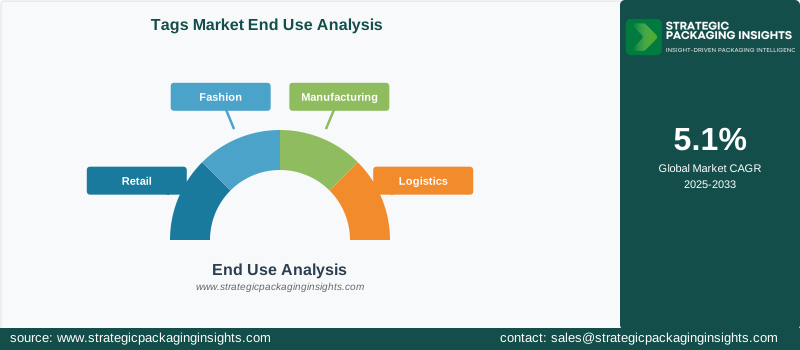
Companies like Nilorn Group and ITL Group are leading the way in developing innovative tagging solutions for different end uses. The growing demand for efficient inventory management and product tracking is driving the adoption of advanced tagging solutions in various industries. As businesses continue to prioritize operational efficiency, the demand for advanced tagging solutions is expected to rise, offering significant growth potential for market players. The increasing focus on supply chain transparency and security is also driving the demand for tagging solutions in the logistics industry.
Tags Market Segments
The Tags market has been segmented on the basis ofMaterial Type
- Paper
- Plastic
- Textile
- Metal
Product Type
- Hang Tags
- Barcode Tags
- RFID Tags
- Security Tags
Application
- Apparel
- Retail
- Logistics
- Industrial Labeling
End Use
- Retail
- Fashion
- Manufacturing
- Logistics
Region
- Asia Pacific
- North America
- Latin America
- Europe
- Middle East & Africa




