
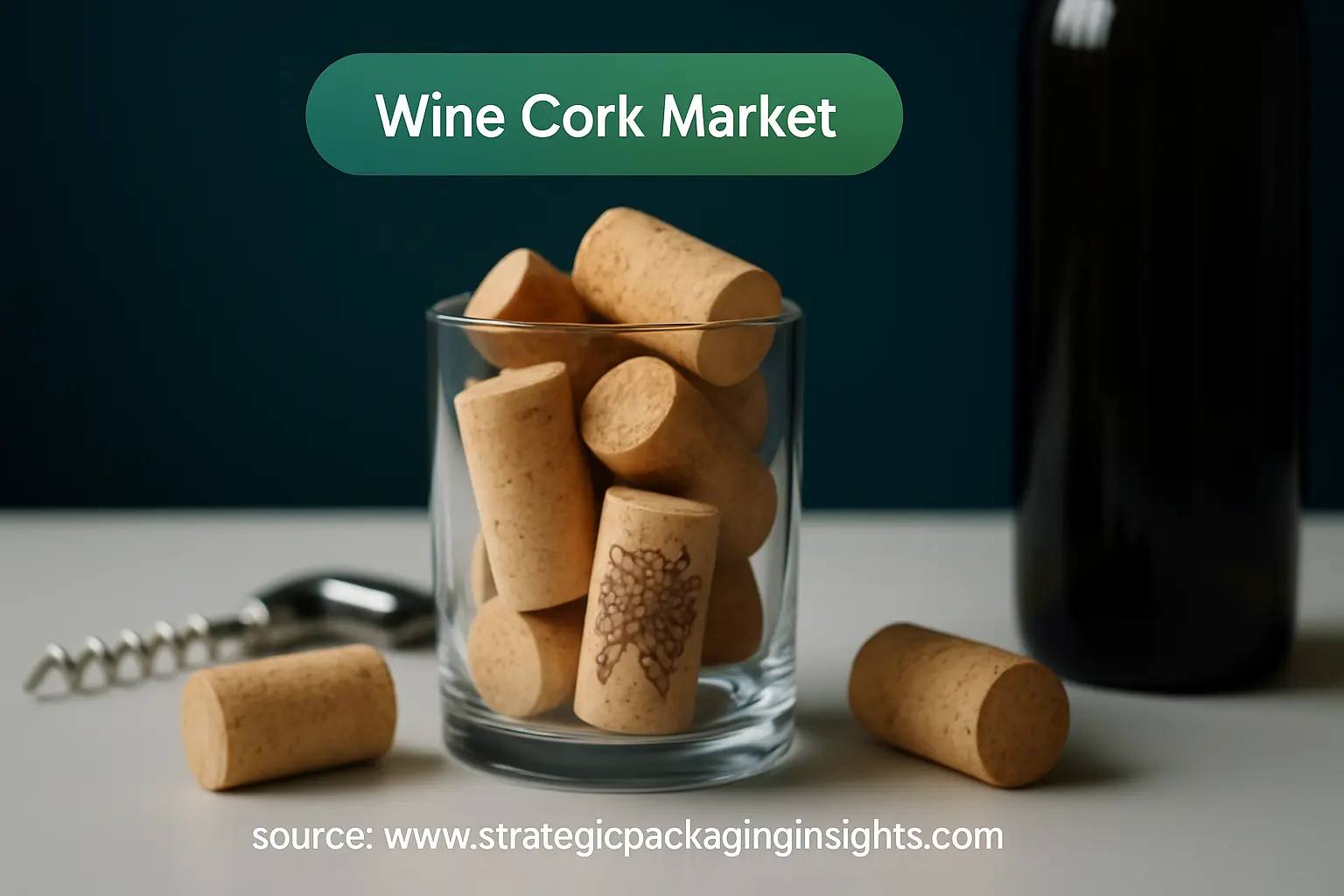
Explore the Wine Cork Market's evolution from 2018 to 2034, analyzing market size, CAGR, segment landscape, and strategic outlook. Gain insights into technology, regulation, and sustainability impacts.
Strategic Market Overview
The Wine Cork Market is a pivotal component of the global wine industry, serving as a critical element in the preservation and presentation of wine. As consumer preferences evolve and sustainability becomes a focal point, the market for wine corks is experiencing significant transformations. This briefing provides a comprehensive analysis of the market's trajectory, key segments, and strategic opportunities, offering valuable insights for stakeholders looking to navigate this dynamic landscape.
https://www.strategicpackaginginsights.com/report/wine-cork-market
From 2018 to 2034: Evolution of the Market
Between 2018 and 2024, the Wine Cork Market witnessed steady growth, driven by increasing wine consumption and a rising preference for natural corks due to their sustainability and superior sealing properties. The period also saw advancements in cork production technologies, enhancing product quality and reducing waste. As we look towards 2026-2034, the market is poised for further expansion, fueled by innovations in cork manufacturing and a growing emphasis on eco-friendly packaging solutions.
Interpreting Market Size & CAGR
In 2025, the Wine Cork Market was valued at $6.43 billion. By 2034, it is projected to reach $9.47 billion, reflecting a compound annual growth rate (CAGR) of 4.4%. This growth trajectory underscores the market's resilience and adaptability in the face of changing consumer preferences and regulatory landscapes. The steady CAGR indicates a robust demand for wine corks, particularly natural and technical corks, which are favored for their environmental benefits and performance.
Segment Landscape
| Segment | Details |
|---|---|
| Product Type | Natural Cork, Technical Cork, Agglomerated Cork, Synthetic Cork |
| Application | Still Wine, Sparkling Wine, Spirits, Specialty Beverages |
| Grade | Premium, Standard, Economy |
| End Use | Wineries, Distilleries, Beverage Brands, Distributors |
| Region | Asia Pacific, North America, Latin America, Europe, Middle East & Africa |
The segment landscape of the Wine Cork Market is diverse, with natural corks leading due to their traditional appeal and environmental advantages. Technical corks are gaining traction for their cost-effectiveness and consistent quality. The application segment is dominated by still wine, which accounts for the largest share, while sparkling wine and spirits are emerging as significant growth areas. Premium-grade corks are preferred by high-end wineries, whereas standard and economy grades cater to broader market needs.
Value Chain & Stakeholder Impact
The wine cork value chain encompasses raw material suppliers, cork manufacturers, wine producers, and distributors. Each stakeholder plays a crucial role in ensuring product quality and sustainability. Raw material suppliers are increasingly focusing on sustainable harvesting practices, while manufacturers are investing in technology to enhance cork quality and reduce environmental impact. Wine producers and distributors are pivotal in driving demand, as they seek cork solutions that align with their brand values and consumer expectations.
Opportunities vs Constraints
The Wine Cork Market presents numerous opportunities, including the growing demand for sustainable packaging and the expansion of wine consumption in emerging markets. However, the market also faces constraints such as competition from alternative closures like screw caps and synthetic stoppers, which offer cost advantages and ease of use. Balancing these opportunities and constraints requires strategic investments in innovation and marketing to highlight the unique benefits of cork closures.
SWOT Analysis
| Factor | Strengths | Weaknesses | Opportunities | Threats |
|---|---|---|---|---|
| Analysis | Strong heritage and consumer preference for natural corks | Higher cost compared to synthetic alternatives | Rising demand for eco-friendly packaging | Competition from alternative closure solutions |
The SWOT analysis reveals that the Wine Cork Market's strengths lie in its traditional appeal and consumer preference for natural corks. However, the higher cost of cork compared to synthetic alternatives is a notable weakness. Opportunities abound in the form of increasing demand for eco-friendly packaging, while threats include competition from alternative closure solutions that offer cost and convenience benefits.
Technology, Regulation & Sustainability Impact
Technological advancements in cork production are enhancing product quality and sustainability. Innovations such as micro-agglomeration and improved sealing technologies are reducing cork taint and enhancing performance. Regulatory frameworks are increasingly favoring sustainable practices, encouraging cork producers to adopt eco-friendly methods. Sustainability is a key driver, with consumers and producers alike prioritizing environmentally responsible solutions.
Strategic Outlook to 2034
Looking ahead to 2034, the Wine Cork Market is expected to continue its growth trajectory, driven by technological innovations and a strong focus on sustainability. Stakeholders should prioritize investments in research and development to enhance cork quality and performance. Marketing strategies should emphasize the environmental benefits and heritage of cork closures to differentiate from alternative solutions. By aligning with consumer values and regulatory trends, the market can capitalize on emerging opportunities and mitigate potential threats.