


PFAS-Free Food Packaging Market Outlook
The PFAS-Free Food Packaging market size was valued at USD $95.10 Billion in 2025 and is anticipated to reach USD $271.80 Billion by 2035, growing at a CAGR of 10.4% % during the forecast period according to Strategic Packaging Insights.
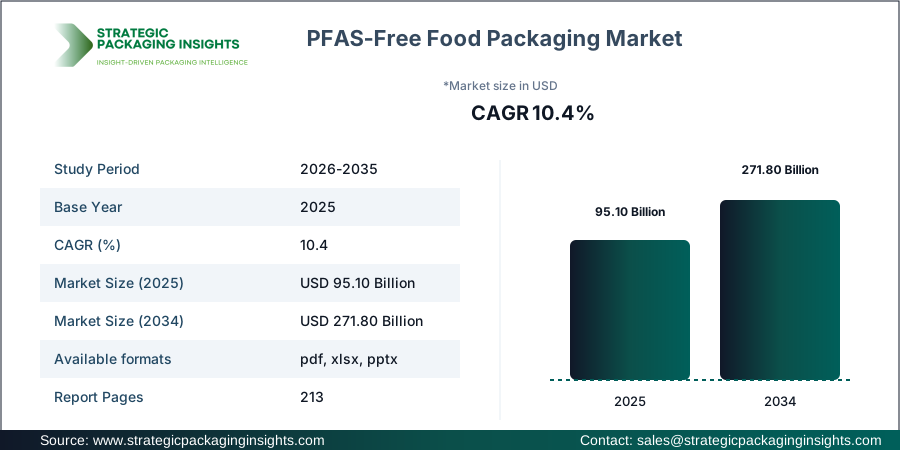
The most impactful market driver is the increasing regulatory pressure to eliminate PFAS from food packaging due to environmental and health concerns. Governments and regulatory bodies, such as the European Commission and the U.S. EPA, are implementing stringent regulations to phase out PFAS, prompting manufacturers to seek alternative materials and technologies.
Report Scope
| Attributes | Details |
| Report Title | PFAS-Free Food Packaging Market Projected to Scale to 271.80 Billion by 2035, Assesses Strategic Packaging Insights |
| By material | Paper and Paperboard, Bioplastics, Bio-Derived Polymers, Aluminum, Plastic, Glass, Coated Paper |
| By product type | Films and Wraps, Plates and Bowls, Trays, Bags and Pouches, Cups and Lids, Containers, Foodservice Packaging |
| By coating | Water-Based Coatings, Silicone Coatings, Wax-Based Coatings, Bio-Based Coatings, Polymer Barrier Coatings, Uncoated |
| By end use | Packaged Food Manufacturers, Retail and Convenience Stores, Restaurants, Fast Food Outlets, Foodservice Operators, Catering, E-Commerce Food Delivery |
| By application | Bakery Products, Fast Food, Meat and Seafood, Dairy Products, Snacks, Frozen Food, Beverages, Fresh Produce |
| By region | North America, Europe, Asia Pacific, Latin America, Middle East and Africa |
| Base Year | 2025 |
| Historic Period | 2018-2024 |
| Forecast Period | 2026-2035 |
| Number of Pages | 213 |
| Customization Available | Yes* |
Market Trends Analysis
There is a significant shift towards sustainable and eco-friendly packaging solutions, driven by consumer demand and regulatory mandates. Companies are investing in research and development to create innovative PFAS-free materials, such as bioplastics and bio-derived polymers, which offer similar barrier properties without the environmental impact. This trend is influencing procurement strategies and product development, as businesses aim to align with sustainability goals and reduce their carbon footprint.
Another trend is the adoption of advanced coating technologies, such as water-based and bio-based coatings, which provide effective barriers without PFAS. These coatings are gaining traction in the market due to their compatibility with various substrates and their ability to meet food safety standards. The shift towards these coatings is expected to enhance the competitive positioning of companies that can offer high-performance, PFAS-free packaging solutions.
Industry Transformation Analysis
The PFAS-Free Food Packaging industry is undergoing a transformation as manufacturers adapt to new regulatory requirements and consumer preferences. The value chain is evolving, with increased focus on sustainable raw materials and innovative coating technologies. Companies are expanding their capacity to produce PFAS-free materials, investing in new production lines and technologies to meet growing demand.
Localization of production is becoming more prevalent as companies seek to reduce supply chain risks and improve operational efficiency. This shift is driven by the need to comply with regional regulations and to cater to local consumer preferences. The integration of sustainability into business models is also influencing procurement and distribution strategies, as companies aim to minimize their environmental impact and enhance their brand reputation.
Trends & Disruptions Impacting Customers' Customers
Downstream customers, such as packaged food manufacturers and foodservice operators, are increasingly prioritizing sustainability and regulatory compliance in their purchasing decisions. The demand for PFAS-free packaging is driven by consumer awareness of environmental issues and the desire for safer food packaging options. This shift is influencing the product requirements of downstream customers, who are seeking packaging solutions that align with their sustainability goals and regulatory obligations.
As a result, there is a growing demand for innovative packaging solutions that offer both functionality and environmental benefits. This trend is creating opportunities for suppliers to differentiate themselves by offering high-performance, PFAS-free packaging options. Companies that can provide cost-effective, sustainable solutions are likely to gain a competitive advantage and capture a larger share of the market.
PFAS-Free Food Packaging Market Ecosystem
The PFAS-Free Food Packaging market ecosystem involves a complex interplay of raw material suppliers, substrate producers, converters, and distributors. The value creation process begins with the procurement of sustainable raw materials, which are then processed into substrates. These substrates undergo coating application to enhance their barrier properties before being converted into various packaging formats.
Distribution plays a crucial role in ensuring that the final products reach end users efficiently. The ecosystem is characterized by strong interdependencies, with each stage relying on the previous one for quality inputs. Changes in the ecosystem, such as shifts in raw material availability or regulatory requirements, can significantly impact the market dynamics and create opportunities for innovation and differentiation.
Analyst Perspective
Analyst Perspective: The PFAS-Free Food Packaging market is poised for significant growth as regulatory pressures and consumer demand drive the transition to sustainable packaging solutions.
The most important structural change is the shift towards bioplastics and bio-derived polymers, which offer a viable alternative to traditional materials. This change is likely to impact the competitive landscape, as companies that can innovate and scale production will gain a competitive edge.
Companies, investors, and suppliers should closely monitor regulatory developments and invest in research and development to stay ahead of the curve. The ability to offer cost-effective, high-performance PFAS-free solutions will be a key differentiator in the market.
Opportunities & Threats
The PFAS-Free Food Packaging market presents significant opportunities for growth, driven by increasing consumer awareness and regulatory mandates. Companies that can develop innovative, sustainable packaging solutions are well-positioned to capture market share. The demand for bioplastics and bio-derived polymers is expected to rise, creating opportunities for material suppliers and converters to expand their offerings.
Technological advancements in coating applications, such as water-based and bio-based coatings, offer opportunities for companies to enhance the performance of their packaging solutions. These coatings provide effective barriers without PFAS, aligning with regulatory requirements and consumer preferences. The ability to offer high-performance, PFAS-free packaging will be a key competitive advantage.
However, the market also faces threats from raw material volatility and supply chain constraints. The availability of sustainable raw materials, such as bioplastics, can be limited, leading to potential supply disruptions and price fluctuations. Companies must develop robust procurement strategies to mitigate these risks and ensure a stable supply of materials.
Regulatory uncertainty and the high cost of transitioning to PFAS-free solutions pose additional challenges. Companies must navigate complex regulatory landscapes and invest in research and development to meet evolving standards. The cost of developing and scaling new technologies can be significant, requiring strategic investments and partnerships to succeed in the market.
Drivers & Challenges
One of the primary drivers of the PFAS-Free Food Packaging market is the increasing regulatory pressure to eliminate PFAS from food packaging. Governments and regulatory bodies are implementing stringent regulations to phase out PFAS, prompting manufacturers to seek alternative materials and technologies. This regulatory push is creating a significant demand for PFAS-free packaging solutions, driving market growth.
Consumer demand for sustainable and eco-friendly packaging is another key driver. As awareness of environmental issues grows, consumers are increasingly seeking packaging solutions that align with their values. This shift in consumer preferences is influencing purchasing decisions and driving companies to innovate and develop sustainable packaging options.
However, the market faces challenges related to the high cost of transitioning to PFAS-free solutions. Developing and scaling new technologies can be expensive, requiring significant investments in research and development. Additionally, the availability of sustainable raw materials, such as bioplastics, can be limited, leading to potential supply disruptions and price fluctuations. Companies must navigate these challenges to succeed in the market.
Packaging Market Economics
The economics of PFAS-Free Food Packaging are influenced by several factors, including raw material costs, conversion costs, and regulatory compliance. The cost of sustainable raw materials, such as bioplastics and bio-derived polymers, can be higher than traditional materials, impacting the overall cost structure. However, advancements in production technologies and economies of scale are expected to reduce costs over time.
Conversion costs, including coating application and substrate production, also play a significant role in the economics of PFAS-free packaging. Companies must invest in advanced technologies to enhance the performance of their packaging solutions while maintaining cost-effectiveness. Regulatory compliance adds another layer of complexity, as companies must ensure their products meet evolving standards and requirements.
Packaging Value Chain & Cost Analysis
The PFAS-Free Food Packaging value chain involves several tiers, each contributing to the overall cost structure. Tier-3 includes resin synthesis and additive production, where sustainable raw materials are procured and processed. Tier-2 involves film extrusion and substrate production, where materials are converted into usable forms for packaging.
Tier-1 encompasses converting, printing, and lamination, where substrates are transformed into finished packaging products. Downstream activities include co-packing, distribution, and recycling, where products are delivered to end users and managed at the end of their lifecycle. Each tier has its own cost drivers, including raw material costs, energy consumption, and labor expenses.
Unit Economics & Substrate Cost Analysis
The unit economics of PFAS-Free Food Packaging are influenced by several factors, including raw material costs, energy consumption, and labor expenses. The cost of sustainable raw materials, such as bioplastics and bio-derived polymers, can be higher than traditional materials, impacting the overall cost structure. However, advancements in production technologies and economies of scale are expected to reduce costs over time.
Energy consumption and labor expenses also play a significant role in the unit economics of PFAS-free packaging. Companies must invest in advanced technologies to enhance the performance of their packaging solutions while maintaining cost-effectiveness. Regulatory compliance adds another layer of complexity, as companies must ensure their products meet evolving standards and requirements.
Packaging Regulatory & Sustainability Analysis
The PFAS-Free Food Packaging market is heavily influenced by regulatory and sustainability factors. Governments and regulatory bodies, such as the European Commission and the U.S. EPA, are implementing stringent regulations to phase out PFAS from food packaging. These regulations are driving the demand for alternative materials and technologies that meet food safety standards and environmental requirements.
Sustainability is a key focus for the market, with companies investing in research and development to create innovative, eco-friendly packaging solutions. The adoption of bioplastics and bio-derived polymers is gaining traction, as these materials offer similar barrier properties without the environmental impact. Companies that can offer high-performance, PFAS-free packaging solutions are likely to gain a competitive advantage in the market.
Strategic Mergers, Acquisitions & Capacity Expansions
Recent strategic developments in the PFAS-Free Food Packaging market include mergers, acquisitions, and capacity expansions aimed at enhancing production capabilities and expanding market reach. Companies are investing in new production lines and technologies to meet growing demand for PFAS-free packaging solutions.
For example, Huhtamaki has expanded its production capacity for sustainable packaging solutions, while Stora Enso has invested in new technologies to enhance its product offerings. These strategic moves are aimed at strengthening competitive positioning and capturing a larger share of the market.
Strategic Action Directives
Brand Packaging Engineers & Sustainability Directors: Focus on material selection and mono-material qualification to enhance recyclability and barrier performance. Integrate PCR into packaging solutions to meet sustainability goals.
Converter Operations & Extrusion Leads: Optimize line speed and tooling to reduce scrap and improve capacity utilization. Address PCR variability to ensure consistent product quality.
Procurement & Material Sourcing Managers: Diversify supplier base and secure resin contracts to mitigate price volatility. Index prices to market fluctuations and manage EPR exposure.
Investors: Monitor capacity expansions and technology investments to identify growth opportunities. Evaluate market concentration and margin structure to inform investment decisions.
Market Share Analysis
The PFAS-Free Food Packaging market is characterized by a competitive landscape with several key players vying for market share. Companies such as Huhtamaki, Stora Enso, and Pactiv Evergreen are leading the charge in developing innovative, sustainable packaging solutions. These companies have a strong presence in the market, leveraging their expertise and resources to capture a significant share of the growing demand for PFAS-free packaging.
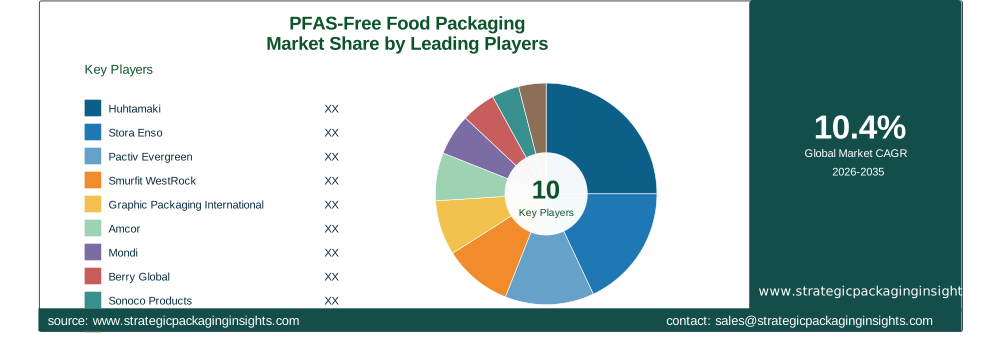
Huhtamaki is known for its extensive product portfolio and commitment to sustainability, offering a range of PFAS-free packaging solutions across various applications. Stora Enso has invested heavily in research and development to enhance its product offerings and expand its market reach. Pactiv Evergreen is focused on expanding its production capacity and strengthening its competitive positioning in the market.
Other notable players in the market include Smurfit WestRock, Graphic Packaging International, and Amcor, each with their own unique strengths and strategies. These companies are investing in new technologies and capacity expansions to meet the growing demand for PFAS-free packaging solutions. The competitive landscape is expected to evolve as companies continue to innovate and adapt to changing market dynamics.
The market is also witnessing increased collaboration and partnerships among key players, aimed at enhancing product offerings and expanding market reach. Companies are leveraging strategic alliances to share resources and expertise, driving innovation and growth in the PFAS-Free Food Packaging market.
Key Highlights
- Largest Region: North America
- Fastest-Growing Region: Asia Pacific
- Largest Segment: Paper and Paperboard
- Fastest-Growing Segment: Bioplastics
- Base-year market size: USD 95.10 Billion
- Forecast-year market size: USD 271.80 Billion
- CAGR: 10.4%
- Important application: Bakery Products
- Major end-use industry: Packaged Food Manufacturers
- Major market driver: Regulatory pressure to eliminate PFAS
Regional Insights
The PFAS-Free Food Packaging market is witnessing significant growth across major regions, driven by regulatory pressures and consumer demand for sustainable packaging solutions. North America is the largest region, with a strong focus on regulatory compliance and sustainability initiatives. The region is home to several key players, driving innovation and growth in the market.
North America
North America is the largest market for PFAS-Free Food Packaging, driven by stringent regulatory requirements and consumer demand for sustainable packaging solutions. The region is home to several key players, including Huhtamaki and Pactiv Evergreen, who are investing in new technologies and capacity expansions to meet growing demand.
The U.S. is a major contributor to the market, with a strong focus on regulatory compliance and sustainability initiatives. The demand for PFAS-free packaging is driven by consumer awareness of environmental issues and the desire for safer food packaging options.
Europe
Europe is a significant market for PFAS-Free Food Packaging, driven by stringent regulations and sustainability initiatives. The European Commission has implemented regulations to phase out PFAS from food packaging, prompting manufacturers to seek alternative materials and technologies.
Countries such as Germany, France, and the UK are leading the charge in adopting sustainable packaging solutions, with a strong focus on innovation and research and development. The demand for PFAS-free packaging is expected to grow as companies continue to invest in new technologies and expand their product offerings.
Asia Pacific
Asia Pacific is the fastest-growing region for PFAS-Free Food Packaging, driven by increasing consumer awareness and regulatory pressures. The region is witnessing significant investments in new technologies and capacity expansions, as companies seek to capture a larger share of the growing demand for sustainable packaging solutions.
Countries such as China, India, and Japan are major contributors to the market, with a strong focus on regulatory compliance and sustainability initiatives. The demand for PFAS-free packaging is expected to grow as companies continue to invest in new technologies and expand their product offerings.
Latin America
Latin America is an emerging market for PFAS-Free Food Packaging, driven by increasing consumer awareness and regulatory pressures. The region is witnessing significant investments in new technologies and capacity expansions, as companies seek to capture a larger share of the growing demand for sustainable packaging solutions.
Countries such as Brazil and Mexico are major contributors to the market, with a strong focus on regulatory compliance and sustainability initiatives. The demand for PFAS-free packaging is expected to grow as companies continue to invest in new technologies and expand their product offerings.
Middle East & Africa
The Middle East & Africa region is witnessing growing demand for PFAS-Free Food Packaging, driven by increasing consumer awareness and regulatory pressures. The region is witnessing significant investments in new technologies and capacity expansions, as companies seek to capture a larger share of the growing demand for sustainable packaging solutions.
Countries such as South Africa and the UAE are major contributors to the market, with a strong focus on regulatory compliance and sustainability initiatives. The demand for PFAS-free packaging is expected to grow as companies continue to invest in new technologies and expand their product offerings.
PFAS-Free Food Packaging Market Segments Insights

By Material Analysis
The PFAS-Free Food Packaging market is segmented by material, with paper and paperboard being the largest segment. These materials are favored for their sustainability and recyclability, aligning with consumer preferences and regulatory requirements. Bioplastics and bio-derived polymers are the fastest-growing segments, driven by advancements in material science and increasing demand for eco-friendly packaging solutions.
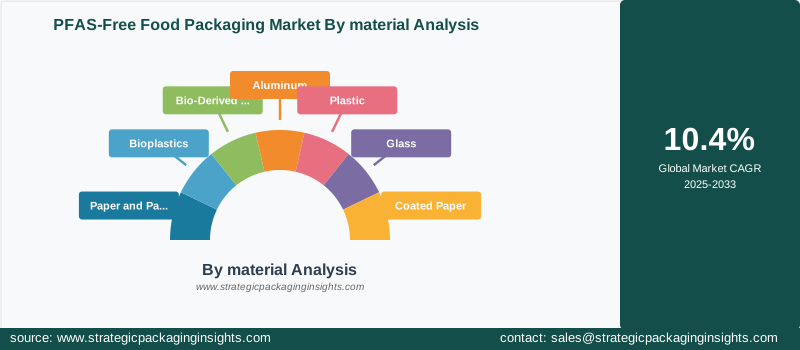
Aluminum and glass are also significant segments, offering excellent barrier properties and recyclability. The demand for these materials is driven by their ability to meet food safety standards and environmental requirements. Coated paper is gaining traction as a sustainable alternative to traditional materials, offering similar barrier properties without the environmental impact.
By Product Type Analysis
The PFAS-Free Food Packaging market is segmented by product type, with films and wraps being the largest segment. These products are widely used in various applications, offering excellent barrier properties and versatility. Plates and bowls, trays, and bags and pouches are also significant segments, driven by the demand for convenient and sustainable packaging solutions.
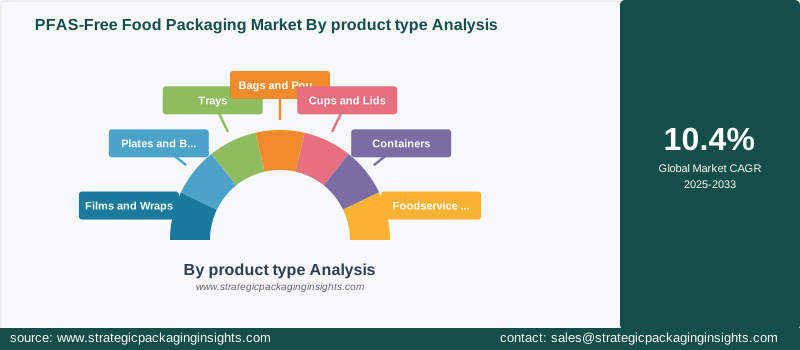
Cups and lids, containers, and foodservice packaging are gaining traction as companies seek to offer innovative, eco-friendly solutions. The demand for these products is driven by consumer preferences for sustainable packaging and regulatory requirements to eliminate PFAS from food packaging.
By Coating Analysis
The PFAS-Free Food Packaging market is segmented by coating, with water-based coatings being the largest segment. These coatings offer effective barriers without PFAS, aligning with regulatory requirements and consumer preferences. Silicone coatings and wax-based coatings are also significant segments, offering excellent barrier properties and versatility.
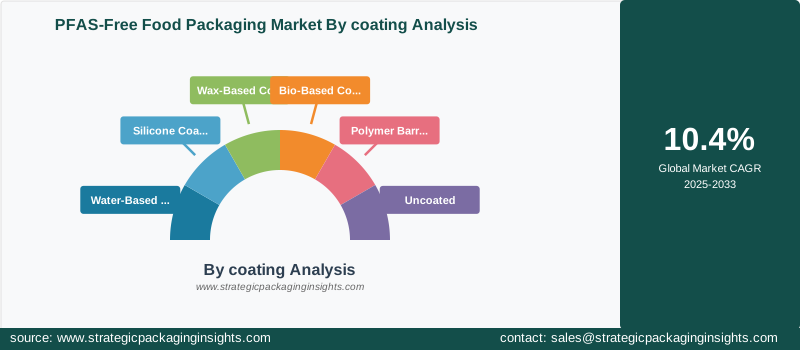
Bio-based coatings and polymer barrier coatings are gaining traction as companies seek to offer innovative, eco-friendly solutions. The demand for these coatings is driven by advancements in material science and increasing demand for sustainable packaging solutions. Uncoated products are also significant, offering a cost-effective alternative to coated products.
By End Use Analysis
The PFAS-Free Food Packaging market is segmented by end use, with packaged food manufacturers being the largest segment. These companies are driving demand for PFAS-free packaging solutions, seeking to align with regulatory requirements and consumer preferences. Retail and convenience stores, restaurants, and fast food outlets are also significant segments, driven by the demand for sustainable packaging solutions.
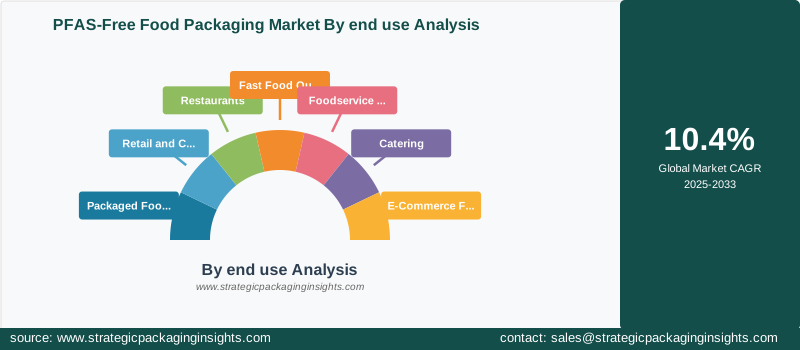
Foodservice operators, catering, and e-commerce food delivery are gaining traction as companies seek to offer innovative, eco-friendly solutions. The demand for these products is driven by consumer preferences for sustainable packaging and regulatory requirements to eliminate PFAS from food packaging.
By Application Analysis
The PFAS-Free Food Packaging market is segmented by application, with bakery products being the largest segment. These products are widely used in various applications, offering excellent barrier properties and versatility. Fast food, meat and seafood, and dairy products are also significant segments, driven by the demand for convenient and sustainable packaging solutions.
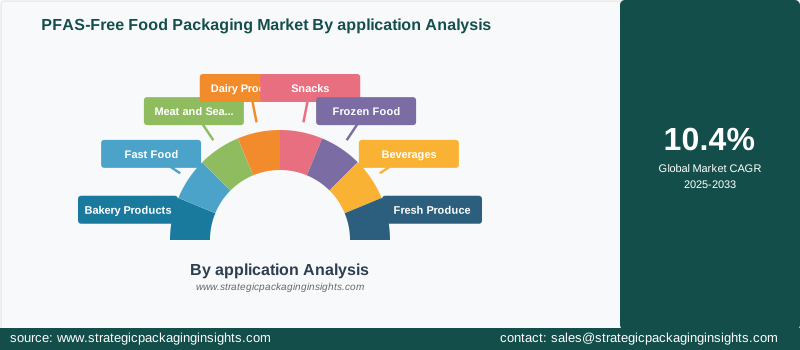
Snacks, frozen food, beverages, and fresh produce are gaining traction as companies seek to offer innovative, eco-friendly solutions. The demand for these products is driven by consumer preferences for sustainable packaging and regulatory requirements to eliminate PFAS from food packaging.
Top 10 Companies in the PFAS-Free Food Packaging Market
Huhtamaki (Finland)
Huhtamaki is a leading provider of sustainable packaging solutions, offering a range of PFAS-free products across various applications. The company is known for its commitment to sustainability and innovation, with a strong presence in North America and Europe. Recent developments include capacity expansions and investments in new technologies to enhance product offerings.
Stora Enso (Finland)
Stora Enso is a global leader in renewable packaging solutions, focusing on sustainable materials and innovative technologies. The company offers a wide range of PFAS-free packaging products, with a strong presence in Europe and Asia Pacific. Recent developments include investments in research and development to enhance product offerings and expand market reach.
Pactiv Evergreen (USA)
Pactiv Evergreen is a leading provider of foodservice and food packaging solutions, offering a range of PFAS-free products. The company is focused on expanding its production capacity and strengthening its competitive positioning in the market. Recent developments include investments in new technologies and capacity expansions to meet growing demand.
Smurfit WestRock (Ireland)
Smurfit WestRock is a leading provider of sustainable packaging solutions, offering a range of PFAS-free products across various applications. The company is known for its commitment to sustainability and innovation, with a strong presence in North America and Europe. Recent developments include capacity expansions and investments in new technologies to enhance product offerings.
Graphic Packaging International (USA)
Graphic Packaging International is a leading provider of sustainable packaging solutions, offering a range of PFAS-free products across various applications. The company is known for its commitment to sustainability and innovation, with a strong presence in North America and Europe. Recent developments include capacity expansions and investments in new technologies to enhance product offerings.
Amcor (Switzerland)
Amcor is a global leader in packaging solutions, offering a range of PFAS-free products across various applications. The company is known for its commitment to sustainability and innovation, with a strong presence in North America and Europe. Recent developments include capacity expansions and investments in new technologies to enhance product offerings.
Mondi (Austria)
Mondi is a global leader in packaging and paper solutions, offering a range of PFAS-free products across various applications. The company is known for its commitment to sustainability and innovation, with a strong presence in Europe and Asia Pacific. Recent developments include capacity expansions and investments in new technologies to enhance product offerings.
Berry Global (USA)
Berry Global is a leading provider of packaging and protection solutions, offering a range of PFAS-free products across various applications. The company is known for its commitment to sustainability and innovation, with a strong presence in North America and Europe. Recent developments include capacity expansions and investments in new technologies to enhance product offerings.
Sonoco Products (USA)
Sonoco Products is a global provider of packaging solutions, offering a range of PFAS-free products across various applications. The company is known for its commitment to sustainability and innovation, with a strong presence in North America and Europe. Recent developments include capacity expansions and investments in new technologies to enhance product offerings.
WestRock (USA)
WestRock is a leading provider of sustainable packaging solutions, offering a range of PFAS-free products across various applications. The company is known for its commitment to sustainability and innovation, with a strong presence in North America and Europe. Recent developments include capacity expansions and investments in new technologies to enhance product offerings.
PFAS-Free Food Packaging Market Segments
The PFAS-Free Food Packaging market has been segmented on the basis ofBy material
- Paper and Paperboard
- Bioplastics
- Bio-Derived Polymers
- Aluminum
- Plastic
- Glass
- Coated Paper
By product type
- Films and Wraps
- Plates and Bowls
- Trays
- Bags and Pouches
- Cups and Lids
- Containers
- Foodservice Packaging
By coating
- Water-Based Coatings
- Silicone Coatings
- Wax-Based Coatings
- Bio-Based Coatings
- Polymer Barrier Coatings
- Uncoated
By end use
- Packaged Food Manufacturers
- Retail and Convenience Stores
- Restaurants
- Fast Food Outlets
- Foodservice Operators
- Catering
- E-Commerce Food Delivery
By application
- Bakery Products
- Fast Food
- Meat and Seafood
- Dairy Products
- Snacks
- Frozen Food
- Beverages
- Fresh Produce
By region
- North America
- Europe
- Asia Pacific
- Latin America
- Middle East and Africa




