
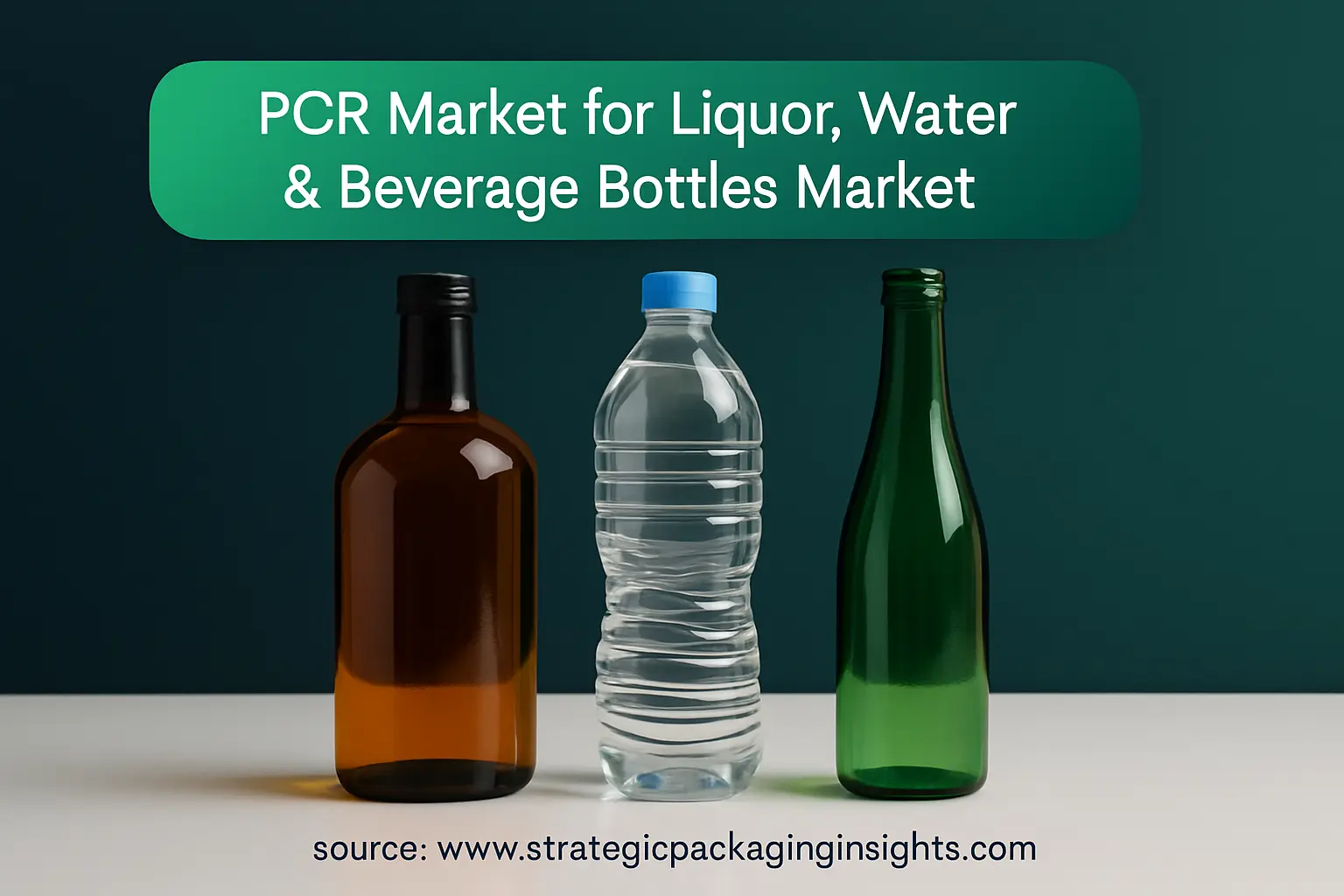
Explore the strategic market overview, historical evolution, and future outlook of the PCR Market for Liquor, Water & Beverage Bottles Market. Gain insights into market size, CAGR, segment landscape, and more.
Strategic Market Overview
The PCR Market for Liquor, Water & Beverage Bottles Market is poised for significant growth, driven by increasing environmental awareness and regulatory pressures to reduce plastic waste. Post-consumer recycled (PCR) materials are becoming a cornerstone in the packaging industry, particularly for bottles used in liquor, water, and beverages. This market is characterized by its dynamic nature, influenced by technological advancements, consumer preferences, and sustainability mandates.
From 2018 to 2034: Evolution of the Market
Between 2018 and 2024, the PCR market for bottles witnessed a gradual shift from traditional plastic materials to recycled alternatives. This transition was fueled by both consumer demand for sustainable products and legislative measures aimed at reducing plastic pollution. As we move from 2025 to 2034, the market is expected to evolve further, with innovations in recycling technologies and increased adoption of PCR materials across various sectors. The forecast period will likely see a more robust integration of PCR materials, driven by advancements in material quality and processing capabilities.
Interpreting Market Size & CAGR
In 2025, the PCR market for liquor, water, and beverage bottles was valued at $8.61 billion. By 2034, it is projected to reach $19.69 billion, reflecting a compound annual growth rate (CAGR) of 9.6%. This substantial growth underscores the increasing acceptance and demand for PCR materials in the packaging industry. The market's expansion is attributed to heightened environmental consciousness, regulatory support, and technological innovations that enhance the quality and usability of recycled materials.
Segment Landscape
| Segment | Details |
|---|---|
| By Resin Type | rPET, rHDPE, rPP |
| By Bottle Type | Water Bottles, Liquor Bottles, Soft Drink Bottles |
| By PCR Content | Up to 25%, 26–50%, Above 50% |
| By End Use | Beverage, Alcohol, Bottled Water |
| Region | Asia Pacific, North America, Latin America, Europe, Middle East & Africa |
The segment landscape of the PCR market is diverse, with various resin types such as rPET, rHDPE, and rPP playing crucial roles. Water bottles dominate the bottle type segment, reflecting the global emphasis on sustainable hydration solutions. The market also sees significant contributions from liquor and soft drink bottles. In terms of PCR content, the trend is shifting towards higher percentages of recycled content, driven by both regulatory requirements and consumer preferences. Regionally, Asia Pacific and North America are leading the charge, with Europe also showing strong growth due to stringent environmental regulations.
Value Chain & Stakeholder Impact
The value chain of the PCR market involves multiple stakeholders, including raw material suppliers, recyclers, manufacturers, and end-users. Each stakeholder plays a pivotal role in ensuring the efficient flow of materials and the production of high-quality PCR bottles. The impact on stakeholders is profound, as the shift towards PCR materials necessitates changes in sourcing strategies, manufacturing processes, and product offerings. Companies that adapt to these changes are likely to gain a competitive edge, while those that resist may face challenges in meeting regulatory and consumer demands.
Opportunities vs Constraints
The PCR market presents numerous opportunities, particularly in the development of advanced recycling technologies and the expansion of PCR applications across different bottle types. However, constraints such as the high cost of recycling infrastructure, variability in material quality, and regulatory compliance pose challenges. Companies that can navigate these constraints while capitalizing on opportunities are well-positioned for success in this evolving market.
SWOT Analysis
| Strengths | Weaknesses | Opportunities | Threats |
|---|---|---|---|
| Strong regulatory support | High initial investment costs | Technological advancements in recycling | Fluctuating raw material prices |
| Growing consumer demand for sustainability | Quality variability of recycled materials | Expansion into emerging markets | Regulatory changes |
The SWOT analysis reveals that the PCR market's strengths lie in regulatory support and consumer demand for sustainable products. However, weaknesses such as high investment costs and material quality variability must be addressed. Opportunities abound in technological advancements and market expansion, while threats include fluctuating raw material prices and potential regulatory changes.
Technology, Regulation & Sustainability Impact
Technological advancements are pivotal in enhancing the quality and efficiency of PCR materials. Innovations in sorting, cleaning, and processing technologies are reducing costs and improving material quality. Regulatory frameworks are also shaping the market, with governments worldwide implementing policies to encourage recycling and reduce plastic waste. Sustainability remains a core focus, with companies increasingly adopting circular economy principles to minimize environmental impact.
Strategic Outlook to 2034
Looking ahead to 2034, the PCR market for liquor, water, and beverage bottles is expected to continue its upward trajectory. Companies that invest in technology, embrace sustainability, and adapt to regulatory changes will likely thrive. The market will see increased collaboration across the value chain, with stakeholders working together to overcome challenges and capitalize on opportunities. As consumer preferences shift towards more sustainable options, the demand for PCR materials will only grow, solidifying their role in the future of packaging.