


Hot Fill Packaging Market Outlook
The Hot Fill Packaging market size was valued at USD 6.0 billion in 2025 and is anticipated to reach USD 9.0 billion by 2034, growing at a CAGR of 4.60% during the forecast period according to Strategic Packaging Insights. This growth is driven by increasing demand for convenient and safe packaging solutions in the food and beverage industry. Companies like Amcor and Graham Packaging are leading the charge by innovating in heat-resistant materials and sustainable packaging solutions. The market is witnessing a surge in demand for hot fill packaging due to its ability to extend shelf life without preservatives, which is a significant advantage for health-conscious consumers.
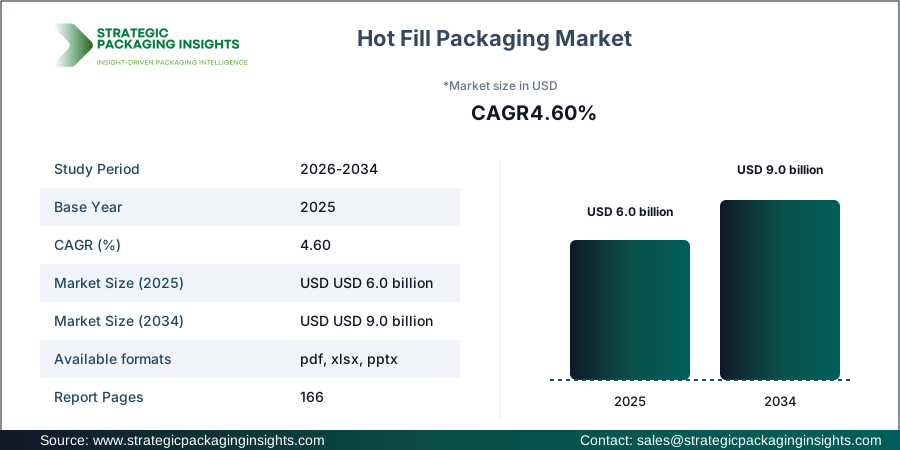
One of the most impactful drivers of the Hot Fill Packaging market is the growing consumer preference for natural and minimally processed foods. According to a report by the Food and Agriculture Organization, there is a significant shift towards healthier food options, which is boosting the demand for packaging solutions that can preserve the natural quality of products. Companies like Berry Global and Alpla are investing in advanced technologies to enhance the efficiency and sustainability of hot fill packaging processes. This trend is further supported by stringent government regulations aimed at reducing food waste and promoting sustainable packaging practices, making hot fill packaging an attractive option for manufacturers.
Report Scope
| Attributes | Details |
| Report Title | Hot Fill Packaging Market Size, Future Growth and Forecast 2034 |
| By Material | Heat-Set PET, Polypropylene (PP), Glass, Metal Cans, Multilayer / Barrier Plastics |
| By Product Type | Bottles, Jars, Cups & Trays, Pouches (Hot-Fill Capable) |
| By Fill Temperature | Up to 85 C, 85-95 C, Above 95 C |
| By Application | Juices & Nectars, Sports & Isotonic Drinks, Teas, Sauces & Ketchups, Jams & Spreads, Soups |
| By Region | North America (U.S., Canada, Mexico), Europe (Germany, UK, France, Italy, Spain, Rest of Europe), Asia Pacific (China, India, Japan, South Korea, Australia, Rest of Asia Pacific), Latin America (Brazil, Argentina, Rest of Latin America), Middle East & Africa (GCC Countries, South Africa, Rest of MEA) |
| Base Year | 2025 |
| Historic Period | 2018-2024 |
| Forecast Period | 2026-2034 |
| Number of Pages | 166 |
| Customization Available | Yes* |
Sustainability & Circular Economy Analysis
Sustainability initiatives and circular economy practices are significantly influencing the hot fill packaging market. The industry is increasingly focusing on recyclable materials and reusable packaging to meet consumer demand for eco-friendly solutions. Companies like Amcor are leading the way by developing lightweight packaging that reduces material usage and carbon footprint. This shift towards sustainability is not only driven by consumer preferences but also by stringent packaging regulations that mandate the use of eco-friendly materials and waste reduction strategies.
The adoption of eco-friendly material innovation is reshaping packaging design and manufacturing processes. Packaging manufacturers are investing in research and development to create materials that are both durable and environmentally friendly. This trend is influencing investment decisions as companies prioritize sustainable practices to enhance their market competitiveness. Extended Producer Responsibility (EPR) regulations are also pushing manufacturers to take responsibility for the entire lifecycle of their products, encouraging the use of recyclable and biodegradable materials.
Consumer sustainability preferences are driving changes in supply chain strategies, with companies focusing on reducing their carbon footprint and enhancing supply chain resilience. ESG initiatives are becoming a key factor in regulatory compliance, as governments worldwide implement policies to promote sustainable packaging practices. This focus on sustainability is expected to have a long-term impact on the market, as companies that prioritize eco-friendly solutions are likely to gain a competitive edge in the industry.
Packaging Value Chain & Supply Chain Analysis
The packaging value chain in the hot fill packaging market is complex, involving multiple stakeholders from raw material sourcing to recycling networks. Raw material availability plays a crucial role in determining the efficiency of the supply chain. Companies like Plastipak and Silgan are focusing on securing reliable sources of materials to ensure uninterrupted production. Packaging converters and manufacturers are key players in this ecosystem, transforming raw materials into finished products that meet the specific needs of brand owners and retailers.
Logistics and distribution channels are critical components of the supply chain, influencing the overall market performance. Efficient transportation and inventory management strategies are essential for maintaining supply chain resilience and meeting consumer demand. Companies are increasingly adopting localization strategies to reduce transportation costs and enhance supply chain efficiency. Strategic partnerships with logistics providers are also becoming common, as companies seek to optimize their distribution networks and improve market reach.
Recycling networks are an integral part of the packaging value chain, as sustainability becomes a top priority for manufacturers and consumers alike. Companies are investing in recycling technologies and collaborating with recycling partners to enhance their sustainability credentials. This focus on recycling is not only driven by regulatory compliance but also by the growing consumer demand for sustainable packaging solutions. As a result, companies that invest in recycling and sustainable practices are likely to gain a competitive advantage in the market.
Opportunities & Threats
The hot fill packaging market presents numerous opportunities for growth, driven by the increasing demand for convenient and safe packaging solutions. The rise in health-conscious consumers seeking natural and minimally processed foods is creating a significant opportunity for manufacturers to innovate in packaging solutions that preserve product quality. Companies like Krones and Sidel are investing in advanced technologies to enhance the efficiency and sustainability of hot fill packaging processes, providing a competitive edge in the market.
Another opportunity lies in the expansion of the market in emerging economies, where the demand for packaged food and beverages is on the rise. The growing middle-class population and increasing urbanization in regions like Asia Pacific and Latin America are driving the demand for hot fill packaging solutions. Companies that can effectively tap into these markets by offering cost-effective and sustainable packaging solutions are likely to experience significant growth in the coming years.
However, the market also faces certain threats, such as the volatility in raw material prices and the stringent regulatory environment. Fluctuations in the prices of raw materials like plastics and metals can impact the profitability of manufacturers. Additionally, compliance with stringent packaging regulations requires significant investment in research and development, which can be a barrier for smaller companies. To mitigate these threats, companies need to adopt flexible procurement strategies and invest in sustainable practices to enhance their market resilience.
Drivers & Challenges
One of the primary drivers of the hot fill packaging market is the increasing demand for convenient and safe packaging solutions in the food and beverage industry. The ability of hot fill packaging to extend the shelf life of products without the need for preservatives is a significant advantage for health-conscious consumers. Companies like Amcor and Graham Packaging are leading the charge by innovating in heat-resistant materials and sustainable packaging solutions, driving market growth.
Another key driver is the growing consumer preference for natural and minimally processed foods. This trend is boosting the demand for packaging solutions that can preserve the natural quality of products. Companies like Berry Global and Alpla are investing in advanced technologies to enhance the efficiency and sustainability of hot fill packaging processes. This trend is further supported by stringent government regulations aimed at reducing food waste and promoting sustainable packaging practices, making hot fill packaging an attractive option for manufacturers.
Despite these drivers, the market faces several challenges, including the volatility in raw material prices and the stringent regulatory environment. Fluctuations in the prices of raw materials like plastics and metals can impact the profitability of manufacturers. Additionally, compliance with stringent packaging regulations requires significant investment in research and development, which can be a barrier for smaller companies. To overcome these challenges, companies need to adopt flexible procurement strategies and invest in sustainable practices to enhance their market resilience.
Market Share Analysis
The competitive landscape of the hot fill packaging market is characterized by the presence of several key players, including Amcor, Graham Packaging, Berry Global, Alpla, and Plastipak. These companies are focusing on innovation and sustainability to maintain their market position. Amcor, for instance, is investing in advanced technologies to enhance the efficiency and sustainability of its packaging solutions. Similarly, Graham Packaging is focusing on developing heat-resistant materials to meet the growing demand for hot fill packaging.
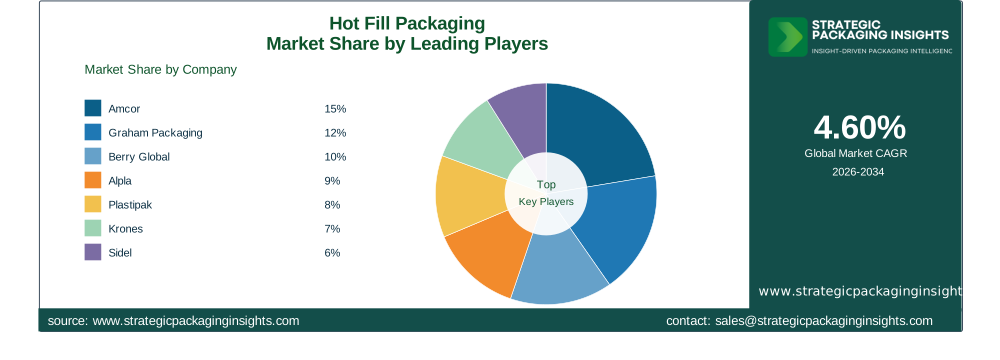
Berry Global is another major player in the market, known for its innovative packaging solutions and commitment to sustainability. The company is investing in research and development to create materials that are both durable and environmentally friendly. Alpla, on the other hand, is focusing on expanding its market presence in emerging economies by offering cost-effective and sustainable packaging solutions. Plastipak is also investing in recycling technologies to enhance its sustainability credentials and meet the growing demand for eco-friendly packaging solutions.
Other notable players in the market include Krones and Sidel, which are known for their advanced packaging equipment. These companies are focusing on developing technologies that enhance the efficiency and sustainability of hot fill packaging processes. O-I Glass and Silgan are also key players in the market, known for their innovative glass and metal packaging solutions. CKS Packaging is another important player, focusing on developing cost-effective and sustainable packaging solutions to meet the growing demand for hot fill packaging.
The market is highly competitive, with companies focusing on innovation and sustainability to gain a competitive edge. The growing demand for eco-friendly packaging solutions is driving companies to invest in research and development to create materials that are both durable and environmentally friendly. As a result, companies that prioritize sustainability and innovation are likely to gain a competitive advantage in the market.
Key Highlights
- Market Size: USD 6.0 billion in 2025, projected to reach USD 9.0 billion by 2034.
- Growth Rate: CAGR of 4.60% during the forecast period.
- Leading Companies: Amcor, Graham Packaging, Berry Global, Alpla, Plastipak.
- Emerging Markets: Asia Pacific and Latin America showing significant growth potential.
- Material Innovation: Focus on recyclable and eco-friendly materials.
- Consumer Trends: Increasing demand for natural and minimally processed foods.
- Regulatory Environment: Stringent packaging regulations promoting sustainability.
Hot Fill Packaging Market Segments Insights

By Material Analysis
The hot fill packaging market is segmented by material into Heat-Set PET, Polypropylene (PP), Glass, Metal Cans, and Multilayer/Barrier Plastics. Heat-Set PET is gaining popularity due to its lightweight and durable properties, making it ideal for beverage packaging. Companies like Amcor and Berry Global are investing in advanced technologies to enhance the performance of PET materials. Polypropylene (PP) is also widely used due to its heat resistance and cost-effectiveness, with manufacturers focusing on improving its recyclability to meet sustainability goals.
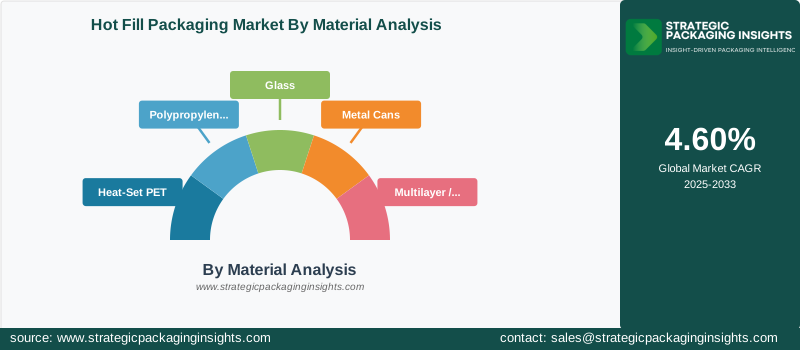
Glass remains a preferred choice for premium products due to its superior barrier properties and recyclability. Companies like O-I Glass are focusing on developing innovative glass packaging solutions to cater to the growing demand for eco-friendly packaging. Metal cans are also popular for their durability and ability to preserve product quality, with companies like Silgan investing in lightweight and recyclable metal packaging solutions. Multilayer/Barrier Plastics are used for products requiring extended shelf life, with manufacturers focusing on reducing material usage and enhancing recyclability.
By Product Type Analysis
The market is segmented by product type into Bottles, Jars, Cups & Trays, and Pouches (Hot-Fill Capable). Bottles are the most widely used product type, driven by the demand for convenient and portable packaging solutions. Companies like Graham Packaging and Alpla are focusing on developing lightweight and sustainable bottle designs to meet consumer preferences. Jars are popular for packaging sauces, jams, and spreads, with manufacturers investing in innovative designs to enhance product appeal.
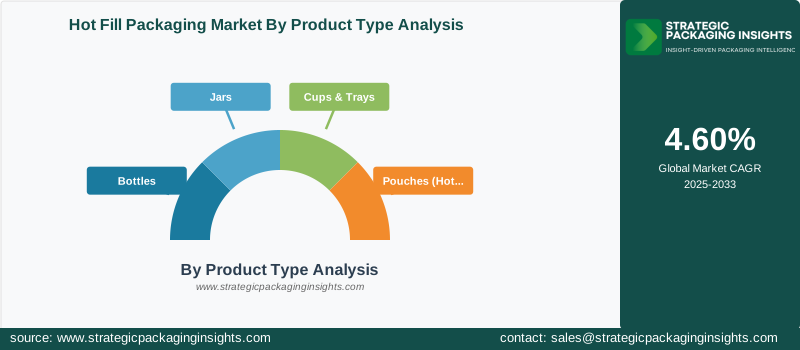
Cups & Trays are used for ready-to-eat meals and soups, with companies focusing on developing heat-resistant and microwave-safe packaging solutions. Pouches (Hot-Fill Capable) are gaining traction due to their lightweight and flexible properties, making them ideal for on-the-go consumption. Companies like Plastipak are investing in advanced technologies to enhance the performance and sustainability of pouch packaging solutions. The growing demand for convenient and sustainable packaging solutions is driving innovation in product design and materials.
By Fill Temperature Analysis
The market is segmented by fill temperature into Up to 85 C, 85-95 C, and Above 95 C. The Up to 85 C segment is driven by the demand for packaging solutions that can preserve the natural quality of products without compromising safety. Companies are focusing on developing materials that can withstand lower fill temperatures while maintaining product integrity. The 85-95 C segment is popular for packaging beverages like juices and teas, with manufacturers investing in heat-resistant materials to enhance product safety.
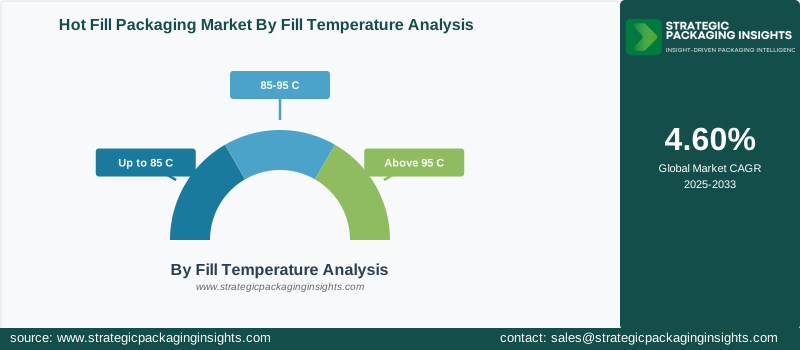
The Above 95 C segment is used for packaging products that require higher fill temperatures, such as soups and sauces. Companies are focusing on developing advanced materials that can withstand high temperatures without compromising product quality. The growing demand for natural and minimally processed foods is driving innovation in fill temperature technologies, with manufacturers focusing on enhancing the performance and sustainability of packaging solutions.
By Application Analysis
The market is segmented by application into Juices & Nectars, Sports & Isotonic Drinks, Teas, Sauces & Ketchups, Jams & Spreads, and Soups. Juices & Nectars are the largest application segment, driven by the demand for natural and healthy beverages. Companies like Amcor and Berry Global are focusing on developing packaging solutions that preserve the natural quality of juices and nectars while extending shelf life. Sports & Isotonic Drinks are also popular, with manufacturers investing in lightweight and portable packaging solutions to meet consumer demand.
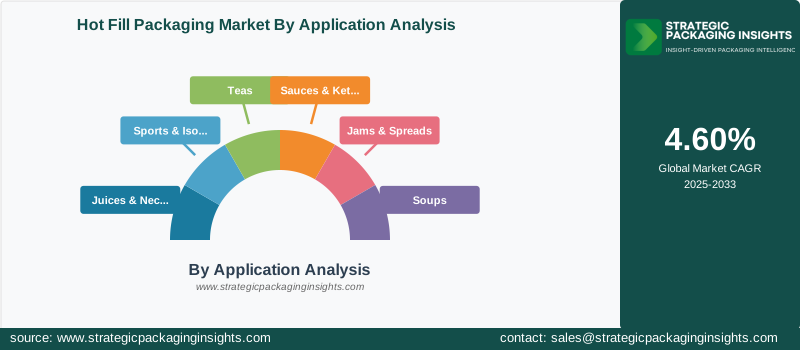
Teas are gaining popularity due to their health benefits, with companies focusing on developing packaging solutions that preserve the natural flavor and aroma of teas. Sauces & Ketchups are popular for their convenience and versatility, with manufacturers investing in innovative packaging designs to enhance product appeal. Jams & Spreads are used for breakfast and snacks, with companies focusing on developing packaging solutions that preserve product freshness and quality. Soups are popular for their convenience and nutritional value, with manufacturers investing in heat-resistant and microwave-safe packaging solutions.
Hot Fill Packaging Market Segments
The Hot Fill Packaging market has been segmented on the basis ofBy Material
- Heat-Set PET
- Polypropylene (PP)
- Glass
- Metal Cans
- Multilayer / Barrier Plastics
By Product Type
- Bottles
- Jars
- Cups & Trays
- Pouches (Hot-Fill Capable)
By Fill Temperature
- Up to 85 C
- 85-95 C
- Above 95 C
By Application
- Juices & Nectars
- Sports & Isotonic Drinks
- Teas
- Sauces & Ketchups
- Jams & Spreads
- Soups
By Region
- North America (U.S., Canada, Mexico)
- Europe (Germany, UK, France, Italy, Spain, Rest of Europe)
- Asia Pacific (China, India, Japan, South Korea, Australia, Rest of Asia Pacific)
- Latin America (Brazil, Argentina, Rest of Latin America)
- Middle East & Africa (GCC Countries, South Africa, Rest of MEA)




