


Brick Carton Packaging Market Outlook
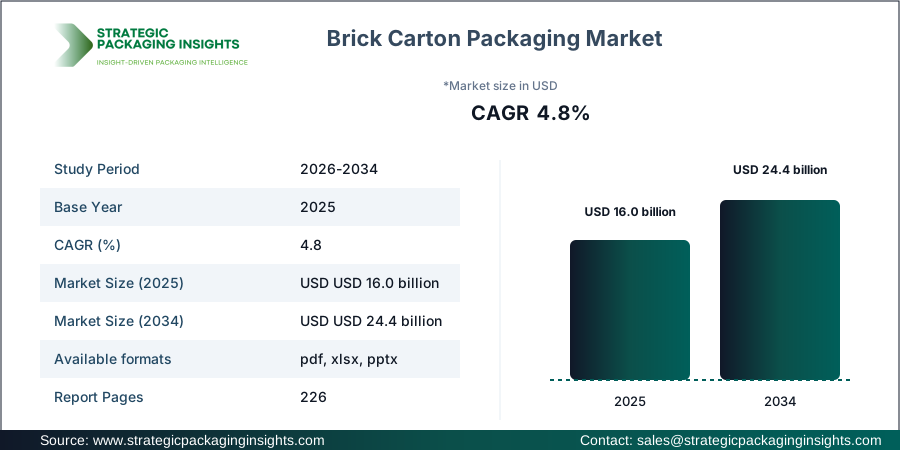
The Brick Carton Packaging market size was valued at USD 16.0 billion in 2025 and is anticipated to reach USD 24.4 billion by 2034, growing at a CAGR of 4.80% during the forecast period according to Strategic Packaging Insights. The market is driven by the increasing demand for sustainable and eco-friendly packaging solutions, with Tetra Pak leading the charge in innovation and market penetration. The versatility of brick carton packaging, which caters to a wide range of liquid food and beverage products, is a significant factor contributing to its growth. The demand for aseptic packaging solutions, which ensure product safety and extend shelf life without preservatives, is particularly strong in emerging markets where cold chain logistics are less developed.
One of the most impactful drivers of the Brick Carton Packaging market is the growing consumer preference for environmentally friendly packaging options. As consumers become more environmentally conscious, brands like Tetra Pak are investing heavily in research and development to create packaging solutions that reduce carbon footprints and utilize renewable resources. Government regulations aimed at reducing plastic waste and promoting recycling are also playing a crucial role in driving the market. For instance, the European Union's directive on single-use plastics is pushing manufacturers to innovate and adopt sustainable packaging solutions, thereby boosting the demand for brick carton packaging.
Report Scope
| Attributes | Details |
| Report Title | Brick Carton Packaging Market Size, Future Growth and Forecast 2034 |
| By Type | Aseptic Brick Cartons, Chilled / Gable-Adjacent Brick Formats |
| By Material Layer | Paperboard, PE Layers, Aluminum Barrier, Bio-Based Coating Variants |
| By Capacity | Below 200 ml, 200-500 ml, 500 ml - 1 L, Above 1 L |
| By Closure | Straw Hole, Screw Cap (Tethered), Open Corner |
| By End Use | Dairy (Milk, Cream), Juices & Nectars, Plant-Based Beverages, Liquid Food (Soups, Sauces), Wine |
| By Region | North America (U.S., Canada, Mexico), Europe (Germany, UK, France, Italy, Spain, Rest of Europe), Asia Pacific (China, India, Japan, South Korea, Australia, Rest of Asia Pacific), Latin America (Brazil, Argentina, Rest of Latin America), Middle East & Africa (GCC Countries, South Africa, Rest of MEA) |
| Base Year | 2025 |
| Historic Period | 2018-2024 |
| Forecast Period | 2026-2034 |
| Number of Pages | 226 |
| Customization Available | Yes* |
Sustainability & Circular Economy Analysis
Sustainability initiatives are significantly shaping the brick carton packaging market, with a strong emphasis on recyclable materials and eco-friendly innovations. Companies like Tetra Pak are leading the way by developing packaging solutions that incorporate renewable materials, such as bio-based coatings, which reduce reliance on fossil fuels. The shift towards lightweight packaging not only minimizes material usage but also reduces transportation emissions, aligning with global carbon footprint reduction goals. These sustainability trends are influencing packaging design and manufacturing processes, encouraging companies to invest in technologies that support circular economy practices.
Extended Producer Responsibility (EPR) regulations are compelling manufacturers to take accountability for the entire lifecycle of their products, including end-of-life disposal. This has led to increased investment in recycling networks and waste reduction strategies, ensuring that packaging materials are reused and recycled efficiently. Consumer preferences are also shifting towards brands that demonstrate a commitment to sustainability, prompting companies to adopt ESG initiatives that enhance their market competitiveness. As a result, packaging manufacturers are prioritizing sustainable supply chain strategies to meet regulatory compliance and consumer expectations.
The integration of sustainability into the brick carton packaging market is not only a response to regulatory pressures but also a strategic move to secure long-term market competitiveness. By adopting eco-friendly materials and practices, companies can differentiate themselves in a crowded market and appeal to environmentally conscious consumers. This trend is driving investment decisions and influencing supply chain strategies, as manufacturers seek to optimize their operations for sustainability. As the market continues to evolve, the focus on sustainability will remain a key driver of innovation and growth, shaping the future of the packaging industry.
Packaging Value Chain & Supply Chain Analysis
The packaging value chain for brick carton packaging is complex, involving multiple stakeholders from raw material suppliers to end consumers. Raw material sourcing is a critical component, with companies like Tetra Pak and SIG relying on sustainable paperboard and bio-based coatings to produce eco-friendly packaging solutions. Packaging converters and manufacturers play a vital role in transforming these materials into finished products, utilizing advanced machinery and technologies to ensure high-quality output. The efficiency of the supply chain is crucial, as it impacts production capabilities and overall market performance.
Logistics and distribution channels are integral to the packaging supply chain, ensuring that products reach retailers and consumers efficiently. Strategic partnerships with logistics providers enable manufacturers to optimize transportation routes and reduce costs, enhancing supply chain resilience. Inventory management is another critical aspect, as companies must balance supply and demand to avoid overproduction and waste. Localization strategies are becoming increasingly important, as manufacturers seek to reduce transportation emissions and improve supply chain efficiency by sourcing materials and producing products closer to end markets.
Recycling networks are an essential component of the packaging value chain, supporting the circular economy by ensuring that used packaging materials are collected, processed, and reused. Companies are investing in recycling infrastructure and collaborating with stakeholders across the value chain to enhance their sustainability efforts. This focus on recycling and waste reduction not only supports regulatory compliance but also strengthens brand reputation and consumer trust. As the market continues to evolve, the integration of sustainable practices into the packaging value chain will be a key driver of competitiveness and growth.
Opportunities & Threats
The brick carton packaging market presents numerous opportunities for growth, driven by the increasing demand for sustainable and eco-friendly packaging solutions. As consumers become more environmentally conscious, there is a growing preference for packaging that minimizes environmental impact. This trend is creating opportunities for manufacturers to innovate and develop new products that meet these demands. The rise of e-commerce and online grocery shopping is also driving demand for convenient and durable packaging solutions, providing further growth opportunities for the market.
Emerging markets present significant opportunities for the brick carton packaging industry, as rising disposable incomes and changing consumer preferences drive demand for packaged food and beverages. The expansion of the middle class in countries like China and India is leading to increased consumption of packaged goods, creating a lucrative market for brick carton packaging. Additionally, advancements in packaging technology, such as the development of smart packaging solutions, offer opportunities for manufacturers to differentiate their products and enhance consumer engagement.
Despite the opportunities, the brick carton packaging market faces several threats that could impact its growth. One of the primary challenges is the increasing competition from alternative packaging materials, such as plastic and glass, which offer different benefits and may appeal to certain consumer segments. Additionally, fluctuations in raw material prices can impact production costs and profitability, posing a threat to market stability. Regulatory changes and environmental policies can also create challenges for manufacturers, as they must adapt to new requirements and invest in sustainable practices to remain competitive.
Drivers & Challenges
The brick carton packaging market is driven by several key factors, including the growing demand for sustainable packaging solutions and the increasing popularity of aseptic packaging. As consumers become more environmentally conscious, there is a strong preference for packaging that reduces environmental impact and supports recycling efforts. This trend is driving manufacturers to invest in eco-friendly materials and technologies, such as bio-based coatings and lightweight packaging, to meet consumer demands and regulatory requirements.
Another significant driver of the market is the rise of e-commerce and online grocery shopping, which is increasing demand for convenient and durable packaging solutions. Brick carton packaging offers several advantages, including product protection, extended shelf life, and ease of transportation, making it an ideal choice for online retailers. Additionally, advancements in packaging technology, such as the development of smart packaging solutions, are enhancing consumer engagement and driving market growth.
Despite the positive drivers, the brick carton packaging market faces several challenges that could impact its growth. One of the primary challenges is the increasing competition from alternative packaging materials, such as plastic and glass, which offer different benefits and may appeal to certain consumer segments. Additionally, fluctuations in raw material prices can impact production costs and profitability, posing a threat to market stability. Regulatory changes and environmental policies can also create challenges for manufacturers, as they must adapt to new requirements and invest in sustainable practices to remain competitive.
Market Share Analysis
The brick carton packaging market is characterized by a competitive landscape, with several key players dominating the industry. Tetra Pak is a leading company in the market, known for its innovative packaging solutions and commitment to sustainability. The company has a strong global presence and offers a wide range of products that cater to various end-use applications. SIG is another major player in the market, offering high-quality packaging solutions that focus on sustainability and consumer convenience.
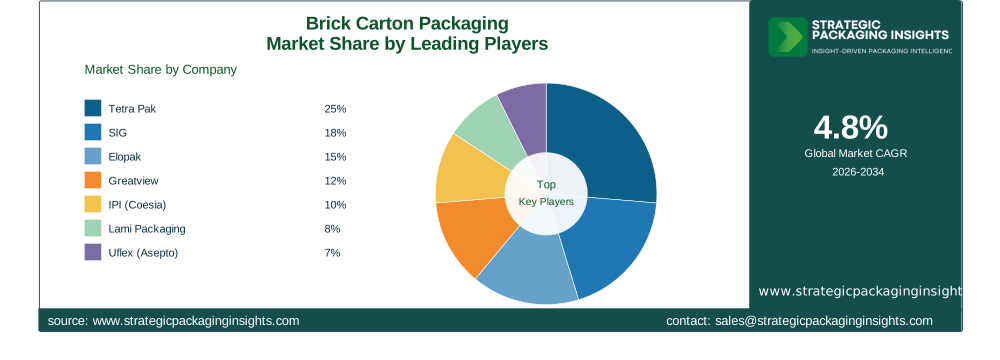
Elopak is a prominent player in the brick carton packaging market, known for its environmentally friendly packaging solutions and focus on innovation. The company has a strong presence in Europe and is expanding its operations in other regions to capitalize on growing demand. Greatview is another key player, offering cost-effective packaging solutions that cater to the needs of emerging markets. The company has a strong focus on sustainability and is committed to reducing its environmental impact through innovative packaging designs.
IPI (Coesia) is a significant player in the market, offering a wide range of packaging solutions that focus on sustainability and consumer convenience. The company has a strong presence in Europe and is expanding its operations in other regions to capitalize on growing demand. Lami Packaging is another key player, known for its high-quality packaging solutions and commitment to sustainability. The company has a strong focus on innovation and is investing in new technologies to enhance its product offerings.
Uflex (Asepto) is a leading player in the brick carton packaging market, known for its innovative packaging solutions and focus on sustainability. The company has a strong global presence and offers a wide range of products that cater to various end-use applications. Adam Pack is another prominent player, offering high-quality packaging solutions that focus on sustainability and consumer convenience. The company has a strong presence in Europe and is expanding its operations in other regions to capitalize on growing demand.
Key Highlights
- Market Size: USD 16.0 billion in 2025, projected to reach USD 24.4 billion by 2034.
- Growth Rate: Forecasted CAGR of 4.80% from 2025 to 2034.
- Leading Companies: Tetra Pak, SIG, Elopak, Greatview, IPI (Coesia), Lami Packaging, Uflex (Asepto), Adam Pack.
- Key Segments: Aseptic Brick Cartons, Chilled / Gable-Adjacent Brick Formats.
- Material Innovations: Bio-Based Coating Variants, PE Layers.
- Regional Growth: Significant demand in Asia Pacific and Europe.
- Consumer Trends: Increasing preference for eco-friendly and sustainable packaging solutions.
Brick Carton Packaging Market Segments Insights

By Type Analysis
The brick carton packaging market is segmented by type into aseptic brick cartons and chilled/gable-adjacent brick formats. Aseptic brick cartons are gaining popularity due to their ability to preserve the freshness and nutritional value of products without the need for refrigeration. This type of packaging is particularly beneficial for dairy products, juices, and plant-based beverages, where maintaining product integrity is crucial. The demand for aseptic packaging is driven by the growing consumer preference for convenient and long-lasting products, as well as the expansion of the food and beverage industry in emerging markets.
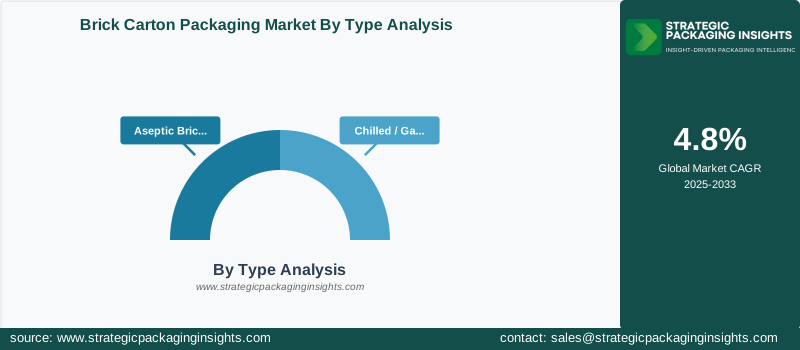
Chilled/gable-adjacent brick formats are also witnessing significant growth, driven by the increasing demand for fresh and natural products. This type of packaging is ideal for products that require refrigeration, such as milk and cream, as it provides excellent protection against spoilage and contamination. The rise of health-conscious consumers is driving demand for chilled products, leading to increased adoption of gable-adjacent brick formats. Manufacturers are focusing on developing innovative packaging solutions that enhance product appeal and meet consumer expectations for freshness and quality.
By Material Layer Analysis
The brick carton packaging market is segmented by material layer into paperboard, PE layers, aluminum barrier, and bio-based coating variants. Paperboard is the most commonly used material, offering excellent printability and structural integrity. It is a sustainable option, as it is made from renewable resources and is easily recyclable. The use of PE layers provides additional protection against moisture and oxygen, ensuring product freshness and extending shelf life. This combination of materials is ideal for packaging liquid food and beverages, where maintaining product quality is essential.
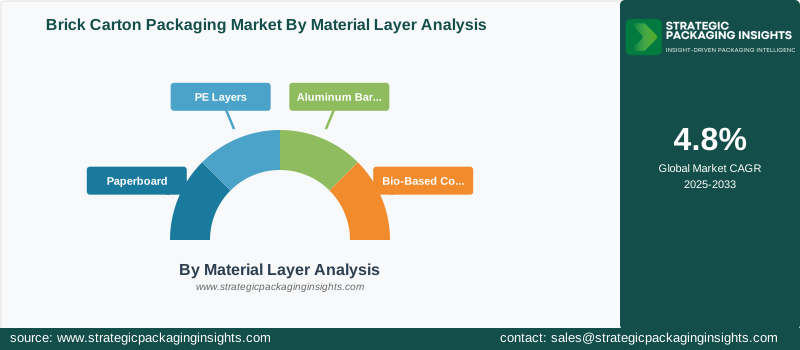
Aluminum barriers are used in brick carton packaging to provide an additional layer of protection against light and oxygen, which can degrade product quality. This material is particularly beneficial for products that require a longer shelf life, such as juices and plant-based beverages. Bio-based coating variants are gaining traction as manufacturers seek to reduce their environmental impact and meet consumer demand for sustainable packaging solutions. These coatings are derived from renewable resources and offer similar protective properties to traditional materials, making them an attractive option for eco-conscious consumers.
By Capacity Analysis
The brick carton packaging market is segmented by capacity into below 200 ml, 200-500 ml, 500 ml - 1 L, and above 1 L. The below 200 ml segment is popular for single-serve products, such as juices and plant-based beverages, where convenience and portability are key factors driving demand. This segment is particularly appealing to on-the-go consumers and is witnessing significant growth in urban areas where busy lifestyles are prevalent. The 200-500 ml segment is also experiencing growth, driven by the increasing demand for portion-controlled products that cater to health-conscious consumers.
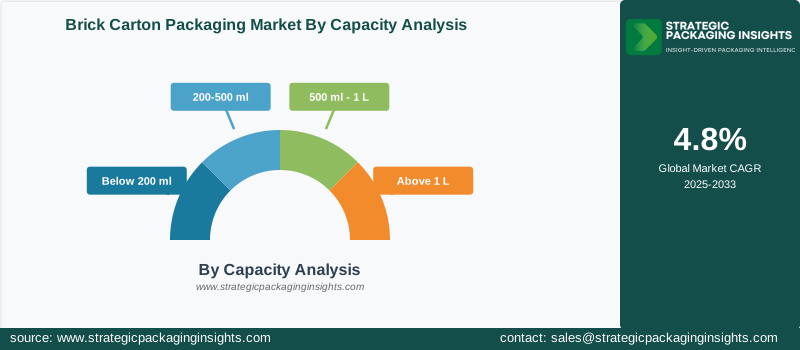
The 500 ml - 1 L segment is the largest in the brick carton packaging market, catering to family-sized products and bulk purchases. This segment is driven by the growing demand for cost-effective packaging solutions that offer value for money. The above 1 L segment is gaining traction in the market, particularly for products like liquid food and wine, where larger quantities are preferred. Manufacturers are focusing on developing innovative packaging solutions that cater to different consumer needs and preferences, ensuring that they remain competitive in a dynamic market.
By Closure Analysis
The brick carton packaging market is segmented by closure into straw hole, screw cap (tethered), and open corner. Straw hole closures are popular for single-serve products, such as juices and plant-based beverages, where convenience and ease of use are important factors. This type of closure is particularly appealing to children and on-the-go consumers, driving demand in the market. Screw cap (tethered) closures are gaining popularity due to their resealability and convenience, making them ideal for products that require multiple servings, such as milk and cream.
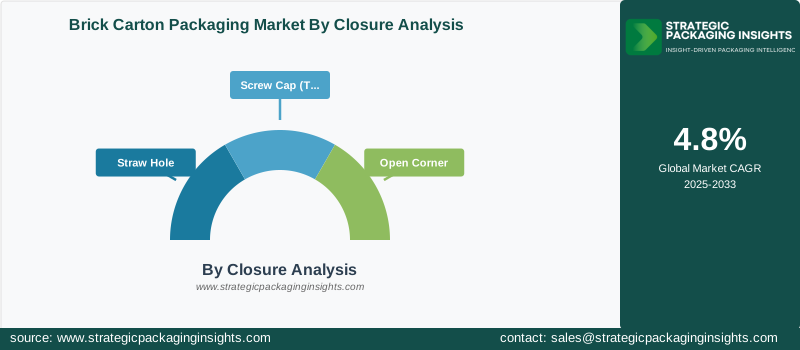
Open corner closures are used in brick carton packaging for products that require easy pouring, such as liquid food and wine. This type of closure is designed to enhance consumer convenience and reduce spillage, making it an attractive option for busy households. Manufacturers are focusing on developing innovative closure solutions that enhance product appeal and meet consumer expectations for convenience and functionality. The increasing demand for user-friendly packaging solutions is driving innovation in the closure segment, ensuring that manufacturers remain competitive in a dynamic market.
By End Use Analysis
The brick carton packaging market is segmented by end use into dairy (milk, cream), juices & nectars, plant-based beverages, liquid food (soups, sauces), and wine. The dairy segment is the largest in the market, driven by the growing demand for milk and cream products that require packaging solutions that preserve freshness and extend shelf life. The juices & nectars segment is also experiencing significant growth, driven by the increasing demand for healthy and natural beverages that cater to health-conscious consumers.
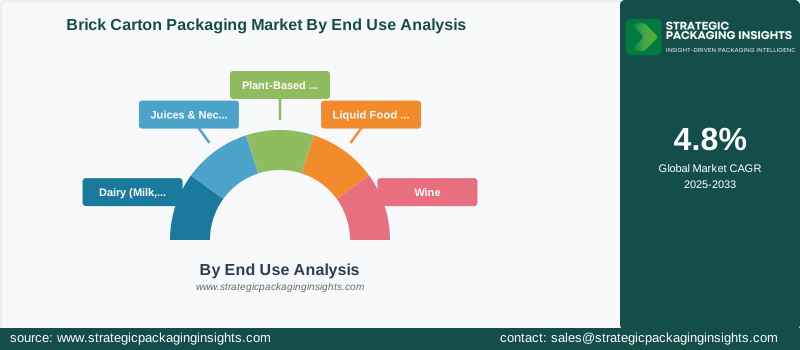
The plant-based beverages segment is gaining traction in the market, driven by the growing popularity of vegan and vegetarian diets. This segment is particularly appealing to environmentally conscious consumers who prefer sustainable packaging solutions. The liquid food segment is also witnessing growth, driven by the increasing demand for convenient and ready-to-eat products that cater to busy lifestyles. The wine segment is gaining popularity, driven by the growing demand for premium and artisanal products that require packaging solutions that enhance product appeal and preserve quality.
Brick Carton Packaging Market Segments
The Brick Carton Packaging market has been segmented on the basis ofBy Type
- Aseptic Brick Cartons
- Chilled / Gable-Adjacent Brick Formats
By Material Layer
- Paperboard
- PE Layers
- Aluminum Barrier
- Bio-Based Coating Variants
By Capacity
- Below 200 ml
- 200-500 ml
- 500 ml - 1 L
- Above 1 L
By Closure
- Straw Hole
- Screw Cap (Tethered)
- Open Corner
By End Use
- Dairy (Milk, Cream)
- Juices & Nectars
- Plant-Based Beverages
- Liquid Food (Soups, Sauces)
- Wine
By Region
- North America (U.S., Canada, Mexico)
- Europe (Germany, UK, France, Italy, Spain, Rest of Europe)
- Asia Pacific (China, India, Japan, South Korea, Australia, Rest of Asia Pacific)
- Latin America (Brazil, Argentina, Rest of Latin America)
- Middle East & Africa (GCC Countries, South Africa, Rest of MEA)




