


PCR Market for Liquor, Water & Beverage Bottles Market Outlook
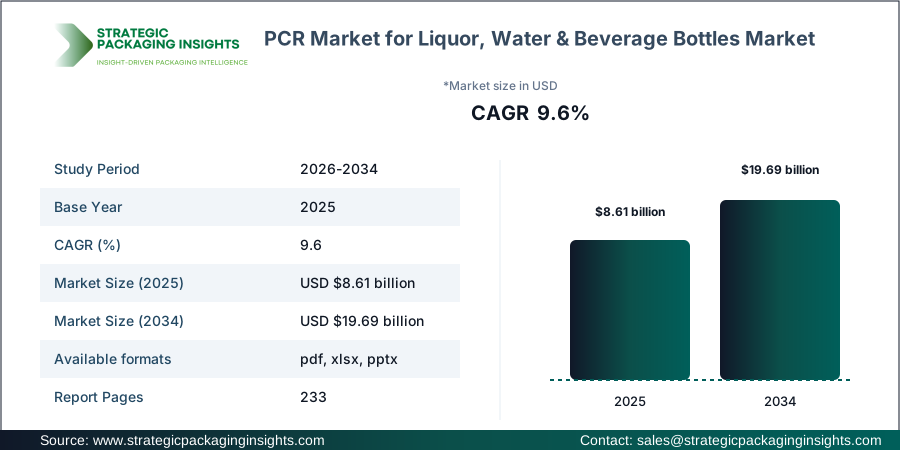
The PCR market for liquor, water, and beverage bottles was valued at $8.61 billion in 2025 and is projected to reach $19.69 billion by 2034, growing at a CAGR of 9.6% during the forecast period 2026-2034. This market is witnessing significant growth due to increasing environmental concerns and the rising demand for sustainable packaging solutions. The shift towards using post-consumer recycled (PCR) materials in bottle manufacturing is driven by stringent regulations and consumer preferences for eco-friendly products. The beverage industry, in particular, is a major contributor to this growth, as companies strive to reduce their carbon footprint and meet sustainability goals. The adoption of PCR materials is further supported by advancements in recycling technologies, which enhance the quality and performance of recycled resins.
Despite the promising growth prospects, the PCR market for liquor, water, and beverage bottles faces several challenges. Regulatory constraints and the high cost of recycling processes can hinder market expansion. Additionally, the availability of high-quality PCR materials remains a concern, as the recycling infrastructure in many regions is still underdeveloped. However, the market holds significant potential for growth, driven by increasing investments in recycling facilities and technological innovations aimed at improving the efficiency of recycling processes. The growing awareness among consumers about the environmental impact of plastic waste is also expected to drive demand for PCR bottles, creating new opportunities for market players.
Report Scope
| Attributes | Details |
| Report Title | PCR Market for Liquor, Water & Beverage Bottles Market Size, Future Growth and Forecast 2034 |
| By Resin Type | rPET, rHDPE, rPP |
| By Bottle Type | Water Bottles, Liquor Bottles, Soft Drink Bottles |
| By PCR Content | Up to 25%, 26–50%, Above 50% |
| By End Use | Beverage, Alcohol, Bottled Water |
| Region | Asia Pacific, North America, Latin America, Europe, Middle East & Africa |
| Base Year | 2025 |
| Historic Period | 2018-2024 |
| Forecast Period | 2026-2034 |
| Number of Pages | 233 |
| Customization Available | Yes* |
Opportunities & Threats
The PCR market for liquor, water, and beverage bottles presents numerous opportunities for growth, primarily driven by the increasing demand for sustainable packaging solutions. As consumers become more environmentally conscious, there is a growing preference for products that utilize recycled materials. This trend is particularly evident in the beverage industry, where companies are actively seeking to reduce their environmental impact by incorporating PCR materials into their packaging. The development of advanced recycling technologies is also creating new opportunities for market players, as these innovations enhance the quality and performance of recycled resins, making them more competitive with virgin materials.
Another significant opportunity lies in the expansion of recycling infrastructure, particularly in emerging markets. Governments and private organizations are investing heavily in recycling facilities to improve the collection and processing of post-consumer waste. This expansion is expected to increase the availability of high-quality PCR materials, thereby supporting the growth of the market. Additionally, the implementation of favorable policies and incentives for the use of recycled materials is likely to encourage more companies to adopt PCR solutions, further driving market growth.
However, the market also faces several threats that could impede its growth. One of the primary challenges is the high cost associated with recycling processes, which can make PCR materials less competitive compared to virgin resins. Additionally, the quality and consistency of recycled materials can vary significantly, posing a challenge for manufacturers who require high-performance materials for their products. The lack of standardized regulations and certifications for PCR materials can also create uncertainty for market players, potentially hindering the adoption of these solutions.
Drivers & Challenges
The primary drivers of the PCR market for liquor, water, and beverage bottles include the increasing demand for sustainable packaging solutions and the growing awareness of environmental issues among consumers. As more people become conscious of the impact of plastic waste on the environment, there is a rising demand for products that utilize recycled materials. This trend is particularly evident in the beverage industry, where companies are actively seeking to reduce their carbon footprint by incorporating PCR materials into their packaging. The development of advanced recycling technologies is also driving market growth, as these innovations enhance the quality and performance of recycled resins, making them more competitive with virgin materials.
Another significant driver is the implementation of stringent regulations and policies aimed at reducing plastic waste and promoting the use of recycled materials. Governments around the world are introducing measures to encourage the adoption of sustainable packaging solutions, such as imposing taxes on single-use plastics and providing incentives for the use of recycled materials. These regulatory initiatives are expected to drive demand for PCR bottles, creating new opportunities for market players. Additionally, the expansion of recycling infrastructure, particularly in emerging markets, is expected to increase the availability of high-quality PCR materials, further supporting market growth.
Despite these drivers, the market faces several challenges that could impede its growth. One of the primary challenges is the high cost associated with recycling processes, which can make PCR materials less competitive compared to virgin resins. Additionally, the quality and consistency of recycled materials can vary significantly, posing a challenge for manufacturers who require high-performance materials for their products. The lack of standardized regulations and certifications for PCR materials can also create uncertainty for market players, potentially hindering the adoption of these solutions. Furthermore, the availability of high-quality PCR materials remains a concern, as the recycling infrastructure in many regions is still underdeveloped.
Market Share Analysis
The competitive landscape of the PCR market for liquor, water, and beverage bottles is characterized by the presence of several key players who are actively engaged in expanding their market share through strategic initiatives. Companies such as Indorama Ventures, Alpla, Plastipak, Veolia, Loop Industries, Evergreen Plastics, Phoenix Technologies, Far Eastern New Century, CarbonLite, and Clean Tech UK are leading the market with their innovative solutions and strong distribution networks. These companies are focusing on enhancing their product offerings by investing in research and development to improve the quality and performance of PCR materials.
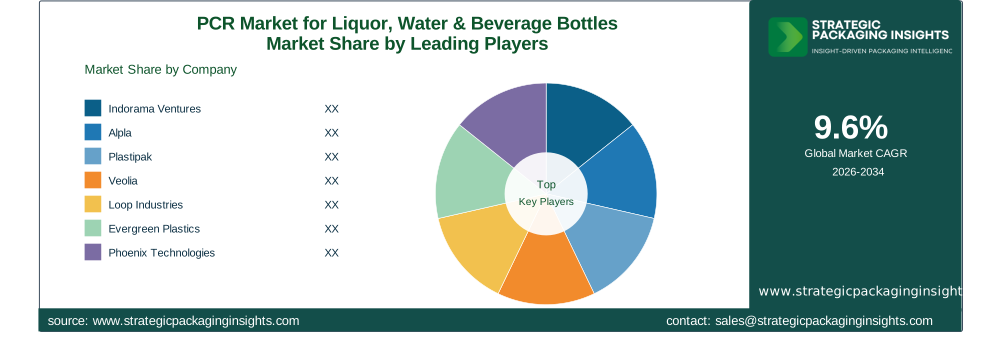
Indorama Ventures, a global leader in the production of PET and fibers, holds a significant market share due to its extensive recycling capabilities and strong presence in the beverage packaging industry. The company is actively expanding its recycling operations to meet the growing demand for sustainable packaging solutions. Alpla, another major player, is known for its innovative packaging solutions and commitment to sustainability. The company has been investing in advanced recycling technologies to enhance the quality of its PCR materials and expand its market presence.
Plastipak, a leading provider of plastic packaging solutions, is also a key player in the PCR market for liquor, water, and beverage bottles. The company has a strong focus on sustainability and has been actively expanding its recycling capabilities to meet the increasing demand for PCR materials. Veolia, a global leader in environmental solutions, is leveraging its expertise in waste management and recycling to capture a significant share of the market. The company is focused on developing innovative recycling technologies to improve the quality and performance of PCR materials.
Loop Industries, a pioneer in the development of sustainable plastics, is making significant strides in the PCR market with its innovative recycling technologies. The company is focused on creating high-quality PCR materials that can compete with virgin resins, thereby expanding its market presence. Evergreen Plastics, Phoenix Technologies, Far Eastern New Century, CarbonLite, and Clean Tech UK are also key players in the market, each contributing to the growth of the PCR market through their unique solutions and strategic initiatives.
Key Highlights
- The PCR market for liquor, water, and beverage bottles is projected to grow at a CAGR of 9.6% from 2026 to 2034.
- Increasing demand for sustainable packaging solutions is driving market growth.
- Advancements in recycling technologies are enhancing the quality of PCR materials.
- Stringent regulations and policies are promoting the use of recycled materials.
- Expansion of recycling infrastructure is increasing the availability of high-quality PCR materials.
- High cost of recycling processes remains a challenge for market players.
- Key players are focusing on research and development to improve product offerings.
- Emerging markets present significant growth opportunities for the PCR market.
- Consumer awareness of environmental issues is driving demand for PCR bottles.
- Innovative recycling technologies are creating new opportunities for market players.
Top Countries Insights
In the PCR market for liquor, water, and beverage bottles, the United States stands out as a leading country with a market size of approximately $3.5 billion and a CAGR of 8%. The country's growth is driven by stringent environmental regulations and a strong consumer preference for sustainable packaging solutions. The presence of major beverage companies and advanced recycling infrastructure further supports market expansion. However, challenges such as the high cost of recycling processes and the need for standardized regulations remain.
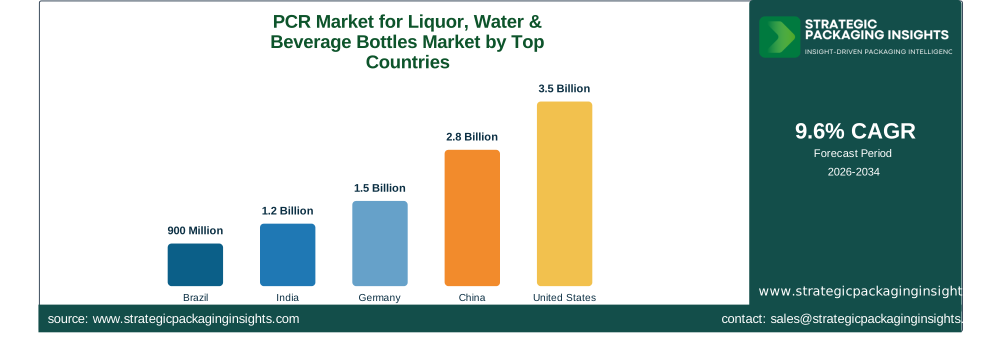
China is another key player in the PCR market, with a market size of around $2.8 billion and a CAGR of 12%. The country's rapid industrialization and increasing environmental awareness are driving demand for PCR materials. Government initiatives to promote recycling and reduce plastic waste are also contributing to market growth. However, the lack of advanced recycling technologies and inconsistent quality of PCR materials pose challenges for the market.
Germany, with a market size of approximately $1.5 billion and a CAGR of 9%, is a significant contributor to the PCR market in Europe. The country's strong focus on sustainability and advanced recycling infrastructure are key growth drivers. The implementation of strict regulations and incentives for the use of recycled materials further supports market expansion. However, the high cost of recycling processes and the need for standardized certifications remain challenges.
India, with a market size of around $1.2 billion and a CAGR of 15%, presents significant growth opportunities for the PCR market. The country's growing population and increasing environmental awareness are driving demand for sustainable packaging solutions. Government initiatives to improve recycling infrastructure and promote the use of recycled materials are also contributing to market growth. However, the lack of advanced recycling technologies and inconsistent quality of PCR materials pose challenges.
Brazil, with a market size of approximately $900 million and a CAGR of 10%, is a key player in the Latin American PCR market. The country's growing beverage industry and increasing consumer awareness of environmental issues are driving demand for PCR materials. Government initiatives to promote recycling and reduce plastic waste further support market growth. However, challenges such as the high cost of recycling processes and the need for standardized regulations remain.
PCR Market for Liquor, Water & Beverage Bottles Market Segments Insights

Resin Type Analysis
The resin type segment in the PCR market for liquor, water, and beverage bottles is categorized into rPET, rHDPE, and rPP. Among these, rPET holds the largest market share due to its widespread use in the beverage industry. The demand for rPET is driven by its excellent clarity, strength, and recyclability, making it an ideal choice for manufacturers seeking sustainable packaging solutions. The increasing adoption of rPET in the production of water and soft drink bottles is further supporting market growth. Additionally, advancements in recycling technologies are enhancing the quality of rPET, making it more competitive with virgin PET.
rHDPE is another significant segment, known for its durability and resistance to chemicals. It is widely used in the production of liquor bottles, where strength and resistance to breakage are critical. The demand for rHDPE is driven by the growing preference for sustainable packaging solutions in the alcohol industry. However, the high cost of recycling processes and the need for advanced technologies to improve the quality of rHDPE remain challenges for the market. rPP, although a smaller segment, is gaining traction due to its versatility and cost-effectiveness. It is used in various applications, including caps and closures for beverage bottles.
Bottle Type Analysis
The bottle type segment in the PCR market for liquor, water, and beverage bottles includes water bottles, liquor bottles, and soft drink bottles. Water bottles hold the largest market share, driven by the increasing demand for bottled water and the growing preference for sustainable packaging solutions. The use of PCR materials in water bottle production is supported by advancements in recycling technologies, which enhance the quality and performance of recycled resins. The demand for PCR water bottles is further driven by consumer awareness of environmental issues and the implementation of stringent regulations promoting the use of recycled materials.
Liquor bottles are another significant segment, with the demand for PCR materials driven by the growing preference for sustainable packaging solutions in the alcohol industry. The use of PCR materials in liquor bottle production is supported by the increasing adoption of advanced recycling technologies, which improve the quality and performance of recycled resins. Soft drink bottles, although a smaller segment, are gaining traction due to the growing demand for sustainable packaging solutions in the beverage industry. The use of PCR materials in soft drink bottle production is driven by consumer awareness of environmental issues and the implementation of stringent regulations promoting the use of recycled materials.
PCR Content Analysis
The PCR content segment in the PCR market for liquor, water, and beverage bottles is categorized into up to 25%, 26-50%, and above 50%. The up to 25% segment holds the largest market share, driven by the increasing demand for sustainable packaging solutions and the growing preference for products that utilize recycled materials. The use of PCR materials in this segment is supported by advancements in recycling technologies, which enhance the quality and performance of recycled resins. The demand for PCR materials in this segment is further driven by consumer awareness of environmental issues and the implementation of stringent regulations promoting the use of recycled materials.
The 26-50% segment is another significant segment, with the demand for PCR materials driven by the growing preference for sustainable packaging solutions in the beverage industry. The use of PCR materials in this segment is supported by the increasing adoption of advanced recycling technologies, which improve the quality and performance of recycled resins. The above 50% segment, although a smaller segment, is gaining traction due to the growing demand for sustainable packaging solutions in the beverage industry. The use of PCR materials in this segment is driven by consumer awareness of environmental issues and the implementation of stringent regulations promoting the use of recycled materials.
End Use Analysis
The end use segment in the PCR market for liquor, water, and beverage bottles includes beverage, alcohol, and bottled water. The beverage segment holds the largest market share, driven by the increasing demand for sustainable packaging solutions and the growing preference for products that utilize recycled materials. The use of PCR materials in this segment is supported by advancements in recycling technologies, which enhance the quality and performance of recycled resins. The demand for PCR materials in this segment is further driven by consumer awareness of environmental issues and the implementation of stringent regulations promoting the use of recycled materials.
The alcohol segment is another significant segment, with the demand for PCR materials driven by the growing preference for sustainable packaging solutions in the alcohol industry. The use of PCR materials in this segment is supported by the increasing adoption of advanced recycling technologies, which improve the quality and performance of recycled resins. The bottled water segment, although a smaller segment, is gaining traction due to the growing demand for sustainable packaging solutions in the beverage industry. The use of PCR materials in this segment is driven by consumer awareness of environmental issues and the implementation of stringent regulations promoting the use of recycled materials.
PCR Market for Liquor, Water & Beverage Bottles Market Segments
The PCR Market for Liquor, Water & Beverage Bottles market has been segmented on the basis ofBy Resin Type
- rPET
- rHDPE
- rPP
By Bottle Type
- Water Bottles
- Liquor Bottles
- Soft Drink Bottles
By PCR Content
- Up to 25%
- 26–50%
- Above 50%
By End Use
- Beverage
- Alcohol
- Bottled Water
Region
- Asia Pacific
- North America
- Latin America
- Europe
- Middle East & Africa




