
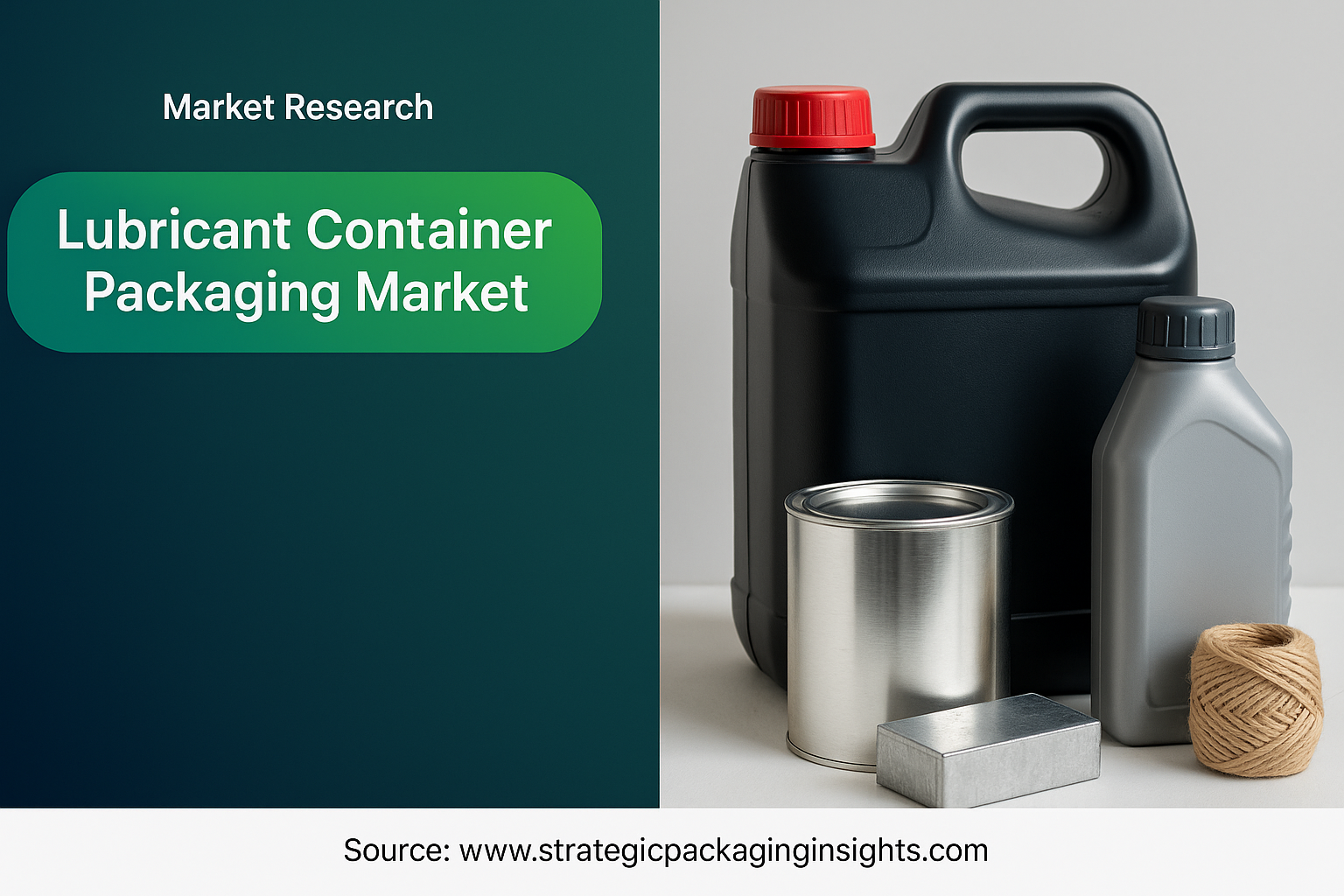
Explore the evolving dynamics of the Lubricant Container Packaging Market from 2017 to 2033, analyzing growth drivers, market size, segment intelligence, and strategic recommendations.
Market Storyline (Historic to Forecast)
The Lubricant Container Packaging Market has undergone significant transformation from 2017 to 2023, driven by technological advancements and evolving consumer preferences. During this period, the market witnessed steady growth, fueled by increased demand from automotive and industrial sectors. As we look towards the forecast period of 2025 to 2033, the market is poised for further expansion, with a projected CAGR of 5.8%. This growth trajectory is indicative of the market's resilience and adaptability to changing economic and environmental conditions.
https://www.strategicpackaginginsights.com/report/lubricant-container-packaging-market
What Drives Growth
The growth of the Lubricant Container Packaging Market is primarily driven by the rising demand for efficient and sustainable packaging solutions. The automotive industry's expansion, particularly in emerging economies, has significantly contributed to increased lubricant consumption, thereby boosting the demand for innovative packaging solutions. Additionally, the industrial sector's focus on operational efficiency and sustainability has led to a preference for packaging that minimizes waste and enhances product longevity. Technological advancements in packaging materials and designs have also played a crucial role in driving market growth.
Market Size Interpretation
In 2024, the Lubricant Container Packaging Market was valued at $2.5 billion. By 2033, it is expected to reach $4.1 billion, reflecting a robust CAGR of 5.8%. This growth signifies a substantial increase in market opportunities and underscores the importance of strategic investments in this sector. The expanding market size highlights the potential for innovation and differentiation in packaging solutions, catering to diverse end-user needs. Companies operating in this space must focus on enhancing their product offerings to capture a larger market share and capitalize on the growing demand.
Segment Intelligence
| Segment | Strategic Insights |
|---|---|
| Material Type | Plastic remains the dominant material due to its cost-effectiveness and versatility. However, metal and glass are gaining traction for premium and eco-friendly packaging solutions. |
| Container Type | Bottles and cans are preferred for smaller capacities, while drums and pails are essential for bulk storage, highlighting the need for diverse product portfolios. |
| Capacity | The demand for containers less than 1 liter is rising in the automotive sector, while industrial applications favor larger capacities, indicating a bifurcation in market needs. |
| End-User | The automotive sector is the largest consumer, but industrial and marine applications are emerging as significant growth areas, necessitating tailored packaging solutions. |
End-User Implications
For end-users, the evolving landscape of the Lubricant Container Packaging Market presents both challenges and opportunities. Automotive and industrial users must adapt to new packaging technologies that offer enhanced performance and sustainability. The shift towards eco-friendly materials and designs requires end-users to reassess their supply chains and invest in packaging solutions that align with regulatory standards and consumer expectations. Additionally, the growing emphasis on customization and branding in packaging offers end-users the opportunity to differentiate their products in a competitive market.
Investment & Strategy Lens
Investors and stakeholders in the Lubricant Container Packaging Market should focus on strategic partnerships and technological innovations to drive growth. Investing in research and development to create sustainable and efficient packaging solutions will be crucial in maintaining a competitive edge. Companies should also explore opportunities in emerging markets, where the demand for lubricants and associated packaging is on the rise. A diversified product portfolio that caters to various end-user segments will be essential in capturing market share and driving long-term growth.
SWOT Matrix
| Strengths | Weaknesses | Opportunities | Threats |
|---|---|---|---|
| Strong demand from automotive and industrial sectors | High dependency on raw material prices | Growing demand for sustainable packaging solutions | Intense competition and price pressures |
| Technological advancements in packaging | Environmental concerns over plastic use | Expansion in emerging markets | Regulatory challenges and compliance costs |
Packaging Trends Shaping This Market
The Lubricant Container Packaging Market is witnessing several key trends that are shaping its future. The shift towards sustainable and eco-friendly packaging is a major trend, driven by consumer demand and regulatory pressures. Innovations in biodegradable and recyclable materials are gaining momentum, offering companies a way to differentiate themselves in the market. Additionally, the rise of smart packaging solutions, which incorporate digital technologies for enhanced functionality and user engagement, is transforming the industry. These trends highlight the need for companies to invest in research and development to stay ahead of the curve.
Outlook & Strategic Recommendations
Looking ahead, the Lubricant Container Packaging Market is set for continued growth, driven by technological advancements and evolving consumer preferences. To capitalize on this growth, companies should focus on developing sustainable and innovative packaging solutions that meet the diverse needs of end-users. Strategic partnerships and collaborations will be essential in expanding market reach and enhancing product offerings. Additionally, companies should prioritize investments in emerging markets, where the demand for lubricants and packaging solutions is expected to rise significantly. By aligning their strategies with market trends and consumer demands, companies can position themselves for long-term success in the Lubricant Container Packaging Market.