
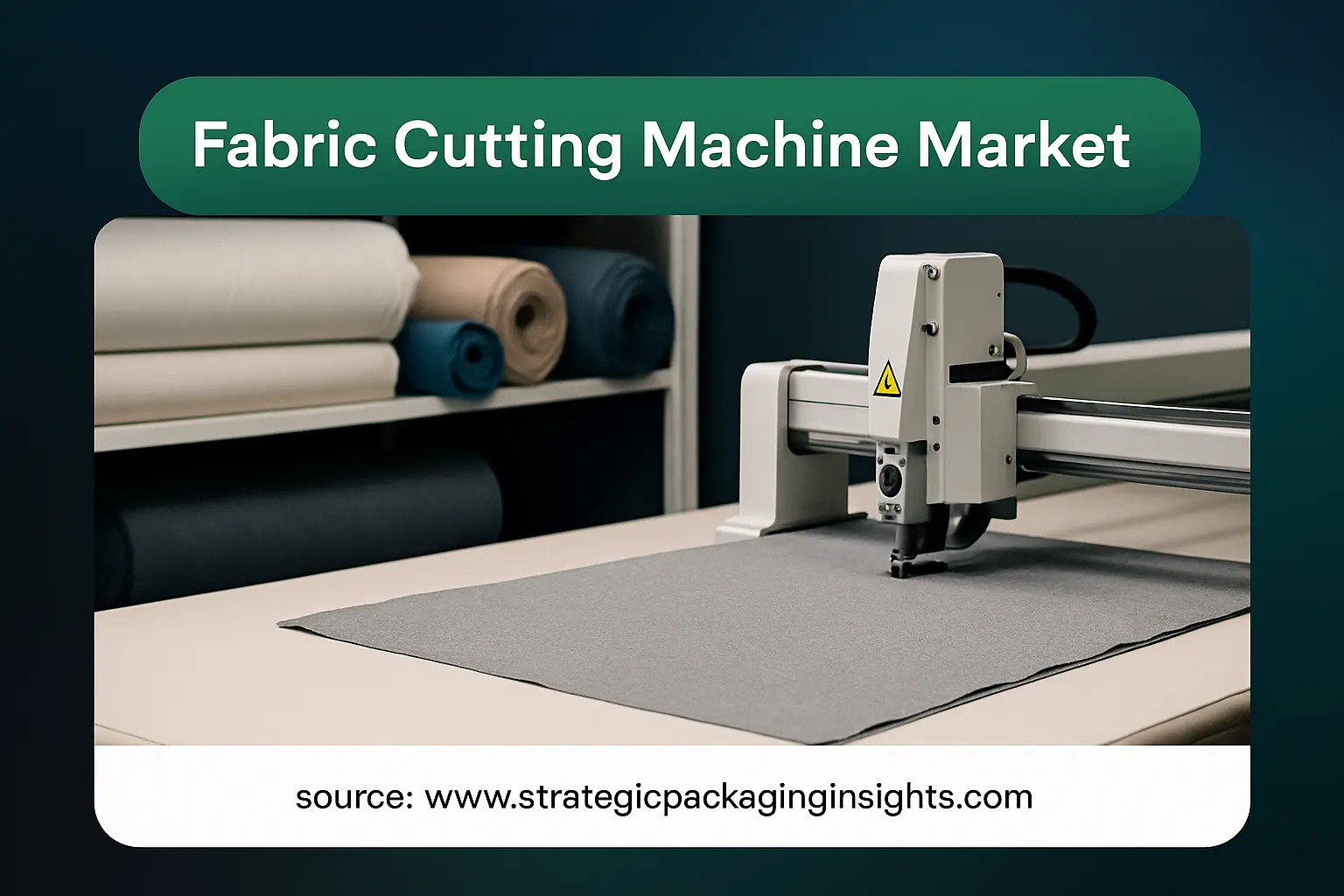
Explore the Fabric Cutting Machine Market with an in-depth analysis of market trends, growth projections, segment landscapes, and strategic insights from 2025 to 2034.
Strategic Market Overview
The Fabric Cutting Machine Market is poised for significant growth, driven by technological advancements and increasing demand across various industries. As the textile industry evolves, the need for precision and efficiency in fabric cutting has become paramount, leading to a surge in the adoption of advanced cutting machines. This market is characterized by a diverse range of machine types, applications, and automation levels, catering to the specific needs of different end-users.
https://www.strategicpackaginginsights.com/report/fabric-cutting-machine-market
From 2018 to 2034: Evolution of the Market
Between 2018 and 2024, the Fabric Cutting Machine Market experienced steady growth, fueled by the rising demand for high-quality textiles and the expansion of the apparel industry. The introduction of automated and semi-automated machines during this period marked a significant shift towards efficiency and precision. Looking ahead to 2026-2034, the market is expected to witness accelerated growth, driven by technological innovations and the increasing adoption of sustainable practices in textile manufacturing.
Interpreting Market Size & CAGR
In 2025, the Fabric Cutting Machine Market was valued at $3.97 billion. By 2034, it is projected to reach $7.35 billion, reflecting a robust compound annual growth rate (CAGR) of 7.1%. This growth trajectory underscores the market's resilience and adaptability in the face of evolving industry demands. The increasing emphasis on automation and precision in fabric cutting processes is a key driver of this growth, as manufacturers seek to enhance productivity and reduce waste.
Segment Landscape
| Segment | Details |
|---|---|
| By Machine Type | Laser Cutters, CNC Cutters, Rotary Cutters |
| By Application | Apparel, Technical Textiles, Packaging Textiles, Automotive Interiors |
| By Automation | Manual, Semi-Automatic, Automatic |
| By End Use | Textile Mills, Converters, Apparel, Industrial Fabrics |
| Region | Asia Pacific, North America, Latin America, Europe, Middle East & Africa |
The segment landscape of the Fabric Cutting Machine Market is diverse, with each segment playing a crucial role in shaping the market dynamics. Laser cutters are gaining popularity due to their precision and efficiency, while CNC cutters are favored for their versatility. The apparel segment remains the largest application area, driven by the growing demand for fashion and technical textiles. Automation levels vary, with a notable shift towards fully automatic machines to enhance productivity and reduce labor costs.
Value Chain & Stakeholder Impact
The value chain of the Fabric Cutting Machine Market encompasses raw material suppliers, machine manufacturers, distributors, and end-users. Each stakeholder plays a vital role in ensuring the seamless operation of the market. Manufacturers are focusing on innovation and sustainability, while distributors are expanding their networks to reach a broader customer base. End-users, particularly in the apparel and industrial fabrics sectors, are increasingly demanding machines that offer precision, speed, and cost-effectiveness.
Opportunities vs Constraints
The Fabric Cutting Machine Market presents numerous opportunities, particularly in the areas of automation and sustainability. The growing demand for eco-friendly textiles is driving manufacturers to develop machines that minimize waste and energy consumption. However, the market also faces constraints, such as high initial investment costs and the need for skilled operators. Addressing these challenges will be crucial for market players to capitalize on the growth opportunities.
SWOT Analysis
| Strengths | Weaknesses | Opportunities | Threats |
|---|---|---|---|
| Advanced technology, High precision | High cost, Skilled labor requirement | Automation, Sustainability trends | Economic fluctuations, Regulatory changes |
The SWOT analysis of the Fabric Cutting Machine Market reveals a landscape of strengths, weaknesses, opportunities, and threats. The market's strengths lie in its advanced technology and high precision, while weaknesses include high costs and the need for skilled labor. Opportunities abound in automation and sustainability trends, but economic fluctuations and regulatory changes pose potential threats.
Technology, Regulation & Sustainability Impact
Technological advancements are at the forefront of the Fabric Cutting Machine Market, with innovations such as AI and IoT integration enhancing machine capabilities. Regulatory frameworks are increasingly focusing on sustainability, prompting manufacturers to adopt eco-friendly practices. The impact of these factors is profound, driving the market towards more efficient and sustainable operations.
Strategic Outlook to 2034
Looking ahead to 2034, the Fabric Cutting Machine Market is expected to continue its upward trajectory, driven by technological innovations and the increasing demand for sustainable textiles. Market players should focus on enhancing their product offerings, expanding their distribution networks, and investing in research and development to stay competitive. By addressing the challenges and capitalizing on the opportunities, stakeholders can position themselves for long-term success in this dynamic market.