


Cellulose Film Market Outlook
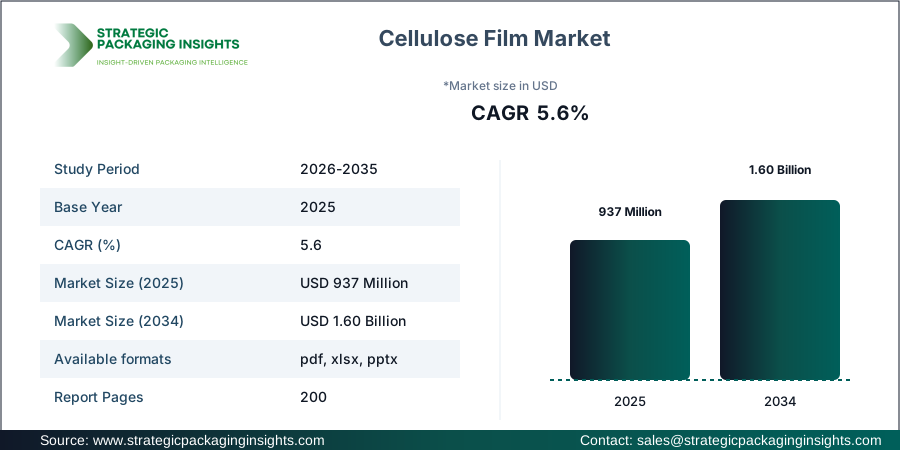
The Cellulose Film market size was valued at USD $937 Million in 2025 and is anticipated to reach USD $1.60 Billion by 2035, growing at a CAGR of 5.6% % during the forecast period according to Strategic Packaging Insights. The increasing demand for sustainable and biodegradable packaging solutions is a significant driver for the cellulose film market. With growing environmental concerns and regulatory pressures, industries are shifting towards eco-friendly packaging materials, boosting the adoption of cellulose films.Report Scope
| Attributes | Details |
| Report Title | Cellulose Film Market Projected to Scale to 1.60 Billion by 2035, Assesses Strategic Packaging Insights |
| By product type | Cellophane, Coated Cellulose Films, Uncoated Cellulose Films, Regenerated Cellulose Films, Barrier Cellulose Films |
| By coating | Nitrocellulose Coated, PVDC Coated, Acrylic Coated, Water-Based Coated, Biopolymer Coated, Uncoated |
| By application | Food Packaging, Personal Care, Cosmetics, Pharmaceuticals, Agriculture, Industrial Packaging, Tobacco Packaging |
| By functionality | Moisture Barrier, Oxygen Barrier, Aroma Barrier, Heat Sealability, Printability, Biodegradability, Compostability |
| By region | North America, Europe, Asia Pacific, Latin America, Middle East and Africa |
| Base Year | 2025 |
| Historic Period | 2018-2024 |
| Forecast Period | 2026-2035 |
| Number of Pages | 200 |
| Customization Available | Yes* |
Market Trends Analysis
The cellulose film market is witnessing a shift towards sustainable packaging solutions, driven by consumer demand for environmentally friendly products. This trend is particularly evident in the food packaging and personal care sectors, where brands are increasingly adopting cellulose films to enhance their sustainability credentials. The development of advanced coating technologies, such as biopolymer coatings, is further enhancing the barrier properties of cellulose films, making them more competitive against traditional plastic films.
Another significant trend is the increasing focus on recyclability and compostability of packaging materials. Governments and regulatory bodies are implementing stricter regulations to reduce plastic waste, encouraging the use of biodegradable materials like cellulose films. This regulatory push is expected to drive innovation in cellulose film production, with manufacturers investing in research and development to improve the performance and cost-effectiveness of these films.
Industry Transformation Analysis
The cellulose film industry is undergoing significant transformation, with manufacturers focusing on enhancing production efficiency and sustainability. The integration of advanced manufacturing technologies, such as automation and digitalization, is improving operational efficiency and reducing production costs. This transformation is enabling manufacturers to meet the growing demand for cellulose films while maintaining competitive pricing.
Additionally, the value chain is evolving with increased collaboration between raw material suppliers, film producers, and end-users. This collaboration is facilitating the development of customized solutions that meet specific customer requirements, such as improved barrier properties and printability. The shift towards localized production is also gaining traction, as companies aim to reduce transportation costs and carbon footprint, further supporting the growth of the cellulose film market.
Trends & Disruptions Impacting Customers' Customers
Downstream customers, particularly in the food packaging and personal care industries, are increasingly prioritizing sustainability and environmental impact in their purchasing decisions. This shift is driven by consumer demand for eco-friendly products and regulatory pressures to reduce plastic waste. As a result, these industries are adopting cellulose films as a sustainable alternative to traditional plastic packaging, driving demand for these materials.
The focus on sustainability is also influencing product innovation and development. Companies are investing in research and development to create cellulose films with enhanced barrier properties and printability, meeting the evolving needs of their customers. This trend is expected to create new market opportunities for cellulose film manufacturers, as they develop innovative solutions to meet the growing demand for sustainable packaging materials.
Cellulose Film Market Ecosystem
The cellulose film market ecosystem involves a complex interplay of raw material suppliers, film producers, converters, and end-users. Raw materials, primarily wood pulp, are sourced from sustainable forestry operations, ensuring a steady supply for film production. The production process involves converting these raw materials into cellulose film substrates, which are then coated with various additives to enhance their properties.
Film production is followed by converting processes, where films are transformed into final packaging products. This stage involves collaboration between film producers and converters to meet specific customer requirements. Distribution plays a crucial role in ensuring timely delivery of products to end-users, while recycling initiatives focus on end-of-life processing to enhance sustainability. The ecosystem's efficiency and sustainability are critical to the market's growth, with companies investing in advanced technologies and processes to optimize operations.
Analyst Perspective
Analyst Perspective: The cellulose film market is poised for significant growth, driven by increasing demand for sustainable packaging solutions across various industries.
The most important structural change is the shift towards biodegradable and compostable packaging materials, which is reshaping the competitive landscape. Companies are investing in research and development to enhance the performance and cost-effectiveness of cellulose films, creating new growth opportunities.
Market participants should closely monitor regulatory developments and consumer preferences, as these factors will significantly influence market dynamics. Companies that can adapt to these changes and offer innovative solutions will be well-positioned to capture market share and drive growth.
Opportunities & Threats
The cellulose film market presents significant opportunities for growth, driven by increasing demand for sustainable packaging solutions. The shift towards biodegradable and compostable materials is creating new market opportunities, particularly in the food packaging and personal care sectors. Companies that can develop innovative solutions to meet these demands will be well-positioned to capture market share and drive growth.
Technological advancements in coating and film production are also creating opportunities for market expansion. The development of advanced coatings, such as biopolymer coatings, is enhancing the barrier properties of cellulose films, making them more competitive against traditional plastic films. This trend is expected to drive innovation and create new market opportunities for cellulose film manufacturers.
However, the market also faces several threats, including raw material volatility and regulatory uncertainty. The availability and cost of raw materials, such as wood pulp, can significantly impact production costs and profitability. Additionally, regulatory changes and environmental policies can create uncertainty and pose challenges for market participants.
Competition from alternative packaging materials, such as bioplastics, also poses a threat to the cellulose film market. Companies must continuously innovate and improve their product offerings to remain competitive and meet the evolving needs of their customers. Failure to do so could result in loss of market share and reduced profitability.
Drivers & Challenges
The cellulose film market is driven by increasing demand for sustainable and biodegradable packaging solutions. As environmental concerns and regulatory pressures mount, industries are shifting towards eco-friendly materials, boosting the adoption of cellulose films. The food packaging and personal care sectors are particularly significant drivers, as they seek to enhance their sustainability credentials and meet consumer demand for environmentally friendly products.
Technological advancements in film production and coating technologies are also driving market growth. The development of advanced coatings, such as biopolymer coatings, is enhancing the barrier properties of cellulose films, making them more competitive against traditional plastic films. This trend is expected to drive innovation and create new market opportunities for cellulose film manufacturers.
However, the market faces several challenges, including raw material volatility and regulatory uncertainty. The availability and cost of raw materials, such as wood pulp, can significantly impact production costs and profitability. Additionally, regulatory changes and environmental policies can create uncertainty and pose challenges for market participants. Companies must navigate these challenges to remain competitive and drive growth in the cellulose film market.
Packaging Market Economics
The economics of the cellulose film market are influenced by several factors, including raw material costs, production efficiency, and regulatory compliance. The cost of wood pulp, the primary raw material for cellulose films, can significantly impact production costs and profitability. Companies must manage these costs effectively to maintain competitive pricing and profitability.
Production efficiency is also a critical factor, with manufacturers investing in advanced technologies and processes to optimize operations and reduce costs. The integration of automation and digitalization is improving operational efficiency and enabling manufacturers to meet the growing demand for cellulose films while maintaining competitive pricing.
Regulatory compliance is another important consideration, with companies required to meet environmental and sustainability standards. This includes adhering to regulations on biodegradability and compostability, as well as meeting consumer demand for eco-friendly packaging solutions. Companies that can navigate these challenges and offer innovative solutions will be well-positioned to capture market share and drive growth.
Packaging Value Chain & Cost Analysis
The cellulose film value chain involves several key stages, including raw material procurement, film production, converting, and distribution. Raw materials, primarily wood pulp, are sourced from sustainable forestry operations, ensuring a steady supply for film production. The production process involves converting these raw materials into cellulose film substrates, which are then coated with various additives to enhance their properties.
Film production is followed by converting processes, where films are transformed into final packaging products. This stage involves collaboration between film producers and converters to meet specific customer requirements. Distribution plays a crucial role in ensuring timely delivery of products to end-users, while recycling initiatives focus on end-of-life processing to enhance sustainability. The ecosystem's efficiency and sustainability are critical to the market's growth, with companies investing in advanced technologies and processes to optimize operations.
Unit Economics & Substrate Cost Analysis
The unit economics of cellulose film production are influenced by several factors, including raw material costs, production efficiency, and regulatory compliance. The cost of wood pulp, the primary raw material for cellulose films, can significantly impact production costs and profitability. Companies must manage these costs effectively to maintain competitive pricing and profitability.
Production efficiency is also a critical factor, with manufacturers investing in advanced technologies and processes to optimize operations and reduce costs. The integration of automation and digitalization is improving operational efficiency and enabling manufacturers to meet the growing demand for cellulose films while maintaining competitive pricing.
Regulatory compliance is another important consideration, with companies required to meet environmental and sustainability standards. This includes adhering to regulations on biodegradability and compostability, as well as meeting consumer demand for eco-friendly packaging solutions. Companies that can navigate these challenges and offer innovative solutions will be well-positioned to capture market share and drive growth.
Packaging Regulatory & Sustainability Analysis
The cellulose film market is subject to various regulatory and sustainability requirements, particularly in the areas of biodegradability and compostability. Regulatory bodies, such as the European Commission and the U.S. Environmental Protection Agency, are implementing stricter regulations to reduce plastic waste and promote the use of sustainable packaging materials.
These regulations are driving innovation in cellulose film production, with manufacturers investing in research and development to enhance the performance and cost-effectiveness of these films. Companies must navigate these regulatory requirements to remain competitive and meet consumer demand for eco-friendly packaging solutions.
Sustainability is also a key consideration, with companies required to meet environmental and sustainability standards. This includes adhering to regulations on biodegradability and compostability, as well as meeting consumer demand for eco-friendly packaging solutions. Companies that can navigate these challenges and offer innovative solutions will be well-positioned to capture market share and drive growth.
Strategic Mergers, Acquisitions & Capacity Expansions
Recent strategic developments in the cellulose film market include mergers, acquisitions, and capacity expansions aimed at enhancing production capabilities and market reach. Companies are investing in new manufacturing facilities and expanding existing ones to meet the growing demand for cellulose films.
For example, Futamura Chemical has expanded its production capacity to meet the increasing demand for sustainable packaging solutions. Similarly, Innovia Films has invested in new technologies to enhance the performance and cost-effectiveness of its cellulose films, creating new growth opportunities.
These strategic developments are enabling companies to strengthen their market position and capture new market opportunities. Companies that can effectively leverage these developments will be well-positioned to drive growth and remain competitive in the cellulose film market.
Strategic Action Directives
Brand Packaging Engineers & Sustainability Directors: Focus on material selection and mono-material qualification to enhance recyclability and meet sustainability targets.
Converter Operations & Extrusion Leads: Optimize line speed and tooling to improve production efficiency and reduce costs. Address PCR variability and capacity utilization to enhance operational efficiency.
Procurement & Material Sourcing Managers: Diversify supplier base and secure resin contracts to manage price volatility and ensure a steady supply of raw materials. Monitor EPR exposure and regulatory developments to mitigate risks.
Investors: Monitor capacity expansions and strategic developments to identify growth opportunities and assess market concentration. Evaluate technology investments and M&A activities to understand competitive dynamics.
Market Share Analysis
The cellulose film market is characterized by a competitive landscape with several key players, including Futamura Chemical, Innovia Films, Celanese, Rengo, Daicel, Hubei Golden Ring, Weifang Henglian, Zhejiang Koray New Materials, and Taghleef Industries. These companies are investing in research and development to enhance the performance and cost-effectiveness of their cellulose films, creating new growth opportunities.
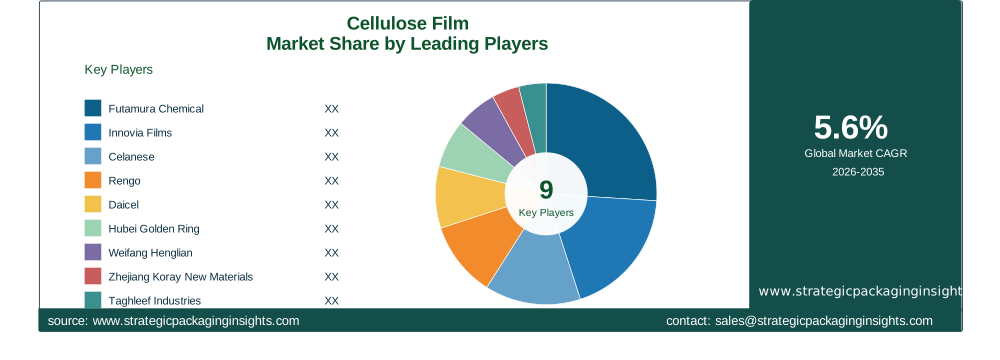
Futamura Chemical is a leading player in the cellulose film market, known for its innovative solutions and strong market presence. The company has expanded its production capacity to meet the growing demand for sustainable packaging solutions, strengthening its market position.
Innovia Films is another key player, with a focus on developing advanced coating technologies to enhance the barrier properties of its cellulose films. The company has invested in new technologies to improve the performance and cost-effectiveness of its products, creating new growth opportunities.
Other notable players include Celanese, Rengo, Daicel, Hubei Golden Ring, Weifang Henglian, Zhejiang Koray New Materials, and Taghleef Industries. These companies are investing in research and development to enhance the performance and cost-effectiveness of their cellulose films, creating new growth opportunities.
Key Highlights
- Largest Region: Asia Pacific
- Fastest-Growing Region: Europe
- Largest Segment: Food Packaging
- Fastest-Growing Segment: Personal Care
- Base-year market size: USD 937 Million
- Forecast-year market size: USD 1.60 Billion
- CAGR: 5.6%
- Important application: Sustainable Packaging
- Major end-use industry: Food Packaging
- Major market driver: Demand for biodegradable packaging
Regional Insights
The cellulose film market is witnessing significant growth across major regions, with Asia Pacific being the largest market and Europe emerging as the fastest-growing region. The demand for sustainable packaging solutions is driving market growth, with increasing adoption of cellulose films in food packaging and personal care sectors.
North America
In North America, the cellulose film market is driven by the demand for sustainable packaging solutions in the food and personal care industries. The region's focus on reducing plastic waste and promoting eco-friendly materials is boosting the adoption of cellulose films. The presence of key players and technological advancements in film production are further supporting market growth.
The United States is a major contributor to the market, with increasing demand for biodegradable packaging solutions. The country's regulatory environment and consumer preferences for sustainable products are driving the adoption of cellulose films, creating new growth opportunities for market participants.
Europe
Europe is the fastest-growing region in the cellulose film market, driven by stringent regulations on plastic waste and increasing demand for sustainable packaging solutions. The region's focus on reducing environmental impact and promoting eco-friendly materials is boosting the adoption of cellulose films in various industries.
Germany, France, and the United Kingdom are key contributors to the market, with increasing demand for biodegradable packaging solutions. The region's regulatory environment and consumer preferences for sustainable products are driving the adoption of cellulose films, creating new growth opportunities for market participants.
Asia Pacific
Asia Pacific is the largest market for cellulose films, driven by the demand for sustainable packaging solutions in the food and personal care industries. The region's focus on reducing plastic waste and promoting eco-friendly materials is boosting the adoption of cellulose films.
China, India, and Japan are major contributors to the market, with increasing demand for biodegradable packaging solutions. The region's regulatory environment and consumer preferences for sustainable products are driving the adoption of cellulose films, creating new growth opportunities for market participants.
Latin America
In Latin America, the cellulose film market is driven by the demand for sustainable packaging solutions in the food and personal care industries. The region's focus on reducing plastic waste and promoting eco-friendly materials is boosting the adoption of cellulose films.
Brazil and Mexico are key contributors to the market, with increasing demand for biodegradable packaging solutions. The region's regulatory environment and consumer preferences for sustainable products are driving the adoption of cellulose films, creating new growth opportunities for market participants.
Middle East & Africa
The cellulose film market in the Middle East & Africa is driven by the demand for sustainable packaging solutions in the food and personal care industries. The region's focus on reducing plastic waste and promoting eco-friendly materials is boosting the adoption of cellulose films.
South Africa and the United Arab Emirates are key contributors to the market, with increasing demand for biodegradable packaging solutions. The region's regulatory environment and consumer preferences for sustainable products are driving the adoption of cellulose films, creating new growth opportunities for market participants.
Cellulose Film Market Segments Insights

By Product Type Analysis
The cellulose film market is segmented by product type into cellophane, coated cellulose films, uncoated cellulose films, regenerated cellulose films, and barrier cellulose films. Cellophane is a traditional product type, known for its transparency and biodegradability, making it popular in food packaging applications. Coated cellulose films are gaining traction due to their enhanced barrier properties, making them suitable for a wide range of applications, including personal care and cosmetics.
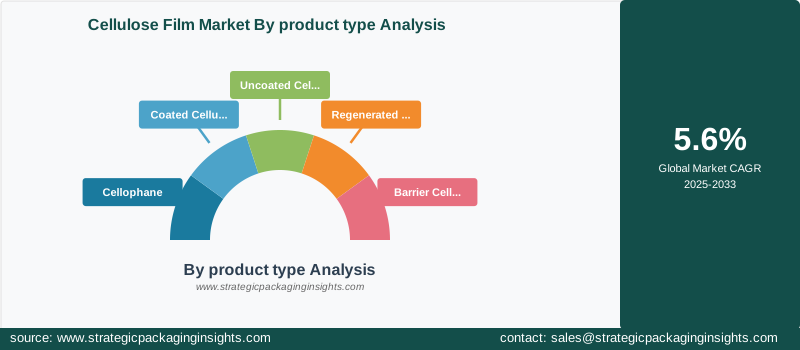
Regenerated cellulose films are also witnessing increased demand, driven by their biodegradability and versatility in various applications. Barrier cellulose films are particularly important in applications requiring moisture and oxygen barrier properties, such as food and pharmaceutical packaging. The demand for these films is expected to grow as industries seek sustainable alternatives to traditional plastic films.
By Coating Analysis
The cellulose film market is segmented by coating into nitrocellulose coated, PVDC coated, acrylic coated, water-based coated, biopolymer coated, and uncoated films. Nitrocellulose coated films are known for their excellent printability and are widely used in packaging applications requiring high-quality graphics. PVDC coated films offer superior barrier properties, making them suitable for food and pharmaceutical packaging.
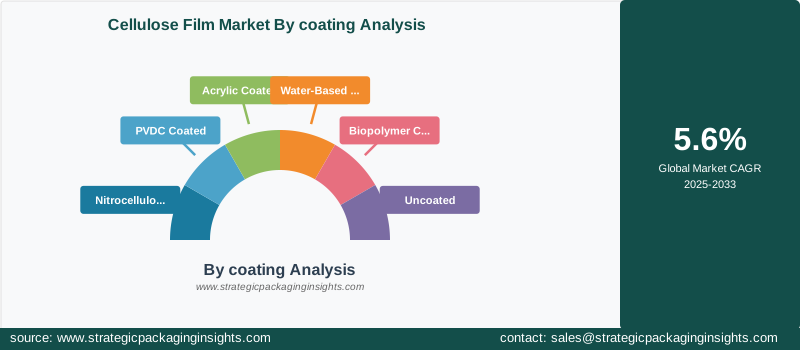
Acrylic coated films are gaining popularity due to their clarity and gloss, enhancing the visual appeal of packaged products. Water-based and biopolymer coated films are increasingly being adopted for their eco-friendly properties, aligning with the industry's shift towards sustainable packaging solutions. The demand for these coatings is expected to grow as companies seek to enhance the performance and sustainability of their packaging materials.
By Application Analysis
The cellulose film market is segmented by application into food packaging, personal care, cosmetics, pharmaceuticals, agriculture, industrial packaging, and tobacco packaging. Food packaging is the largest application segment, driven by the demand for sustainable and biodegradable packaging solutions. The personal care and cosmetics industries are also significant contributors, with increasing adoption of cellulose films to enhance the sustainability of their packaging.
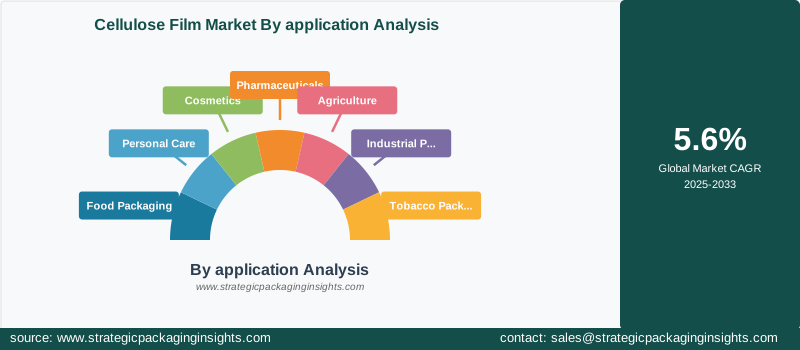
The pharmaceutical industry is another key application area, with cellulose films being used for their barrier properties and biodegradability. The agriculture and industrial packaging sectors are also adopting cellulose films, driven by the need for sustainable alternatives to traditional plastic films. The demand for these films is expected to grow as industries seek to enhance their sustainability credentials and meet consumer demand for eco-friendly products.
By Functionality Analysis
The cellulose film market is segmented by functionality into moisture barrier, oxygen barrier, aroma barrier, heat sealability, printability, biodegradability, and compostability. Moisture and oxygen barrier properties are critical for food and pharmaceutical packaging, ensuring product freshness and extending shelf life. Aroma barrier films are important in applications requiring odor protection, such as food and personal care packaging.
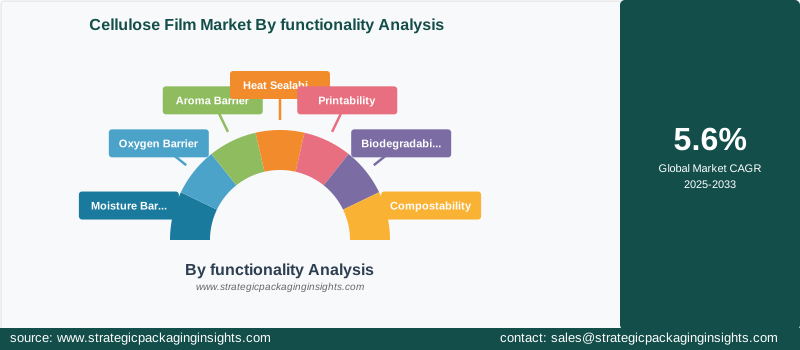
Heat sealability and printability are important considerations for packaging applications, with companies seeking films that offer excellent sealing and printing capabilities. Biodegradability and compostability are increasingly important functionalities, driven by the demand for sustainable packaging solutions. The demand for these functionalities is expected to grow as industries seek to enhance the performance and sustainability of their packaging materials.
Cellulose Film Market Segments
The Cellulose Film market has been segmented on the basis ofBy product type
- Cellophane
- Coated Cellulose Films
- Uncoated Cellulose Films
- Regenerated Cellulose Films
- Barrier Cellulose Films
By coating
- Nitrocellulose Coated
- PVDC Coated
- Acrylic Coated
- Water-Based Coated
- Biopolymer Coated
- Uncoated
By application
- Food Packaging
- Personal Care
- Cosmetics
- Pharmaceuticals
- Agriculture
- Industrial Packaging
- Tobacco Packaging
By functionality
- Moisture Barrier
- Oxygen Barrier
- Aroma Barrier
- Heat Sealability
- Printability
- Biodegradability
- Compostability
By region
- North America
- Europe
- Asia Pacific
- Latin America
- Middle East and Africa




