


Seasonal Packaging Market Outlook
The Seasonal Packaging market size was valued at USD $17.98 Billion in 2025 and is anticipated to reach USD $29.43 Billion by 2035, growing at a CAGR of 5.05% % during the forecast period according to Strategic Packaging Insights.
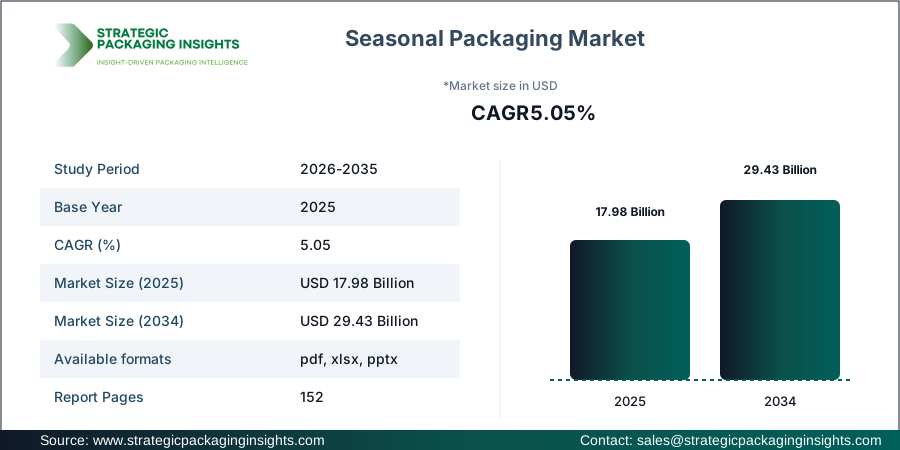
The increasing consumer preference for unique and personalized packaging during festive seasons is a significant driver of the market. This trend is supported by the growing demand for limited edition and gift packaging solutions, particularly in the food and beverage and personal care sectors. The rise of e-commerce platforms has further amplified the need for attractive seasonal packaging to enhance customer experience and brand differentiation.
Report Scope
| Attributes | Details |
| Report Title | Seasonal Packaging Market Projected to Scale to 29.43 Billion by 2035, Assesses Strategic Packaging Insights |
| By packaging type | Holiday Packaging, Festive Packaging, Gift Packaging, Limited Edition Packaging, Seasonal Food Packaging, Seasonal Beverage Packaging, Seasonal Cosmetic Packaging, Seasonal Display Packaging, Special Event Packaging |
| By season | Christmas, Halloween, Valentine's Day, Easter, Thanksgiving, New Year, Summer, Winter, Spring, Autumn |
| By material | Paper, Paperboard, Corrugated Board, Plastic, Glass, Metal, Biodegradable Materials |
| By application | Food and Beverages, Confectionery, Personal Care, Cosmetics, Retail, E-Commerce, Consumer Goods, Corporate Gifting |
| By region | North America, Europe, Asia Pacific, Latin America, Middle East and Africa |
| Base Year | 2025 |
| Historic Period | 2018-2024 |
| Forecast Period | 2026-2035 |
| Number of Pages | 152 |
| Customization Available | Yes* |
Market Trends Analysis
Seasonal packaging is witnessing a shift towards sustainable materials, with brands increasingly opting for biodegradable and recyclable options. This trend is driven by consumer demand for environmentally friendly products and regulatory pressures to reduce packaging waste. The adoption of paper, paperboard, and biodegradable materials is expected to grow, influencing procurement strategies and material sourcing decisions.
Digital printing technologies are transforming the seasonal packaging landscape, enabling brands to offer customized and limited edition designs with shorter lead times. This technological advancement is enhancing brand engagement and allowing for more dynamic marketing campaigns. The integration of augmented reality (AR) in packaging is also gaining traction, providing interactive experiences that boost consumer engagement and drive sales.
Industry Transformation Analysis
The seasonal packaging industry is evolving with a focus on operational efficiency and sustainability. Manufacturers are investing in advanced machinery and automation to streamline production processes and reduce costs. The shift towards localized production is also notable, as companies aim to minimize logistics expenses and carbon footprints.
Supplier consolidation is reshaping the competitive landscape, with larger players acquiring smaller firms to expand their product portfolios and geographic reach. This trend is expected to enhance market competitiveness and drive innovation in packaging design and materials. The integration of digital technologies in manufacturing processes is further optimizing production capabilities and enabling real-time quality control.
Trends & Disruptions Impacting Customers' Customers
Downstream customers, including retailers and e-commerce platforms, are increasingly prioritizing sustainability and customization in their packaging choices. The demand for eco-friendly packaging solutions is rising, driven by consumer awareness and regulatory mandates. Retailers are also seeking innovative packaging designs that enhance product visibility and appeal, influencing purchasing decisions.
These changes are prompting packaging suppliers to innovate and offer more sustainable and customizable options. The focus on reducing packaging waste and improving recyclability is creating opportunities for suppliers to differentiate their offerings and capture new market segments. As a result, the demand for seasonal packaging solutions that align with these trends is expected to grow, driving market expansion and supplier diversification.
Seasonal Packaging Market Ecosystem
The seasonal packaging ecosystem involves a complex interplay of raw material suppliers, substrate producers, converters, and distributors. The procurement of sustainable materials is becoming increasingly important, with companies focusing on reducing environmental impact and meeting regulatory requirements. The integration of digital printing and decoration technologies is enhancing value creation by enabling customized and limited edition designs.
Supply-chain dependencies are critical, with efficient logistics and distribution networks ensuring timely delivery of packaging solutions to end-users. Capacity constraints in substrate production and converting processes can impact market dynamics, influencing pricing and availability. The recycling stage is gaining prominence as companies strive to improve sustainability and meet consumer expectations for eco-friendly packaging.
Analyst Perspective
Analyst Perspective: The seasonal packaging market is poised for significant growth, driven by consumer demand for unique and sustainable packaging solutions. The shift towards eco-friendly materials and digital printing technologies is transforming the industry landscape.
Companies should focus on enhancing their sustainability credentials and investing in advanced manufacturing technologies to remain competitive. The integration of augmented reality in packaging offers a unique opportunity to engage consumers and differentiate products in a crowded market.
Investors and market participants should monitor regulatory developments and consumer trends to capitalize on emerging opportunities. The focus on reducing packaging waste and improving recyclability will continue to shape market dynamics and drive innovation in packaging design and materials.
Opportunities & Threats
The seasonal packaging market presents significant opportunities for growth, driven by increasing consumer demand for personalized and eco-friendly packaging solutions. The rise of e-commerce platforms is amplifying the need for attractive seasonal packaging to enhance customer experience and brand differentiation. Companies can capitalize on this trend by offering innovative and sustainable packaging designs that align with consumer preferences.
Technological advancements in digital printing and augmented reality are creating new avenues for product differentiation and consumer engagement. The ability to offer customized and interactive packaging solutions is becoming a key competitive advantage. Companies that invest in these technologies can enhance their market position and capture new customer segments.
However, the market also faces challenges, including raw material volatility and regulatory uncertainty. The availability and cost of sustainable materials can impact production costs and pricing strategies. Companies must navigate these challenges by diversifying their supplier base and investing in sustainable material sourcing.
Regulatory pressures related to packaging waste and recyclability are increasing, with governments implementing stricter mandates to reduce environmental impact. Companies must adapt to these changes by enhancing their sustainability credentials and investing in recycling infrastructure. Failure to comply with regulatory requirements can result in financial penalties and reputational damage.
Drivers & Challenges
The seasonal packaging market is driven by the growing consumer preference for unique and personalized packaging solutions during festive seasons. This trend is supported by the increasing demand for limited edition and gift packaging, particularly in the food and beverage and personal care sectors. The rise of e-commerce platforms has further amplified the need for attractive seasonal packaging to enhance customer experience and brand differentiation.
Sustainability is a key driver, with consumers and regulatory bodies pushing for eco-friendly packaging solutions. The adoption of biodegradable and recyclable materials is gaining traction, influencing procurement strategies and material sourcing decisions. Companies are investing in sustainable packaging designs to meet consumer expectations and comply with regulatory mandates.
Challenges in the market include raw material volatility and regulatory uncertainty. The availability and cost of sustainable materials can impact production costs and pricing strategies. Companies must navigate these challenges by diversifying their supplier base and investing in sustainable material sourcing. Regulatory pressures related to packaging waste and recyclability are increasing, with governments implementing stricter mandates to reduce environmental impact.
Packaging Market Economics
The economics of seasonal packaging are influenced by raw material costs, conversion expenses, and logistics. The pricing of paper, plastic, and biodegradable materials plays a crucial role in determining overall production costs. Conversion costs, including printing and lamination, are significant factors in the final pricing of packaging solutions.
Energy costs and labor expenses also impact the economics of seasonal packaging. Companies are focusing on optimizing production processes and investing in energy-efficient technologies to reduce costs. Logistics and distribution expenses are critical, with efficient supply chain management ensuring timely delivery of packaging solutions to end-users.
Packaging Value Chain & Cost Analysis
The seasonal packaging value chain involves multiple tiers, from raw material procurement to end-of-life processing. Tier-3 includes resin synthesis, additives, and pulp refining, while Tier-2 encompasses film extrusion, paperboard mills, and substrate production. Tier-1 involves converting, printing, lamination, and forming processes.
Downstream activities include co-packing, CPG brand filling, distribution, collection, sorting, and recycling. Substrate lead times and capacity utilization are critical factors influencing the value chain. Companies are focusing on optimizing conversion economics and logistics to enhance efficiency and reduce costs.
Unit Economics & Substrate Cost Analysis
Unit economics in seasonal packaging are driven by raw material costs, including resin and feedstock pricing. Energy expenses, extrusion, printing, and lamination costs are significant factors in determining unit pricing. Labor and logistics expenses also impact the overall cost structure.
Companies are investing in advanced manufacturing technologies to optimize production processes and reduce costs. The focus on sustainable materials and energy-efficient technologies is enhancing unit economics and driving competitiveness in the market.
Packaging Regulatory & Sustainability Analysis
Regulatory pressures related to packaging waste and recyclability are increasing, with governments implementing stricter mandates to reduce environmental impact. The European Commission and U.S. EPA are key regulatory bodies influencing the market, with mandates on recyclability and packaging waste reduction.
Companies must adapt to these changes by enhancing their sustainability credentials and investing in recycling infrastructure. The focus on reducing packaging waste and improving recyclability is driving innovation in packaging design and materials.
Strategic Mergers, Acquisitions & Capacity Expansions
Recent strategic developments in the seasonal packaging market include mergers and acquisitions aimed at expanding product portfolios and geographic reach. Companies are investing in capacity expansions and new plant developments to enhance production capabilities and meet growing demand.
Technology investments are also notable, with companies focusing on digital printing and augmented reality to enhance product differentiation and consumer engagement. These strategic initiatives are expected to drive market competitiveness and innovation in packaging design and materials.
Strategic Action Directives
Brand Packaging Engineers & Sustainability Directors: Focus on material selection, mono-material qualification, and recyclability to enhance sustainability credentials and meet regulatory requirements.
Converter Operations & Extrusion Leads: Optimize line speed, tooling, and changeover processes to enhance operational efficiency and reduce costs. Invest in advanced manufacturing technologies to improve production capabilities.
Procurement & Material Sourcing Managers: Diversify supplier base and invest in sustainable material sourcing to mitigate raw material volatility and regulatory pressures. Focus on price indexing and PCR contracts to enhance procurement strategies.
Investors: Monitor regulatory developments and consumer trends to capitalize on emerging opportunities. Focus on capacity expansion and technology investments to enhance market competitiveness and drive growth.
Market Share Analysis
The seasonal packaging market is characterized by a competitive landscape with several key players, including Amcor, Mondi, Smurfit WestRock, International Paper, Sonoco Products, DS Smith, Graphic Packaging, Berry Global, Huhtamaki, and Sealed Air. These companies are focusing on expanding their product portfolios and geographic reach to enhance market competitiveness.
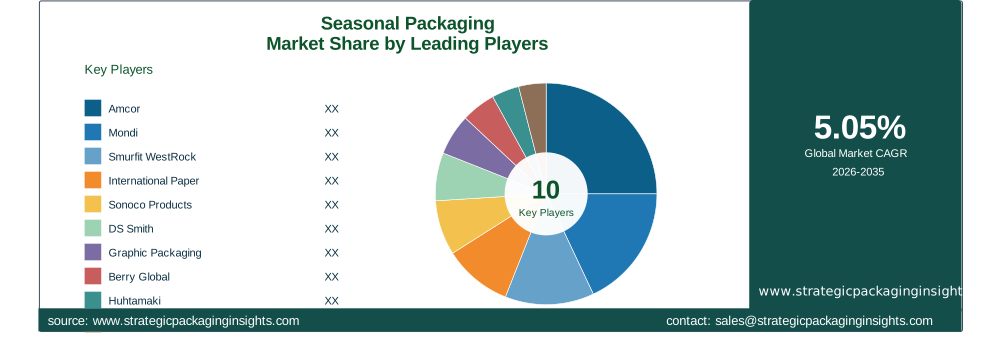
Amcor and Mondi are leading players in the market, with a strong focus on sustainability and innovation in packaging design. Smurfit WestRock and International Paper are notable for their extensive product offerings and global presence. Sonoco Products and DS Smith are investing in capacity expansions and technology advancements to enhance production capabilities.
Graphic Packaging and Berry Global are focusing on digital printing and augmented reality to enhance product differentiation and consumer engagement. Huhtamaki and Sealed Air are notable for their focus on sustainable materials and eco-friendly packaging solutions.
The competitive landscape is characterized by supplier consolidation and strategic partnerships aimed at enhancing product offerings and geographic reach. Companies are investing in advanced manufacturing technologies and sustainable materials to drive innovation and meet consumer demand for eco-friendly packaging solutions.
Key Highlights
- Largest Region: North America
- Fastest-Growing Region: Asia Pacific
- Largest Segment: Holiday Packaging
- Fastest-Growing Segment: Seasonal Beverage Packaging
- Base-year market size: USD 17.98 Billion
- Forecast-year market size: USD 29.43 Billion
- CAGR: 5.05%
- Important application: Food and Beverages
- Major end-use industry: Retail
- Major market driver: Consumer demand for personalized and eco-friendly packaging
Regional Insights
The global seasonal packaging market is witnessing significant growth across major regions, with North America being the largest market and Asia Pacific emerging as the fastest-growing region. The demand for seasonal packaging is driven by consumer preferences for unique and personalized packaging solutions during festive seasons.
North America
North America is the largest market for seasonal packaging, driven by high consumer spending on festive and gift packaging solutions. The region's strong retail and e-commerce sectors are key contributors to market growth, with companies focusing on innovative packaging designs to enhance brand differentiation.
The demand for sustainable packaging solutions is rising, with consumers and regulatory bodies pushing for eco-friendly options. Companies are investing in advanced manufacturing technologies and sustainable materials to meet these demands and enhance market competitiveness.
Europe
Europe is a significant market for seasonal packaging, with a strong focus on sustainability and innovation. The region's stringent regulatory environment is driving the adoption of eco-friendly packaging solutions, with companies investing in biodegradable and recyclable materials.
The demand for personalized and limited edition packaging is rising, driven by consumer preferences for unique and customized products. Companies are focusing on digital printing and augmented reality to enhance product differentiation and consumer engagement.
Asia Pacific
Asia Pacific is the fastest-growing region in the seasonal packaging market, driven by increasing consumer spending and the rise of e-commerce platforms. The demand for festive and gift packaging solutions is rising, with companies focusing on innovative designs to capture new customer segments.
The region's growing middle-class population and increasing disposable incomes are key drivers of market growth. Companies are investing in capacity expansions and technology advancements to enhance production capabilities and meet growing demand.
Latin America
Latin America is witnessing steady growth in the seasonal packaging market, driven by increasing consumer demand for personalized and eco-friendly packaging solutions. The region's growing retail and e-commerce sectors are key contributors to market growth, with companies focusing on innovative packaging designs to enhance brand differentiation.
The demand for sustainable packaging solutions is rising, with consumers and regulatory bodies pushing for eco-friendly options. Companies are investing in advanced manufacturing technologies and sustainable materials to meet these demands and enhance market competitiveness.
Middle East & Africa
The Middle East & Africa region is experiencing moderate growth in the seasonal packaging market, driven by increasing consumer demand for festive and gift packaging solutions. The region's growing retail and e-commerce sectors are key contributors to market growth, with companies focusing on innovative packaging designs to enhance brand differentiation.
The demand for sustainable packaging solutions is rising, with consumers and regulatory bodies pushing for eco-friendly options. Companies are investing in advanced manufacturing technologies and sustainable materials to meet these demands and enhance market competitiveness.
Seasonal Packaging Market Segments Insights

By Packaging Type Analysis
The seasonal packaging market is segmented by packaging type, with holiday packaging being the largest segment. The demand for festive and gift packaging solutions is rising, driven by consumer preferences for unique and personalized products. Companies are focusing on innovative designs and sustainable materials to enhance product differentiation and meet consumer expectations.
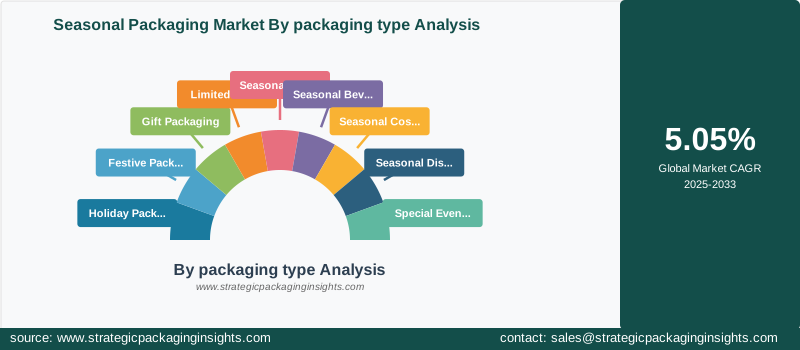
Seasonal beverage packaging is the fastest-growing segment, driven by increasing consumer demand for limited edition and customized packaging solutions. The rise of e-commerce platforms is amplifying the need for attractive packaging designs to enhance customer experience and brand differentiation.
By Season Analysis
The seasonal packaging market is segmented by season, with Christmas being the largest segment. The demand for festive packaging solutions is rising, driven by consumer preferences for unique and personalized products during the holiday season. Companies are focusing on innovative designs and sustainable materials to enhance product differentiation and meet consumer expectations.
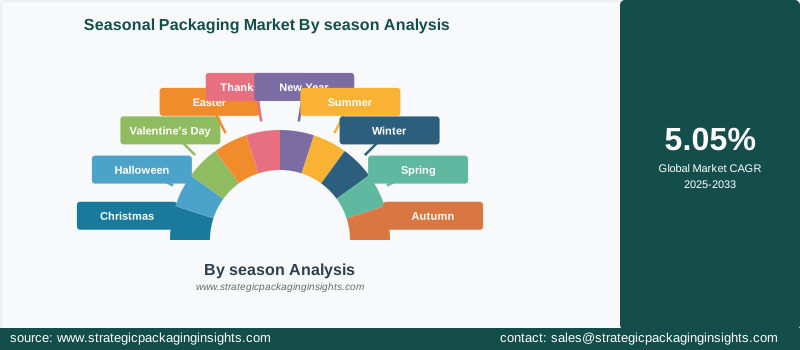
Valentine's Day and Halloween are also significant segments, with increasing consumer demand for limited edition and customized packaging solutions. The rise of e-commerce platforms is amplifying the need for attractive packaging designs to enhance customer experience and brand differentiation.
By Material Analysis
The seasonal packaging market is segmented by material, with paper and paperboard being the largest segments. The demand for sustainable packaging solutions is rising, driven by consumer preferences for eco-friendly products and regulatory pressures to reduce packaging waste. Companies are focusing on biodegradable and recyclable materials to enhance sustainability credentials and meet regulatory requirements.
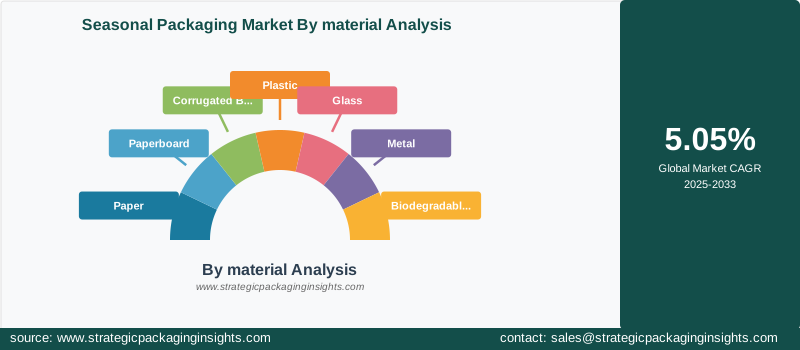
Plastic and biodegradable materials are also significant segments, with increasing consumer demand for innovative and sustainable packaging solutions. The rise of e-commerce platforms is amplifying the need for attractive packaging designs to enhance customer experience and brand differentiation.
By Application Analysis
The seasonal packaging market is segmented by application, with food and beverages being the largest segment. The demand for festive and gift packaging solutions is rising, driven by consumer preferences for unique and personalized products. Companies are focusing on innovative designs and sustainable materials to enhance product differentiation and meet consumer expectations.
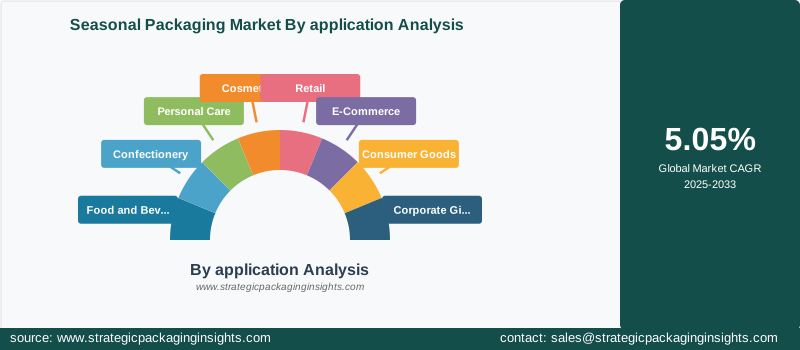
Confectionery and personal care are also significant segments, with increasing consumer demand for limited edition and customized packaging solutions. The rise of e-commerce platforms is amplifying the need for attractive packaging designs to enhance customer experience and brand differentiation.
By Region Analysis
The seasonal packaging market is segmented by region, with North America being the largest market and Asia Pacific emerging as the fastest-growing region. The demand for seasonal packaging is driven by consumer preferences for unique and personalized packaging solutions during festive seasons.
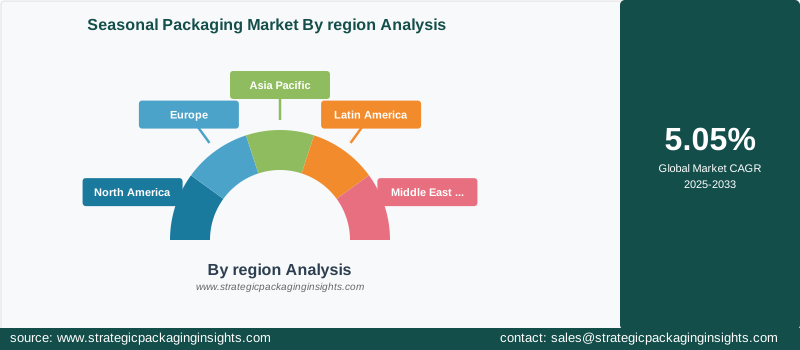
The rise of e-commerce platforms is amplifying the need for attractive packaging designs to enhance customer experience and brand differentiation. Companies are focusing on innovative designs and sustainable materials to enhance product differentiation and meet consumer expectations.
Seasonal Packaging Market Segments
The Seasonal Packaging market has been segmented on the basis ofBy packaging type
- Holiday Packaging
- Festive Packaging
- Gift Packaging
- Limited Edition Packaging
- Seasonal Food Packaging
- Seasonal Beverage Packaging
- Seasonal Cosmetic Packaging
- Seasonal Display Packaging
- Special Event Packaging
By season
- Christmas
- Halloween
- Valentine's Day
- Easter
- Thanksgiving
- New Year
- Summer
- Winter
- Spring
- Autumn
By material
- Paper
- Paperboard
- Corrugated Board
- Plastic
- Glass
- Metal
- Biodegradable Materials
By application
- Food and Beverages
- Confectionery
- Personal Care
- Cosmetics
- Retail
- E-Commerce
- Consumer Goods
- Corporate Gifting
By region
- North America
- Europe
- Asia Pacific
- Latin America
- Middle East and Africa




