


Fabric Cutting Machine Market Outlook
The Fabric Cutting Machine market was valued at $3.97 billion in 2025 and is projected to reach $7.35 billion by 2034, growing at a CAGR of 7.1% during the forecast period 2026-2034. This growth is driven by the increasing demand for precision and efficiency in textile manufacturing processes. The rise in automation and technological advancements in cutting machines are also significant contributors to market expansion. As industries such as apparel, automotive, and technical textiles continue to grow, the need for advanced fabric cutting solutions becomes more pronounced, further propelling market growth.
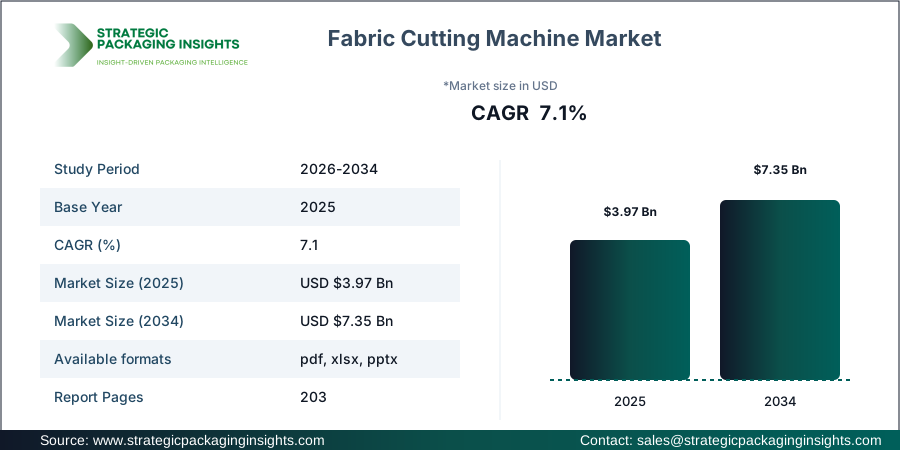
Report Scope
| Attributes | Details |
| Report Title | Fabric Cutting Machine Market Size, Future Growth and Forecast 2034 |
| By Machine Type | Laser Cutters, CNC Cutters, Rotary Cutters |
| By Application | Apparel, Technical Textiles, Packaging Textiles, Automotive Interiors |
| By Automation | Manual, Semi-Automatic, Automatic |
| By End Use | Textile Mills, Converters, Apparel, Industrial Fabrics |
| Region | Asia Pacific, North America, Latin America, Europe, Middle East & Africa |
| Base Year | 2025 |
| Historic Period | 2018-2024 |
| Forecast Period | 2026-2034 |
| Number of Pages | 203 |
| Customization Available | Yes* |
Opportunities & Threats
The fabric cutting machine market presents numerous opportunities, particularly with the increasing adoption of automation in the textile industry. Automation not only enhances precision and efficiency but also reduces labor costs, making it an attractive option for manufacturers. The growing demand for customized and high-quality textile products is driving the need for advanced cutting technologies, such as laser and CNC cutters, which offer superior accuracy and flexibility. Additionally, the expansion of the e-commerce sector is boosting the demand for packaging textiles, creating further opportunities for fabric cutting machine manufacturers to innovate and cater to diverse market needs.
Another significant opportunity lies in the rising demand for technical textiles, which are used in various industries, including automotive, healthcare, and construction. These textiles require precise cutting solutions to meet stringent quality standards, thereby increasing the demand for advanced fabric cutting machines. Furthermore, the growing focus on sustainability and eco-friendly manufacturing processes is encouraging the development of energy-efficient and environmentally friendly cutting technologies. Companies that invest in research and development to create sustainable solutions are likely to gain a competitive edge in the market.
However, the market faces certain threats, such as the high initial investment required for advanced fabric cutting machines. Small and medium-sized enterprises may find it challenging to afford these machines, which could limit market growth. Additionally, the rapid pace of technological advancements may lead to obsolescence of existing machines, posing a risk for manufacturers who fail to keep up with the latest innovations. The market is also susceptible to fluctuations in raw material prices and trade regulations, which could impact the overall cost of production and affect profitability.
Drivers & Challenges
The primary drivers of the fabric cutting machine market include the increasing demand for high-quality textile products and the need for efficient and precise cutting solutions. The rise in disposable income and changing consumer preferences are driving the demand for fashionable and customized apparel, which in turn is boosting the need for advanced fabric cutting machines. Additionally, the growth of the automotive and technical textiles industries is contributing to the demand for specialized cutting solutions that can handle a wide range of materials and applications.
Technological advancements in fabric cutting machines, such as the integration of artificial intelligence and machine learning, are also driving market growth. These technologies enable machines to perform complex cutting tasks with greater accuracy and efficiency, reducing waste and improving overall productivity. The increasing adoption of Industry 4.0 and smart manufacturing practices is further enhancing the capabilities of fabric cutting machines, making them an integral part of modern textile production processes.
Despite these drivers, the market faces several challenges, including the high cost of advanced fabric cutting machines and the need for skilled operators to manage and maintain them. The complexity of these machines requires specialized training, which can be a barrier for some manufacturers. Additionally, the market is highly competitive, with numerous players vying for market share, leading to price pressures and the need for continuous innovation. The ongoing trade tensions and economic uncertainties in various regions also pose challenges to market growth, as they can impact the availability of raw materials and affect overall demand.
Market Share Analysis
The fabric cutting machine market is characterized by a competitive landscape with several key players dominating the industry. Companies such as Gerber Technology, Lectra, and Eastman Machine hold significant market shares due to their extensive product portfolios and strong global presence. These companies have established themselves as leaders in the market by continuously innovating and offering advanced cutting solutions that cater to the diverse needs of the textile industry. Their focus on research and development, along with strategic partnerships and acquisitions, has enabled them to maintain a competitive edge.
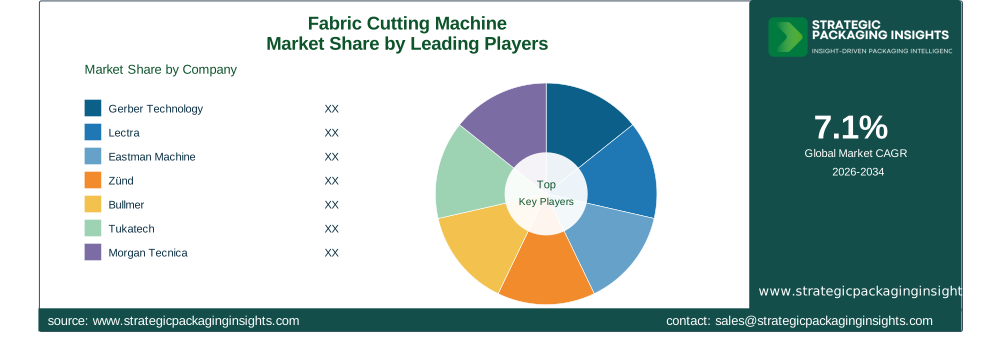
Gerber Technology is renowned for its cutting-edge solutions that integrate software and hardware to deliver precise and efficient cutting processes. The company's commitment to innovation and customer satisfaction has helped it secure a substantial market share. Similarly, Lectra is a prominent player known for its advanced cutting technologies and comprehensive service offerings. The company's focus on digital transformation and sustainability has positioned it as a leader in the market, catering to a wide range of industries, including fashion, automotive, and furniture.
Eastman Machine, another key player, is recognized for its robust and reliable cutting machines that are designed to handle various materials and applications. The company's emphasis on quality and customer support has earned it a loyal customer base and a strong market position. Zünd and Bullmer are also notable players in the market, offering innovative cutting solutions that address the evolving needs of the textile industry. These companies have invested in expanding their product lines and enhancing their technological capabilities to stay competitive in the market.
Other significant players in the market include Tukatech, Morgan Tecnica, Kuris Spezialmaschinen, Pathfinder, and Richpeace. These companies have carved out niches in the market by offering specialized cutting solutions and focusing on customer-centric approaches. Their ability to adapt to changing market dynamics and deliver value-added services has contributed to their success in the industry. Overall, the competitive landscape of the fabric cutting machine market is shaped by innovation, strategic collaborations, and a focus on meeting the diverse needs of customers across various sectors.
Key Highlights
- The fabric cutting machine market is projected to grow at a CAGR of 7.1% from 2026 to 2034.
- Technological advancements, such as AI and machine learning integration, are driving market growth.
- Increasing demand for customized and high-quality textile products is boosting the need for advanced cutting solutions.
- The rise of e-commerce is creating opportunities for packaging textiles, enhancing market demand.
- Key players include Gerber Technology, Lectra, Eastman Machine, and Zünd, among others.
- Automation in textile manufacturing is a significant trend, reducing labor costs and improving efficiency.
- The market faces challenges such as high initial investment costs and the need for skilled operators.
- Sustainability and eco-friendly manufacturing processes are gaining importance in the market.
- Asia Pacific is a leading region in the market, driven by rapid industrialization and demand for textiles.
Top Countries Insights
In the fabric cutting machine market, China stands out as a dominant player, with a market size of approximately $1.2 billion and a CAGR of 9%. The country's robust textile industry, coupled with government initiatives to promote advanced manufacturing technologies, drives market growth. China's focus on automation and innovation in textile production processes further enhances its position in the market. However, challenges such as environmental regulations and rising labor costs may impact future growth.
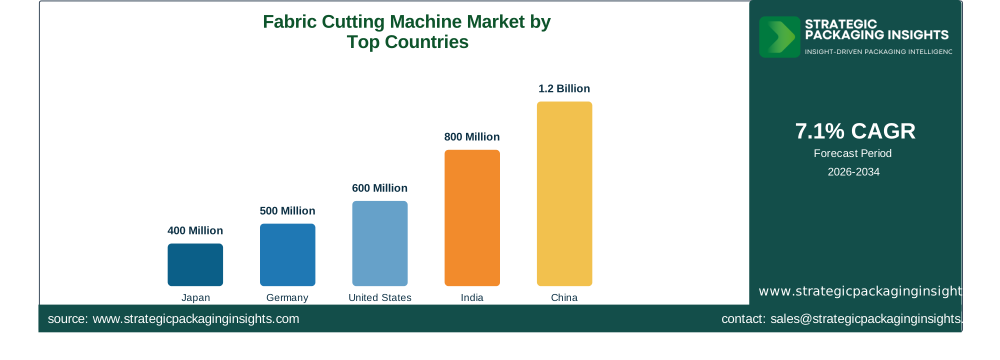
India is another significant market, with a current size of around $800 million and a CAGR of 8%. The country's growing middle class and increasing demand for apparel and home textiles are key drivers of market expansion. Government policies supporting the textile sector, along with investments in infrastructure and technology, contribute to India's market growth. However, the industry faces challenges such as fluctuating raw material prices and competition from other low-cost manufacturing countries.
The United States, with a market size of $600 million and a CAGR of 6%, is a key player in the fabric cutting machine market. The country's advanced manufacturing capabilities and focus on innovation drive demand for cutting-edge fabric cutting solutions. The growing trend of reshoring and increasing demand for technical textiles further boost market growth. However, the industry faces challenges such as trade tensions and regulatory compliance issues.
Germany, with a market size of $500 million and a CAGR of 5%, is a leading market in Europe. The country's strong engineering capabilities and focus on high-quality manufacturing processes drive demand for advanced fabric cutting machines. Germany's emphasis on sustainability and eco-friendly production practices further enhances its market position. However, the industry faces challenges such as high labor costs and competition from emerging markets.
Japan, with a market size of $400 million and a CAGR of 4%, is a significant player in the Asia Pacific region. The country's focus on precision engineering and technological innovation drives demand for advanced fabric cutting solutions. Japan's aging population and shrinking workforce present challenges, but the country's emphasis on automation and smart manufacturing practices helps mitigate these issues.
Fabric Cutting Machine Market Segments Insights

Machine Type Analysis
The fabric cutting machine market is segmented by machine type into laser cutters, CNC cutters, and rotary cutters. Laser cutters are gaining popularity due to their precision and ability to handle a wide range of materials. These machines offer high-speed cutting with minimal material wastage, making them ideal for industries that require intricate designs and patterns. The growing demand for customized apparel and technical textiles is driving the adoption of laser cutters, as they provide superior accuracy and flexibility compared to traditional cutting methods.
CNC cutters are also witnessing significant demand, particularly in the automotive and industrial fabrics sectors. These machines offer high precision and repeatability, making them suitable for large-scale production processes. The integration of advanced software and automation technologies in CNC cutters enhances their efficiency and reduces the need for manual intervention. As industries continue to seek cost-effective and efficient cutting solutions, the demand for CNC cutters is expected to grow steadily.
Rotary cutters, while less advanced than laser and CNC cutters, remain popular in certain applications due to their simplicity and cost-effectiveness. These machines are commonly used in textile mills and converters for cutting basic fabric shapes and patterns. The demand for rotary cutters is driven by their ease of use and low maintenance requirements, making them an attractive option for small and medium-sized enterprises. However, the market for rotary cutters may face challenges as industries increasingly adopt more advanced cutting technologies.
Application Analysis
The application segment of the fabric cutting machine market includes apparel, technical textiles, packaging textiles, and automotive interiors. The apparel industry is a major driver of market growth, with increasing demand for fashionable and customized clothing driving the need for advanced cutting solutions. The rise of fast fashion and e-commerce has further accelerated the demand for efficient and precise fabric cutting machines, as manufacturers seek to meet the growing consumer demand for trendy and affordable apparel.
Technical textiles, which are used in various industries such as automotive, healthcare, and construction, represent a significant growth opportunity for the fabric cutting machine market. These textiles require precise cutting solutions to meet stringent quality standards, driving the demand for advanced cutting technologies. The growing focus on sustainability and eco-friendly manufacturing processes is also contributing to the demand for technical textiles, as industries seek to reduce their environmental impact.
Packaging textiles, driven by the expansion of the e-commerce sector, are another key application area for fabric cutting machines. The increasing demand for durable and aesthetically pleasing packaging solutions is driving the need for advanced cutting technologies that can handle a wide range of materials and designs. Automotive interiors, which require high-quality and precise cutting solutions, also represent a significant market for fabric cutting machines, as the automotive industry continues to grow and innovate.
Automation Analysis
The automation segment of the fabric cutting machine market is divided into manual, semi-automatic, and automatic machines. Automatic machines are gaining traction due to their ability to enhance productivity and reduce labor costs. These machines are equipped with advanced technologies such as AI and machine learning, enabling them to perform complex cutting tasks with minimal human intervention. The growing adoption of Industry 4.0 and smart manufacturing practices is further driving the demand for automatic fabric cutting machines.
Semi-automatic machines, which offer a balance between manual and automatic operations, are also witnessing significant demand. These machines provide flexibility and efficiency, making them suitable for a wide range of applications. The ability to switch between manual and automatic modes allows manufacturers to optimize their production processes and reduce downtime. As industries continue to seek cost-effective and efficient cutting solutions, the demand for semi-automatic machines is expected to grow steadily.
Manual machines, while less advanced than their automatic counterparts, remain popular in certain applications due to their simplicity and cost-effectiveness. These machines are commonly used in small-scale production processes and by manufacturers who require basic cutting solutions. However, the market for manual machines may face challenges as industries increasingly adopt more advanced cutting technologies to enhance productivity and reduce labor costs.
End Use Analysis
The end-use segment of the fabric cutting machine market includes textile mills, converters, apparel, and industrial fabrics. Textile mills are a major driver of market growth, with increasing demand for high-quality and efficient cutting solutions driving the need for advanced fabric cutting machines. The rise of fast fashion and e-commerce has further accelerated the demand for efficient and precise fabric cutting machines, as manufacturers seek to meet the growing consumer demand for trendy and affordable apparel.
Converters, which process raw textiles into finished products, represent a significant growth opportunity for the fabric cutting machine market. These companies require precise cutting solutions to meet stringent quality standards, driving the demand for advanced cutting technologies. The growing focus on sustainability and eco-friendly manufacturing processes is also contributing to the demand for converters, as industries seek to reduce their environmental impact.
Apparel manufacturers, which produce clothing and accessories, are another key end-use segment for fabric cutting machines. The increasing demand for fashionable and customized clothing is driving the need for advanced cutting solutions that can handle a wide range of materials and designs. Industrial fabrics, which are used in various industries such as automotive, healthcare, and construction, also represent a significant market for fabric cutting machines, as these industries continue to grow and innovate.
Fabric Cutting Machine Market Segments
The Fabric Cutting Machine market has been segmented on the basis ofBy Machine Type
- Laser Cutters
- CNC Cutters
- Rotary Cutters
By Application
- Apparel
- Technical Textiles
- Packaging Textiles
- Automotive Interiors
By Automation
- Manual
- Semi-Automatic
- Automatic
By End Use
- Textile Mills
- Converters
- Apparel
- Industrial Fabrics
Region
- Asia Pacific
- North America
- Latin America
- Europe
- Middle East & Africa




