
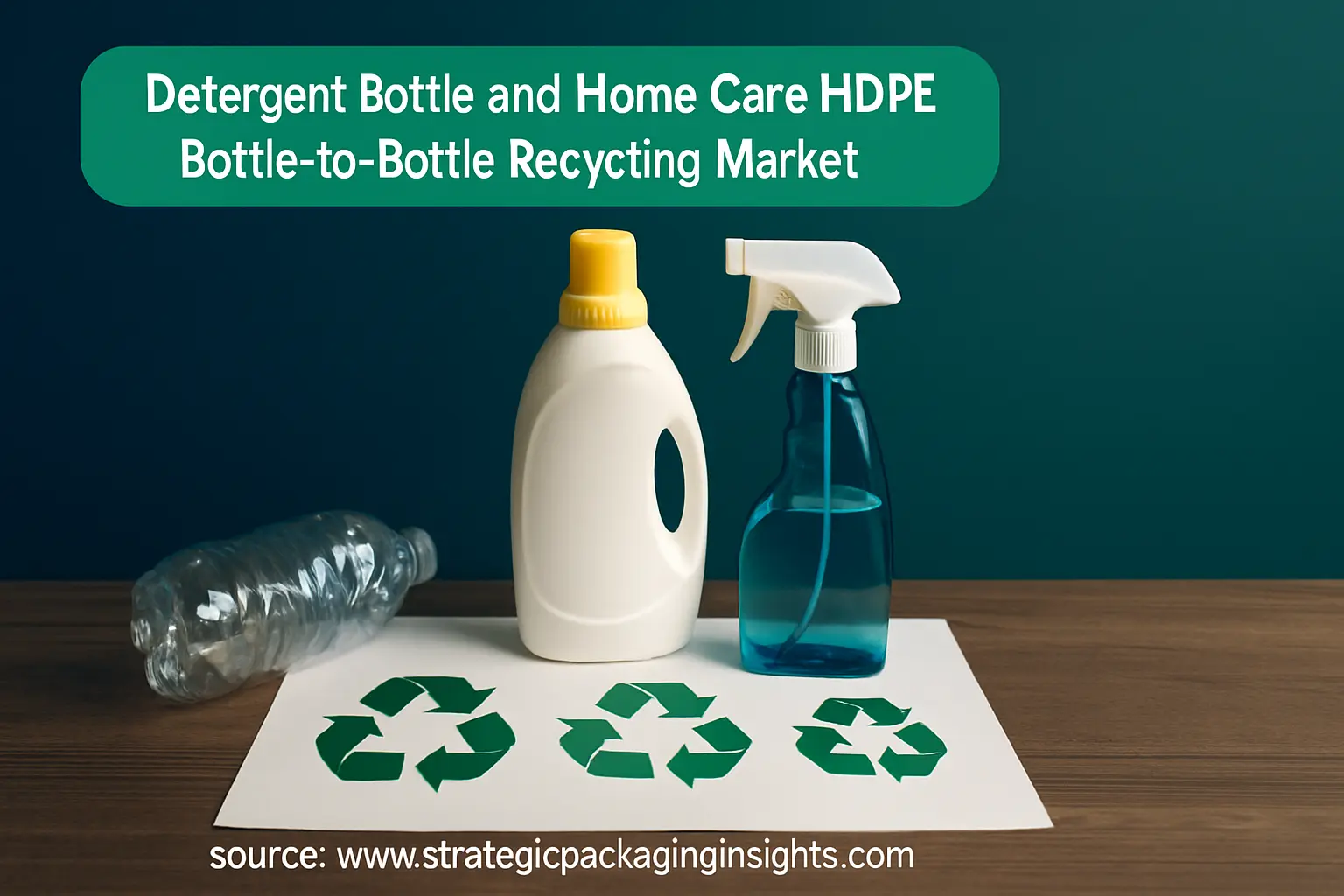
Discover the growth, segmentation, and opportunities in the Detergent Bottle and Home Care HDPE Bottle-to-Bottle Recycling Market, with insights into regional dynamics and sustainability trends.
Why This Market Is Gaining Attention
The Detergent Bottle and Home Care HDPE Bottle-to-Bottle Recycling Market is capturing significant attention due to the increasing global emphasis on sustainability and circular economy practices. As environmental concerns rise, industries are under pressure to reduce plastic waste and enhance recycling efforts. This market specifically addresses the need for efficient recycling of high-density polyethylene (HDPE) bottles, which are prevalent in the home care sector. The shift towards bottle-to-bottle recycling not only supports environmental goals but also offers economic benefits by reducing raw material costs and fostering innovation in packaging solutions.
Market Scale & Growth Momentum
The market is poised for substantial growth, with a base year market size of $1.84 billion in 2025, projected to reach $3.77 billion by 2034. This represents a robust compound annual growth rate (CAGR) of 8.3%. This growth trajectory is indicative of the increasing adoption of recycling technologies and the rising demand for sustainable packaging solutions. The market's expansion is driven by technological advancements in recycling processes, regulatory support for sustainable practices, and the growing consumer preference for eco-friendly products.
Deep Dive into Segments
| Segment | Description |
|---|---|
| Process Type | Includes sorting, washing, extrusion, and deodorization processes that are crucial for transforming used HDPE bottles into reusable materials. |
| Output Type | Comprises natural rHDPE, colored rHDPE, and food-adjacent rHDPE, each serving different applications based on color and safety requirements. |
| Application | Focuses on detergent bottles, home care bottles, and refill bottles, highlighting the diverse uses of recycled HDPE in packaging. |
| End Use | Targets home care brands, recyclers, and packaging converters, illustrating the market's reach across various stakeholders in the supply chain. |
| Region | Covers Asia Pacific, North America, Latin America, Europe, and the Middle East & Africa, reflecting the global scope and regional dynamics of the market. |
Application & End-Use Relevance
The application of recycled HDPE in detergent and home care bottles is particularly relevant as these products are consumed in large volumes globally. The end-use sectors, including home care brands and packaging converters, are increasingly integrating recycled materials into their production lines to meet consumer demand for sustainable products. This trend is further supported by recyclers who are enhancing their capabilities to produce high-quality recycled HDPE that meets industry standards.
Regional & Industry Dynamics
Regionally, the market dynamics vary significantly. Asia Pacific is expected to lead the market due to its large consumer base and rapid industrialization. North America and Europe are also key players, driven by stringent environmental regulations and a strong focus on sustainability. In contrast, Latin America and the Middle East & Africa are emerging markets with growing awareness and investment in recycling infrastructure. Industry dynamics are shaped by collaborations between recyclers, manufacturers, and regulatory bodies to streamline recycling processes and improve material quality.
Challenges vs Opportunities
While the market presents numerous opportunities, it also faces challenges such as the high cost of recycling technologies and the need for standardized processes. However, these challenges are counterbalanced by opportunities in technological innovation, regulatory incentives, and the growing consumer demand for sustainable products. Companies that can navigate these challenges and capitalize on opportunities are likely to gain a competitive edge.
SWOT Overview
| Strengths | Weaknesses | Opportunities | Threats |
|---|---|---|---|
| Strong regulatory support and consumer demand for sustainability. | High initial investment costs for recycling infrastructure. | Technological advancements in recycling processes. | Volatility in raw material prices and market competition. |
Innovation & Sustainability Angle
Innovation is at the heart of the market's growth, with advancements in sorting, washing, and extrusion technologies enhancing the efficiency and quality of recycled HDPE. Sustainability is a key driver, as companies strive to reduce their carbon footprint and meet regulatory requirements. The development of food-adjacent rHDPE is a notable innovation, expanding the potential applications of recycled materials in the packaging industry.
What This Means for Packaging Stakeholders
For packaging stakeholders, the growth of the Detergent Bottle and Home Care HDPE Bottle-to-Bottle Recycling Market signifies a shift towards more sustainable practices. Companies involved in the production and recycling of HDPE bottles must adapt to changing consumer preferences and regulatory landscapes. By investing in advanced recycling technologies and forming strategic partnerships, stakeholders can enhance their market position and contribute to a more sustainable future.