


Detergent Bottle and Home Care HDPE Bottle-to-Bottle Recycling Market Outlook
The Detergent Bottle and Home Care HDPE Bottle-to-Bottle Recycling market was valued at $1.84 billion in 2025 and is projected to reach $3.77 billion by 2034, growing at a CAGR of 8.3% during the forecast period 2026-2034. This market is witnessing significant growth due to the increasing demand for sustainable packaging solutions and the rising awareness about environmental conservation. The shift towards circular economy practices is driving the adoption of HDPE bottle-to-bottle recycling, as it reduces the need for virgin plastic production and minimizes waste. The market is also benefiting from technological advancements in recycling processes, which enhance the quality and efficiency of recycled HDPE products.
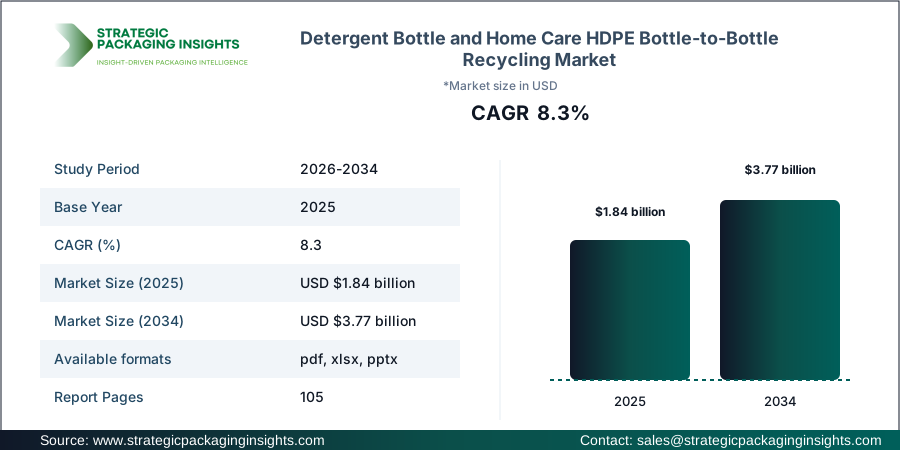
Despite the promising growth prospects, the market faces challenges such as regulatory hurdles and the high cost of recycling infrastructure. Stringent regulations regarding plastic waste management and recycling standards can pose barriers to market expansion. However, these regulations also create opportunities for innovation and the development of advanced recycling technologies. The market's growth potential is further bolstered by the increasing collaboration between stakeholders, including manufacturers, recyclers, and government bodies, to promote sustainable practices and improve recycling rates. As consumer preferences shift towards eco-friendly products, the demand for recycled HDPE bottles is expected to rise, driving market growth.
Report Scope
| Attributes | Details |
| Report Title | Detergent Bottle and Home Care HDPE Bottle-to-Bottle Recycling Market Size, Future Growth and Forecast 2034 |
| Process Type | Sorting, Washing, Extrusion, Deodorization |
| Output Type | Natural rHDPE, Colored rHDPE, Food-Adjacent rHDPE |
| Application | Detergent Bottles, Home Care Bottles, Refill Bottles |
| End Use | Home Care Brands, Recyclers, Packaging Converters |
| Region | Asia Pacific, North America, Latin America, Europe, Middle East & Africa |
| Base Year | 2025 |
| Historic Period | 2018-2024 |
| Forecast Period | 2026-2034 |
| Number of Pages | 105 |
| Customization Available | Yes* |
Opportunities & Threats
The Detergent Bottle and Home Care HDPE Bottle-to-Bottle Recycling market presents numerous opportunities for growth, primarily driven by the increasing consumer demand for sustainable and eco-friendly packaging solutions. As environmental awareness continues to rise, consumers are actively seeking products that contribute to reducing plastic waste and promoting recycling. This shift in consumer behavior is encouraging manufacturers to adopt recycled HDPE materials for their packaging needs, thereby creating a robust demand for bottle-to-bottle recycling processes. Additionally, advancements in recycling technologies are enhancing the quality and efficiency of recycled HDPE, making it a viable alternative to virgin plastics. These technological innovations are expected to further drive market growth by improving the cost-effectiveness and scalability of recycling operations.
Another significant opportunity lies in the growing support from government initiatives and policies aimed at promoting recycling and reducing plastic waste. Governments across the globe are implementing stringent regulations and offering incentives to encourage the adoption of sustainable practices in the packaging industry. These regulatory frameworks are fostering a conducive environment for the growth of the HDPE bottle-to-bottle recycling market. Furthermore, collaborations between industry players, non-governmental organizations, and government bodies are playing a crucial role in raising awareness and driving the adoption of recycling practices. Such partnerships are expected to accelerate market growth by facilitating knowledge sharing and resource pooling.
However, the market also faces certain threats that could hinder its growth trajectory. One of the primary challenges is the high cost associated with setting up and maintaining recycling infrastructure. The initial investment required for establishing recycling facilities and acquiring advanced technologies can be substantial, posing a barrier for small and medium-sized enterprises. Additionally, fluctuations in the prices of raw materials and recycled HDPE can impact the profitability of recycling operations. The market also faces competition from alternative packaging materials, which may offer cost advantages or superior performance characteristics. To mitigate these threats, industry players need to focus on continuous innovation and cost optimization strategies.
Drivers & Challenges
The Detergent Bottle and Home Care HDPE Bottle-to-Bottle Recycling market is primarily driven by the increasing emphasis on sustainability and environmental conservation. As consumers become more environmentally conscious, there is a growing demand for products that minimize environmental impact. This trend is encouraging manufacturers to incorporate recycled HDPE materials into their packaging solutions, thereby driving the demand for bottle-to-bottle recycling processes. Additionally, the implementation of stringent regulations aimed at reducing plastic waste and promoting recycling is acting as a significant driver for market growth. These regulations are compelling manufacturers to adopt sustainable practices and invest in recycling technologies, further boosting the market.
Technological advancements in recycling processes are also playing a crucial role in driving the market. Innovations in sorting, washing, extrusion, and deodorization technologies are enhancing the quality and efficiency of recycled HDPE products. These advancements are making recycled HDPE a more attractive option for manufacturers, as it offers comparable performance to virgin plastics at a lower environmental cost. Furthermore, the increasing collaboration between stakeholders, including manufacturers, recyclers, and government bodies, is fostering a supportive ecosystem for the growth of the HDPE bottle-to-bottle recycling market. Such collaborations are facilitating knowledge sharing, resource pooling, and the development of best practices, thereby driving market expansion.
Despite the positive drivers, the market faces several challenges that could impede its growth. One of the primary challenges is the high cost associated with recycling infrastructure and operations. Establishing and maintaining recycling facilities requires significant capital investment, which can be a barrier for small and medium-sized enterprises. Additionally, the market is subject to fluctuations in the prices of raw materials and recycled HDPE, which can impact the profitability of recycling operations. The market also faces competition from alternative packaging materials, which may offer cost advantages or superior performance characteristics. To overcome these challenges, industry players need to focus on continuous innovation, cost optimization, and strategic partnerships.
Market Share Analysis
The competitive landscape of the Detergent Bottle and Home Care HDPE Bottle-to-Bottle Recycling market is characterized by the presence of several key players who are actively contributing to the market's growth. Companies such as Veolia, Suez, ALPLA, Berry Global, Plastipak, Envision Plastics, Biffa, Jayplas, KW Plastics, and Clean Tech UK are leading the charge in advancing recycling technologies and expanding their market presence. These companies are leveraging their expertise and resources to develop innovative recycling solutions that meet the evolving needs of the packaging industry. The market is witnessing intense competition as players strive to enhance their product offerings and expand their customer base.
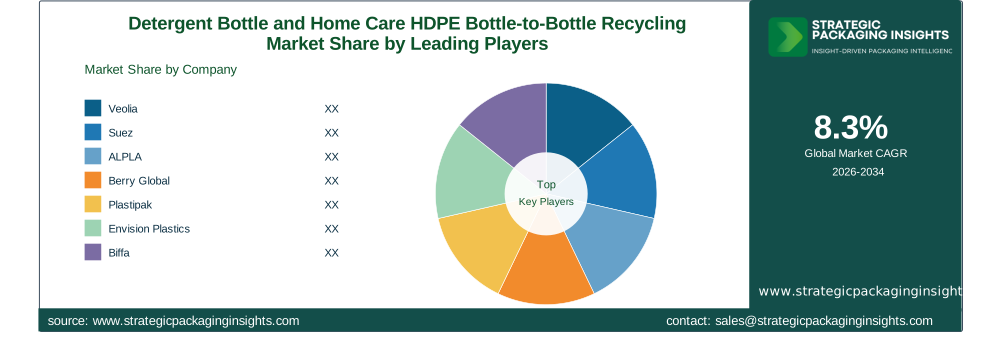
Veolia, a global leader in environmental solutions, holds a significant market share in the HDPE bottle-to-bottle recycling market. The company is known for its comprehensive recycling services and commitment to sustainability. Suez, another major player, is actively involved in developing advanced recycling technologies and promoting circular economy practices. ALPLA, a leading packaging solutions provider, is focusing on expanding its recycling capabilities to meet the growing demand for sustainable packaging. Berry Global, a prominent player in the packaging industry, is investing in recycling infrastructure and technologies to enhance its product portfolio and strengthen its market position.
Plastipak, a key player in the HDPE recycling market, is known for its innovative recycling processes and commitment to sustainability. The company is actively expanding its recycling operations to cater to the increasing demand for recycled HDPE products. Envision Plastics, a leading recycler of HDPE, is focusing on developing high-quality recycled products that meet the stringent requirements of the packaging industry. Biffa, a prominent waste management company, is leveraging its expertise in recycling to expand its market presence and offer sustainable solutions to its customers. Jayplas, a leading recycler in the UK, is known for its advanced recycling technologies and commitment to environmental conservation.
KW Plastics, a major player in the HDPE recycling market, is focusing on expanding its recycling capabilities and enhancing its product offerings. The company is known for its high-quality recycled HDPE products and commitment to sustainability. Clean Tech UK, a leading recycler in the UK, is actively involved in developing innovative recycling solutions and promoting sustainable practices. These companies are playing a crucial role in driving the growth of the HDPE bottle-to-bottle recycling market by investing in advanced technologies, expanding their recycling operations, and collaborating with stakeholders to promote sustainable practices.
Key Highlights
- The market is projected to grow from $1.84 billion in 2025 to $3.77 billion by 2034, at a CAGR of 8.3%.
- Technological advancements in recycling processes are enhancing the quality and efficiency of recycled HDPE products.
- Government initiatives and policies are promoting recycling and reducing plastic waste, creating a conducive environment for market growth.
- Increasing consumer demand for sustainable and eco-friendly packaging solutions is driving market expansion.
- High costs associated with recycling infrastructure and operations pose a challenge for market growth.
- Collaboration between industry players, non-governmental organizations, and government bodies is fostering market growth.
- Fluctuations in raw material prices can impact the profitability of recycling operations.
- Competition from alternative packaging materials presents a challenge for market players.
- Key players in the market include Veolia, Suez, ALPLA, Berry Global, Plastipak, Envision Plastics, Biffa, Jayplas, KW Plastics, and Clean Tech UK.
Top Countries Insights
In the Detergent Bottle and Home Care HDPE Bottle-to-Bottle Recycling market, the United States stands out as a key player with a market size of approximately $1.2 billion and a CAGR of 7%. The country's strong regulatory framework and consumer demand for sustainable packaging solutions are driving market growth. The presence of major recycling companies and technological advancements in recycling processes further bolster the market. However, challenges such as high recycling costs and competition from alternative materials persist.
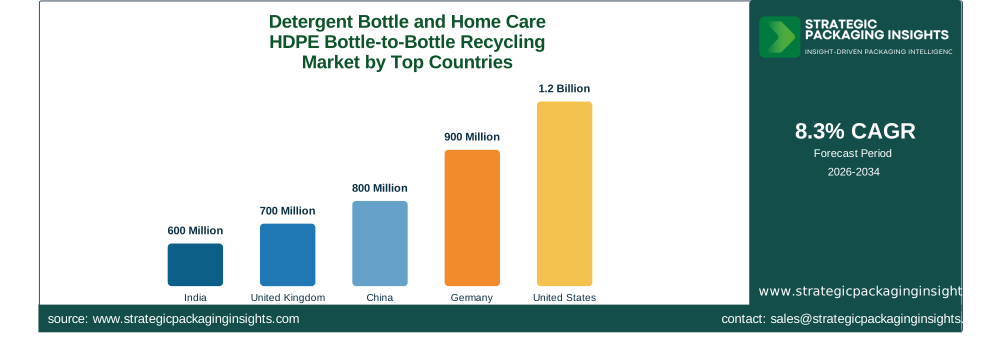
Germany is another significant market, with a market size of around $900 million and a CAGR of 6%. The country's stringent environmental regulations and commitment to sustainability are key growth drivers. Germany's advanced recycling infrastructure and strong government support for recycling initiatives contribute to the market's expansion. However, the market faces challenges such as fluctuating raw material prices and the need for continuous innovation to maintain competitiveness.
China, with a market size of approximately $800 million and a CAGR of 9%, is experiencing rapid growth in the HDPE bottle-to-bottle recycling market. The country's large population and increasing consumer awareness about environmental issues are driving demand for recycled packaging solutions. Government policies promoting recycling and reducing plastic waste are also supporting market growth. However, challenges such as regulatory compliance and the need for advanced recycling technologies remain.
The United Kingdom, with a market size of about $700 million and a CAGR of 5%, is a key player in the European market. The country's strong focus on sustainability and government initiatives to promote recycling are driving market growth. The presence of major recycling companies and technological advancements in recycling processes further support the market. However, challenges such as high recycling costs and competition from alternative materials persist.
India, with a market size of approximately $600 million and a CAGR of 10%, is emerging as a significant market for HDPE bottle-to-bottle recycling. The country's growing population and increasing consumer awareness about environmental issues are driving demand for sustainable packaging solutions. Government initiatives to promote recycling and reduce plastic waste are also supporting market growth. However, challenges such as regulatory compliance and the need for advanced recycling technologies remain.
Detergent Bottle and Home Care HDPE Bottle-to-Bottle Recycling Market Segments Insights

Process Type Analysis
The process type segment in the Detergent Bottle and Home Care HDPE Bottle-to-Bottle Recycling market includes sorting, washing, extrusion, and deodorization. Sorting is a critical step in the recycling process, as it ensures the separation of HDPE bottles from other materials, enhancing the quality of the recycled product. Technological advancements in sorting technologies, such as optical sorting and automated systems, are improving the efficiency and accuracy of this process. Washing is another essential step, as it removes contaminants and impurities from the HDPE bottles, ensuring the production of high-quality recycled products. Innovations in washing technologies, such as the use of eco-friendly detergents and advanced filtration systems, are enhancing the effectiveness of this process.
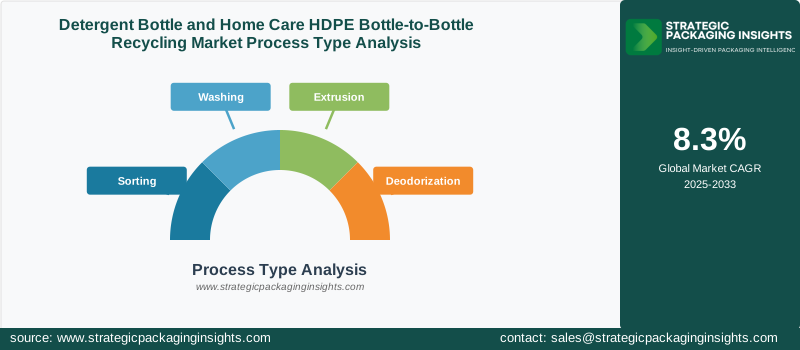
Extrusion is a key process in the recycling of HDPE bottles, as it involves melting and reshaping the plastic into new products. Technological advancements in extrusion technologies, such as the use of energy-efficient equipment and advanced control systems, are improving the quality and efficiency of this process. Deodorization is an important step in the recycling process, as it removes any residual odors from the recycled HDPE products, ensuring their suitability for use in packaging applications. Innovations in deodorization technologies, such as the use of advanced filtration systems and eco-friendly deodorants, are enhancing the effectiveness of this process.
Output Type Analysis
The output type segment in the Detergent Bottle and Home Care HDPE Bottle-to-Bottle Recycling market includes natural rHDPE, colored rHDPE, and food-adjacent rHDPE. Natural rHDPE is a popular choice among manufacturers, as it offers a versatile and cost-effective solution for a wide range of packaging applications. The demand for natural rHDPE is driven by its high-quality and eco-friendly characteristics, making it a preferred choice for sustainable packaging solutions. Colored rHDPE is another important segment, as it offers manufacturers the flexibility to produce packaging products in a variety of colors, catering to diverse consumer preferences.
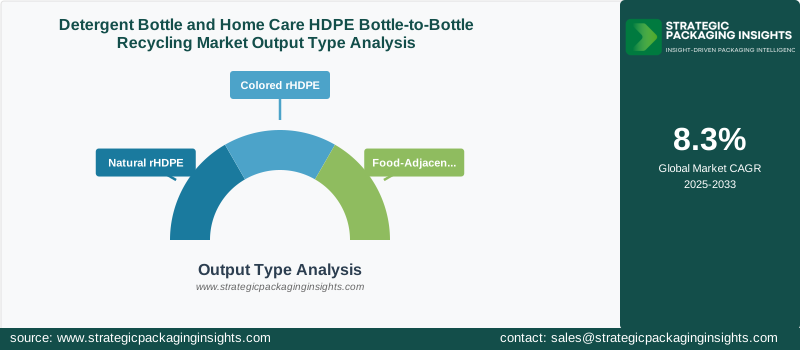
Food-adjacent rHDPE is a growing segment in the market, as it offers manufacturers the opportunity to produce packaging products that are suitable for use in food-related applications. The demand for food-adjacent rHDPE is driven by the increasing consumer demand for sustainable and eco-friendly packaging solutions in the food industry. Technological advancements in recycling processes are enhancing the quality and safety of food-adjacent rHDPE products, making them a viable alternative to virgin plastics. The output type segment is expected to witness significant growth, driven by the increasing demand for sustainable packaging solutions and the growing awareness about environmental conservation.
Application Analysis
The application segment in the Detergent Bottle and Home Care HDPE Bottle-to-Bottle Recycling market includes detergent bottles, home care bottles, and refill bottles. Detergent bottles are a major application segment, as they account for a significant share of the HDPE bottle-to-bottle recycling market. The demand for recycled HDPE detergent bottles is driven by the increasing consumer demand for sustainable and eco-friendly packaging solutions. Home care bottles are another important application segment, as they offer manufacturers the opportunity to produce packaging products that cater to the growing demand for sustainable home care products.
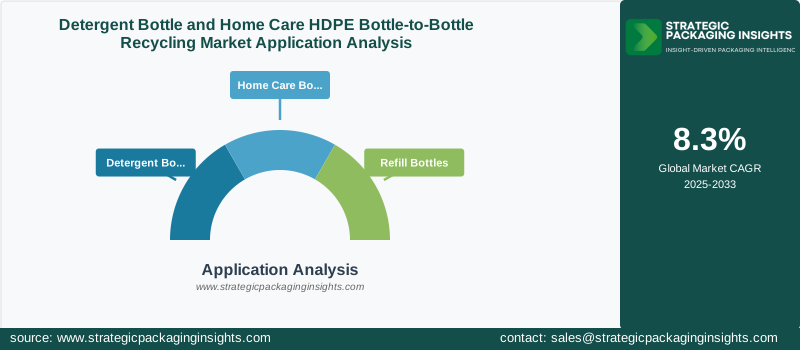
Refill bottles are a growing segment in the market, as they offer consumers a convenient and cost-effective solution for reducing plastic waste. The demand for refill bottles is driven by the increasing consumer awareness about environmental issues and the growing preference for sustainable packaging solutions. Technological advancements in recycling processes are enhancing the quality and efficiency of recycled HDPE products, making them a viable alternative to virgin plastics. The application segment is expected to witness significant growth, driven by the increasing demand for sustainable packaging solutions and the growing awareness about environmental conservation.
End Use Analysis
The end use segment in the Detergent Bottle and Home Care HDPE Bottle-to-Bottle Recycling market includes home care brands, recyclers, and packaging converters. Home care brands are a major end use segment, as they account for a significant share of the HDPE bottle-to-bottle recycling market. The demand for recycled HDPE products from home care brands is driven by the increasing consumer demand for sustainable and eco-friendly packaging solutions. Recyclers are another important end use segment, as they play a crucial role in the recycling process by collecting, sorting, and processing HDPE bottles into recycled products.
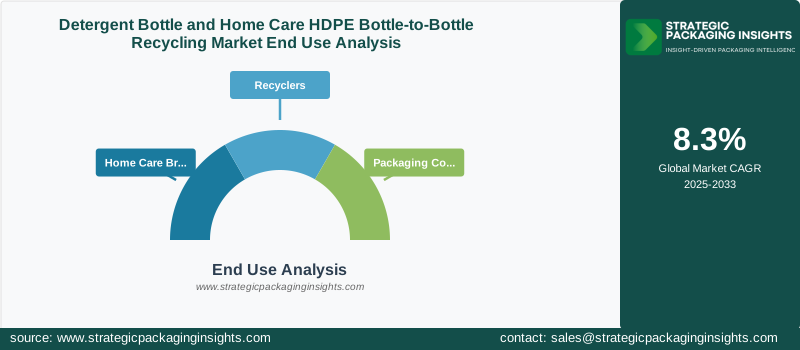
Packaging converters are a growing segment in the market, as they offer manufacturers the opportunity to produce packaging products that cater to the growing demand for sustainable packaging solutions. The demand for recycled HDPE products from packaging converters is driven by the increasing consumer awareness about environmental issues and the growing preference for sustainable packaging solutions. Technological advancements in recycling processes are enhancing the quality and efficiency of recycled HDPE products, making them a viable alternative to virgin plastics. The end use segment is expected to witness significant growth, driven by the increasing demand for sustainable packaging solutions and the growing awareness about environmental conservation.
Detergent Bottle and Home Care HDPE Bottle-to-Bottle Recycling Market Segments
The Detergent Bottle and Home Care HDPE Bottle-to-Bottle Recycling market has been segmented on the basis ofProcess Type
- Sorting
- Washing
- Extrusion
- Deodorization
Output Type
- Natural rHDPE
- Colored rHDPE
- Food-Adjacent rHDPE
Application
- Detergent Bottles
- Home Care Bottles
- Refill Bottles
End Use
- Home Care Brands
- Recyclers
- Packaging Converters
Region
- Asia Pacific
- North America
- Latin America
- Europe
- Middle East & Africa




