
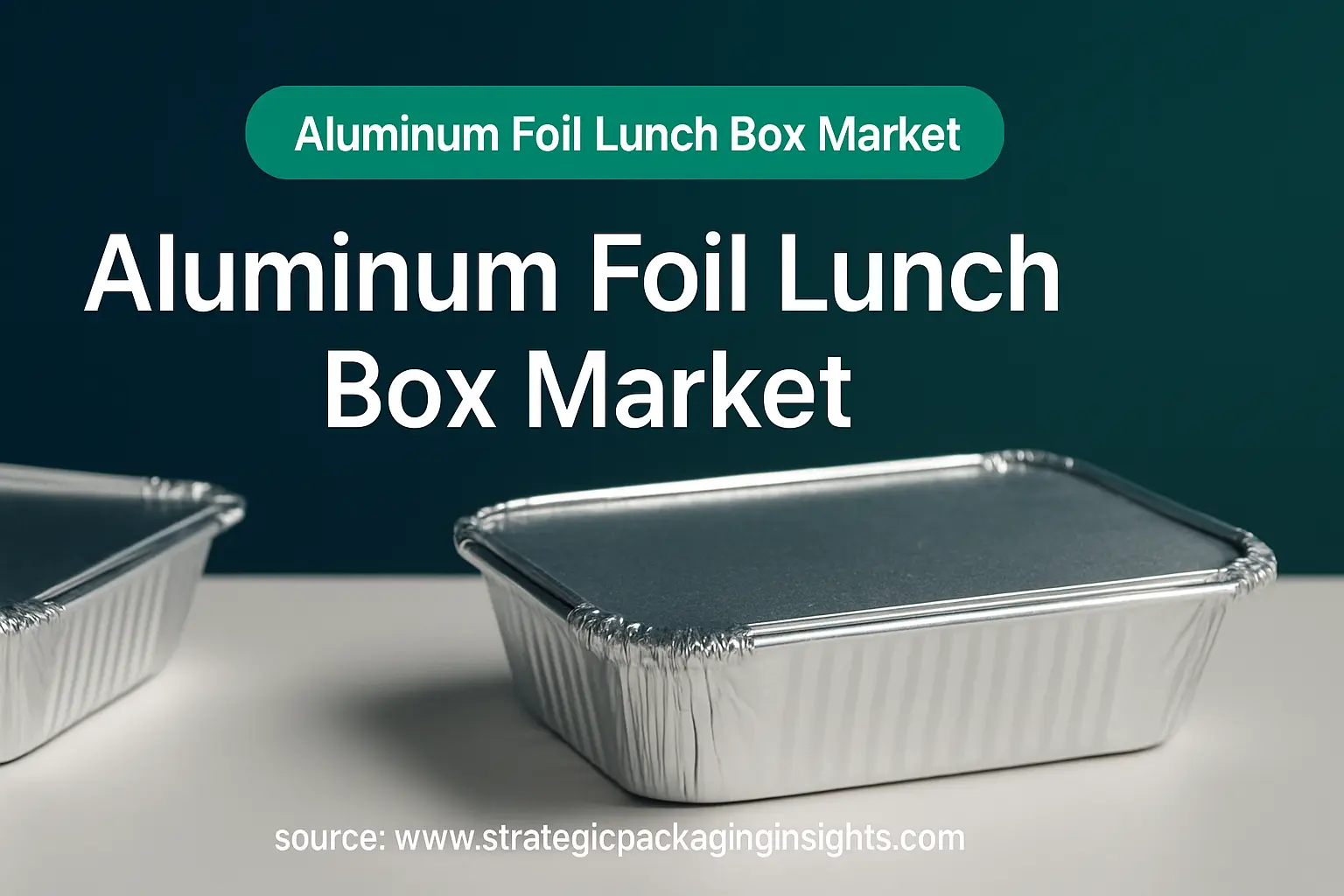
Explore the dynamic growth of the Aluminum Foil Lunch Box Market, driven by sustainability and convenience. Analyze market trends, segment breakdowns, and strategic forecasts for 2025-2034.
Market Context & Industry Relevance
The Aluminum Foil Lunch Box Market is experiencing a transformative phase, driven by the increasing demand for sustainable and convenient packaging solutions. As consumers become more environmentally conscious, the shift towards recyclable and eco-friendly materials is reshaping the packaging industry. Aluminum foil lunch boxes, known for their lightweight, durable, and recyclable properties, are at the forefront of this evolution, offering a practical solution for both consumers and businesses.
https://www.strategicpackaginginsights.com/report/aluminum-foil-lunch-box-market
Demand Drivers Across Packaging
The demand for aluminum foil lunch boxes is primarily fueled by the growing trend of on-the-go lifestyles and the need for convenient meal solutions. Urbanization and the rise of dual-income households have increased the reliance on ready-to-eat meals, which in turn boosts the demand for efficient packaging solutions. Additionally, the food delivery and takeaway industry has seen exponential growth, further driving the need for reliable and sustainable packaging options.
Market Valuation & Forecast
In 2025, the Aluminum Foil Lunch Box Market was valued at $1.45 billion. With a projected compound annual growth rate (CAGR) of 4.90%, the market is expected to reach $2.22 billion by 2034. This growth trajectory is underpinned by the increasing adoption of aluminum foil lunch boxes across various sectors, including food services, retail, and hospitality. The market's expansion is also supported by technological advancements in packaging design and manufacturing processes.
Segment Breakdown
| Segment | Description |
|---|---|
| Design Type | Single Compartment, Multi-compartment |
| Capacity Volume | 300ml, 500ml, 750ml |
| Feature Set | With Lid, Handle Option |
| Stackability | Nested, Flat Pack |
| Region | Asia Pacific, North America, Latin America, Europe, Middle East & Africa |
The market is segmented based on design type, capacity volume, feature set, stackability, and region. Single and multi-compartment designs cater to different consumer needs, while varying capacity volumes offer flexibility for portion control. Features such as lids and handle options enhance usability, and stackability options like nested and flat pack designs optimize storage and transportation efficiency.
Application-Led Impact
The application of aluminum foil lunch boxes extends beyond traditional food packaging. They are increasingly used in catering services, airline meal packaging, and institutional catering due to their ability to maintain food freshness and temperature. The versatility of these lunch boxes makes them suitable for a wide range of culinary applications, from hot meals to cold salads, thereby broadening their market appeal.
Risks, Barriers & Mitigation
Despite the positive outlook, the market faces challenges such as fluctuating raw material prices and stringent environmental regulations. To mitigate these risks, manufacturers are investing in research and development to enhance the recyclability of aluminum foil and reduce production costs. Additionally, collaborations with regulatory bodies can help navigate compliance challenges and promote sustainable practices.
Concise SWOT Snapshot
| Strengths | Weaknesses | Opportunities | Threats |
|---|---|---|---|
| Recyclable, Lightweight | Cost Variability | Growing Eco-consciousness | Regulatory Challenges |
The SWOT analysis highlights the market's strengths in recyclability and lightweight properties, while cost variability remains a weakness. Opportunities arise from increasing eco-consciousness, but regulatory challenges pose a threat to market stability.
Technology & Sustainability Influence
Technological advancements are playing a crucial role in enhancing the sustainability of aluminum foil lunch boxes. Innovations in manufacturing processes are reducing energy consumption and waste, while new coating technologies are improving the recyclability of aluminum foil. These developments are aligned with global sustainability goals and are expected to drive further market growth.
Strategic Takeaways for 2025–2034
As the Aluminum Foil Lunch Box Market continues to evolve, stakeholders should focus on leveraging technological innovations to enhance product sustainability and efficiency. Strategic partnerships with environmental organizations can bolster brand reputation and consumer trust. Additionally, expanding product offerings to cater to diverse consumer needs and preferences will be key to capturing market share in the coming years.