
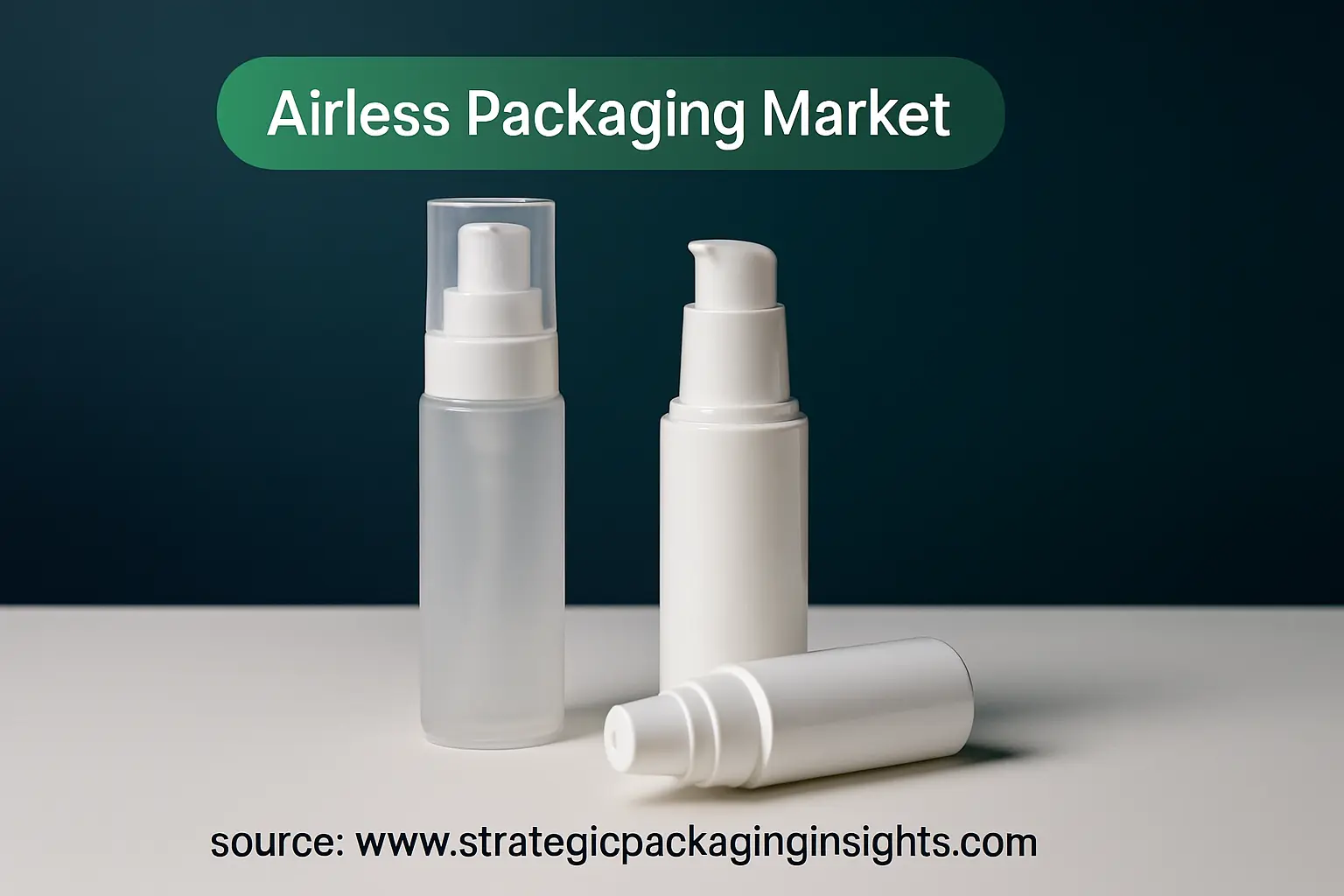
Explore the dynamic growth of the Airless Packaging Market, driven by innovation in product types, materials, and applications. Analyze market trends, segment breakdowns, and strategic insights for 2025-2033.
Market Context & Industry Relevance
The Airless Packaging Market is at the forefront of packaging innovation, offering solutions that preserve product integrity and extend shelf life. This market is increasingly relevant as consumer demand for sustainable and efficient packaging solutions grows. Airless packaging systems are designed to prevent contamination and oxidation, making them ideal for sensitive products such as cosmetics and pharmaceuticals.
https://www.strategicpackaginginsights.com/report/airless-packaging-market
Demand Drivers Across Packaging
Several factors are driving demand in the airless packaging sector. The rise in consumer awareness regarding product safety and shelf life is a primary driver. Additionally, the cosmetics and skincare industry is experiencing a surge in demand for airless packaging due to its ability to maintain product efficacy. The pharmaceutical sector also benefits from airless systems that ensure precise dosage and reduce waste.
Market Valuation & Forecast
The airless packaging market was valued at $6.44 billion in 2024 and is projected to reach $11.94 billion by 2033, growing at a CAGR of 7.10%. This growth is fueled by technological advancements and the increasing adoption of airless systems across various industries. The trend towards eco-friendly packaging solutions is also contributing to market expansion, as companies seek to reduce their environmental footprint.
Segment Breakdown
| Segment | Description |
|---|---|
| Product Type | Airless Bottles, Airless Jars, Airless Pumps |
| Material Type | Plastic Packaging, Glass Packaging, Metal Packaging |
| Application | Cosmetics & Skincare, Pharmaceuticals, Personal Care Products |
| Distribution Channel | Direct Supply, Contract Packaging, Retail Packaging Suppliers |
| Region | Asia Pacific, North America, Latin America, Europe, Middle East & Africa |
Application-Led Impact
Airless packaging is making significant inroads in the cosmetics and skincare industry, where product preservation is paramount. The pharmaceutical industry also benefits from airless systems that provide precise dosing and reduce contamination risks. Personal care products are increasingly adopting airless packaging to enhance user experience and product longevity.
Risks, Barriers & Mitigation
Despite its advantages, the airless packaging market faces challenges such as high production costs and the complexity of manufacturing processes. To mitigate these risks, companies are investing in research and development to streamline production and reduce costs. Additionally, regulatory compliance remains a barrier, necessitating continuous adaptation to changing standards.
Concise SWOT Snapshot
| Strengths | Weaknesses | Opportunities | Threats |
|---|---|---|---|
| Product Integrity, Extended Shelf Life | High Production Costs | Growing Demand in Emerging Markets | Regulatory Challenges |
Technology & Sustainability Influence
Technological advancements are pivotal in the airless packaging market, with innovations focusing on improving functionality and sustainability. The shift towards eco-friendly materials is gaining momentum, as consumers and companies alike prioritize environmental responsibility. Recyclable and biodegradable materials are becoming more prevalent, aligning with global sustainability goals.
Strategic Takeaways for 2025–2033
As the airless packaging market continues to evolve, companies should focus on innovation and sustainability to maintain competitive advantage. Embracing new technologies and materials will be crucial in meeting consumer demands and regulatory requirements. Strategic partnerships and investments in emerging markets can also provide growth opportunities, ensuring long-term success in this dynamic industry.