


Vacuum Sealing Machine Market Outlook
The vacuum sealing machine market was valued at $2.04 billion in 2025 and is projected to reach $3.48 billion by 2034, growing at a CAGR of 6.1% during the forecast period 2026-2034. This growth is driven by increasing demand for efficient packaging solutions across various industries, including food and beverage, healthcare, and electronics. The rising awareness about food preservation and waste reduction is significantly contributing to the market's expansion. Additionally, technological advancements in vacuum sealing machines, such as the integration of IoT and automation, are enhancing operational efficiency and driving market growth. The market is also benefiting from the growing trend of home-based food preservation, which is increasing the demand for compact and user-friendly vacuum sealing machines.
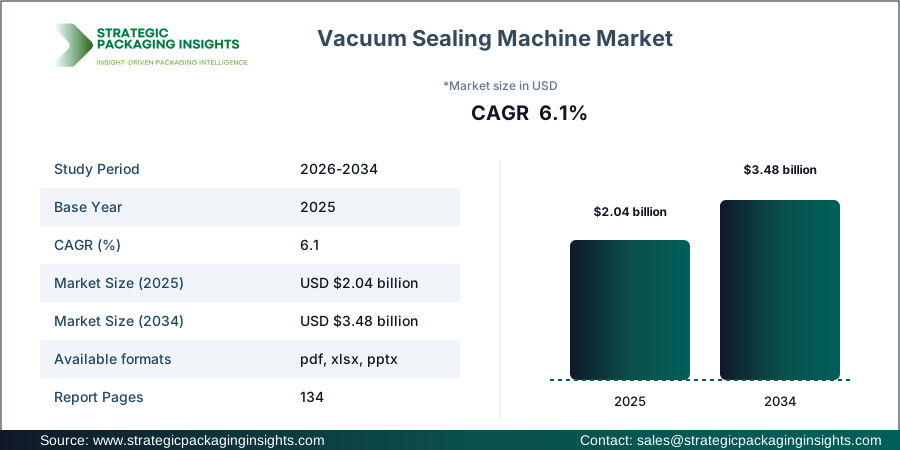
However, the market faces certain challenges, including high initial costs and maintenance expenses associated with advanced vacuum sealing machines. Regulatory constraints related to packaging materials and environmental concerns regarding plastic waste are also potential barriers to market growth. Despite these challenges, the market holds significant growth potential due to the increasing adoption of vacuum sealing machines in emerging economies, where the food processing industry is rapidly expanding. The market is also expected to benefit from the growing demand for sustainable packaging solutions, which is encouraging manufacturers to develop eco-friendly vacuum sealing machines.
Report Scope
| Attributes | Details |
| Report Title | Vacuum Sealing Machine Market Size, Future Growth and Forecast 2034 |
| By Machine Type | Chamber Sealers, External Vacuum Sealers, Nozzle Vacuum Sealers |
| By Automation | Manual, Semi-Automatic, Automatic |
| By Application | Food Packaging, Medical Packaging, Electronics, Industrial Goods |
| By End Use | Food Processors, Restaurants, Laboratories, Manufacturers |
| Region | Asia Pacific, North America, Latin America, Europe, Middle East & Africa |
| Base Year | 2025 |
| Historic Period | 2018-2024 |
| Forecast Period | 2026-2034 |
| Number of Pages | 134 |
| Customization Available | Yes* |
Opportunities & Threats
The vacuum sealing machine market presents numerous opportunities, particularly in the food packaging sector. As consumers become more health-conscious and demand for fresh, preservative-free food increases, the need for effective food preservation methods like vacuum sealing is on the rise. This trend is particularly strong in developed regions where consumers are willing to invest in advanced kitchen appliances. Additionally, the growing popularity of sous-vide cooking, which requires vacuum-sealed bags, is further boosting the demand for vacuum sealing machines. Manufacturers can capitalize on these trends by developing innovative products that cater to the evolving needs of consumers.
Another significant opportunity lies in the industrial and medical packaging sectors. The need for sterile and contamination-free packaging in the medical industry is driving the demand for vacuum sealing machines. Similarly, the electronics industry requires vacuum sealing for moisture-sensitive components, presenting a lucrative opportunity for market players. Companies that can offer specialized vacuum sealing solutions tailored to these industries stand to gain a competitive edge. Furthermore, the increasing focus on sustainability is encouraging manufacturers to develop eco-friendly vacuum sealing machines, which could open up new market segments.
Despite these opportunities, the market faces threats from regulatory challenges and environmental concerns. The use of plastic in vacuum sealing machines is under scrutiny due to its environmental impact, and manufacturers may face stricter regulations in the future. Additionally, the high cost of advanced vacuum sealing machines could deter small businesses and individual consumers from adopting these products. To mitigate these threats, companies need to invest in research and development to create cost-effective and environmentally friendly solutions. Collaborations with regulatory bodies to ensure compliance with packaging standards can also help mitigate potential risks.
Drivers & Challenges
The primary drivers of the vacuum sealing machine market include the increasing demand for food preservation and the growing awareness of food waste reduction. As consumers become more conscious of the need to reduce food waste, vacuum sealing machines offer an effective solution by extending the shelf life of perishable goods. This is particularly relevant in the food processing industry, where vacuum sealing helps maintain product quality and freshness. Additionally, the rise of e-commerce and online food delivery services is driving the demand for vacuum-sealed packaging to ensure safe and secure transportation of food products.
Technological advancements are also playing a crucial role in driving market growth. The integration of IoT and automation in vacuum sealing machines is enhancing their functionality and efficiency, making them more appealing to consumers and businesses alike. These advancements are enabling manufacturers to offer machines with improved features, such as remote monitoring and control, which are highly valued in industrial applications. Furthermore, the development of compact and portable vacuum sealing machines is expanding their use in residential settings, contributing to market growth.
However, the market faces several challenges, including high initial costs and maintenance expenses associated with advanced vacuum sealing machines. These costs can be prohibitive for small businesses and individual consumers, limiting market penetration. Additionally, the market is constrained by regulatory challenges related to packaging materials and environmental concerns regarding plastic waste. To overcome these challenges, manufacturers need to focus on developing cost-effective and sustainable solutions. Investing in research and development to create innovative products that meet regulatory standards and consumer demands is essential for long-term market success.
Market Share Analysis
The vacuum sealing machine market is characterized by a competitive landscape with several key players vying for market share. Henkelman, MULTIVAC, PAC Machinery, Promarks, Sammic, VacMaster, Henkovac, Ulma Packaging, Nesco, and FoodSaver are some of the prominent companies operating in this market. These companies are focusing on product innovation, strategic partnerships, and mergers and acquisitions to strengthen their market position. The competitive landscape is further intensified by the presence of regional players who offer cost-effective solutions to cater to local demand.
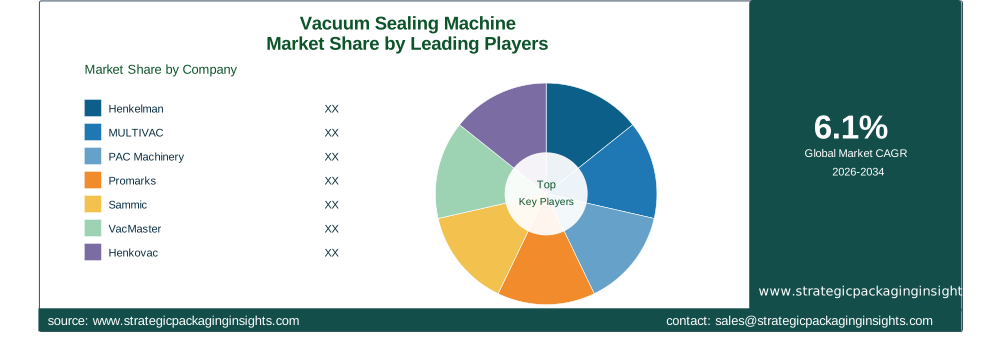
Henkelman is a leading player in the vacuum sealing machine market, known for its high-quality and reliable products. The company has a strong presence in the food packaging sector and is continuously expanding its product portfolio to meet the evolving needs of consumers. MULTIVAC is another major player, offering a wide range of vacuum sealing machines for various applications, including food, medical, and industrial packaging. The company's focus on innovation and sustainability has helped it maintain a competitive edge in the market.
PAC Machinery is recognized for its advanced vacuum sealing solutions that cater to both commercial and residential markets. The company's commitment to quality and customer satisfaction has earned it a loyal customer base. Promarks and Sammic are also key players in the market, known for their durable and efficient vacuum sealing machines. These companies are investing in research and development to introduce new products that address the changing demands of consumers and industries.
VacMaster and Henkovac are prominent players in the vacuum sealing machine market, offering a range of products that cater to different end-use applications. Ulma Packaging is known for its innovative packaging solutions and has a strong presence in the global market. Nesco and FoodSaver are popular brands among residential consumers, offering user-friendly and affordable vacuum sealing machines. These companies are focusing on expanding their distribution networks and enhancing their product offerings to capture a larger share of the market.
Key Highlights
- The vacuum sealing machine market is projected to grow at a CAGR of 6.1% from 2026 to 2034.
- Technological advancements, such as IoT integration and automation, are driving market growth.
- Increasing demand for food preservation and waste reduction is boosting the market.
- The food packaging sector is the largest application segment in the market.
- Regulatory challenges and environmental concerns are potential barriers to market growth.
- Key players are focusing on product innovation and strategic partnerships to strengthen their market position.
- The market is witnessing significant growth opportunities in emerging economies.
- Eco-friendly vacuum sealing machines are gaining popularity among consumers.
- The rise of e-commerce and online food delivery services is driving demand for vacuum-sealed packaging.
Top Countries Insights
In the vacuum sealing machine market, the United States holds a significant share, with a market size of approximately $1.2 billion and a CAGR of 5%. The country's strong food processing industry and high consumer awareness about food preservation are key growth drivers. Additionally, the presence of major market players and technological advancements in packaging solutions contribute to the market's expansion. However, regulatory challenges related to packaging materials and environmental concerns pose potential threats to growth.
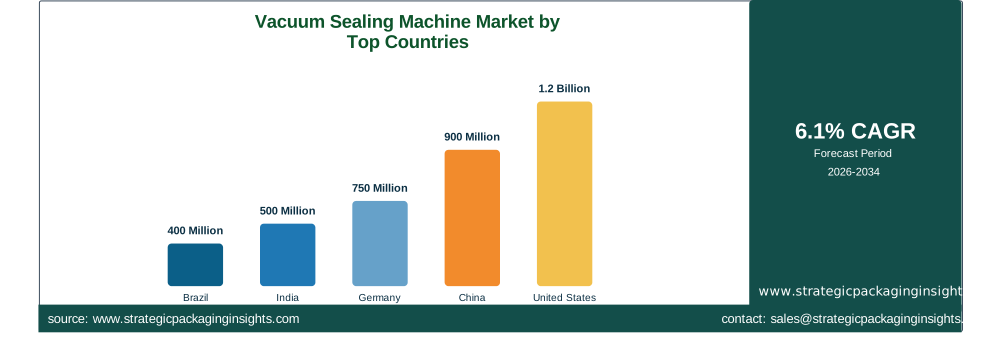
China is another major player in the vacuum sealing machine market, with a market size of around $900 million and a CAGR of 7%. The country's rapidly growing food processing industry and increasing demand for efficient packaging solutions are driving market growth. Government initiatives to promote sustainable packaging and reduce food waste are also contributing to the market's expansion. However, the market faces challenges from regulatory constraints and the high cost of advanced vacuum sealing machines.
Germany is a key market in Europe, with a market size of approximately $750 million and a CAGR of 6%. The country's strong industrial base and focus on innovation in packaging solutions are driving market growth. The demand for vacuum sealing machines in the food and medical packaging sectors is particularly high. However, environmental concerns related to plastic waste and regulatory challenges pose potential barriers to growth.
India is an emerging market for vacuum sealing machines, with a market size of around $500 million and a CAGR of 8%. The country's growing food processing industry and increasing consumer awareness about food preservation are key growth drivers. Government initiatives to promote sustainable packaging and reduce food waste are also contributing to the market's expansion. However, the market faces challenges from regulatory constraints and the high cost of advanced vacuum sealing machines.
Brazil is a significant market in Latin America, with a market size of approximately $400 million and a CAGR of 6%. The country's expanding food processing industry and increasing demand for efficient packaging solutions are driving market growth. Government initiatives to promote sustainable packaging and reduce food waste are also contributing to the market's expansion. However, the market faces challenges from regulatory constraints and the high cost of advanced vacuum sealing machines.
Vacuum Sealing Machine Market Segments Insights

Machine Type Analysis
The vacuum sealing machine market is segmented by machine type into chamber sealers, external vacuum sealers, and nozzle vacuum sealers. Chamber sealers are widely used in commercial settings due to their ability to handle large volumes and provide a high level of vacuum. These machines are particularly popular in the food processing industry, where they are used to package bulk products efficiently. The demand for chamber sealers is driven by their versatility and ability to accommodate various packaging sizes and materials. Additionally, technological advancements in chamber sealers, such as the integration of digital controls and automation, are enhancing their efficiency and appeal.
External vacuum sealers are gaining popularity among residential consumers due to their compact size and affordability. These machines are ideal for home use, where they are used to preserve food and reduce waste. The growing trend of home-based food preservation and the increasing popularity of sous-vide cooking are driving the demand for external vacuum sealers. Manufacturers are focusing on developing user-friendly and portable models to cater to the needs of residential consumers. The market for external vacuum sealers is expected to grow significantly as more consumers become aware of the benefits of vacuum sealing.
Nozzle vacuum sealers are primarily used in industrial applications, where they provide a high level of precision and control. These machines are ideal for packaging delicate and moisture-sensitive products, such as electronics and medical devices. The demand for nozzle vacuum sealers is driven by the need for contamination-free packaging in the medical and electronics industries. Manufacturers are investing in research and development to enhance the performance and efficiency of nozzle vacuum sealers, making them more appealing to industrial users. The market for nozzle vacuum sealers is expected to grow as industries continue to prioritize product safety and quality.
Automation Analysis
The vacuum sealing machine market is segmented by automation into manual, semi-automatic, and automatic machines. Manual vacuum sealers are popular among residential consumers due to their affordability and ease of use. These machines are ideal for home use, where they are used to preserve food and reduce waste. The demand for manual vacuum sealers is driven by the growing trend of home-based food preservation and the increasing popularity of sous-vide cooking. Manufacturers are focusing on developing user-friendly and portable models to cater to the needs of residential consumers.
Semi-automatic vacuum sealers are widely used in commercial settings, where they offer a balance between cost and efficiency. These machines are ideal for small to medium-sized businesses, where they are used to package a variety of products efficiently. The demand for semi-automatic vacuum sealers is driven by their versatility and ability to accommodate various packaging sizes and materials. Additionally, technological advancements in semi-automatic vacuum sealers, such as the integration of digital controls and automation, are enhancing their efficiency and appeal.
Automatic vacuum sealers are primarily used in industrial applications, where they provide a high level of precision and control. These machines are ideal for packaging large volumes of products quickly and efficiently. The demand for automatic vacuum sealers is driven by the need for high-speed and high-volume packaging in the food processing and industrial sectors. Manufacturers are investing in research and development to enhance the performance and efficiency of automatic vacuum sealers, making them more appealing to industrial users. The market for automatic vacuum sealers is expected to grow as industries continue to prioritize efficiency and productivity.
Application Analysis
The vacuum sealing machine market is segmented by application into food packaging, medical packaging, electronics, and industrial goods. The food packaging segment is the largest application segment in the market, driven by the increasing demand for food preservation and waste reduction. Vacuum sealing machines are widely used in the food processing industry to extend the shelf life of perishable goods and maintain product quality. The rise of e-commerce and online food delivery services is also driving the demand for vacuum-sealed packaging to ensure safe and secure transportation of food products.
The medical packaging segment is another significant application segment, driven by the need for sterile and contamination-free packaging in the medical industry. Vacuum sealing machines are used to package medical devices and supplies, ensuring their safety and integrity. The demand for vacuum sealing machines in the medical packaging segment is expected to grow as the healthcare industry continues to expand and prioritize product safety and quality.
The electronics segment is also a key application segment, driven by the need for moisture-sensitive packaging in the electronics industry. Vacuum sealing machines are used to package electronic components, protecting them from moisture and contamination. The demand for vacuum sealing machines in the electronics segment is expected to grow as the electronics industry continues to expand and prioritize product safety and quality. The industrial goods segment is also a significant application segment, driven by the need for efficient and secure packaging in various industrial applications.
End Use Analysis
The vacuum sealing machine market is segmented by end use into food processors, restaurants, laboratories, and manufacturers. Food processors are the largest end-use segment in the market, driven by the increasing demand for food preservation and waste reduction. Vacuum sealing machines are widely used in the food processing industry to extend the shelf life of perishable goods and maintain product quality. The rise of e-commerce and online food delivery services is also driving the demand for vacuum-sealed packaging to ensure safe and secure transportation of food products.
Restaurants are another significant end-use segment, driven by the need for efficient and secure packaging in the food service industry. Vacuum sealing machines are used to package food products, ensuring their freshness and quality. The demand for vacuum sealing machines in the restaurant segment is expected to grow as the food service industry continues to expand and prioritize product safety and quality.
Laboratories are also a key end-use segment, driven by the need for sterile and contamination-free packaging in the scientific and research industries. Vacuum sealing machines are used to package laboratory samples and supplies, ensuring their safety and integrity. The demand for vacuum sealing machines in the laboratory segment is expected to grow as the scientific and research industries continue to expand and prioritize product safety and quality. Manufacturers are also a significant end-use segment, driven by the need for efficient and secure packaging in various industrial applications.
Vacuum Sealing Machine Market Segments
The Vacuum Sealing Machine market has been segmented on the basis ofBy Machine Type
- Chamber Sealers
- External Vacuum Sealers
- Nozzle Vacuum Sealers
By Automation
- Manual
- Semi-Automatic
- Automatic
By Application
- Food Packaging
- Medical Packaging
- Electronics
- Industrial Goods
By End Use
- Food Processors
- Restaurants
- Laboratories
- Manufacturers
Region
- Asia Pacific
- North America
- Latin America
- Europe
- Middle East & Africa




