


Food Packaging Market Outlook
The food packaging market was valued at $433.12 billion in 2025 and is projected to reach $670.84 billion by 2034, growing at a CAGR of 5.0% during the forecast period 2026-2034. This growth is driven by increasing consumer demand for convenience foods, which necessitates effective packaging solutions to ensure product safety and extend shelf life. The rise in e-commerce and online grocery shopping has further fueled the demand for innovative packaging solutions that can withstand the rigors of shipping while maintaining product integrity. Additionally, the growing awareness of environmental issues has led to a surge in demand for sustainable and eco-friendly packaging materials, pushing companies to innovate and adopt greener practices.
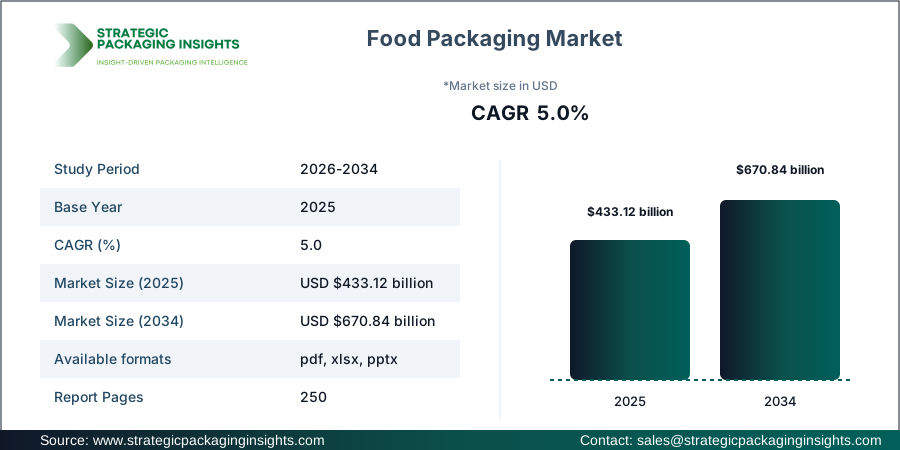
However, the market faces challenges such as stringent regulations regarding food safety and packaging waste management. Regulatory bodies across the globe are imposing strict guidelines to ensure that packaging materials do not contaminate food products, which can increase production costs and limit the use of certain materials. Despite these challenges, the food packaging market holds significant growth potential, particularly in emerging economies where rising disposable incomes and changing lifestyles are driving demand for packaged foods. The ongoing advancements in packaging technologies, such as smart packaging and biodegradable materials, present lucrative opportunities for market players to differentiate their offerings and capture a larger market share.
Report Scope
| Attributes | Details |
| Report Title | Food Packaging Market Size, Future Growth and Forecast 2034 |
| By Material Type | Plastic, Paperboard, Metal, Glass |
| By Packaging Type | Bags, Boxes, Trays, Bottles, Pouches |
| By Application | Bakery, Dairy, Meat, Ready Meals, Beverages |
| By End Use | Food Manufacturers, Retail, Foodservice, FMCG |
| Region | Asia Pacific, North America, Latin America, Europe, Middle East & Africa |
| Base Year | 2025 |
| Historic Period | 2018-2024 |
| Forecast Period | 2026-2034 |
| Number of Pages | 250 |
| Customization Available | Yes* |
Opportunities & Threats
The food packaging market is ripe with opportunities, particularly in the realm of sustainable packaging solutions. As consumers become more environmentally conscious, there is a growing demand for packaging that minimizes environmental impact. This has led to increased investment in research and development of biodegradable and recyclable materials. Companies that can innovate in this space stand to gain a competitive edge, as sustainability becomes a key differentiator in consumer purchasing decisions. Additionally, the rise of e-commerce presents a significant opportunity for the food packaging industry. With more consumers shopping online for groceries, there is a need for packaging that can protect products during transit while also being easy to open and dispose of. This has led to the development of new packaging designs and materials that cater to the unique needs of online retail.
Another opportunity lies in the growing demand for convenience foods, which require packaging that is not only functional but also enhances the consumer experience. This includes packaging that is easy to open, resealable, and microwaveable. As urbanization continues and lifestyles become busier, the demand for such convenience-oriented packaging solutions is expected to rise. Furthermore, the increasing focus on food safety and hygiene, particularly in the wake of the COVID-19 pandemic, has highlighted the importance of packaging in preventing contamination and ensuring product integrity. This has created opportunities for companies to develop packaging solutions that offer enhanced protection and safety features.
Despite these opportunities, the food packaging market faces several threats. One of the primary challenges is the stringent regulatory environment surrounding food safety and packaging waste. Compliance with these regulations can be costly and time-consuming, particularly for smaller companies with limited resources. Additionally, the volatility in raw material prices, particularly for plastics and metals, can impact profit margins and create uncertainty for manufacturers. The growing competition in the market also poses a threat, as companies vie for market share by offering innovative and cost-effective solutions. To succeed in this competitive landscape, companies must continuously innovate and adapt to changing consumer preferences and regulatory requirements.
Drivers & Challenges
The food packaging market is driven by several key factors, including the increasing demand for convenience foods and the rise of e-commerce. As consumers lead busier lifestyles, there is a growing preference for ready-to-eat meals and packaged foods that offer convenience without compromising on quality. This has led to an increased demand for packaging solutions that can preserve the freshness and quality of food products while also being easy to use. The growth of online grocery shopping has further fueled this demand, as packaging must be designed to withstand the rigors of shipping and handling. Additionally, the growing awareness of environmental issues has led to a shift towards sustainable packaging solutions, with consumers and companies alike seeking to reduce their environmental footprint.
Technological advancements in packaging materials and processes are also driving the market forward. Innovations such as smart packaging, which can monitor the condition of food products and provide real-time information to consumers, are gaining traction. These technologies not only enhance the consumer experience but also help reduce food waste by ensuring products are consumed before they spoil. The development of biodegradable and recyclable materials is another key driver, as companies seek to meet consumer demand for eco-friendly packaging solutions. These advancements are enabling companies to differentiate their offerings and capture a larger share of the market.
However, the market also faces several challenges that could hinder its growth. One of the primary challenges is the stringent regulatory environment surrounding food safety and packaging waste. Compliance with these regulations can be costly and time-consuming, particularly for smaller companies with limited resources. Additionally, the volatility in raw material prices, particularly for plastics and metals, can impact profit margins and create uncertainty for manufacturers. The growing competition in the market also poses a threat, as companies vie for market share by offering innovative and cost-effective solutions. To succeed in this competitive landscape, companies must continuously innovate and adapt to changing consumer preferences and regulatory requirements.
Market Share Analysis
The competitive landscape of the food packaging market is characterized by the presence of several key players who are driving innovation and growth in the industry. Companies such as Amcor, Berry Global, and Sealed Air are leading the charge with their extensive product portfolios and strong focus on research and development. These companies are investing heavily in new technologies and sustainable materials to meet the evolving needs of consumers and regulatory requirements. Their ability to offer a wide range of packaging solutions across different segments gives them a competitive edge in the market.
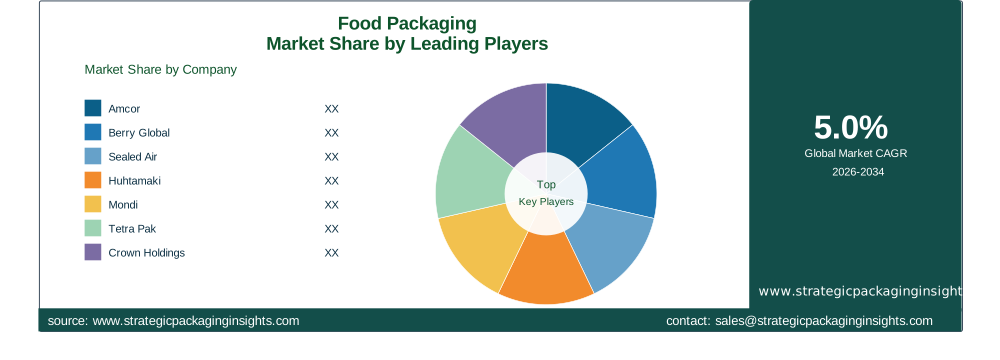
Amcor, for instance, is a global leader in packaging solutions, known for its innovative approach to sustainable packaging. The company has made significant strides in developing recyclable and biodegradable materials, positioning itself as a frontrunner in the eco-friendly packaging space. Berry Global, another major player, has a strong presence in the plastic packaging segment and is focused on expanding its product offerings to include more sustainable options. The company's commitment to sustainability is evident in its efforts to reduce plastic waste and increase the use of recycled materials in its products.
Sealed Air is renowned for its expertise in protective packaging solutions, catering to a wide range of industries including food and beverage. The company's focus on innovation and customer-centric solutions has helped it maintain a strong market position. Huhtamaki, a key player in the paperboard packaging segment, is known for its sustainable packaging solutions that cater to the growing demand for eco-friendly options. The company's emphasis on renewable materials and innovative designs has made it a preferred choice for many food manufacturers and retailers.
Mondi and Tetra Pak are also significant players in the food packaging market, with a strong focus on sustainability and innovation. Mondi's extensive product portfolio includes a range of paper and plastic packaging solutions, while Tetra Pak is renowned for its expertise in aseptic packaging for beverages. Both companies are committed to reducing their environmental impact and are investing in new technologies to enhance their product offerings. Crown Holdings and Ball Corporation are leaders in the metal packaging segment, known for their durable and recyclable packaging solutions. Their focus on innovation and sustainability has helped them maintain a strong market presence.
Key Highlights
- The food packaging market is projected to grow from $433.12 billion in 2025 to $670.84 billion by 2034, at a CAGR of 5.0%.
- Increasing demand for convenience foods and online grocery shopping are key drivers of market growth.
- Sustainable packaging solutions are gaining traction as consumers become more environmentally conscious.
- Technological advancements in smart packaging and biodegradable materials are creating new opportunities.
- Stringent regulations on food safety and packaging waste management pose challenges for manufacturers.
- Key players include Amcor, Berry Global, Sealed Air, Huhtamaki, and Mondi, among others.
- Emerging economies present significant growth potential due to rising disposable incomes and changing lifestyles.
- Volatility in raw material prices, particularly for plastics and metals, can impact profit margins.
- Companies are investing in research and development to innovate and meet evolving consumer needs.
Top Countries Insights
The United States is a leading market for food packaging, with a market size of approximately $120 billion and a CAGR of 4%. The country's strong focus on innovation and sustainability, coupled with a well-established food and beverage industry, drives demand for advanced packaging solutions. Government regulations promoting recycling and waste reduction further support market growth. However, challenges such as fluctuating raw material prices and stringent safety standards can impact market dynamics.
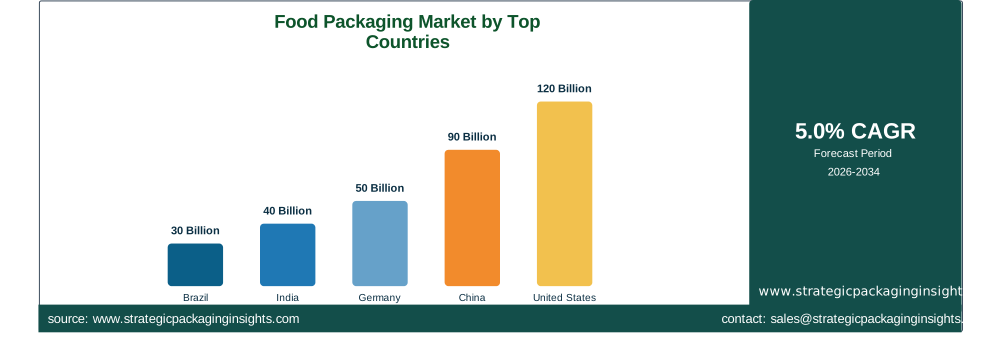
China is another significant player in the food packaging market, with a market size of around $90 billion and a CAGR of 6%. The country's rapid urbanization and growing middle class are driving demand for packaged foods, creating opportunities for packaging manufacturers. Government initiatives to promote sustainable packaging and reduce plastic waste are also influencing market trends. However, the market faces challenges such as regulatory compliance and competition from local manufacturers.
Germany, with a market size of approximately $50 billion and a CAGR of 3%, is a key market in Europe. The country's strong emphasis on sustainability and innovation in packaging materials drives demand for eco-friendly solutions. The presence of major food and beverage companies further supports market growth. However, stringent regulations on packaging waste and recycling can pose challenges for manufacturers.
India's food packaging market is growing rapidly, with a market size of about $40 billion and a CAGR of 8%. The country's expanding middle class and increasing demand for convenience foods are key growth drivers. Government initiatives to promote food safety and hygiene are also influencing market trends. However, challenges such as inadequate infrastructure and regulatory compliance can impact market growth.
Brazil, with a market size of approximately $30 billion and a CAGR of 5%, is a significant market in Latin America. The country's growing food and beverage industry and increasing consumer demand for packaged foods drive market growth. Government policies promoting sustainable packaging and waste reduction further support market trends. However, economic instability and regulatory challenges can impact market dynamics.
Food Packaging Market Segments Insights

Material Type Analysis
The material type segment in the food packaging market is dominated by plastic, which is favored for its versatility, durability, and cost-effectiveness. Plastic packaging is widely used across various applications due to its ability to preserve food quality and extend shelf life. However, the environmental impact of plastic waste has led to increased scrutiny and a push for more sustainable alternatives. This has spurred innovation in biodegradable and recyclable plastics, which are gaining traction as companies seek to reduce their environmental footprint. Paperboard is another significant material type, known for its recyclability and eco-friendly properties. It is increasingly used in applications where sustainability is a key consideration, such as bakery and dairy packaging.
Metal packaging, particularly aluminum and steel, is valued for its strength and ability to protect food products from external factors such as light and oxygen. This makes it a popular choice for beverages and canned goods. Glass packaging, while less common, is favored for its premium appeal and recyclability. It is often used for high-end products where aesthetics and product integrity are paramount. The ongoing advancements in material science are enabling the development of new materials that offer improved performance and sustainability, providing opportunities for companies to differentiate their offerings and capture a larger market share.
Packaging Type Analysis
The packaging type segment is diverse, with bags, boxes, trays, bottles, and pouches being the primary categories. Bags are widely used for their convenience and cost-effectiveness, particularly in applications such as snacks and bakery products. Boxes, often made from paperboard, are favored for their structural integrity and ability to protect products during transit. They are commonly used in applications such as ready meals and dairy products. Trays, typically made from plastic or paperboard, are used for their ability to display products attractively while providing protection. They are popular in applications such as meat and poultry packaging.
Bottles, primarily used for beverages, are valued for their ability to preserve product quality and offer convenience to consumers. The rise of on-the-go consumption has driven demand for innovative bottle designs that enhance the consumer experience. Pouches, known for their flexibility and lightweight properties, are gaining popularity in applications such as sauces and ready meals. They offer convenience and ease of use, making them a preferred choice for busy consumers. The ongoing advancements in packaging technology are enabling the development of new designs and materials that offer improved functionality and sustainability, providing opportunities for companies to capture a larger market share.
Application Analysis
The application segment of the food packaging market is diverse, with bakery, dairy, meat, ready meals, and beverages being the primary categories. The bakery segment is driven by the demand for packaging that preserves freshness and extends shelf life. This has led to the development of innovative packaging solutions that offer enhanced protection and convenience. The dairy segment, known for its stringent safety and hygiene requirements, is driving demand for packaging that ensures product integrity and prevents contamination. This has led to the development of new materials and designs that offer improved performance and sustainability.
The meat segment is characterized by the need for packaging that offers superior protection and extends shelf life. This has led to the development of innovative packaging solutions that offer enhanced protection and convenience. The ready meals segment, driven by the demand for convenience foods, is driving demand for packaging that offers convenience and ease of use. This has led to the development of new designs and materials that offer improved functionality and sustainability. The beverages segment, known for its diverse range of products, is driving demand for packaging that offers convenience and preserves product quality. This has led to the development of new materials and designs that offer improved performance and sustainability.
End Use Analysis
The end-use segment of the food packaging market is diverse, with food manufacturers, retail, foodservice, and FMCG being the primary categories. Food manufacturers are driving demand for packaging that offers superior protection and extends shelf life. This has led to the development of innovative packaging solutions that offer enhanced protection and convenience. The retail segment, known for its diverse range of products, is driving demand for packaging that offers convenience and preserves product quality. This has led to the development of new materials and designs that offer improved performance and sustainability.
The foodservice segment, driven by the demand for convenience foods, is driving demand for packaging that offers convenience and ease of use. This has led to the development of new designs and materials that offer improved functionality and sustainability. The FMCG segment, known for its diverse range of products, is driving demand for packaging that offers convenience and preserves product quality. This has led to the development of new materials and designs that offer improved performance and sustainability. The ongoing advancements in packaging technology are enabling the development of new designs and materials that offer improved functionality and sustainability, providing opportunities for companies to capture a larger market share.
Food Packaging Market Segments
The Food Packaging market has been segmented on the basis ofBy Material Type
- Plastic
- Paperboard
- Metal
- Glass
By Packaging Type
- Bags
- Boxes
- Trays
- Bottles
- Pouches
By Application
- Bakery
- Dairy
- Meat
- Ready Meals
- Beverages
By End Use
- Food Manufacturers
- Retail
- Foodservice
- FMCG
Region
- Asia Pacific
- North America
- Latin America
- Europe
- Middle East & Africa




