


Thermal Inkjet Printer Market Outlook
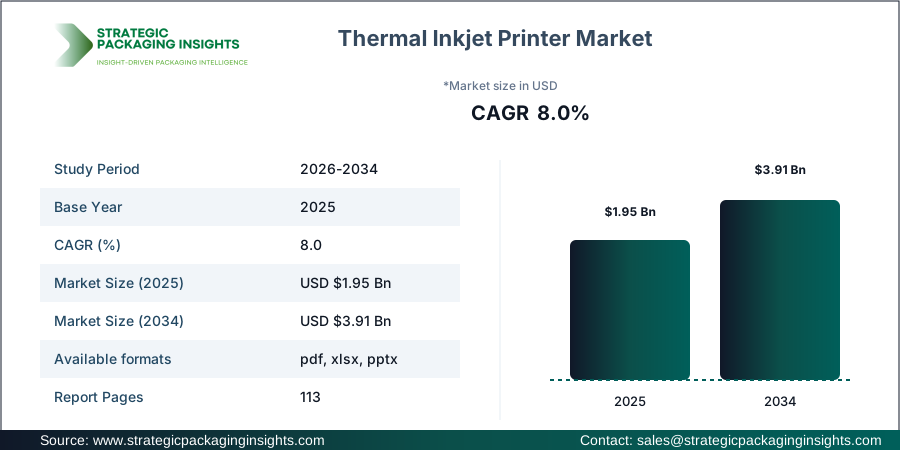
The Thermal Inkjet Printer market was valued at $1.95 billion in 2025 and is projected to reach $3.91 billion by 2034, growing at a CAGR of 8.0% during the forecast period 2026-2034. This growth trajectory is driven by the increasing demand for high-resolution printing solutions across various industries, including food, pharmaceuticals, and electronics. The market is witnessing a surge in demand for compact and efficient printing solutions, which is further fueled by advancements in ink technology and the growing need for precise and reliable printing in packaging and labeling applications. The adoption of thermal inkjet printers is also being propelled by their ability to deliver high-quality prints at a lower cost, making them an attractive option for small and medium-sized enterprises.
Despite the promising growth prospects, the thermal inkjet printer market faces certain challenges that could hinder its expansion. Regulatory constraints related to the use of certain ink types, particularly solvent-based inks, pose a significant challenge for manufacturers. Additionally, the high initial investment required for advanced thermal inkjet printing systems may deter some potential buyers, particularly in emerging markets. However, the market's growth potential remains robust, driven by the increasing adoption of digital printing technologies and the ongoing shift towards sustainable and eco-friendly printing solutions. As the market continues to evolve, manufacturers are focusing on developing innovative products that cater to the specific needs of different end-use industries, thereby unlocking new growth opportunities.
Report Scope
| Attributes | Details |
| Report Title | Thermal Inkjet Printer Market Size, Future Growth and Forecast 2034 |
| By Product Type | Desktop TIJ Printers, Industrial TIJ Printers, Handheld TIJ Printers |
| By Application | Coding, Marking, Labeling, Serialization |
| By End Use | Food, Pharma, Logistics, Electronics |
| By Ink Type | Solvent-Based, Water-Based, UV-Curable |
| Region | Asia Pacific, North America, Latin America, Europe, Middle East & Africa |
| Base Year | 2025 |
| Historic Period | 2018-2024 |
| Forecast Period | 2026-2034 |
| Number of Pages | 113 |
| Customization Available | Yes* |
Opportunities & Threats
The thermal inkjet printer market presents numerous opportunities for growth, particularly in the realm of technological advancements. The ongoing development of new ink formulations, such as UV-curable and water-based inks, is opening up new avenues for application in industries that require high-quality, durable prints. Additionally, the increasing demand for personalized and customized printing solutions is driving innovation in the market, with manufacturers focusing on developing printers that offer greater flexibility and versatility. The rise of e-commerce and the growing need for efficient logistics and supply chain management are also creating new opportunities for thermal inkjet printers, as they are increasingly being used for coding and marking applications in these sectors.
Another significant opportunity lies in the expanding market for eco-friendly and sustainable printing solutions. As environmental concerns continue to gain prominence, there is a growing demand for printing technologies that minimize waste and reduce the environmental impact of printing processes. Thermal inkjet printers, with their ability to use water-based and UV-curable inks, are well-positioned to capitalize on this trend. Furthermore, the increasing adoption of digital printing technologies in the packaging industry is expected to drive demand for thermal inkjet printers, as they offer a cost-effective and efficient solution for high-quality printing on a variety of substrates.
However, the market is not without its threats. One of the primary challenges facing the thermal inkjet printer market is the intense competition from alternative printing technologies, such as laser and piezoelectric inkjet printers. These technologies offer certain advantages, such as higher speed and lower operating costs, which could pose a threat to the growth of the thermal inkjet printer market. Additionally, the volatility in raw material prices, particularly for ink and printer components, could impact the profitability of manufacturers and hinder market growth. To mitigate these threats, companies are focusing on enhancing their product offerings and expanding their distribution networks to reach a wider customer base.
Drivers & Challenges
The thermal inkjet printer market is primarily driven by the increasing demand for high-resolution printing solutions across various industries. The ability of thermal inkjet printers to deliver precise and reliable prints makes them an ideal choice for applications such as coding, marking, labeling, and serialization. The growing emphasis on product traceability and anti-counterfeiting measures in industries such as pharmaceuticals and electronics is further driving the demand for thermal inkjet printers. Additionally, the advancements in ink technology, including the development of UV-curable and water-based inks, are enhancing the capabilities of thermal inkjet printers and expanding their application scope.
Another key driver of the market is the rising adoption of digital printing technologies in the packaging industry. As companies seek to enhance their brand image and improve product presentation, there is a growing demand for high-quality printing solutions that can deliver vibrant and durable prints. Thermal inkjet printers, with their ability to print on a wide range of substrates, are well-suited to meet this demand. Furthermore, the increasing focus on sustainability and eco-friendly printing solutions is driving the adoption of thermal inkjet printers, as they offer a more environmentally friendly alternative to traditional printing methods.
Despite the positive growth drivers, the thermal inkjet printer market faces several challenges that could impact its expansion. One of the primary challenges is the high initial investment required for advanced thermal inkjet printing systems, which may deter some potential buyers, particularly in emerging markets. Additionally, the regulatory constraints related to the use of certain ink types, particularly solvent-based inks, pose a significant challenge for manufacturers. The intense competition from alternative printing technologies, such as laser and piezoelectric inkjet printers, also presents a challenge for the market. To overcome these challenges, companies are focusing on developing innovative products that cater to the specific needs of different end-use industries and expanding their distribution networks to reach a wider customer base.
Market Share Analysis
The competitive landscape of the thermal inkjet printer market is characterized by the presence of several key players, each vying for a significant share of the market. Companies such as HP, Videojet Technologies, Markem-Imaje, Domino Printing Sciences, and Linx Printing Technologies are among the leading players in the market, offering a wide range of thermal inkjet printing solutions to cater to the diverse needs of various industries. These companies are focusing on enhancing their product offerings and expanding their distribution networks to strengthen their market position and gain a competitive edge.
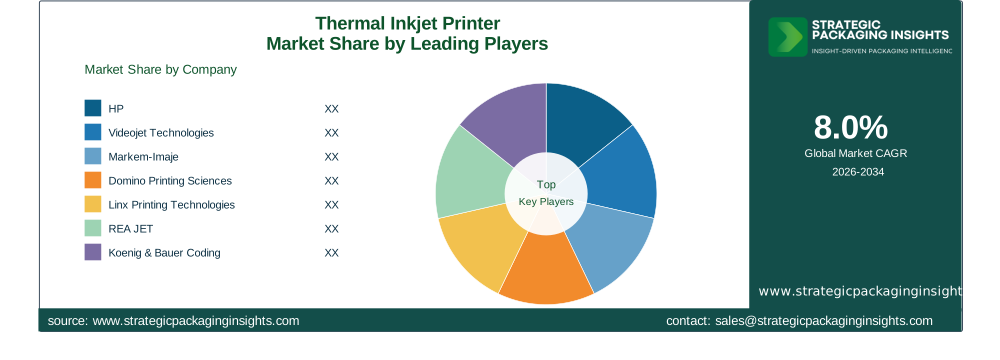
HP is a major player in the thermal inkjet printer market, known for its innovative printing solutions and strong brand presence. The company offers a wide range of thermal inkjet printers that cater to various applications, including coding, marking, and labeling. Videojet Technologies is another leading player in the market, offering a comprehensive portfolio of thermal inkjet printers that are designed to meet the specific needs of different industries. The company's focus on innovation and customer-centric solutions has helped it maintain a strong market position.
Markem-Imaje, a subsidiary of the Dover Corporation, is a prominent player in the thermal inkjet printer market, known for its high-quality printing solutions and extensive distribution network. The company offers a wide range of thermal inkjet printers that are designed to deliver precise and reliable prints for various applications. Domino Printing Sciences, a subsidiary of Brother Industries, is another key player in the market, offering a comprehensive range of thermal inkjet printers that cater to the diverse needs of different industries. The company's focus on innovation and customer satisfaction has helped it maintain a strong market position.
Linx Printing Technologies, a subsidiary of Danaher Corporation, is a leading player in the thermal inkjet printer market, known for its high-quality printing solutions and strong customer focus. The company offers a wide range of thermal inkjet printers that are designed to meet the specific needs of different industries. REA JET, Koenig & Bauer Coding, Matthews Marking Systems, Weber Marking Systems, and Hitachi Industrial Equipment are also prominent players in the market, each offering a diverse range of thermal inkjet printing solutions to cater to the needs of various industries.
Key Highlights
- The thermal inkjet printer market is projected to grow at a CAGR of 8.0% from 2026 to 2034, reaching a market size of $3.91 billion by 2034.
- Advancements in ink technology, including the development of UV-curable and water-based inks, are driving the growth of the market.
- The increasing demand for high-resolution printing solutions in industries such as food, pharmaceuticals, and electronics is a key driver of the market.
- The rise of e-commerce and the growing need for efficient logistics and supply chain management are creating new opportunities for thermal inkjet printers.
- The market is characterized by intense competition from alternative printing technologies, such as laser and piezoelectric inkjet printers.
- Regulatory constraints related to the use of certain ink types pose a significant challenge for manufacturers.
- The increasing focus on sustainability and eco-friendly printing solutions is driving the adoption of thermal inkjet printers.
Top Countries Insights
In the thermal inkjet printer market, the United States stands out as a key player, with a market size of approximately $1.2 billion and a CAGR of 6%. The country's strong industrial base and the presence of major market players like HP and Videojet Technologies drive growth. The demand for high-quality printing solutions in sectors such as pharmaceuticals and food packaging is a significant growth driver. However, regulatory challenges related to ink formulations and environmental concerns pose challenges.
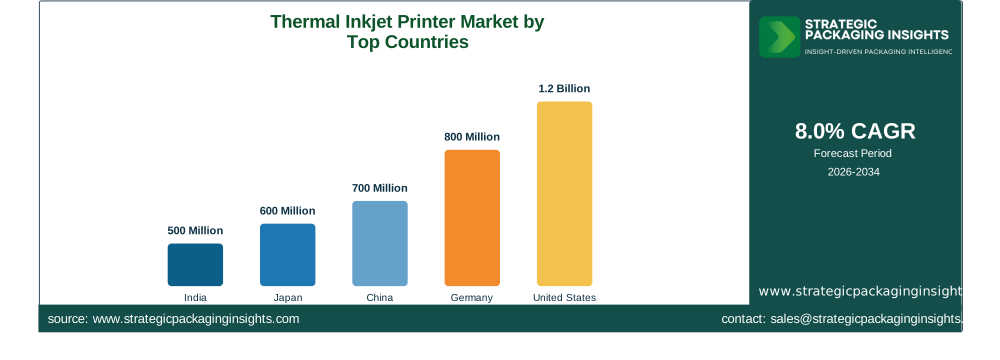
Germany, with a market size of around $800 million and a CAGR of 5%, is another significant player in the thermal inkjet printer market. The country's strong manufacturing sector and emphasis on innovation and technology drive demand for advanced printing solutions. The increasing focus on sustainability and eco-friendly printing technologies is a key growth driver. However, the market faces challenges from stringent regulatory requirements and competition from alternative printing technologies.
China, with a market size of approximately $700 million and a CAGR of 9%, is a rapidly growing market for thermal inkjet printers. The country's expanding industrial base and increasing demand for high-quality printing solutions in sectors such as electronics and logistics drive growth. The government's focus on promoting digital printing technologies and sustainable practices is a significant growth driver. However, the market faces challenges from intense competition and price sensitivity.
Japan, with a market size of around $600 million and a CAGR of 4%, is a mature market for thermal inkjet printers. The country's strong emphasis on quality and precision in manufacturing drives demand for high-resolution printing solutions. The increasing adoption of digital printing technologies in the packaging industry is a key growth driver. However, the market faces challenges from an aging population and a shrinking workforce.
India, with a market size of approximately $500 million and a CAGR of 10%, is an emerging market for thermal inkjet printers. The country's growing industrial base and increasing demand for efficient logistics and supply chain management drive growth. The government's focus on promoting digital printing technologies and sustainable practices is a significant growth driver. However, the market faces challenges from infrastructure constraints and regulatory hurdles.
Thermal Inkjet Printer Market Segments Insights

Product Type Analysis
The thermal inkjet printer market is segmented by product type into desktop TIJ printers, industrial TIJ printers, and handheld TIJ printers. Desktop TIJ printers are gaining popularity due to their compact size and ease of use, making them ideal for small businesses and home offices. These printers offer high-quality prints at a lower cost, making them an attractive option for budget-conscious consumers. Industrial TIJ printers, on the other hand, are designed for high-volume printing applications and are widely used in industries such as food, pharmaceuticals, and electronics. These printers offer robust performance and reliability, making them a preferred choice for large-scale printing operations. Handheld TIJ printers are gaining traction in the market due to their portability and versatility, making them ideal for on-the-go printing applications.
The demand for thermal inkjet printers is driven by the increasing need for high-resolution printing solutions across various industries. The growing emphasis on product traceability and anti-counterfeiting measures in industries such as pharmaceuticals and electronics is further driving the demand for thermal inkjet printers. Additionally, the advancements in ink technology, including the development of UV-curable and water-based inks, are enhancing the capabilities of thermal inkjet printers and expanding their application scope. The market is characterized by intense competition from alternative printing technologies, such as laser and piezoelectric inkjet printers, which offer certain advantages, such as higher speed and lower operating costs.
Application Analysis
The thermal inkjet printer market is segmented by application into coding, marking, labeling, and serialization. Coding applications are a significant driver of the market, as thermal inkjet printers offer precise and reliable printing solutions for product identification and traceability. The increasing demand for high-quality coding solutions in industries such as food, pharmaceuticals, and electronics is driving the growth of this segment. Marking applications are also gaining traction in the market, as thermal inkjet printers offer a cost-effective and efficient solution for printing on a variety of substrates. The growing emphasis on product branding and presentation is driving the demand for high-quality marking solutions.
Labeling applications are another key segment of the thermal inkjet printer market, as these printers offer a versatile and efficient solution for printing labels on a wide range of materials. The increasing demand for customized and personalized labeling solutions is driving the growth of this segment. Serialization applications are also gaining importance in the market, as thermal inkjet printers offer a reliable and efficient solution for printing unique identifiers on products. The growing emphasis on product traceability and anti-counterfeiting measures is driving the demand for serialization solutions in industries such as pharmaceuticals and electronics.
End Use Analysis
The thermal inkjet printer market is segmented by end use into food, pharma, logistics, and electronics. The food industry is a significant driver of the market, as thermal inkjet printers offer a reliable and efficient solution for printing expiration dates, batch numbers, and other important information on food packaging. The increasing demand for high-quality printing solutions in the food industry is driving the growth of this segment. The pharmaceutical industry is another key end-use segment of the market, as thermal inkjet printers offer a precise and reliable solution for printing important information on pharmaceutical packaging.
The logistics industry is also a significant driver of the thermal inkjet printer market, as these printers offer a cost-effective and efficient solution for printing barcodes, shipping labels, and other important information on packages. The growing emphasis on efficient logistics and supply chain management is driving the demand for thermal inkjet printers in this industry. The electronics industry is another key end-use segment of the market, as thermal inkjet printers offer a reliable and efficient solution for printing important information on electronic components and devices. The increasing demand for high-quality printing solutions in the electronics industry is driving the growth of this segment.
Ink Type Analysis
The thermal inkjet printer market is segmented by ink type into solvent-based, water-based, and UV-curable inks. Solvent-based inks are widely used in the market due to their fast-drying properties and ability to adhere to a wide range of substrates. However, the use of solvent-based inks is subject to regulatory constraints due to environmental concerns, which could impact their growth in the market. Water-based inks are gaining popularity in the market due to their eco-friendly properties and ability to deliver high-quality prints. The increasing demand for sustainable printing solutions is driving the growth of this segment.
UV-curable inks are also gaining traction in the market due to their ability to deliver durable and high-quality prints. These inks offer several advantages, such as fast curing times and resistance to fading and smudging, making them an attractive option for high-quality printing applications. The growing emphasis on sustainability and eco-friendly printing solutions is driving the adoption of UV-curable inks in the market. However, the high cost of UV-curable inks could pose a challenge to their growth in the market. To overcome this challenge, manufacturers are focusing on developing cost-effective UV-curable ink formulations that cater to the specific needs of different end-use industries.
Thermal Inkjet Printer Market Segments
The Thermal Inkjet Printer market has been segmented on the basis ofBy Product Type
- Desktop TIJ Printers
- Industrial TIJ Printers
- Handheld TIJ Printers
By Application
- Coding
- Marking
- Labeling
- Serialization
By End Use
- Food
- Pharma
- Logistics
- Electronics
By Ink Type
- Solvent-Based
- Water-Based
- UV-Curable
Region
- Asia Pacific
- North America
- Latin America
- Europe
- Middle East & Africa




