


Inkjet Printers Market Outlook
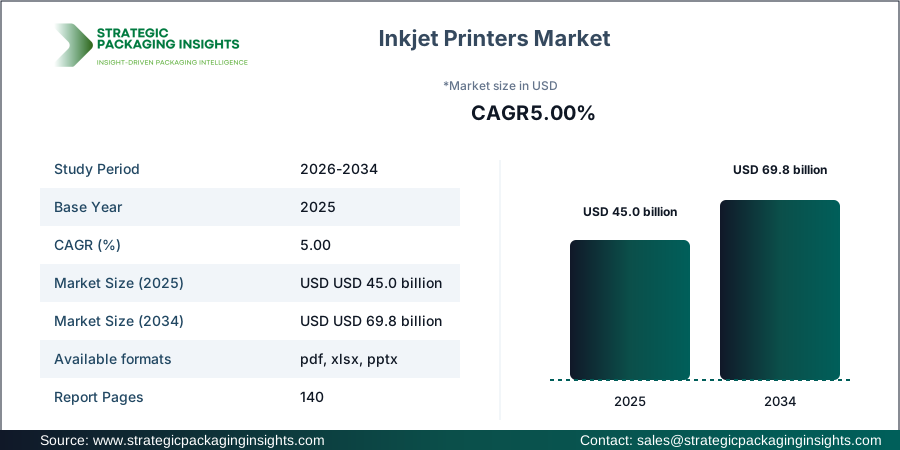
The Inkjet Printers market size was valued at USD 45.0 billion in 2025 and is anticipated to reach USD 69.8 billion by 2034, growing at a CAGR of 5.00% during the forecast period according to Strategic Packaging Insights. The market is witnessing robust growth driven by the increasing demand for high-quality printing solutions across various sectors. Companies like HP, Epson, and Canon are leading the charge with innovative products that cater to both consumer and industrial needs. The rise in e-commerce and digital marketing has further fueled the demand for inkjet printers, as businesses seek efficient and cost-effective printing solutions to enhance their marketing efforts.
One of the most impactful drivers of the inkjet printers market is the growing trend towards digitalization and the need for on-demand printing solutions. According to industry experts, the shift from traditional printing methods to digital printing is accelerating, driven by the need for customization and quick turnaround times. This trend is particularly evident in sectors such as packaging and textiles, where companies like Brother and Roland DG are making significant strides. The adoption of eco-friendly inks and sustainable printing practices is also gaining traction, aligning with global sustainability goals and consumer preferences for environmentally responsible products.
Report Scope
| Attributes | Details |
| Report Title | Inkjet Printers Market Size, Future Growth and Forecast 2034 |
| By Type | Consumer / Home Inkjet, Office Business Inkjet, Wide-Format & Signage, Industrial Inkjet (CIJ, DOD), Textile & Direct-to-Garment, Label & Packaging Presses |
| By Ink | Aqueous / Dye, Pigment, Solvent & Eco-Solvent, UV-Curable, Latex, Sublimation |
| By End Use | Home & SOHO, Corporate Offices, Commercial Print, Packaging & Labeling, Textiles, Manufacturing Coding & Marking |
| By Region | North America (U.S., Canada, Mexico), Europe (Germany, UK, France, Italy, Spain, Rest of Europe), Asia Pacific (China, India, Japan, South Korea, Australia, Rest of Asia Pacific), Latin America (Brazil, Argentina, Rest of Latin America), Middle East & Africa (GCC Countries, South Africa, Rest of MEA) |
| Base Year | 2025 |
| Historic Period | 2018-2024 |
| Forecast Period | 2026-2034 |
| Number of Pages | 140 |
| Customization Available | Yes* |
Sustainability & Circular Economy Analysis
Sustainability initiatives and circular economy practices are increasingly influencing the inkjet printers market. Companies are focusing on developing recyclable materials and reusable packaging to minimize environmental impact. The use of eco-friendly inks, such as water-based and UV-curable inks, is becoming more prevalent, reducing the carbon footprint associated with traditional solvent-based inks. This shift is driven by consumer demand for sustainable products and stringent packaging regulations that promote waste reduction and extended producer responsibility (EPR).
These sustainability trends are reshaping packaging design and manufacturing processes. Lightweight packaging and innovative material solutions are being adopted to enhance product efficiency and reduce transportation costs. Companies are investing in research and development to create inks and printing technologies that align with ESG initiatives and regulatory compliance. This focus on sustainability is not only enhancing brand reputation but also providing a competitive edge in the market.
Long-term market competitiveness is increasingly tied to a company's ability to integrate sustainability into its supply chain strategies. As consumers become more environmentally conscious, businesses are prioritizing sustainable practices to meet these expectations. This includes adopting waste reduction strategies and optimizing supply chain operations to minimize environmental impact. The emphasis on sustainability is expected to drive investment decisions and influence market dynamics in the coming years.
Packaging Value Chain & Supply Chain Analysis
The packaging value chain for inkjet printers involves a complex ecosystem of raw material sourcing, manufacturing, and distribution. Raw materials such as inks and substrates are sourced from specialized suppliers, while packaging converters and manufacturers play a crucial role in transforming these materials into finished products. Companies like Mimaki and Durst are at the forefront of developing advanced packaging machinery that enhances production capabilities and efficiency.
Supply chain efficiency is critical to the overall performance of the inkjet printers market. The availability of raw materials, coupled with efficient logistics and distribution channels, influences market competitiveness. Strategic partnerships and collaborations with suppliers and distributors are essential for ensuring a steady supply of materials and optimizing inventory management. Companies are also focusing on localization and global sourcing strategies to enhance supply chain resilience and mitigate risks associated with geopolitical uncertainties.
Recycling networks and procurement strategies are integral to the sustainability of the packaging value chain. Companies are investing in recycling technologies and establishing partnerships with recycling firms to promote circular economy practices. This not only reduces waste but also supports regulatory compliance and enhances brand image. As the market continues to evolve, businesses are prioritizing supply chain optimization to meet consumer demands and maintain a competitive edge.
Opportunities & Threats
The inkjet printers market presents numerous opportunities for growth, driven by technological advancements and evolving consumer preferences. The increasing demand for personalized and customized printing solutions is creating new avenues for market expansion. Companies are leveraging digital printing technologies to offer on-demand printing services, catering to the needs of various industries such as textiles, packaging, and commercial printing. The rise of e-commerce and online retailing is also boosting the demand for efficient and cost-effective printing solutions, providing significant growth opportunities for market players.
Another opportunity lies in the development of eco-friendly and sustainable printing solutions. As environmental concerns continue to rise, consumers are seeking products that align with their sustainability values. This has led to the adoption of water-based and UV-curable inks, which are less harmful to the environment compared to traditional solvent-based inks. Companies that invest in sustainable printing technologies and practices are likely to gain a competitive advantage and capture a larger market share.
However, the market also faces certain threats that could hinder its growth. One of the primary challenges is the high cost of advanced printing technologies and equipment. Small and medium-sized enterprises may find it difficult to invest in these technologies, limiting their ability to compete with larger players. Additionally, the market is subject to regulatory constraints related to environmental standards and safety regulations, which could impact production processes and increase operational costs for manufacturers.
Drivers & Challenges
The inkjet printers market is driven by several key factors, including technological advancements and the growing demand for high-quality printing solutions. The shift towards digitalization and the need for on-demand printing are significant drivers, as businesses seek efficient and cost-effective solutions to meet their printing needs. Companies like HP and Epson are leading the way with innovative products that cater to both consumer and industrial applications, enhancing market growth.
Another major driver is the increasing adoption of eco-friendly and sustainable printing practices. Consumers are becoming more environmentally conscious, and businesses are responding by investing in sustainable printing technologies. The use of water-based and UV-curable inks is gaining traction, reducing the environmental impact of printing processes. This trend is supported by regulatory initiatives that promote sustainability and waste reduction, further driving market growth.
Despite these drivers, the market faces several challenges that could impact its growth trajectory. One of the primary challenges is the high cost of advanced printing technologies and equipment. This can be a barrier for small and medium-sized enterprises, limiting their ability to compete with larger players. Additionally, the market is subject to regulatory constraints related to environmental standards and safety regulations, which could impact production processes and increase operational costs for manufacturers.
Market Share Analysis
The competitive landscape of the inkjet printers market is characterized by the presence of several key players, each striving to capture a significant share of the market. Companies like HP, Epson, and Canon dominate the market with their extensive product portfolios and strong brand presence. These companies have established themselves as leaders in the industry, offering a wide range of inkjet printers that cater to various consumer and industrial needs.
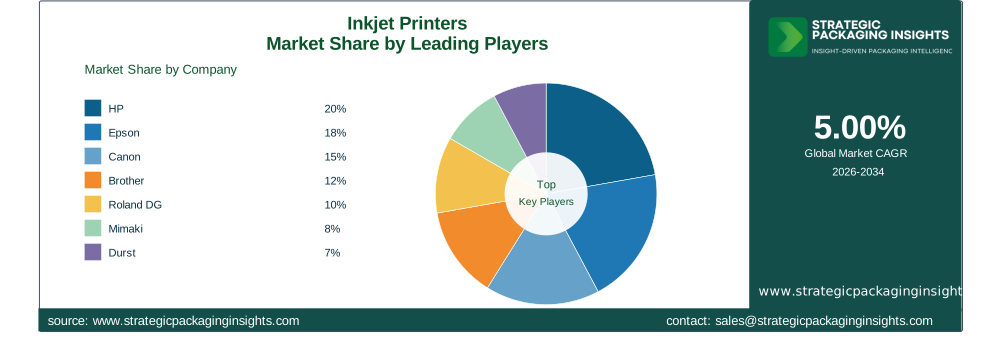
HP is a major player in the inkjet printers market, known for its innovative products and cutting-edge technology. The company offers a diverse range of printers, from consumer models to industrial-grade machines, catering to a wide array of applications. Epson is another leading company, renowned for its high-quality printing solutions and commitment to sustainability. The company's focus on eco-friendly inks and energy-efficient printers has helped it maintain a strong market position.
Canon is a prominent player in the market, offering a comprehensive range of inkjet printers that cater to both home and office use. The company's emphasis on innovation and quality has earned it a loyal customer base and a significant market share. Other notable companies in the market include Brother, Roland DG, and Mimaki, each contributing to the market's growth with their unique offerings and technological advancements.
In addition to these major players, companies like Durst, Videojet (Veralto), and Domino (Brother) are making significant strides in the market. These companies are known for their advanced printing technologies and focus on industrial applications, such as packaging and labeling. Markem-Imaje (Dover) and Fujifilm are also key players, offering a range of printing solutions that cater to various industries and applications.
Key Highlights
- Market Size: The inkjet printers market was valued at USD 45.0 billion in 2025 and is projected to reach USD 69.8 billion by 2034.
- Growth Rate: The market is expected to grow at a CAGR of 5.00% during the forecast period.
- Leading Companies: Key players include HP, Epson, Canon, Brother, and Roland DG.
- Technological Advancements: Innovations in digital printing and eco-friendly inks are driving market growth.
- Regional Insights: Asia Pacific is expected to witness significant growth, driven by increasing demand for printing solutions.
- Sustainability Trends: The adoption of sustainable printing practices and eco-friendly inks is gaining traction.
- Market Segments: The market is segmented by type, ink, end use, and region, with diverse applications across industries.
Inkjet Printers Market Segments Insights

By Type Analysis
The inkjet printers market is segmented by type, including Consumer/Home Inkjet, Office Business Inkjet, Wide-Format & Signage, Industrial Inkjet (CIJ, DOD), Textile & Direct-to-Garment, and Label & Packaging Presses. Consumer/Home Inkjet printers are witnessing significant demand due to the rise in home-based work and education, driven by the need for affordable and efficient printing solutions. Office Business Inkjet printers are also gaining traction as businesses seek cost-effective and high-quality printing options for corporate environments.
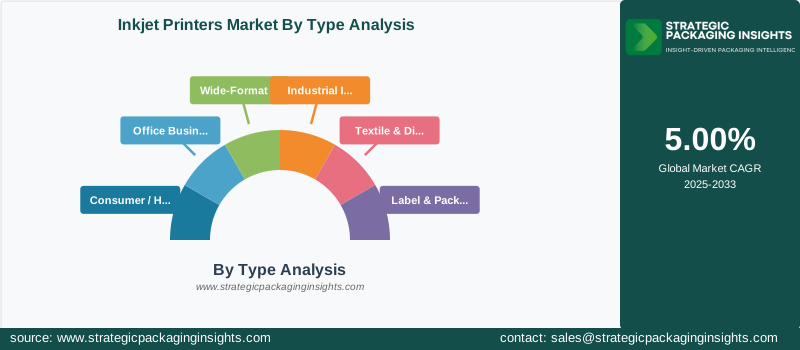
Wide-Format & Signage printers are experiencing growth due to the increasing demand for large-scale advertising and promotional materials. Industrial Inkjet printers, including Continuous Inkjet (CIJ) and Drop on Demand (DOD) technologies, are widely used in manufacturing and packaging industries for coding and marking applications. Textile & Direct-to-Garment printers are gaining popularity in the fashion industry, offering customized and high-quality printing solutions for fabrics. Label & Packaging Presses are essential for the packaging industry, providing efficient and versatile printing options for labels and packaging materials.
By Ink Analysis
The market is also segmented by ink type, including Aqueous/Dye, Pigment, Solvent & Eco-Solvent, UV-Curable, Latex, and Sublimation inks. Aqueous/Dye inks are commonly used in consumer and office printers due to their affordability and vibrant color output. Pigment inks are preferred for their durability and resistance to fading, making them ideal for professional and archival printing applications. Solvent & Eco-Solvent inks are widely used in outdoor signage and graphics due to their weather-resistant properties.
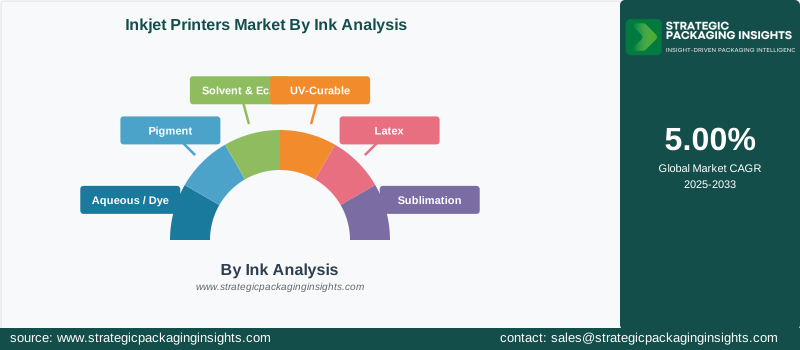
UV-Curable inks are gaining popularity for their quick drying and environmentally friendly characteristics, making them suitable for a wide range of applications, including packaging and labeling. Latex inks are known for their versatility and eco-friendly nature, offering high-quality prints for both indoor and outdoor use. Sublimation inks are primarily used in textile printing, providing vibrant and long-lasting prints on fabrics. The diverse range of ink types caters to various printing needs, driving market growth and innovation.
By End Use Analysis
The inkjet printers market is segmented by end use, including Home & SOHO, Corporate Offices, Commercial Print, Packaging & Labeling, Textiles, and Manufacturing Coding & Marking. Home & SOHO (Small Office/Home Office) printers are in high demand due to the increasing trend of remote work and home-based businesses. Corporate Offices require reliable and efficient printing solutions for daily operations, driving the demand for office inkjet printers.
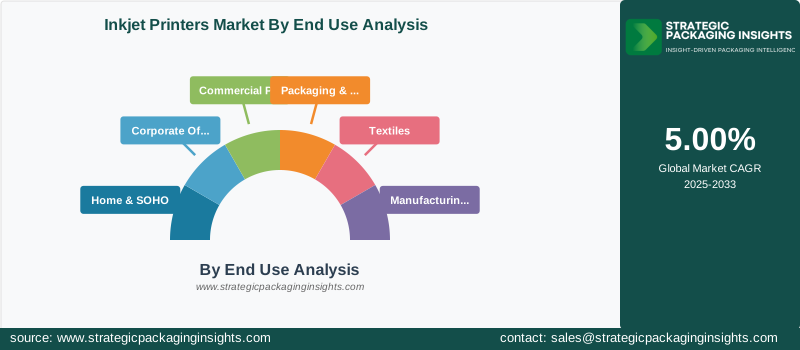
Commercial Print applications benefit from the versatility and high-quality output of inkjet printers, catering to a wide range of printing needs, from brochures to promotional materials. Packaging & Labeling is a significant segment, with inkjet printers providing efficient and customizable solutions for packaging materials and labels. The Textiles industry is increasingly adopting inkjet printing for its ability to produce vibrant and intricate designs on fabrics. Manufacturing Coding & Marking applications rely on inkjet printers for precise and durable marking solutions, essential for product identification and traceability.
Inkjet Printers Market Segments
The Inkjet Printers market has been segmented on the basis ofBy Type
- Consumer / Home Inkjet
- Office Business Inkjet
- Wide-Format & Signage
- Industrial Inkjet (CIJ, DOD)
- Textile & Direct-to-Garment
- Label & Packaging Presses
By Ink
- Aqueous / Dye
- Pigment
- Solvent & Eco-Solvent
- UV-Curable
- Latex
- Sublimation
By End Use
- Home & SOHO
- Corporate Offices
- Commercial Print
- Packaging & Labeling
- Textiles
- Manufacturing Coding & Marking
By Region
- North America (U.S., Canada, Mexico)
- Europe (Germany, UK, France, Italy, Spain, Rest of Europe)
- Asia Pacific (China, India, Japan, South Korea, Australia, Rest of Asia Pacific)
- Latin America (Brazil, Argentina, Rest of Latin America)
- Middle East & Africa (GCC Countries, South Africa, Rest of MEA)




