


Pharma Blister Packaging Machines Market Outlook
The Pharma Blister Packaging Machines market was valued at $2.33 billion in 2025 and is projected to reach $3.10 billion by 2034, growing at a CAGR of 3.2% during the forecast period 2026-2034. This market is driven by the increasing demand for efficient and reliable packaging solutions in the pharmaceutical industry. The rise in chronic diseases and the growing elderly population have led to an increased consumption of pharmaceuticals, thereby boosting the demand for blister packaging machines. Additionally, the need for tamper-evident and child-resistant packaging solutions further propels the market growth. The technological advancements in blister packaging machines, such as the integration of automation and IoT, are also contributing to the market expansion.
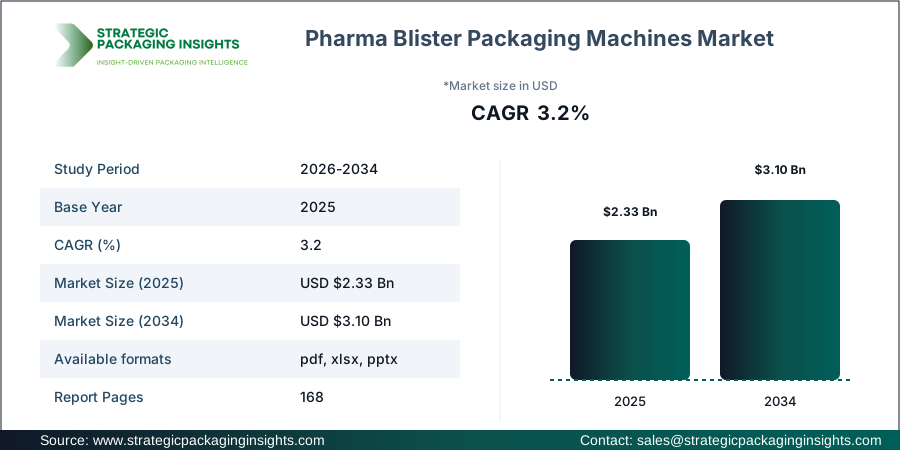
However, the market faces certain restraints, including the high initial investment required for setting up blister packaging machinery and the stringent regulatory requirements imposed by health authorities across different regions. Despite these challenges, the market holds significant growth potential due to the increasing focus on sustainable packaging solutions and the rising adoption of blister packaging in emerging economies. The shift towards eco-friendly materials and the development of innovative packaging designs are expected to create lucrative opportunities for market players in the coming years.
Report Scope
| Attributes | Details |
| Report Title | Pharma Blister Packaging Machines Market Size, Future Growth and Forecast 2034 |
| Machine Type | Flat-Plate Blister Machines, Rotary Blister Machines, Thermoforming Machines, Cold-Forming Machines |
| Automation Level | Semi-Automatic, Automatic, High-Speed Lines |
| Application | Tablets, Capsules, Medical Devices, Diagnostics |
| End Use | Pharmaceuticals, Nutraceuticals, Healthcare |
| Region | Asia Pacific, North America, Latin America, Europe, Middle East & Africa |
| Base Year | 2025 |
| Historic Period | 2018-2024 |
| Forecast Period | 2026-2034 |
| Number of Pages | 168 |
| Customization Available | Yes* |
Opportunities & Threats
The Pharma Blister Packaging Machines market presents numerous opportunities, particularly with the growing emphasis on sustainable and eco-friendly packaging solutions. As environmental concerns rise, pharmaceutical companies are increasingly seeking packaging options that minimize environmental impact. This trend is driving the demand for blister packaging machines that can accommodate biodegradable and recyclable materials. Additionally, the expansion of the pharmaceutical industry in emerging markets, such as Asia Pacific and Latin America, offers significant growth prospects. These regions are witnessing an increase in healthcare infrastructure investments and a rise in pharmaceutical manufacturing activities, thereby boosting the demand for advanced packaging solutions.
Another opportunity lies in the technological advancements in blister packaging machines. The integration of automation and smart technologies, such as IoT and AI, is enhancing the efficiency and precision of packaging processes. These innovations are enabling manufacturers to achieve higher production speeds, reduce downtime, and improve overall operational efficiency. As a result, companies that invest in advanced blister packaging technologies are likely to gain a competitive edge in the market. Furthermore, the increasing focus on patient safety and compliance is driving the demand for blister packaging solutions that offer tamper-evident and child-resistant features, creating additional opportunities for market growth.
Despite the promising opportunities, the market faces certain threats, including the stringent regulatory requirements imposed by health authorities. Compliance with regulations such as the FDA's Current Good Manufacturing Practice (CGMP) and the European Medicines Agency's guidelines can be challenging for manufacturers, particularly in terms of documentation and validation processes. Additionally, the high initial investment required for setting up blister packaging machinery can be a barrier for small and medium-sized enterprises. The market also faces competition from alternative packaging solutions, such as strip packaging and bottle packaging, which may limit the adoption of blister packaging machines in certain applications.
Drivers & Challenges
The Pharma Blister Packaging Machines market is primarily driven by the increasing demand for efficient and reliable packaging solutions in the pharmaceutical industry. The rise in chronic diseases and the growing elderly population have led to an increased consumption of pharmaceuticals, thereby boosting the demand for blister packaging machines. Additionally, the need for tamper-evident and child-resistant packaging solutions further propels the market growth. The technological advancements in blister packaging machines, such as the integration of automation and IoT, are also contributing to the market expansion. These innovations are enhancing the efficiency and precision of packaging processes, enabling manufacturers to achieve higher production speeds and improve overall operational efficiency.
Another significant driver is the growing emphasis on sustainable and eco-friendly packaging solutions. As environmental concerns rise, pharmaceutical companies are increasingly seeking packaging options that minimize environmental impact. This trend is driving the demand for blister packaging machines that can accommodate biodegradable and recyclable materials. Furthermore, the expansion of the pharmaceutical industry in emerging markets, such as Asia Pacific and Latin America, offers significant growth prospects. These regions are witnessing an increase in healthcare infrastructure investments and a rise in pharmaceutical manufacturing activities, thereby boosting the demand for advanced packaging solutions.
However, the market faces certain challenges, including the stringent regulatory requirements imposed by health authorities. Compliance with regulations such as the FDA's Current Good Manufacturing Practice (CGMP) and the European Medicines Agency's guidelines can be challenging for manufacturers, particularly in terms of documentation and validation processes. Additionally, the high initial investment required for setting up blister packaging machinery can be a barrier for small and medium-sized enterprises. The market also faces competition from alternative packaging solutions, such as strip packaging and bottle packaging, which may limit the adoption of blister packaging machines in certain applications.
Market Share Analysis
The competitive landscape of the Pharma Blister Packaging Machines market is characterized by the presence of several key players who hold significant market shares. These companies are continuously striving to enhance their product offerings and expand their market presence through strategic initiatives such as mergers and acquisitions, partnerships, and collaborations. The market is highly competitive, with players focusing on technological advancements and innovation to gain a competitive edge. The leading companies in the market include Uhlmann, IMA Group, Marchesini Group, Syntegon, Romaco, CAM Packaging, ACG Worldwide, Mediseal, Hoonga, and Jornen Machinery.
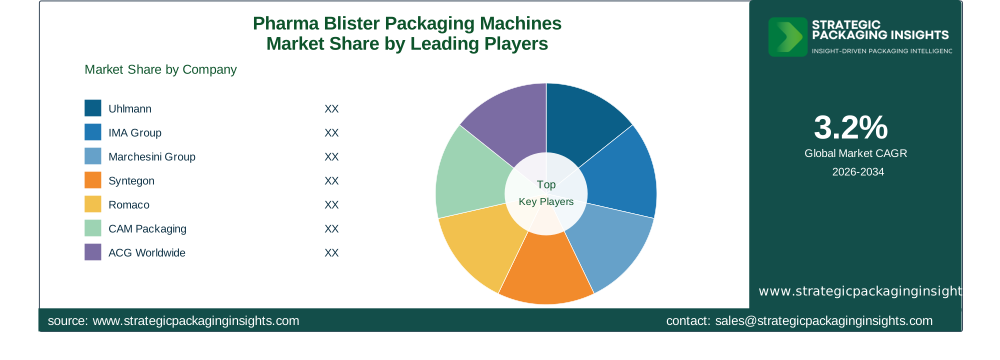
Uhlmann is a prominent player in the market, known for its advanced blister packaging solutions that cater to the pharmaceutical industry's diverse needs. The company focuses on innovation and quality, offering a wide range of machines that ensure high efficiency and precision in packaging processes. IMA Group is another key player, renowned for its comprehensive portfolio of blister packaging machines that integrate cutting-edge technologies to enhance productivity and operational efficiency. The company's commitment to sustainability and eco-friendly solutions further strengthens its market position.
Marchesini Group is recognized for its state-of-the-art blister packaging machines that offer flexibility and customization options to meet specific customer requirements. The company's focus on research and development enables it to introduce innovative solutions that address the evolving needs of the pharmaceutical industry. Syntegon, formerly known as Bosch Packaging Technology, is a leading provider of blister packaging machines that emphasize automation and smart technologies. The company's solutions are designed to optimize production processes and ensure compliance with stringent regulatory standards.
Romaco, CAM Packaging, and ACG Worldwide are also significant players in the market, offering a diverse range of blister packaging machines that cater to various applications. These companies focus on enhancing their product portfolios and expanding their global footprint through strategic partnerships and collaborations. Mediseal, Hoonga, and Jornen Machinery are other notable players that contribute to the market's competitive landscape, offering innovative and reliable blister packaging solutions that meet the pharmaceutical industry's stringent requirements.
Key Highlights
- The Pharma Blister Packaging Machines market is projected to grow at a CAGR of 3.2% from 2026 to 2034.
- Technological advancements, such as automation and IoT integration, are driving market growth.
- Increasing demand for tamper-evident and child-resistant packaging solutions is boosting the market.
- Emerging markets, such as Asia Pacific and Latin America, offer significant growth opportunities.
- Environmental concerns are driving the demand for sustainable and eco-friendly packaging solutions.
- Stringent regulatory requirements pose challenges for market players.
- High initial investment costs can be a barrier for small and medium-sized enterprises.
- Key players include Uhlmann, IMA Group, Marchesini Group, and Syntegon.
- Alternative packaging solutions, such as strip and bottle packaging, present competition.
Top Countries Insights
In the Pharma Blister Packaging Machines market, the United States holds a significant share, with a market size of approximately $650 million and a CAGR of 3%. The country's well-established pharmaceutical industry and stringent regulatory standards drive the demand for advanced blister packaging solutions. The focus on patient safety and compliance further boosts the market growth. However, the high cost of machinery and regulatory challenges can pose obstacles for manufacturers.
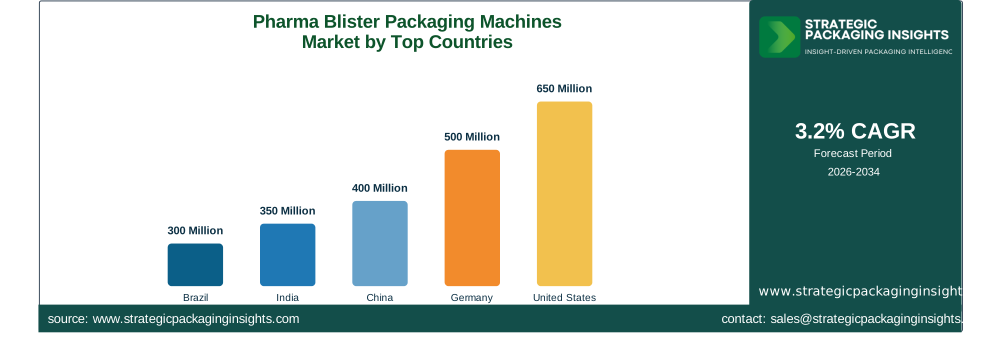
Germany is another key player in the market, with a market size of around $500 million and a CAGR of 4%. The country's strong emphasis on innovation and technology adoption in the pharmaceutical sector drives the demand for blister packaging machines. The presence of leading companies, such as Uhlmann and Syntegon, further strengthens Germany's position in the market. However, the stringent regulatory environment can be a challenge for manufacturers.
China is witnessing rapid growth in the Pharma Blister Packaging Machines market, with a market size of approximately $400 million and a CAGR of 5%. The country's expanding pharmaceutical industry and increasing healthcare investments drive the demand for advanced packaging solutions. The government's focus on improving healthcare infrastructure and promoting domestic manufacturing further supports market growth. However, the market faces challenges related to regulatory compliance and quality standards.
India is emerging as a significant market for blister packaging machines, with a market size of around $350 million and a CAGR of 6%. The country's growing pharmaceutical industry and increasing focus on exports drive the demand for efficient packaging solutions. The government's initiatives to promote domestic manufacturing and improve healthcare access further boost market growth. However, the market faces challenges related to infrastructure and regulatory compliance.
Brazil is also a key market, with a market size of approximately $300 million and a CAGR of 4%. The country's expanding pharmaceutical sector and increasing healthcare investments drive the demand for blister packaging machines. The focus on improving healthcare access and promoting domestic manufacturing further supports market growth. However, the market faces challenges related to economic instability and regulatory compliance.
Pharma Blister Packaging Machines Market Segments Insights

Machine Type Analysis
The Pharma Blister Packaging Machines market is segmented by machine type into Flat-Plate Blister Machines, Rotary Blister Machines, Thermoforming Machines, and Cold-Forming Machines. Flat-Plate Blister Machines are widely used due to their versatility and ability to handle various packaging materials. These machines are preferred for their precision and efficiency in packaging processes, making them suitable for a wide range of pharmaceutical products. Rotary Blister Machines, on the other hand, are known for their high-speed capabilities and are ideal for large-scale production. The demand for these machines is driven by the need for increased productivity and operational efficiency in pharmaceutical manufacturing.
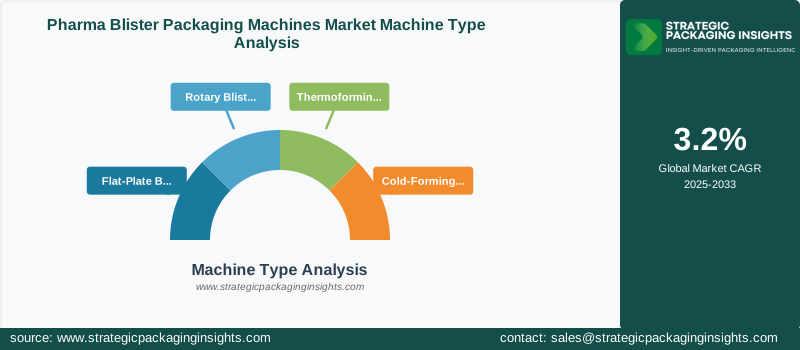
Thermoforming Machines are gaining popularity due to their ability to create complex packaging designs and accommodate a variety of materials. These machines are favored for their flexibility and customization options, allowing manufacturers to meet specific packaging requirements. Cold-Forming Machines are also in demand, particularly for products that require high barrier protection. These machines offer excellent moisture and oxygen barrier properties, making them suitable for sensitive pharmaceutical products. The growing focus on product safety and shelf life extension is driving the demand for cold-forming machines in the market.
Automation Level Analysis
The market is also segmented by automation level into Semi-Automatic, Automatic, and High-Speed Lines. Semi-Automatic machines are preferred by small and medium-sized enterprises due to their cost-effectiveness and ease of operation. These machines offer a balance between manual intervention and automation, making them suitable for companies with limited production volumes. Automatic machines, on the other hand, are widely used in large-scale pharmaceutical manufacturing due to their high efficiency and precision. These machines are equipped with advanced technologies that enhance productivity and reduce downtime, making them ideal for high-volume production.
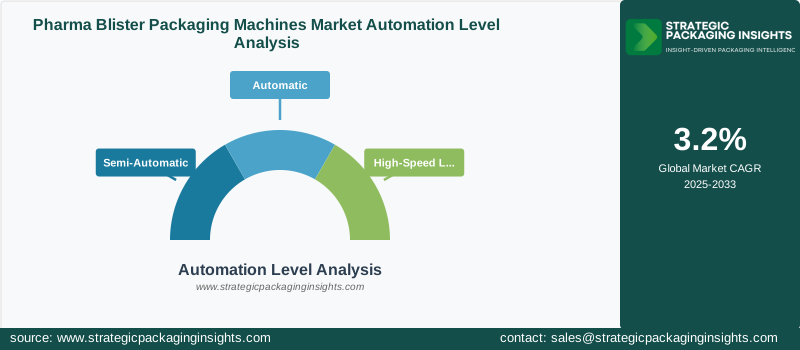
High-Speed Lines are gaining traction in the market due to their ability to achieve rapid production speeds and handle large volumes of products. These machines are designed to optimize production processes and ensure consistent quality, making them suitable for large pharmaceutical companies with high production demands. The integration of smart technologies, such as IoT and AI, in high-speed lines is further enhancing their efficiency and operational capabilities. The growing emphasis on automation and digitalization in the pharmaceutical industry is driving the demand for high-speed lines in the market.
Application Analysis
The Pharma Blister Packaging Machines market is segmented by application into Tablets, Capsules, Medical Devices, and Diagnostics. Tablets and capsules are the most common applications for blister packaging machines, driven by the increasing consumption of oral solid dosage forms in the pharmaceutical industry. The demand for blister packaging solutions for tablets and capsules is fueled by the need for tamper-evident and child-resistant packaging, as well as the growing focus on patient safety and compliance.
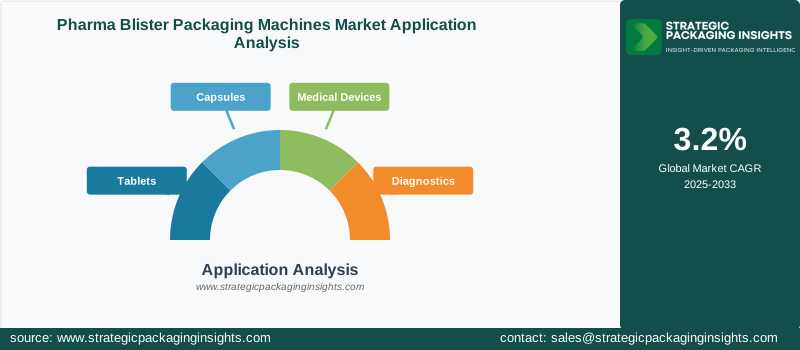
Medical devices and diagnostics are also significant applications for blister packaging machines. The demand for packaging solutions for medical devices is driven by the need for protection against contamination and damage during transportation and storage. Blister packaging offers excellent barrier properties and ensures the integrity of medical devices, making it a preferred choice for manufacturers. The growing emphasis on healthcare and the increasing adoption of diagnostic tests are further boosting the demand for blister packaging machines in these applications.
End Use Analysis
The market is segmented by end use into Pharmaceuticals, Nutraceuticals, and Healthcare. The pharmaceutical industry is the largest end-user of blister packaging machines, driven by the increasing demand for efficient and reliable packaging solutions. The need for tamper-evident and child-resistant packaging, as well as the focus on patient safety and compliance, are key factors driving the demand for blister packaging machines in the pharmaceutical sector.
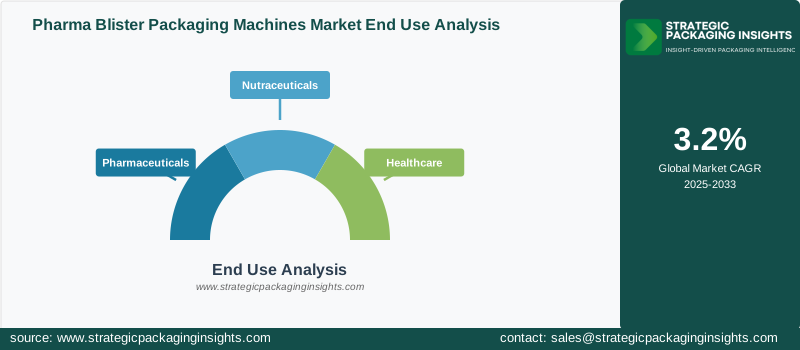
Nutraceuticals are also a significant end-use segment, with the growing demand for dietary supplements and functional foods driving the need for advanced packaging solutions. Blister packaging offers excellent protection and shelf life extension for nutraceutical products, making it a preferred choice for manufacturers. The healthcare sector is also witnessing an increasing demand for blister packaging machines, driven by the need for efficient packaging solutions for medical devices and diagnostics. The focus on improving healthcare access and promoting domestic manufacturing further supports the demand for blister packaging machines in the healthcare sector.
Pharma Blister Packaging Machines Market Segments
The Pharma Blister Packaging Machines market has been segmented on the basis ofMachine Type
- Flat-Plate Blister Machines
- Rotary Blister Machines
- Thermoforming Machines
- Cold-Forming Machines
Automation Level
- Semi-Automatic
- Automatic
- High-Speed Lines
Application
- Tablets
- Capsules
- Medical Devices
- Diagnostics
End Use
- Pharmaceuticals
- Nutraceuticals
- Healthcare
Region
- Asia Pacific
- North America
- Latin America
- Europe
- Middle East & Africa




