


Thermoforming Machines Market Outlook
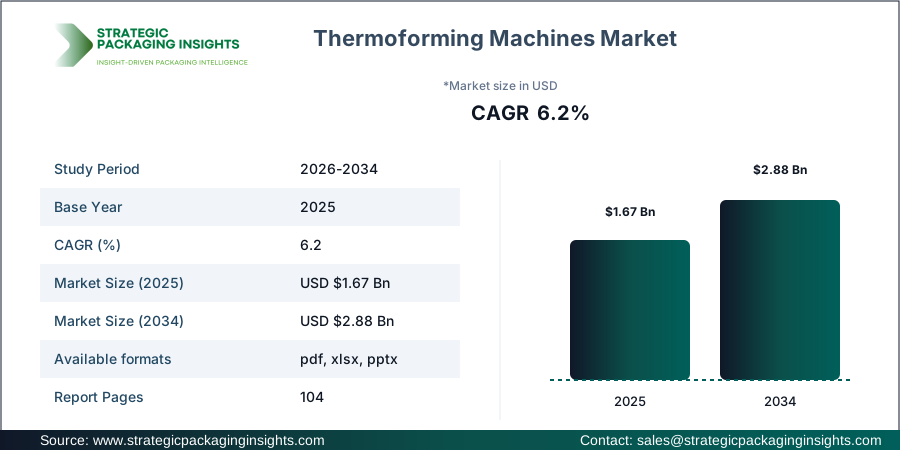
The Thermoforming Machines market size was valued at USD 1.67 billion in 2025 and is anticipated to reach USD 2.88 billion by 2034, growing at a CAGR of 6.2% during the forecast period according to Strategic Packaging Insights. The market is experiencing robust growth driven by the increasing demand for efficient and cost-effective packaging solutions across various industries. Companies like Multivac and ILLIG are at the forefront, leveraging advanced technologies to enhance production capabilities and meet the rising consumer expectations for sustainable and high-quality packaging. The adoption of thermoforming machines is particularly strong in the food and beverage sector, where the need for lightweight, durable, and visually appealing packaging is paramount. This trend is further supported by the growing emphasis on reducing packaging waste and improving recyclability, which thermoforming machines can effectively address.
One of the most impactful drivers of the Thermoforming Machines market is the increasing regulatory focus on sustainable packaging solutions. Governments worldwide are implementing stringent regulations to minimize environmental impact, which is pushing manufacturers to adopt eco-friendly packaging technologies. According to recent reports, the European Union's directive on reducing single-use plastics has significantly influenced the packaging industry, encouraging the adoption of thermoforming machines that utilize recyclable materials like PET and PP. This regulatory push is complemented by consumer demand for environmentally responsible products, creating a favorable environment for market growth. Companies such as Kiefel and GN Thermoforming are investing in research and development to innovate and offer machines that align with these sustainability goals, thereby gaining a competitive edge in the market.
Report Scope
| Attributes | Details |
| Report Title | Thermoforming Machines Market Size, Future Growth and Forecast 2034 |
| By Machine Type | Vacuum Thermoforming Machines, Pressure Thermoforming Machines, Inline Thermoforming Machines |
| By Application | Food Packaging, Medical Packaging, Consumer Goods Packaging |
| By Material Type | PET, PP, PS, PVC |
| By End Use | Food & Beverage, Healthcare, Packaging Converters, Industrial |
| Region | Asia Pacific, North America, Latin America, Europe, Middle East & Africa |
| Base Year | 2025 |
| Historic Period | 2018-2024 |
| Forecast Period | 2026-2034 |
| Number of Pages | 104 |
| Customization Available | Yes* |
Opportunities & Threats
The Thermoforming Machines market presents significant opportunities, particularly in the realm of technological advancements. The integration of automation and digitalization in thermoforming processes is a key area of growth. Companies are increasingly investing in smart manufacturing technologies that enhance precision, reduce waste, and improve overall efficiency. This trend is driven by the need to meet the high standards of quality and customization demanded by end-users in sectors such as healthcare and consumer goods. The development of machines with advanced features like real-time monitoring and predictive maintenance capabilities is expected to open new avenues for market players, allowing them to offer differentiated products and services.
Another promising opportunity lies in the expansion of the thermoforming machines market in emerging economies. Regions such as Asia Pacific and Latin America are witnessing rapid industrialization and urbanization, leading to increased demand for packaged goods. This surge in demand is creating a lucrative market for thermoforming machines, as manufacturers seek to establish local production facilities to cater to the growing consumer base. Companies like Brown Machine and SencorpWhite are strategically expanding their presence in these regions, capitalizing on the favorable economic conditions and government incentives aimed at boosting manufacturing activities.
Despite the positive outlook, the Thermoforming Machines market faces certain restrainers, primarily related to the high initial investment costs associated with advanced thermoforming equipment. Small and medium-sized enterprises (SMEs) may find it challenging to adopt these technologies due to budget constraints, limiting their ability to compete with larger players. Additionally, the market is subject to fluctuations in raw material prices, particularly for plastics like PET and PVC, which can impact production costs and profit margins. Companies need to navigate these challenges by optimizing their supply chains and exploring alternative materials to maintain competitiveness.
Drivers & Challenges
The Thermoforming Machines market is driven by several key factors, including the growing demand for lightweight and cost-effective packaging solutions. The food and beverage industry, in particular, is a major driver, as it requires packaging that not only preserves product quality but also enhances shelf appeal. Thermoforming machines offer the flexibility to produce a wide range of packaging designs, making them an ideal choice for manufacturers looking to differentiate their products. Additionally, the increasing focus on sustainability is driving the adoption of thermoforming machines that use recyclable materials, aligning with global efforts to reduce plastic waste.
Another significant driver is the advancement in thermoforming technology, which has led to improved machine efficiency and productivity. Innovations such as multi-layer thermoforming and the use of advanced materials have expanded the application scope of these machines, enabling manufacturers to cater to diverse industry needs. Companies like WM Thermoforming and Gabler Thermoform are at the forefront of these technological advancements, continuously enhancing their product offerings to meet the evolving demands of the market. The ability to produce high-quality, customized packaging solutions at a competitive cost is a key factor propelling market growth.
However, the market also faces challenges, particularly in terms of environmental concerns and regulatory compliance. The increasing scrutiny on plastic usage and waste management is compelling manufacturers to adopt sustainable practices, which can be both costly and complex. Compliance with varying regulations across different regions adds another layer of complexity, requiring companies to invest in research and development to ensure their products meet the necessary standards. Additionally, the market is highly competitive, with numerous players vying for market share, which can lead to pricing pressures and reduced profit margins.
Market Growth Factors
- The EU Packaging and Packaging Waste Regulation entered into force on 11 February 2025 and is being implemented from 12 August 2026, with measures to improve recyclability, reuse, consumer information, and resource efficiency; this strengthens demand for thermoforming equipment that can process recyclable and lower-footprint packaging formats. [European Commission ]
- Commission Regulation (EU) 2025/351 updated EU food-contact and recycled-plastic rules in February 2025, increasing the importance of controlled manufacturing and quality assurance for plastic and recycled-plastic food-contact articles; that supports investment in compliant thermoforming lines for recycled PET and other approved materials. [EUR-Lex ]
- Material and energy efficiency upgrades are a current demand driver: MULTIVAC’s 2025 pixelHEAT and pixelSEAL systems were designed for integration into thermoforming packaging machines, with thinner-film capability, support for recyclable mono-material concepts, and lower material and energy consumption.
- Automation and digital-twin deployment are improving the business case for new thermoforming machines: Kiefel’s October 2025 Siemens collaboration used standardized controls, integrated safety, and a digital twin, and said commissioning time could be reduced by up to 40%.
- Interoperable machine-data connectivity is becoming a practical growth driver for equipment upgrades: Kiefel’s OPC UA-based data packages expose energy consumption, cycle times, production volumes, film usage, and availability for integration into ERP and data-management systems.
- Commercialization of fiber-based forming is expanding the addressable market for thermoforming equipment: Kiefel’s NATUREFORMER KFD, introduced in May 2026, targets industrial production of dry-fiber packaging from rollstock for applications such as lids, trays, cutlery, and consumer-goods packaging.
- Recent expansion of development and application infrastructure is lowering adoption barriers for converters and brand owners: Kiefel’s new Heilbronn engineering office added process-engineering and tooling expertise in 2026 to accelerate feasibility work, development cycles, and industrialization of new thermoformed packaging solutions.
Recent Developments
- In April 2025, MULTIVAC and Watttron introduced the MULTIVAC pixelHEAT forming system and MULTIVAC pixelSEAL sealing system for thermoforming packaging machines; the matrix heating systems can be integrated into machines across output categories and were presented as enabling up to 50% less material use and up to 30% energy savings.
- In September 2025, Kiefel and Fiberdom announced a partnership combining Kiefel’s Dry Fiber forming technology with Fiberdom’s Duranova material; first applications such as cup lids, margarine container lids, and single-use cutlery were in final tests and close to market readiness.
- In February 2026, Kiefel officially opened its Asia-Pacific Customer Innovation Center in Rayong, Thailand, a 350 m² site equipped with thermoforming machines including the SPEEDFORMER KMD 78 Smart and NATUREFORMER KFT Lab for on-site testing, feasibility studies, and live demonstrations. [Kiefel ]
- In April 2026, MULTIVAC presented the RX Ultimate to the worldwide market for the first time, integrating pixelHEAT and pixelSEAL on one thermoforming packaging machine and enabling rapid material changeovers while consistently running recyclable films with reduced material use. [MULTIVAC ]
Market Share Analysis
The competitive landscape of the Thermoforming Machines market is characterized by the presence of several key players who are driving innovation and growth. Companies like Multivac, ILLIG, and Kiefel hold significant market shares, leveraging their extensive experience and technological expertise to maintain a competitive edge. These companies are known for their comprehensive product portfolios, which cater to a wide range of applications across various industries. Their focus on research and development, coupled with strategic partnerships and acquisitions, has enabled them to expand their market presence and enhance their product offerings.
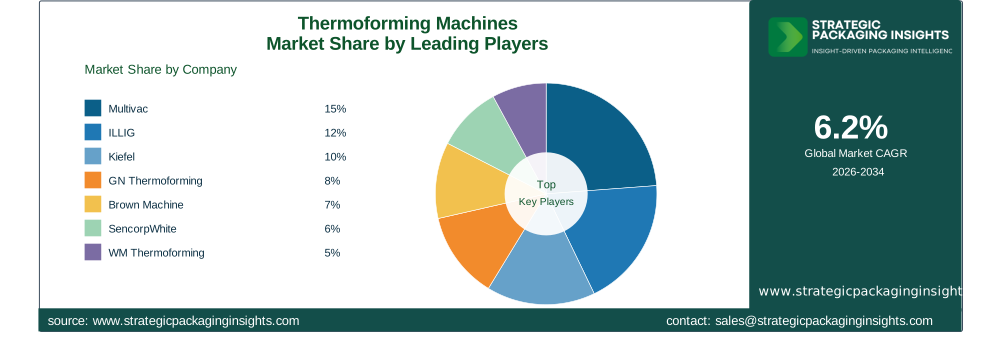
Multivac, for instance, is a leading player in the thermoforming machines market, known for its innovative solutions and commitment to sustainability. The company offers a diverse range of machines that cater to the food, medical, and consumer goods sectors, emphasizing efficiency and environmental responsibility. Similarly, ILLIG is renowned for its advanced thermoforming technology, which enables the production of high-quality packaging solutions with minimal environmental impact. The company's focus on automation and digitalization has positioned it as a leader in the market, offering cutting-edge solutions that meet the evolving needs of its customers.
Kiefel is another major player, recognized for its expertise in designing and manufacturing thermoforming machines for the packaging industry. The company's commitment to innovation and quality has earned it a strong reputation, with a focus on developing machines that offer superior performance and reliability. Kiefel's strategic collaborations with industry partners and its emphasis on customer-centric solutions have further strengthened its market position. Other notable companies in the market include GN Thermoforming, Brown Machine, and SencorpWhite, each contributing to the market's growth through their unique offerings and strategic initiatives.
GN Thermoforming is known for its high-performance machines that cater to the food packaging industry, offering solutions that enhance productivity and reduce waste. Brown Machine, on the other hand, focuses on providing customized thermoforming solutions that meet the specific needs of its clients, emphasizing flexibility and innovation. SencorpWhite is recognized for its comprehensive range of thermoforming machines, which are designed to deliver exceptional performance and efficiency. These companies, along with others like WM Thermoforming, Gabler Thermoform, GEISS, and MAAC Machinery, play a crucial role in shaping the competitive landscape of the thermoforming machines market.
Key Highlights
- The Thermoforming Machines market is projected to grow from USD 1.67 billion in 2025 to USD 2.88 billion by 2034, at a CAGR of 6.2%.
- Key drivers include the demand for lightweight, cost-effective packaging solutions and advancements in thermoforming technology.
- Opportunities exist in technological advancements and market expansion in emerging economies.
- Challenges include high initial investment costs and regulatory compliance related to environmental concerns.
- Major players like Multivac, ILLIG, and Kiefel dominate the market with innovative and sustainable solutions.
- The food and beverage industry is a significant driver, requiring packaging that preserves quality and enhances shelf appeal.
- Technological advancements such as multi-layer thermoforming are expanding the application scope of these machines.
Thermoforming Machines Market Segments Insights

By Machine Type Analysis
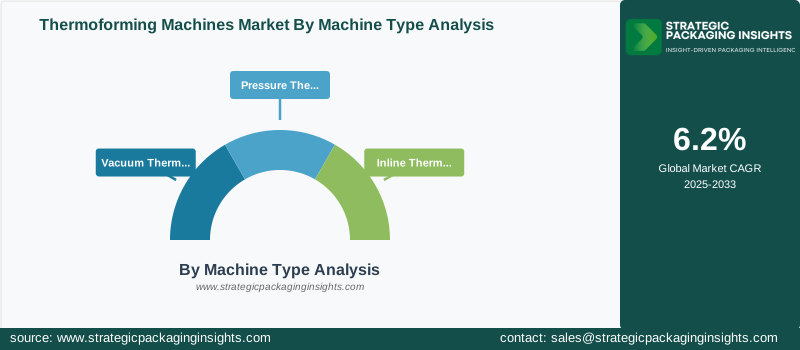
The Thermoforming Machines market is segmented by machine type into Vacuum Thermoforming Machines, Pressure Thermoforming Machines, and Inline Thermoforming Machines. Vacuum thermoforming machines are widely used due to their ability to produce detailed and complex shapes, making them ideal for applications in the food and consumer goods industries. These machines offer high efficiency and cost-effectiveness, which are crucial for manufacturers looking to optimize production processes. Pressure thermoforming machines, on the other hand, are preferred for applications requiring high precision and strength, such as medical packaging. The demand for inline thermoforming machines is also on the rise, driven by their ability to integrate multiple processes into a single production line, enhancing productivity and reducing operational costs.
Companies like Multivac and ILLIG are leading the way in developing advanced thermoforming machines that cater to the diverse needs of the market. These companies are focusing on incorporating automation and digitalization into their machines, enabling real-time monitoring and control of the production process. This not only improves efficiency but also ensures consistent product quality, which is essential for maintaining competitiveness in the market. The growing emphasis on sustainability is also influencing the development of thermoforming machines, with manufacturers exploring the use of recyclable materials and energy-efficient technologies to reduce environmental impact.
By Application Analysis
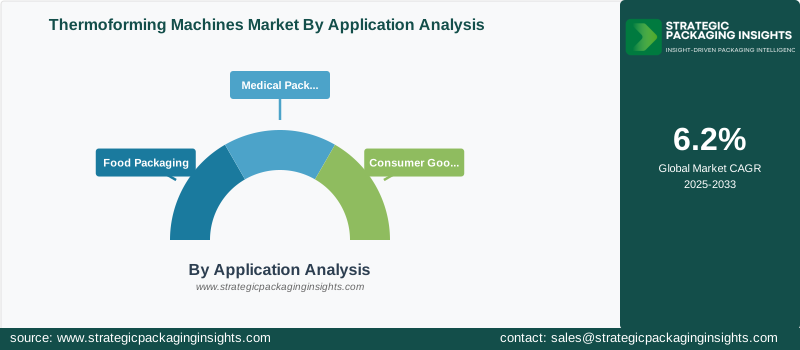
The application segment of the Thermoforming Machines market includes Food Packaging, Medical Packaging, and Consumer Goods Packaging. The food packaging segment is the largest, driven by the increasing demand for convenient and attractive packaging solutions that enhance product shelf life and appeal. Thermoforming machines are ideal for producing a wide range of food packaging products, from trays and containers to lids and clamshells, offering manufacturers the flexibility to meet diverse consumer preferences. The medical packaging segment is also experiencing significant growth, as thermoforming machines provide the precision and reliability required for packaging sensitive medical devices and pharmaceuticals.
Consumer goods packaging is another important application area, with thermoforming machines enabling the production of customized and aesthetically pleasing packaging solutions that enhance brand visibility and consumer engagement. Companies like Kiefel and GN Thermoforming are at the forefront of this segment, offering innovative machines that cater to the specific needs of the food, medical, and consumer goods industries. These companies are investing in research and development to enhance the capabilities of their machines, ensuring they meet the evolving demands of the market and comply with stringent regulatory standards.
By Material Type Analysis
The Thermoforming Machines market is segmented by material type into PET, PP, PS, and PVC. PET is the most widely used material, favored for its excellent clarity, strength, and recyclability, making it ideal for food and beverage packaging applications. The demand for PET is driven by the growing emphasis on sustainability and the need for packaging solutions that minimize environmental impact. PP is another popular material, known for its versatility and resistance to heat and chemicals, making it suitable for a wide range of applications, including medical and consumer goods packaging.
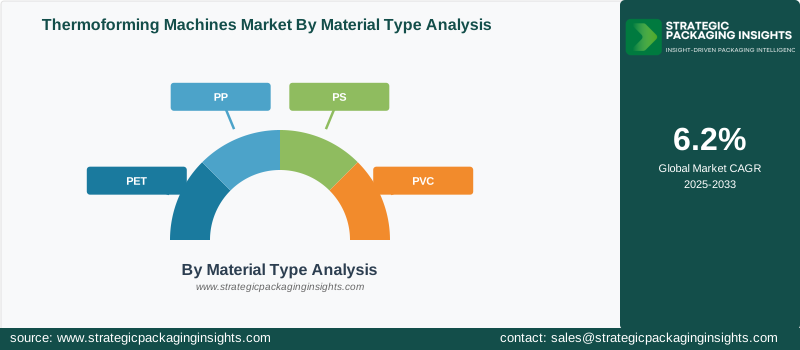
PS and PVC are also used in thermoforming applications, although their usage is declining due to environmental concerns and regulatory restrictions. Companies like Brown Machine and SencorpWhite are focusing on developing machines that can process a variety of materials, offering manufacturers the flexibility to choose the most suitable material for their specific needs. The trend towards sustainable packaging is encouraging manufacturers to explore alternative materials and technologies that reduce environmental impact while maintaining product quality and performance.
By End Use Analysis
The end-use segment of the Thermoforming Machines market includes Food & Beverage, Healthcare, Packaging Converters, and Industrial applications. The food and beverage industry is the largest end-user, driven by the need for packaging solutions that preserve product quality and enhance consumer appeal. Thermoforming machines are widely used in this industry to produce a variety of packaging products, from trays and containers to lids and clamshells, offering manufacturers the flexibility to meet diverse consumer preferences.
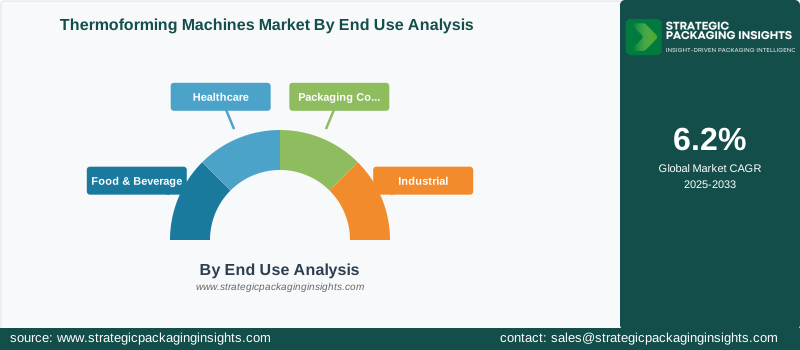
The healthcare sector is also a significant end-user, as thermoforming machines provide the precision and reliability required for packaging sensitive medical devices and pharmaceuticals. Packaging converters and industrial applications are other important end-use segments, with thermoforming machines enabling the production of customized and durable packaging solutions that meet the specific needs of these industries. Companies like WM Thermoforming and Gabler Thermoform are at the forefront of this segment, offering innovative machines that cater to the specific needs of the food, healthcare, and industrial sectors.
Thermoforming Machines Market Segments
The Thermoforming Machines market has been segmented on the basis ofBy Machine Type
- Vacuum Thermoforming Machines
- Pressure Thermoforming Machines
- Inline Thermoforming Machines
By Application
- Food Packaging
- Medical Packaging
- Consumer Goods Packaging
By Material Type
- PET
- PP
- PS
- PVC
By End Use
- Food & Beverage
- Healthcare
- Packaging Converters
- Industrial
Region
- Asia Pacific
- North America
- Latin America
- Europe
- Middle East & Africa




