


Pharma Blister Packaging Market Outlook
The Pharma Blister Packaging market size was valued at USD 24.26 billion in 2025 and is anticipated to reach USD 42.75 billion by 2034, growing at a CAGR of 6.5% during the forecast period according to Strategic Packaging Insights. This growth is driven by the increasing demand for convenient and safe packaging solutions in the pharmaceutical industry. Companies like Amcor and Constantia Flexibles are at the forefront, leveraging advanced materials and technologies to enhance product safety and extend shelf life. The rising prevalence of chronic diseases and the growing geriatric population are further fueling the demand for blister packaging, as it offers precise dosage and tamper-evident features.
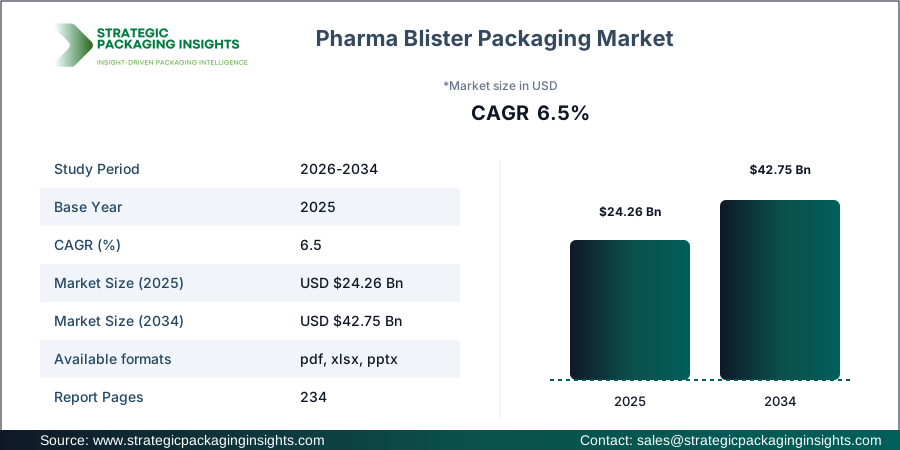
One of the most impactful drivers of the Pharma Blister Packaging market is the stringent regulatory requirements for pharmaceutical packaging. Governments worldwide are enforcing regulations to ensure the safety and efficacy of pharmaceutical products, which is boosting the adoption of blister packaging. For instance, the U.S. Food and Drug Administration (FDA) mandates child-resistant and senior-friendly packaging for certain medications, which blister packs can effectively provide. Additionally, the European Union's Falsified Medicines Directive requires unique identifiers on packaging, further promoting the use of blister packaging. Companies like UFlex and TekniPlex are investing in compliance-ready solutions to meet these regulatory demands, thereby enhancing their market position.
Report Scope
| Attributes | Details |
| Report Title | Pharma Blister Packaging Market Size, Future Growth and Forecast 2034 |
| By Material Type | PVC, PVDC, Aluminum, Cold Form Foil |
| By Product Type | Thermoform Blisters, Cold Form Blisters, Wallet Blisters |
| By Application | Tablets, Capsules, Medical Devices, Unit-Dose Drugs |
| By End Use | Pharma Companies, CDMOs, Healthcare Providers |
| Region | Asia Pacific, North America, Latin America, Europe, Middle East & Africa |
| Base Year | 2025 |
| Historic Period | 2018-2024 |
| Forecast Period | 2026-2034 |
| Number of Pages | 234 |
| Customization Available | Yes* |
Sustainability & Circular Economy Analysis
Sustainability initiatives are significantly shaping the Pharma Blister Packaging market, with a strong emphasis on recyclable materials and eco-friendly innovations. Companies are increasingly adopting lightweight packaging solutions to reduce material usage and carbon footprint. For instance, the use of recyclable PVC and aluminum in blister packs is gaining traction, as it aligns with global sustainability goals. This shift towards sustainable materials is not only driven by environmental concerns but also by consumer preferences for eco-friendly products. As a result, packaging manufacturers are investing in research and development to create innovative, sustainable packaging solutions that meet regulatory standards and consumer expectations.
The circular economy concept is also influencing the packaging market, encouraging the reuse and recycling of materials. Extended Producer Responsibility (EPR) regulations are prompting companies to take responsibility for the entire lifecycle of their products, including post-consumer waste management. This has led to the development of closed-loop recycling systems, where used blister packs are collected, recycled, and reintroduced into the production cycle. Such initiatives are not only reducing waste but also enhancing the brand image of companies like ACG Pharmapack and Bilcare, who are actively participating in circular economy practices.
Moreover, sustainability trends are impacting investment decisions and supply chain strategies in the packaging industry. Companies are prioritizing investments in sustainable technologies and processes to gain a competitive edge in the market. This includes the adoption of energy-efficient manufacturing practices and the use of renewable energy sources. Additionally, regulatory compliance with environmental standards is becoming a key factor in long-term market competitiveness. As governments worldwide tighten packaging regulations, companies that proactively adopt sustainable practices are better positioned to navigate these changes and maintain their market leadership.
Packaging Value Chain & Supply Chain Analysis
The Pharma Blister Packaging market's value chain is a complex ecosystem involving multiple stakeholders, from raw material suppliers to end-users. Raw material sourcing is a critical component, with companies relying on high-quality PVC, aluminum, and other materials to ensure the integrity and safety of blister packs. Packaging converters and manufacturers play a pivotal role in transforming these materials into finished products, utilizing advanced machinery and technologies to enhance production efficiency and product quality. Strategic partnerships with suppliers and technology providers are essential for maintaining a robust supply chain and ensuring timely delivery of products to market.
Logistics and distribution channels are equally important in the packaging value chain, as they facilitate the movement of products from manufacturers to end-users. Efficient transportation and inventory management are crucial for minimizing costs and ensuring product availability. Companies like Sonoco and WestRock are investing in supply chain resilience strategies, such as localization and global sourcing, to mitigate risks associated with geopolitical uncertainties and supply chain disruptions. These strategies enable companies to maintain a steady supply of raw materials and finished products, thereby enhancing their market competitiveness.
Recycling networks are becoming increasingly integrated into the packaging value chain, driven by the growing emphasis on sustainability and circular economy practices. Companies are collaborating with recycling partners to develop efficient collection and recycling systems for used blister packs. This not only reduces environmental impact but also creates opportunities for cost savings through material recovery and reuse. As a result, companies that effectively integrate recycling into their supply chain are better positioned to meet regulatory requirements and consumer expectations, ultimately strengthening their market position.
Opportunities & Threats
The Pharma Blister Packaging market presents numerous opportunities for growth, driven by technological advancements and evolving consumer preferences. The increasing demand for smart packaging solutions, such as those incorporating QR codes and NFC technology, offers significant potential for innovation. These technologies enable enhanced product tracking and authentication, providing added value to consumers and healthcare providers. Additionally, the growing trend towards personalized medicine is creating opportunities for customized blister packaging solutions that cater to specific patient needs. Companies that invest in research and development to capitalize on these trends are likely to gain a competitive advantage in the market.
Emerging markets, particularly in Asia Pacific and Latin America, offer substantial growth opportunities for the Pharma Blister Packaging market. The expanding pharmaceutical industry in these regions, coupled with rising healthcare expenditure, is driving the demand for advanced packaging solutions. Companies that establish a strong presence in these markets can benefit from the increasing demand for blister packaging, as well as favorable government policies promoting local manufacturing. Furthermore, strategic collaborations with local partners can enhance market penetration and provide access to new customer segments.
However, the market also faces several threats, including the volatility of raw material prices and the stringent regulatory landscape. Fluctuations in the prices of PVC, aluminum, and other materials can impact production costs and profit margins. Additionally, compliance with diverse regulatory requirements across different regions can pose challenges for companies operating in the global market. To mitigate these threats, companies must adopt flexible procurement strategies and invest in regulatory compliance initiatives. By doing so, they can navigate these challenges and maintain their competitive edge in the market.
Drivers & Challenges
The Pharma Blister Packaging market is primarily driven by the increasing demand for safe and convenient packaging solutions in the pharmaceutical industry. The growing prevalence of chronic diseases and the aging population are leading to higher consumption of medications, thereby boosting the demand for blister packaging. Companies like Huhtamaki and Klöckner Pentaplast are leveraging advanced materials and technologies to enhance the safety and efficacy of their packaging solutions. Additionally, the rise of e-commerce and online pharmacies is driving the need for secure and tamper-evident packaging, further propelling market growth.
Technological advancements in packaging materials and machinery are also significant drivers of the market. Innovations such as child-resistant and senior-friendly packaging designs are gaining traction, as they address the needs of diverse consumer segments. Furthermore, the integration of smart technologies, such as RFID and NFC, into blister packaging is enhancing product traceability and consumer engagement. Companies that invest in these technologies are better positioned to meet the evolving demands of the pharmaceutical industry and gain a competitive edge in the market.
Despite these drivers, the Pharma Blister Packaging market faces several challenges, including environmental concerns and regulatory compliance. The increasing focus on sustainability and waste reduction is prompting companies to adopt eco-friendly materials and practices. However, the transition to sustainable packaging solutions can be costly and time-consuming, posing challenges for companies with limited resources. Additionally, navigating the complex regulatory landscape requires significant investment in compliance initiatives and quality assurance processes. Companies must balance these challenges with the need to innovate and remain competitive in the market.
Market Share Analysis
The Pharma Blister Packaging market is characterized by intense competition, with several key players vying for market share. Companies like Amcor, Constantia Flexibles, and UFlex are leading the market, leveraging their extensive product portfolios and global presence to maintain a competitive edge. These companies are investing in research and development to introduce innovative packaging solutions that meet the evolving needs of the pharmaceutical industry. Additionally, strategic acquisitions and partnerships are enabling these companies to expand their market reach and enhance their product offerings.
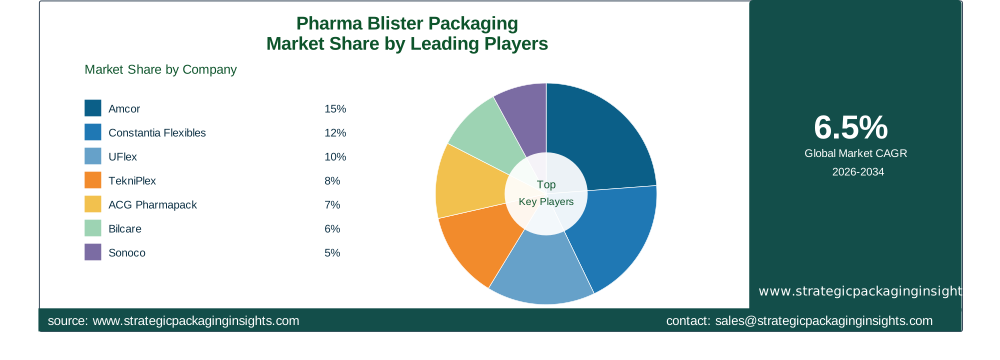
Amcor, a global leader in packaging solutions, holds a significant share of the Pharma Blister Packaging market. The company's focus on sustainability and innovation has positioned it as a preferred partner for pharmaceutical companies worldwide. Constantia Flexibles, known for its high-quality flexible packaging solutions, is also a major player in the market. The company's commitment to sustainability and customer-centric approach has helped it maintain a strong market position.
UFlex, an Indian multinational, is rapidly gaining market share with its innovative and cost-effective packaging solutions. The company's focus on research and development, coupled with its extensive manufacturing capabilities, has enabled it to cater to the diverse needs of the pharmaceutical industry. TekniPlex, a leading provider of packaging materials and solutions, is known for its expertise in developing high-performance blister packaging solutions. The company's focus on quality and innovation has helped it establish a strong presence in the market.
Other notable players in the market include ACG Pharmapack, Bilcare, Sonoco, WestRock, Huhtamaki, and Klöckner Pentaplast. These companies are investing in advanced technologies and sustainable practices to enhance their market competitiveness. By focusing on product innovation and customer satisfaction, these companies are well-positioned to capitalize on the growing demand for blister packaging solutions in the pharmaceutical industry.
Key Highlights
- Market Size: The Pharma Blister Packaging market was valued at USD 24.26 billion in 2025 and is projected to reach USD 42.75 billion by 2034.
- Growth Rate: The market is expected to grow at a CAGR of 6.5% during the forecast period.
- Leading Companies: Key players include Amcor, Constantia Flexibles, UFlex, and TekniPlex.
- Material Innovation: Increasing use of recyclable PVC and aluminum in blister packs.
- Regulatory Compliance: Stringent regulations driving the adoption of blister packaging.
- Regional Growth: Asia Pacific and Latin America offer significant growth opportunities.
- Technological Advancements: Integration of smart technologies in packaging solutions.
Pharma Blister Packaging Market Segments Insights

By Material Type Analysis
The Pharma Blister Packaging market is segmented by material type, with PVC, PVDC, aluminum, and cold form foil being the primary materials used. PVC is widely used due to its cost-effectiveness and versatility, making it a popular choice for pharmaceutical packaging. However, the increasing focus on sustainability is driving the demand for recyclable materials like aluminum and cold form foil. These materials offer superior barrier properties and are gaining traction in the market as companies strive to meet regulatory requirements and consumer preferences for eco-friendly packaging solutions.
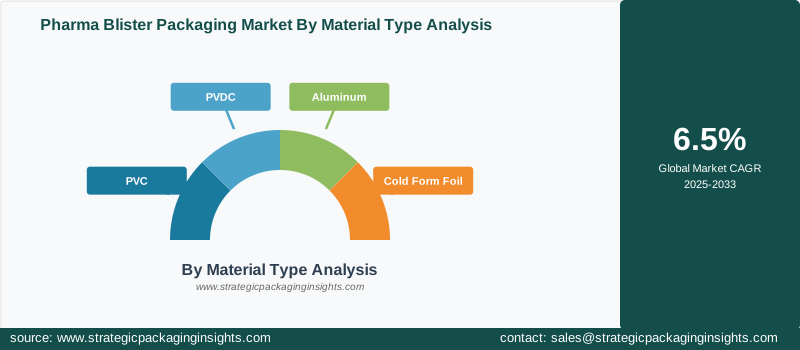
PVDC is another material that is gaining popularity due to its excellent moisture and oxygen barrier properties. It is particularly suitable for packaging moisture-sensitive drugs, ensuring product stability and shelf life. Companies like Amcor and Constantia Flexibles are investing in advanced material technologies to enhance the performance of PVDC and other materials. The growing demand for high-performance materials is driving innovation in the market, with companies focusing on developing new formulations and coatings to improve the barrier properties and sustainability of blister packaging.
By Product Type Analysis
The Pharma Blister Packaging market is also segmented by product type, with thermoform blisters, cold form blisters, and wallet blisters being the key categories. Thermoform blisters are the most commonly used type, offering flexibility and cost-effectiveness. They are ideal for packaging a wide range of pharmaceutical products, including tablets and capsules. Cold form blisters, on the other hand, provide superior barrier properties and are preferred for packaging moisture-sensitive drugs. The demand for cold form blisters is increasing as companies seek to enhance product protection and extend shelf life.
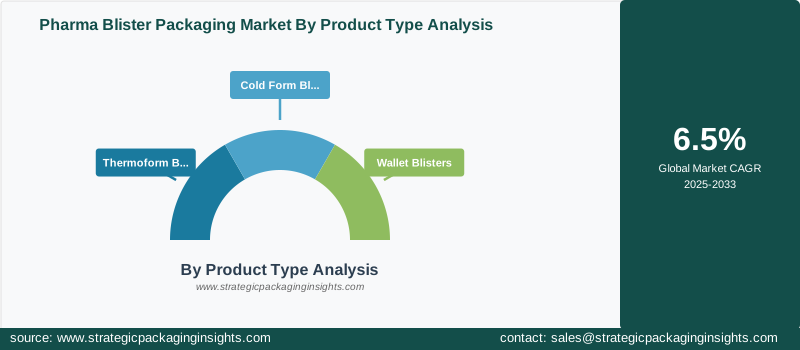
Wallet blisters are gaining popularity due to their convenience and ease of use. They are particularly suitable for unit-dose packaging, providing patients with a convenient and portable solution for medication management. Companies like UFlex and TekniPlex are investing in innovative designs and technologies to enhance the functionality and appeal of wallet blisters. The growing demand for user-friendly packaging solutions is driving innovation in the market, with companies focusing on developing new designs and features to meet the evolving needs of consumers and healthcare providers.
By Application Analysis
The Pharma Blister Packaging market is segmented by application, with tablets, capsules, medical devices, and unit-dose drugs being the primary categories. Tablets and capsules are the most common applications, accounting for a significant share of the market. The demand for blister packaging in these applications is driven by the need for precise dosage and tamper-evident features. Companies like ACG Pharmapack and Bilcare are focusing on developing innovative packaging solutions that enhance product safety and compliance with regulatory standards.
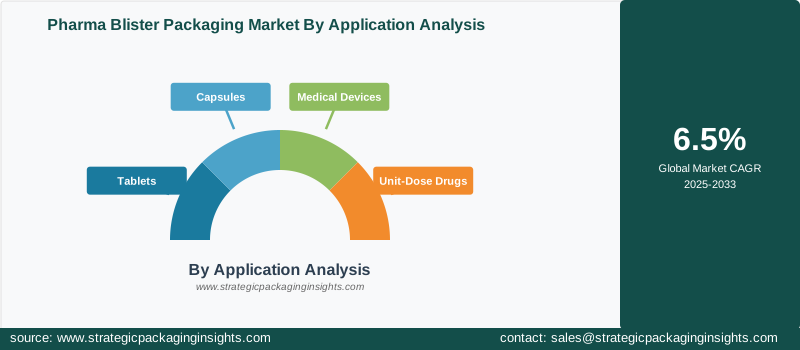
Medical devices and unit-dose drugs are also key applications for blister packaging. The demand for blister packaging in these applications is driven by the need for secure and convenient packaging solutions that ensure product integrity and patient safety. Companies are investing in advanced technologies and materials to enhance the performance and functionality of blister packaging for these applications. The growing demand for personalized medicine and the increasing prevalence of chronic diseases are further driving the demand for blister packaging in these applications.
By End Use Analysis
The Pharma Blister Packaging market is segmented by end use, with pharma companies, CDMOs, and healthcare providers being the primary categories. Pharma companies are the largest end-users of blister packaging, driven by the need for safe and compliant packaging solutions. The demand for blister packaging in this segment is driven by the increasing production of pharmaceuticals and the need for secure and tamper-evident packaging solutions. Companies like Sonoco and WestRock are focusing on developing innovative packaging solutions that meet the evolving needs of pharma companies.
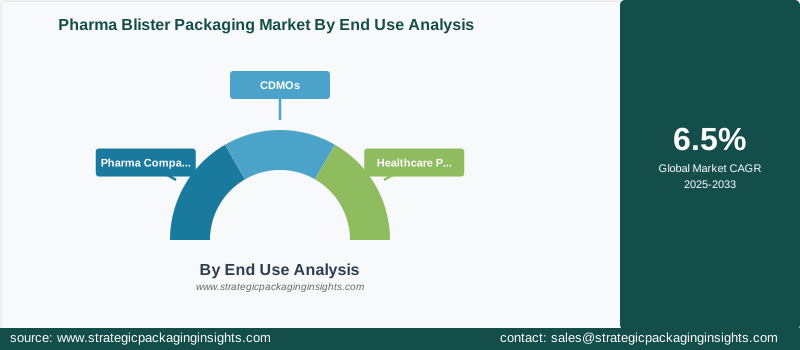
CDMOs and healthcare providers are also key end-users of blister packaging. The demand for blister packaging in these segments is driven by the need for cost-effective and efficient packaging solutions that enhance product safety and compliance with regulatory standards. Companies are investing in advanced technologies and materials to enhance the performance and functionality of blister packaging for these end-users. The growing demand for personalized medicine and the increasing prevalence of chronic diseases are further driving the demand for blister packaging in these segments.
Pharma Blister Packaging Market Segments
The Pharma Blister Packaging market has been segmented on the basis ofBy Material Type
- PVC
- PVDC
- Aluminum
- Cold Form Foil
By Product Type
- Thermoform Blisters
- Cold Form Blisters
- Wallet Blisters
By Application
- Tablets
- Capsules
- Medical Devices
- Unit-Dose Drugs
By End Use
- Pharma Companies
- CDMOs
- Healthcare Providers
Region
- Asia Pacific
- North America
- Latin America
- Europe
- Middle East & Africa




