


Molded Fiber End Caps Market Outlook
The Molded Fiber End Caps market was valued at $1.34 billion in 2025 and is projected to reach $2.72 billion by 2034, growing at a CAGR of 8.2% during the forecast period 2026-2034. This market is witnessing significant growth due to the increasing demand for sustainable and eco-friendly packaging solutions. Molded fiber end caps are gaining traction as they offer excellent protection for products during shipping and handling, while also being biodegradable and recyclable. The rising awareness about environmental issues and stringent regulations against plastic use are further propelling the market growth. Additionally, the versatility of molded fiber end caps in various applications such as electronics, appliances, and industrial shipping is enhancing their adoption across different sectors.
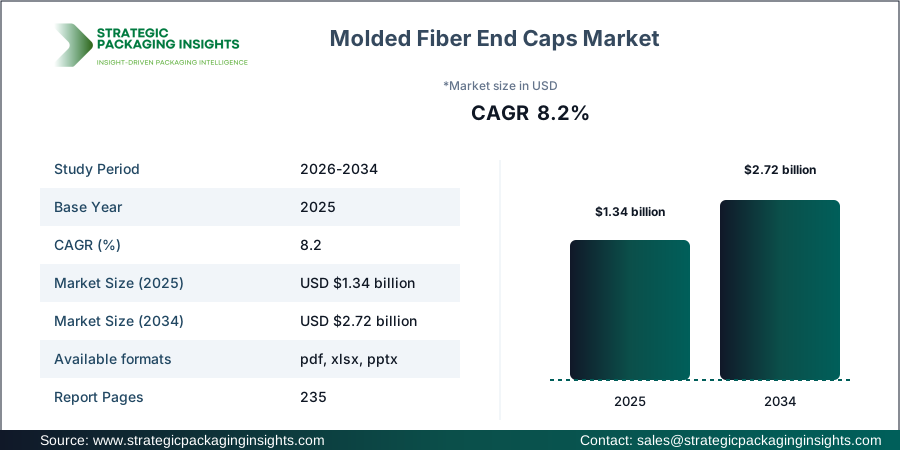
Despite the promising growth prospects, the molded fiber end caps market faces certain challenges. The high cost of raw materials and production processes can act as a restraint, limiting the market's expansion. Moreover, the availability of alternative packaging solutions, such as foam and plastic, which are often cheaper, poses a threat to the market. However, the increasing focus on sustainability and the development of cost-effective production techniques are expected to mitigate these challenges. The market also holds significant growth potential in emerging economies, where the demand for consumer electronics and home appliances is on the rise, creating new opportunities for molded fiber end caps manufacturers.
Report Scope
| Attributes | Details |
| Report Title | Molded Fiber End Caps Market Size, Future Growth and Forecast 2034 |
| By Material Type | Recycled Paper Pulp, Virgin Pulp, Bagasse Fiber, Molded Fiber Blends |
| By Product Type | Protective End Caps, Cushion Inserts, Corner Caps, Custom End Caps |
| By Application | Electronics Packaging, Appliance Packaging, Furniture Packaging, Industrial Shipping |
| By End Use | Consumer Electronics, Home Appliances, Logistics, Retail |
| Region | Asia Pacific, North America, Latin America, Europe, Middle East & Africa |
| Base Year | 2025 |
| Historic Period | 2018-2024 |
| Forecast Period | 2026-2034 |
| Number of Pages | 235 |
| Customization Available | Yes* |
Opportunities & Threats
The molded fiber end caps market presents numerous opportunities, particularly in the realm of sustainability. As global awareness about environmental conservation grows, businesses are increasingly seeking eco-friendly packaging solutions. Molded fiber end caps, being biodegradable and recyclable, align perfectly with this trend. Companies that invest in innovative production techniques to reduce costs and improve the quality of molded fiber products are likely to gain a competitive edge. Additionally, the expansion of e-commerce and the consequent rise in demand for protective packaging solutions offer significant growth opportunities for the market. The ability to customize molded fiber end caps for specific applications further enhances their appeal to a broad range of industries.
Another opportunity lies in the technological advancements in the production of molded fiber products. The development of advanced molding techniques and the use of high-quality raw materials can lead to the production of superior molded fiber end caps that offer better protection and durability. This can open up new markets and applications, particularly in sectors that require high-performance packaging solutions. Furthermore, partnerships and collaborations with major players in the packaging industry can help companies expand their market reach and enhance their product offerings.
However, the market also faces certain threats that could hinder its growth. The high cost of production and raw materials remains a significant challenge, as it can limit the affordability and adoption of molded fiber end caps. Additionally, the presence of alternative packaging solutions, such as plastic and foam, which are often cheaper and more readily available, poses a threat to the market. Companies need to focus on cost reduction strategies and emphasize the environmental benefits of molded fiber products to overcome these challenges and maintain their market position.
Drivers & Challenges
The primary driver of the molded fiber end caps market is the increasing demand for sustainable packaging solutions. As consumers and businesses become more environmentally conscious, there is a growing preference for packaging materials that are biodegradable and recyclable. Molded fiber end caps, made from renewable resources, fit this requirement perfectly, driving their adoption across various industries. Additionally, the stringent regulations imposed by governments worldwide to reduce plastic waste are further propelling the demand for molded fiber products. The versatility of molded fiber end caps, which can be used in a wide range of applications from electronics to industrial shipping, also contributes to their growing popularity.
Another significant driver is the rise of e-commerce, which has led to an increased demand for protective packaging solutions. Molded fiber end caps provide excellent protection for products during transit, making them an ideal choice for e-commerce businesses. The ability to customize these end caps to fit specific product dimensions further enhances their appeal. Moreover, advancements in production technologies have improved the quality and performance of molded fiber products, making them more competitive with traditional packaging materials. These factors are expected to continue driving the growth of the molded fiber end caps market in the coming years.
Despite the positive growth drivers, the molded fiber end caps market faces several challenges. One of the main challenges is the high cost of production, which can limit the affordability and widespread adoption of these products. The availability of cheaper alternative packaging solutions, such as plastic and foam, also poses a significant challenge. Additionally, the market is highly competitive, with numerous players vying for market share. Companies need to focus on innovation, cost reduction, and strategic partnerships to overcome these challenges and maintain their competitive edge in the market.
Market Share Analysis
The competitive landscape of the molded fiber end caps market is characterized by the presence of several key players who are actively engaged in product innovation and strategic partnerships to enhance their market position. Companies such as Huhtamaki, Hartmann, UFP Technologies, and Pactiv Evergreen are leading the market with their extensive product portfolios and strong distribution networks. These companies are focusing on expanding their production capacities and investing in research and development to introduce innovative and cost-effective molded fiber solutions. The market is also witnessing increased collaboration between manufacturers and end-users to develop customized packaging solutions that meet specific industry requirements.
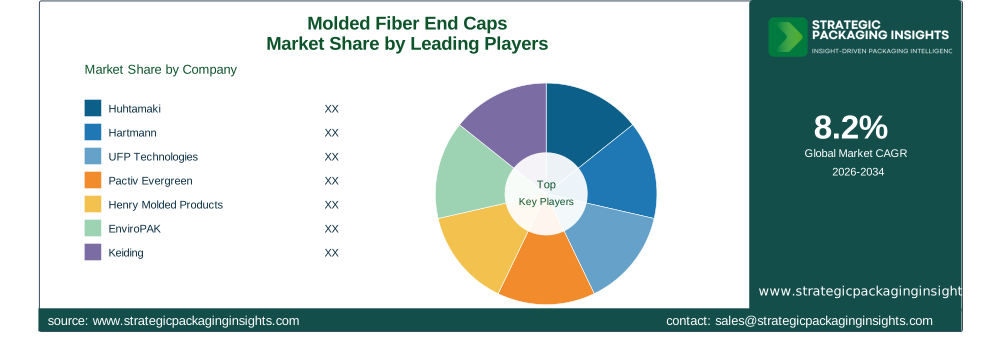
Huhtamaki, a prominent player in the molded fiber end caps market, holds a significant market share due to its strong focus on sustainability and innovation. The company offers a wide range of molded fiber products that cater to various industries, including electronics, appliances, and industrial shipping. Hartmann, another key player, is known for its high-quality molded fiber solutions and has a strong presence in the European market. The company's commitment to sustainability and its extensive product portfolio have helped it maintain a competitive edge in the market.
UFP Technologies is a leading provider of molded fiber end caps, known for its innovative product offerings and strong customer relationships. The company focuses on developing customized packaging solutions that meet the specific needs of its clients, which has helped it gain a significant market share. Pactiv Evergreen, with its extensive distribution network and diverse product range, is another major player in the market. The company is committed to sustainability and continuously invests in research and development to enhance its product offerings.
Other notable companies in the molded fiber end caps market include Henry Molded Products, EnviroPAK, Keiding, Sonoco, Sabert, and Brødrene Hartmann. These companies are actively engaged in expanding their product portfolios and strengthening their market presence through strategic partnerships and collaborations. The competitive landscape of the molded fiber end caps market is expected to remain dynamic, with companies focusing on innovation and sustainability to gain a competitive advantage.
Key Highlights
- The molded fiber end caps market is projected to grow at a CAGR of 8.2% from 2026 to 2034.
- Increasing demand for sustainable and eco-friendly packaging solutions is driving market growth.
- Technological advancements in production techniques are enhancing product quality and performance.
- The rise of e-commerce is boosting the demand for protective packaging solutions.
- High production costs and the availability of alternative packaging solutions pose challenges to market growth.
- Key players are focusing on innovation and strategic partnerships to enhance their market position.
- Emerging economies offer significant growth opportunities for molded fiber end caps manufacturers.
- Customization of molded fiber end caps for specific applications is gaining traction.
- Stringent regulations against plastic use are propelling the demand for molded fiber products.
- The market is witnessing increased collaboration between manufacturers and end-users for customized solutions.
Top Countries Insights
In the molded fiber end caps market, the United States stands out as a key player, with a market size of approximately $500 million and a CAGR of 7%. The country's strong focus on sustainability and the presence of major e-commerce players drive the demand for eco-friendly packaging solutions. Government regulations promoting the use of biodegradable materials further support market growth. However, the high cost of production remains a challenge for manufacturers in the region.
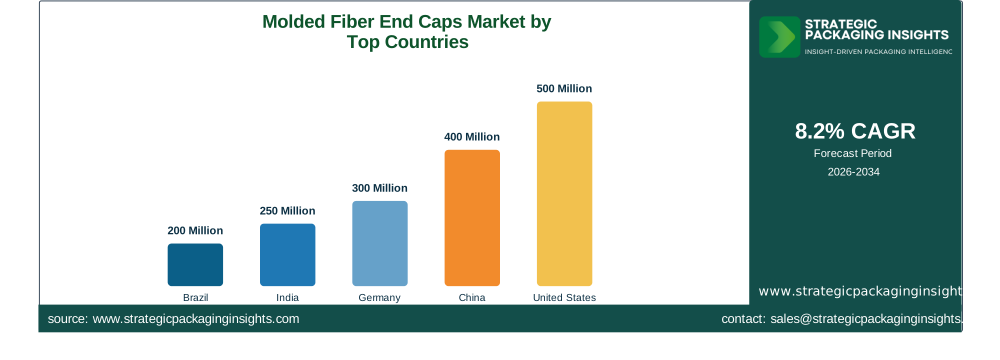
China, with its booming electronics and home appliances industries, is another significant market for molded fiber end caps. The market size in China is estimated at $400 million, with a CAGR of 10%. The country's rapid industrialization and increasing consumer awareness about environmental issues are key growth drivers. However, the availability of cheaper alternative packaging solutions poses a challenge to market expansion.
Germany, known for its strong manufacturing sector, is a leading market for molded fiber end caps in Europe. The market size in Germany is around $300 million, with a CAGR of 6%. The country's stringent environmental regulations and focus on sustainability drive the demand for molded fiber products. However, the high cost of raw materials and production processes can limit market growth.
India, with its growing consumer electronics and home appliances sectors, offers significant growth opportunities for the molded fiber end caps market. The market size in India is approximately $250 million, with a CAGR of 12%. The increasing focus on sustainability and the rising demand for protective packaging solutions are key growth drivers. However, the lack of awareness about molded fiber products can pose a challenge to market expansion.
Brazil, with its expanding logistics and retail sectors, is another promising market for molded fiber end caps. The market size in Brazil is estimated at $200 million, with a CAGR of 8%. The country's focus on reducing plastic waste and promoting sustainable packaging solutions drives market growth. However, the high cost of production and the availability of alternative packaging solutions remain challenges for manufacturers in the region.
Molded Fiber End Caps Market Segments Insights

By Material Type Analysis
The molded fiber end caps market is segmented by material type into recycled paper pulp, virgin pulp, bagasse fiber, and molded fiber blends. Recycled paper pulp is the most widely used material due to its cost-effectiveness and environmental benefits. The increasing focus on sustainability and the availability of recycled materials drive the demand for recycled paper pulp in the production of molded fiber end caps. Virgin pulp, although more expensive, offers superior quality and is preferred for applications requiring high-performance packaging solutions. Bagasse fiber, derived from sugarcane waste, is gaining popularity as an eco-friendly alternative to traditional materials. Molded fiber blends, which combine different materials to enhance product performance, are also witnessing increased adoption in the market.
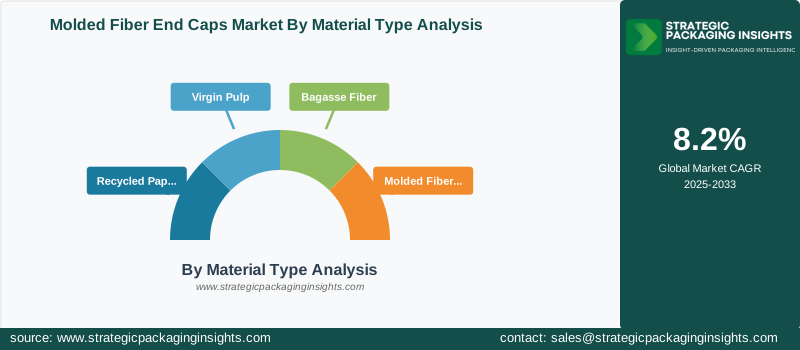
The demand for recycled paper pulp is driven by the growing awareness about environmental conservation and the need to reduce plastic waste. Companies are increasingly opting for recycled materials to align with sustainability goals and meet regulatory requirements. Virgin pulp, on the other hand, is preferred for applications where product quality and durability are critical. The use of bagasse fiber is gaining traction due to its renewable nature and the increasing focus on utilizing agricultural waste for sustainable packaging solutions. Molded fiber blends offer the advantage of combining the benefits of different materials, making them suitable for a wide range of applications.
By Product Type Analysis
The molded fiber end caps market is segmented by product type into protective end caps, cushion inserts, corner caps, and custom end caps. Protective end caps are the most commonly used product type, offering excellent protection for products during shipping and handling. The demand for protective end caps is driven by the rise of e-commerce and the increasing need for secure packaging solutions. Cushion inserts, which provide additional protection and cushioning for fragile items, are also witnessing significant demand in the market. Corner caps, used to protect the corners of products, are gaining popularity in the electronics and appliance industries.

Custom end caps, which are designed to meet specific product requirements, are gaining traction due to their versatility and ability to provide tailored packaging solutions. The demand for custom end caps is driven by the increasing focus on product differentiation and the need for packaging solutions that enhance brand value. Companies are increasingly opting for custom end caps to meet the specific needs of their products and improve customer satisfaction. The ability to customize molded fiber end caps for specific applications further enhances their appeal to a broad range of industries.
By Application Analysis
The molded fiber end caps market is segmented by application into electronics packaging, appliance packaging, furniture packaging, and industrial shipping. Electronics packaging is the largest application segment, driven by the increasing demand for protective packaging solutions in the electronics industry. The rise of e-commerce and the growing popularity of consumer electronics are key factors driving the demand for molded fiber end caps in this segment. Appliance packaging is another significant application segment, with the increasing demand for home appliances driving the need for secure and sustainable packaging solutions.
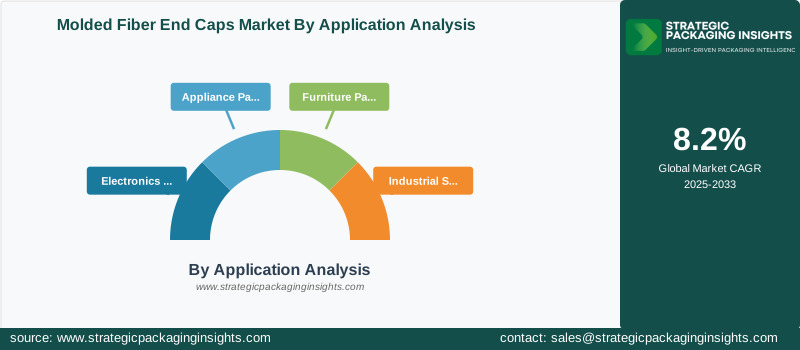
Furniture packaging is witnessing growing demand due to the increasing focus on sustainability and the need for eco-friendly packaging solutions. The use of molded fiber end caps in industrial shipping is also gaining traction, driven by the need for durable and protective packaging solutions for heavy and bulky items. The versatility of molded fiber end caps and their ability to provide excellent protection for a wide range of products make them an ideal choice for various applications.
By End Use Analysis
The molded fiber end caps market is segmented by end use into consumer electronics, home appliances, logistics, and retail. Consumer electronics is the largest end-use segment, driven by the increasing demand for protective packaging solutions in the electronics industry. The rise of e-commerce and the growing popularity of consumer electronics are key factors driving the demand for molded fiber end caps in this segment. Home appliances is another significant end-use segment, with the increasing demand for home appliances driving the need for secure and sustainable packaging solutions.
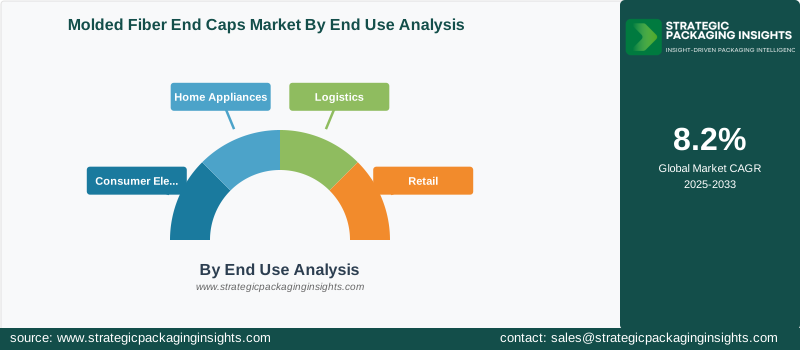
Logistics is witnessing growing demand for molded fiber end caps due to the increasing focus on sustainability and the need for eco-friendly packaging solutions. The use of molded fiber end caps in retail is also gaining traction, driven by the need for durable and protective packaging solutions for a wide range of products. The versatility of molded fiber end caps and their ability to provide excellent protection for a wide range of products make them an ideal choice for various end-use applications.
Molded Fiber End Caps Market Segments
The Molded Fiber End Caps market has been segmented on the basis ofBy Material Type
- Recycled Paper Pulp
- Virgin Pulp
- Bagasse Fiber
- Molded Fiber Blends
By Product Type
- Protective End Caps
- Cushion Inserts
- Corner Caps
- Custom End Caps
By Application
- Electronics Packaging
- Appliance Packaging
- Furniture Packaging
- Industrial Shipping
By End Use
- Consumer Electronics
- Home Appliances
- Logistics
- Retail
Region
- Asia Pacific
- North America
- Latin America
- Europe
- Middle East & Africa




