


Recycled Paper Market Outlook
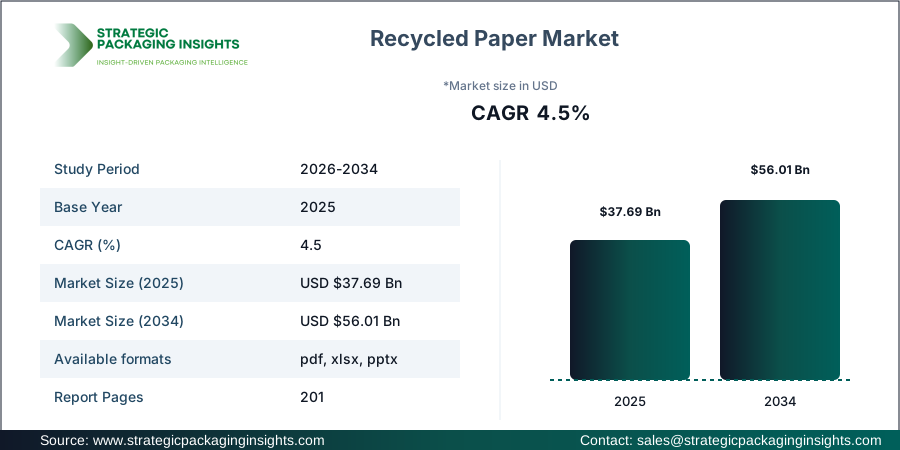
The Recycled Paper market size was valued at USD 37.69 billion in 2025 and is anticipated to reach USD 56.01 billion by 2034, growing at a CAGR of 4.5% during the forecast period according to Strategic Packaging Insights. The increasing demand for sustainable packaging solutions is a significant driver for this market. Companies like International Paper and Smurfit Kappa are leading the charge by investing in advanced recycling technologies and expanding their product portfolios to meet the growing consumer demand for eco-friendly products. The market is also witnessing a surge in demand from the packaging sector, which is increasingly adopting recycled paper to reduce environmental impact and comply with stringent regulations.
One of the most impactful drivers of the recycled paper market is the global push towards sustainability and environmental responsibility. Governments worldwide are implementing regulations to reduce waste and promote recycling, which is boosting the demand for recycled paper products. For instance, the European Union's Circular Economy Action Plan aims to increase recycling rates and reduce landfill waste, directly impacting the recycled paper market. Companies like DS Smith and WestRock are responding by enhancing their recycling capabilities and developing innovative products that meet regulatory standards while appealing to environmentally conscious consumers.
Report Scope
| Attributes | Details |
| Report Title | Recycled Paper Market Size, Future Growth and Forecast 2034 |
| By Product Type | Recycled Printing Paper, Recycled Packaging Paper, Recycled Tissue Paper, Recycled Kraft Paper |
| By Grade | Deinked Pulp, OCC-Based Paper, Mixed Waste Paper |
| By Application | Packaging, Printing, Hygiene, Stationery |
| By End Use | Packaging Converters, Publishers, Retail, Consumer Goods |
| Region | Asia Pacific, North America, Latin America, Europe, Middle East & Africa |
| Base Year | 2025 |
| Historic Period | 2018-2024 |
| Forecast Period | 2026-2034 |
| Number of Pages | 201 |
| Customization Available | Yes* |
Sustainability & Circular Economy Analysis
Sustainability initiatives and circular economy practices are significantly influencing the recycled paper market. The shift towards recyclable materials and reusable packaging is driving innovation in eco-friendly material development. Companies are investing in lightweight packaging solutions that reduce material usage and transportation costs, aligning with consumer preferences for sustainable products. The adoption of waste reduction strategies and ESG initiatives is becoming a standard practice, as businesses aim to minimize their carbon footprint and enhance their brand image.
These sustainability trends are reshaping packaging design and manufacturing processes. Companies are prioritizing investments in technologies that enable the production of high-quality recycled paper with minimal environmental impact. This focus on sustainability is also influencing supply chain strategies, as businesses seek to source raw materials responsibly and ensure compliance with packaging regulations. Extended producer responsibility (EPR) is gaining traction, compelling manufacturers to take accountability for the entire lifecycle of their products, further driving the demand for recycled paper.
Long-term market competitiveness is increasingly tied to a company's ability to adapt to these sustainability trends. As consumer preferences shift towards eco-friendly products, businesses that fail to innovate risk losing market share. Regulatory compliance is also a critical factor, as governments impose stricter standards on packaging materials. Companies that proactively address these challenges by investing in sustainable practices and technologies are better positioned to thrive in the evolving market landscape.
Packaging Value Chain & Supply Chain Analysis
The packaging value chain and supply chain ecosystem for recycled paper are complex and multifaceted. Raw material sourcing is a critical component, with companies relying on a steady supply of waste paper to produce recycled products. Packaging converters and manufacturers play a vital role in transforming these raw materials into finished goods, utilizing advanced machinery and technologies to enhance efficiency and quality. Logistics and distribution channels are essential for ensuring timely delivery to brand owners and retailers, who are increasingly demanding sustainable packaging solutions.
Supply chain efficiency is paramount in the recycled paper market, as it directly impacts production capabilities and market performance. Companies are adopting strategic partnerships and localization strategies to enhance supply chain resilience and mitigate risks associated with global sourcing. Inventory management is also a key focus, with businesses implementing advanced systems to optimize stock levels and reduce waste. The availability of raw materials and transportation infrastructure are critical factors influencing the overall competitiveness of the market.
Recycling networks are an integral part of the supply chain, facilitating the collection and processing of waste paper. Companies are investing in these networks to ensure a consistent supply of raw materials and support their sustainability goals. Procurement strategies are evolving, with businesses prioritizing suppliers that adhere to environmental standards and offer competitive pricing. As the market continues to grow, companies that effectively manage their supply chains and leverage strategic partnerships are better positioned to capitalize on emerging opportunities and maintain a competitive edge.
Opportunities & Threats
The recycled paper market presents numerous opportunities for growth and innovation. The increasing demand for sustainable packaging solutions is a significant opportunity for companies to expand their product offerings and capture new market segments. As consumers become more environmentally conscious, there is a growing preference for products made from recycled materials. This trend is driving companies to invest in research and development to create innovative products that meet consumer expectations and regulatory requirements. Additionally, the rise of e-commerce is boosting demand for packaging materials, providing further growth opportunities for the recycled paper market.
Another opportunity lies in the development of advanced recycling technologies that enhance the quality and efficiency of recycled paper production. Companies that invest in these technologies can improve their competitive position by offering high-quality products at competitive prices. The increasing focus on circular economy practices is also creating opportunities for companies to collaborate with stakeholders across the value chain to develop sustainable solutions. By leveraging these opportunities, companies can enhance their market presence and drive long-term growth.
However, the recycled paper market also faces several threats that could impact its growth potential. One of the primary challenges is the volatility of raw material prices, which can affect production costs and profitability. Additionally, the market is subject to stringent regulatory requirements that can increase compliance costs and limit operational flexibility. Companies must also contend with competition from alternative materials, such as biodegradable plastics, which are gaining traction as sustainable packaging solutions. To mitigate these threats, companies must adopt proactive strategies that focus on cost management, regulatory compliance, and innovation.
Drivers & Challenges
The recycled paper market is driven by several key factors that are shaping its growth trajectory. One of the primary drivers is the increasing demand for sustainable packaging solutions, as consumers and businesses alike seek to reduce their environmental impact. This demand is prompting companies to invest in advanced recycling technologies and expand their product portfolios to include a wider range of recycled paper products. Additionally, government regulations aimed at promoting recycling and reducing waste are providing a significant boost to the market, as companies strive to comply with these standards and enhance their sustainability credentials.
Another important driver is the growing awareness of the environmental benefits of recycled paper. As consumers become more informed about the impact of their purchasing decisions, there is a greater emphasis on choosing products that are environmentally friendly. This trend is encouraging companies to prioritize sustainability in their product development and marketing strategies, further driving demand for recycled paper. The rise of e-commerce is also contributing to market growth, as the need for packaging materials increases with the expansion of online retail.
Despite these drivers, the recycled paper market faces several challenges that could hinder its growth. One of the primary challenges is the availability and quality of raw materials, as fluctuations in waste paper supply can impact production capabilities and costs. Additionally, the market is subject to intense competition from alternative materials, such as biodegradable plastics and other sustainable packaging solutions. Companies must also navigate complex regulatory environments, which can increase compliance costs and limit operational flexibility. To overcome these challenges, companies must adopt innovative strategies that focus on supply chain optimization, cost management, and product differentiation.
Market Share Analysis
The competitive landscape of the recycled paper market is characterized by the presence of several key players who are driving innovation and growth. Companies like International Paper, Smurfit Kappa, and DS Smith are leading the market with their extensive product portfolios and strong focus on sustainability. These companies are investing in advanced recycling technologies and expanding their production capacities to meet the growing demand for recycled paper products. Their strategic initiatives are aimed at enhancing their market presence and capturing new opportunities in the evolving market landscape.
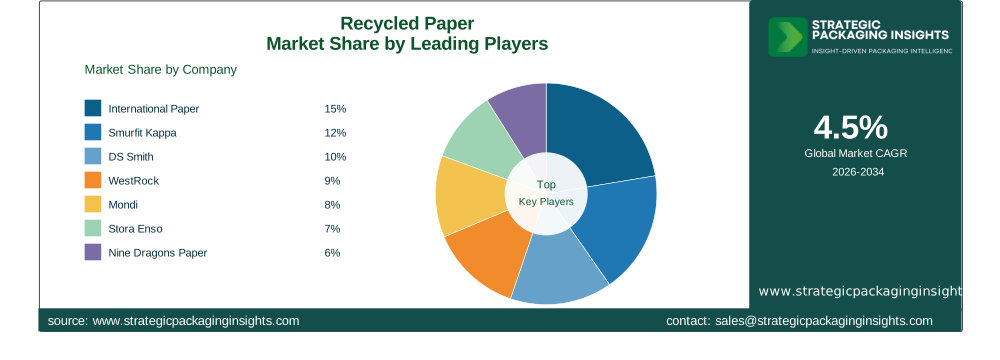
International Paper is a prominent player in the recycled paper market, known for its commitment to sustainability and innovation. The company offers a wide range of recycled paper products and has a strong focus on reducing its environmental impact. Smurfit Kappa is another leading company, recognized for its innovative packaging solutions and dedication to sustainability. The company has a robust recycling network and is actively involved in promoting circular economy practices. DS Smith is also a key player, with a strong emphasis on sustainable packaging and recycling initiatives.
WestRock and Mondi are other significant players in the market, known for their comprehensive product offerings and focus on sustainability. WestRock is committed to reducing its carbon footprint and has implemented several initiatives to enhance its recycling capabilities. Mondi, on the other hand, is focused on developing innovative packaging solutions that meet the needs of environmentally conscious consumers. Stora Enso and Nine Dragons Paper are also important players, with a strong presence in the recycled paper market and a commitment to sustainability.
UPM, Sappi, and Pratt Industries are other notable companies in the market, each with a unique approach to sustainability and innovation. UPM is known for its focus on renewable materials and sustainable practices, while Sappi is recognized for its high-quality recycled paper products. Pratt Industries is a leading player in the North American market, with a strong emphasis on recycling and sustainability. These companies are leveraging their expertise and resources to drive growth and maintain their competitive edge in the recycled paper market.
Key Highlights
- The recycled paper market is projected to reach USD 56.01 billion by 2034, growing at a CAGR of 4.5%.
- International Paper and Smurfit Kappa are leading the market with innovative recycling technologies.
- Government regulations promoting recycling are boosting market demand.
- The packaging sector is a major driver of growth, with increasing adoption of recycled paper.
- Advanced recycling technologies are enhancing product quality and efficiency.
- Asia Pacific is expected to witness significant growth due to rising demand for sustainable packaging.
- Companies are focusing on circular economy practices to enhance sustainability and competitiveness.
Recycled Paper Market Segments Insights

Product Type Analysis
The recycled paper market is segmented by product type into recycled printing paper, recycled packaging paper, recycled tissue paper, and recycled kraft paper. Recycled packaging paper is a significant segment, driven by the increasing demand for sustainable packaging solutions across various industries. Companies are investing in advanced recycling technologies to produce high-quality packaging paper that meets consumer expectations and regulatory standards. The rise of e-commerce is also contributing to the growth of this segment, as the need for packaging materials increases with the expansion of online retail.
Recycled printing paper is another important segment, with growing demand from the publishing and stationery industries. As businesses and consumers become more environmentally conscious, there is a greater emphasis on using recycled materials for printing purposes. Companies are responding by developing innovative products that offer high-quality printing capabilities while minimizing environmental impact. The recycled tissue paper segment is also witnessing growth, driven by increasing demand for eco-friendly hygiene products. Companies are focusing on developing soft and absorbent tissue paper that meets consumer preferences for sustainable products.
Grade Analysis
The recycled paper market is segmented by grade into deinked pulp, OCC-based paper, and mixed waste paper. Deinked pulp is a significant segment, driven by the demand for high-quality recycled paper products. Companies are investing in advanced deinking technologies to enhance the quality and efficiency of their production processes. OCC-based paper is another important segment, with growing demand from the packaging industry. As companies seek to reduce their environmental impact, there is a greater emphasis on using recycled materials for packaging purposes.
Mixed waste paper is also a key segment, with increasing demand from various industries. Companies are focusing on developing innovative products that utilize mixed waste paper to meet consumer preferences for sustainable products. The rise of circular economy practices is driving the growth of this segment, as companies seek to minimize waste and enhance their sustainability credentials. By leveraging these opportunities, companies can enhance their market presence and drive long-term growth.
Application Analysis
The recycled paper market is segmented by application into packaging, printing, hygiene, and stationery. The packaging segment is a major driver of growth, with increasing demand for sustainable packaging solutions across various industries. Companies are investing in advanced recycling technologies to produce high-quality packaging materials that meet consumer expectations and regulatory standards. The rise of e-commerce is also contributing to the growth of this segment, as the need for packaging materials increases with the expansion of online retail.
The printing segment is another important area, with growing demand from the publishing and stationery industries. As businesses and consumers become more environmentally conscious, there is a greater emphasis on using recycled materials for printing purposes. Companies are responding by developing innovative products that offer high-quality printing capabilities while minimizing environmental impact. The hygiene segment is also witnessing growth, driven by increasing demand for eco-friendly hygiene products. Companies are focusing on developing soft and absorbent tissue paper that meets consumer preferences for sustainable products.
End Use Analysis
The recycled paper market is segmented by end use into packaging converters, publishers, retail, and consumer goods. Packaging converters are a significant segment, driven by the increasing demand for sustainable packaging solutions across various industries. Companies are investing in advanced recycling technologies to produce high-quality packaging materials that meet consumer expectations and regulatory standards. The rise of e-commerce is also contributing to the growth of this segment, as the need for packaging materials increases with the expansion of online retail.
Publishers are another important segment, with growing demand for recycled paper products in the publishing industry. As businesses and consumers become more environmentally conscious, there is a greater emphasis on using recycled materials for publishing purposes. Companies are responding by developing innovative products that offer high-quality printing capabilities while minimizing environmental impact. The retail and consumer goods segments are also witnessing growth, driven by increasing demand for eco-friendly products. Companies are focusing on developing innovative products that meet consumer preferences for sustainable products.
Recycled Paper Market Segments
The Recycled Paper market has been segmented on the basis ofBy Product Type
- Recycled Printing Paper
- Recycled Packaging Paper
- Recycled Tissue Paper
- Recycled Kraft Paper
By Grade
- Deinked Pulp
- OCC-Based Paper
- Mixed Waste Paper
By Application
- Packaging
- Printing
- Hygiene
- Stationery
By End Use
- Packaging Converters
- Publishers
- Retail
- Consumer Goods
Region
- Asia Pacific
- North America
- Latin America
- Europe
- Middle East & Africa




