


Appliance Packaging Market Outlook
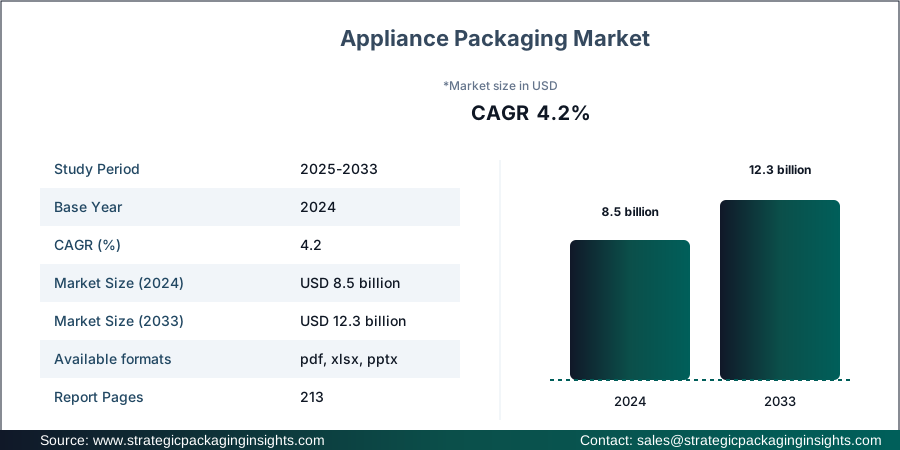
The appliance packaging market was valued at $8.5 billion in 2024 and is projected to reach $12.3 billion by 2033, growing at a CAGR of 4.2% during the forecast period 2025-2033. This market is driven by the increasing demand for durable and sustainable packaging solutions that can withstand the rigors of transportation and storage. The rise in consumer electronics and home appliances, particularly in emerging economies, is fueling the demand for innovative packaging solutions that not only protect the products but also enhance their shelf appeal. The market is also witnessing a shift towards eco-friendly materials, as consumers and manufacturers alike become more environmentally conscious. This trend is expected to continue, with significant investments in research and development to create packaging that is both functional and sustainable.
Report Scope
| Attributes | Details |
| Report Title | Appliance Packaging Market Size, Future Growth and Forecast 2033 |
| Material | Plastic, Paper & Paperboard |
| Application | Refrigerators, Washing Machines |
| Packaging Type | Primary, Secondary |
| End-User | Residential, Commercial |
| Base Year | 2024 |
| Historic Period | 2017-2023 |
| Forecast Period | 2025-2033 |
| Number of Pages | 213 |
| Customization Available | Yes* |
Opportunities & Threats
One of the significant opportunities in the appliance packaging market is the growing demand for smart packaging solutions. With the advent of the Internet of Things (IoT), there is a rising interest in packaging that can communicate with consumers and provide real-time data about the product. This includes features like temperature monitoring, tamper evidence, and interactive displays. Companies that can integrate these technologies into their packaging solutions are likely to gain a competitive edge. Additionally, the increasing focus on reducing carbon footprints is pushing manufacturers to develop packaging that is not only recyclable but also made from renewable resources. This shift towards sustainability presents a lucrative opportunity for companies that can innovate in this space.
Another opportunity lies in the expansion of e-commerce, which has significantly increased the demand for robust packaging solutions that can protect appliances during transit. As more consumers turn to online shopping for their appliance needs, the need for packaging that can withstand the challenges of shipping and handling becomes paramount. This trend is particularly pronounced in regions like Asia Pacific and North America, where e-commerce penetration is high. Companies that can offer packaging solutions tailored to the unique needs of e-commerce are well-positioned to capitalize on this growing market segment.
However, the appliance packaging market also faces several threats. One of the primary challenges is the volatility in raw material prices, which can significantly impact the cost of production. Fluctuations in the prices of materials like plastic and metal can lead to increased costs for manufacturers, which may be passed on to consumers. Additionally, stringent regulations regarding packaging waste and recycling in regions like Europe and North America pose a challenge for manufacturers. Companies must navigate these regulatory landscapes carefully to avoid penalties and ensure compliance, which can be both time-consuming and costly.
Drivers & Challenges
The appliance packaging market is primarily driven by the increasing demand for consumer electronics and home appliances. As disposable incomes rise, particularly in emerging economies, more consumers are investing in appliances that enhance their quality of life. This surge in demand for appliances directly translates to a need for effective packaging solutions that can protect these products during transportation and storage. Additionally, the trend towards urbanization is leading to smaller living spaces, which in turn drives the demand for compact and efficient appliances. This necessitates innovative packaging solutions that can accommodate these smaller, more efficient products.
Another key driver is the growing awareness and demand for sustainable packaging solutions. Consumers are becoming increasingly conscious of the environmental impact of their purchases, and this extends to the packaging of the products they buy. As a result, there is a significant push towards packaging solutions that are not only recyclable but also made from renewable resources. This trend is further supported by government regulations and initiatives aimed at reducing packaging waste and promoting sustainability. Companies that can offer eco-friendly packaging solutions are likely to see increased demand from both consumers and regulatory bodies.
Despite these drivers, the appliance packaging market faces several challenges. One of the primary challenges is the need for constant innovation to keep up with changing consumer preferences and technological advancements. As consumers demand more from their packaging, companies must invest in research and development to create solutions that meet these evolving needs. This can be both time-consuming and costly, particularly for smaller companies with limited resources. Additionally, the market is highly competitive, with numerous players vying for market share. This competition can lead to price wars and reduced profit margins, making it difficult for companies to maintain profitability.
Market Share Analysis
The appliance packaging market is characterized by a highly competitive landscape, with numerous players vying for market share. The market is dominated by a few key players, but there is also a significant presence of small and medium-sized enterprises that contribute to the overall market dynamics. The competitive landscape is shaped by factors such as product innovation, pricing strategies, and distribution networks. Companies that can offer innovative and cost-effective packaging solutions are likely to gain a competitive edge in this market.
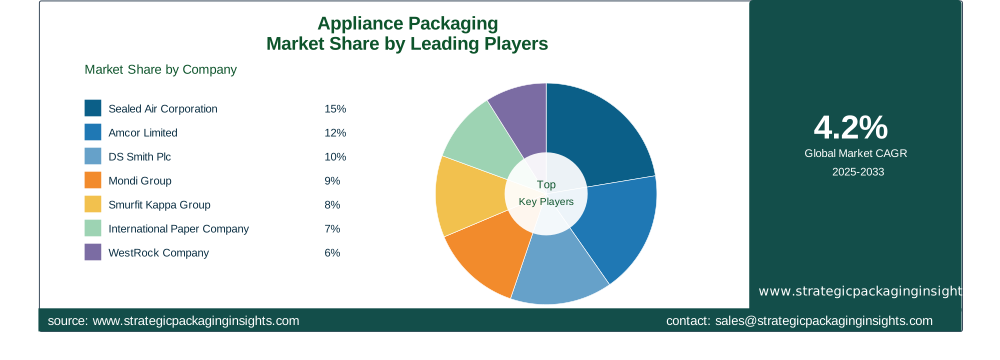
Some of the major companies operating in the appliance packaging market include Sealed Air Corporation, Amcor Limited, DS Smith Plc, Mondi Group, and Smurfit Kappa Group. These companies have established themselves as leaders in the market through a combination of strategic acquisitions, product innovation, and strong distribution networks. For instance, Sealed Air Corporation is known for its innovative packaging solutions that cater to a wide range of industries, including appliances. The company has a strong focus on sustainability and has made significant investments in developing eco-friendly packaging solutions.
Amcor Limited is another key player in the appliance packaging market, known for its extensive product portfolio and global presence. The company has a strong focus on research and development, which has enabled it to offer innovative packaging solutions that meet the evolving needs of consumers. DS Smith Plc is a leading provider of sustainable packaging solutions, with a strong emphasis on recycling and waste reduction. The company has a robust distribution network that allows it to serve customers across the globe.
Mondi Group and Smurfit Kappa Group are also significant players in the appliance packaging market, known for their commitment to sustainability and innovation. Mondi Group has a strong focus on developing packaging solutions that are both functional and environmentally friendly, while Smurfit Kappa Group is known for its innovative approach to packaging design and manufacturing. Both companies have a strong global presence and are well-positioned to capitalize on the growing demand for sustainable packaging solutions.
Key Highlights
- The appliance packaging market is projected to grow at a CAGR of 4.2% from 2025 to 2033.
- Increasing demand for consumer electronics and home appliances is driving market growth.
- There is a significant shift towards sustainable and eco-friendly packaging solutions.
- Smart packaging solutions are gaining traction, offering new opportunities for market players.
- The expansion of e-commerce is boosting demand for robust packaging solutions.
- Volatility in raw material prices poses a challenge for manufacturers.
- Stringent regulations regarding packaging waste and recycling are impacting the market.
Top Countries Insights
In the appliance packaging market, the United States stands out with a market size of $2.1 billion and a CAGR of 5%. The growth is driven by the high demand for consumer electronics and the increasing adoption of smart packaging solutions. The country's focus on sustainability and recycling initiatives further supports market expansion. China, with a market size of $1.8 billion and a CAGR of 6%, is experiencing growth due to the rapid urbanization and rising disposable incomes. The government's push for sustainable practices and the booming e-commerce sector are key growth drivers.
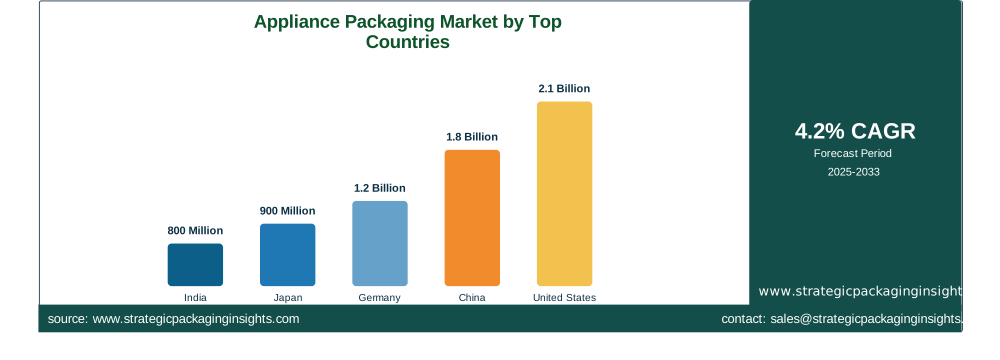
Germany, with a market size of $1.2 billion and a CAGR of 4%, is benefiting from the strong manufacturing sector and the emphasis on eco-friendly packaging solutions. The country's stringent regulations on packaging waste are also influencing market dynamics. Japan, with a market size of $900 million and a CAGR of 3%, is seeing growth due to the increasing demand for compact and efficient appliances. The country's focus on technological innovation and sustainability is driving the demand for advanced packaging solutions.
India, with a market size of $800 million and a CAGR of 7%, is experiencing rapid growth due to the expanding middle class and the increasing penetration of e-commerce. The government's initiatives to promote sustainable practices and reduce packaging waste are also contributing to market growth. The demand for durable and cost-effective packaging solutions is high, driven by the country's growing consumer base and the rise in disposable incomes.
Evolving Market Dynamics (2018-2024) and Strategic Foresight (2025-2033)
| Metric | 2018-2024 | 2025-2033 |
|---|---|---|
| CAGR | 3.5% | 4.2% |
| Market Size Evolution | $6.5 billion to $8.5 billion | $8.5 billion to $12.3 billion |
| Segment Distribution Shifts | High demand for plastic packaging | Shift towards sustainable materials |
| Regional Contribution Changes | Dominance of North America and Europe | Increased contribution from Asia Pacific |
| Technological Impact Factors | Basic packaging solutions | Integration of smart technologies |
| Client Demand Transformations | Focus on cost-effectiveness | Emphasis on sustainability and innovation |
Appliance Packaging Market Segments Insights

Material Analysis
The material segment of the appliance packaging market is dominated by plastic, paper & paperboard, metal, and others. Plastic remains a popular choice due to its durability, lightweight nature, and cost-effectiveness. However, there is a growing shift towards paper & paperboard as consumers and manufacturers seek more sustainable options. The demand for metal packaging is also on the rise, particularly for high-end appliances that require robust protection. Companies are investing in research and development to create innovative materials that meet the evolving needs of consumers and comply with stringent environmental regulations.
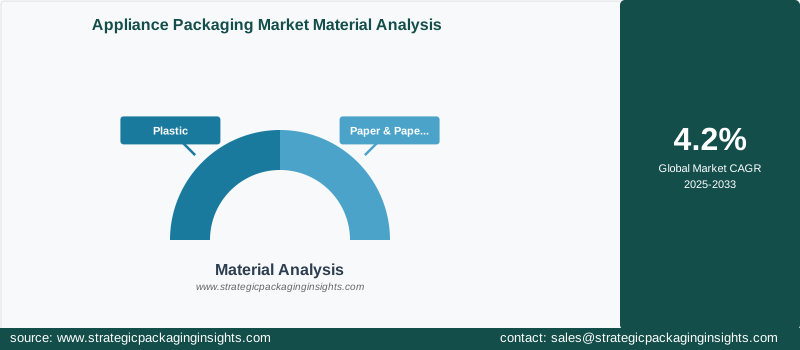
Paper & paperboard are gaining traction due to their recyclability and biodegradability. As environmental concerns continue to rise, manufacturers are increasingly opting for these materials to reduce their carbon footprint. The metal segment, while smaller, is seeing growth due to its superior protective qualities and aesthetic appeal. This is particularly true for premium appliances that require packaging that reflects their high-end nature. The 'others' category includes materials like glass and biodegradable plastics, which are gaining popularity as companies explore new ways to enhance sustainability.
Application Analysis
The application segment of the appliance packaging market includes refrigerators, washing machines, air conditioners, and others. Refrigerators account for the largest share due to their size and the need for robust packaging solutions that can protect them during transportation. Washing machines and air conditioners also require durable packaging, but there is a growing demand for solutions that are both protective and sustainable. The 'others' category includes smaller appliances like microwaves and toasters, which require packaging that is both cost-effective and efficient.
As consumer preferences shift towards energy-efficient and compact appliances, there is a corresponding demand for packaging solutions that can accommodate these changes. Companies are focusing on developing packaging that not only protects the appliance but also enhances its shelf appeal. This is particularly important in the e-commerce sector, where the packaging is often the first point of contact between the consumer and the product. The need for innovative and sustainable packaging solutions is driving growth in this segment, with companies investing in research and development to stay ahead of the competition.
Packaging Type Analysis
The packaging type segment of the appliance packaging market is divided into primary, secondary, and tertiary packaging. Primary packaging is the first layer of protection and is crucial for maintaining the integrity of the appliance. Secondary packaging provides additional protection and is often used for branding and marketing purposes. Tertiary packaging is used for bulk handling and transportation, ensuring that the appliances reach their destination safely.
There is a growing emphasis on reducing packaging waste, which is driving innovation in this segment. Companies are exploring ways to minimize the use of materials while still providing adequate protection for the appliances. This includes the use of lightweight materials and innovative designs that reduce the overall packaging footprint. The focus on sustainability is also leading to the development of packaging solutions that are recyclable and made from renewable resources. As consumer demand for eco-friendly products continues to rise, companies that can offer sustainable packaging solutions are likely to gain a competitive edge.
End-User Analysis
The end-user segment of the appliance packaging market includes residential, commercial, and industrial users. Residential users account for the largest share, driven by the increasing demand for home appliances. Commercial users, such as hotels and restaurants, also contribute significantly to the market, as they require durable and efficient packaging solutions for their appliances. Industrial users, while smaller in number, require specialized packaging solutions that can withstand the rigors of industrial environments.
As the demand for appliances continues to grow, there is a corresponding need for packaging solutions that can meet the diverse needs of these end-users. Companies are focusing on developing packaging that is not only protective but also enhances the overall user experience. This includes features like easy-to-open designs and packaging that can be repurposed or recycled. The emphasis on sustainability is also driving innovation in this segment, with companies exploring new materials and designs that reduce environmental impact.
Appliance Packaging Market Segments
The Appliance Packaging market has been segmented on the basis ofMaterial
- Plastic
- Paper & Paperboard
Application
- Refrigerators
- Washing Machines
Packaging Type
- Primary
- Secondary
End-User
- Residential
- Commercial




