


Foam Market Outlook
The foam market was valued at $117.68 billion in 2025 and is projected to reach $194.75 billion by 2034, growing at a CAGR of 5.8% during the forecast period 2026-2034. This growth is driven by increasing demand across various industries such as automotive, construction, and packaging. The versatility of foam materials, which offer lightweight, durable, and insulating properties, makes them highly sought after in these sectors. Additionally, advancements in foam technology, including the development of eco-friendly and recyclable foam products, are expected to further propel market growth. The Asia Pacific region is anticipated to lead the market due to rapid industrialization and urbanization, particularly in countries like China and India.
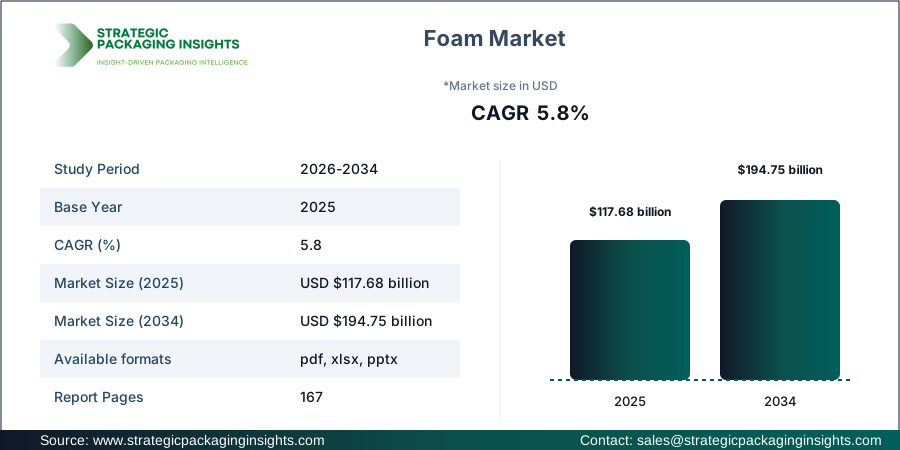
Despite the promising growth prospects, the foam market faces certain challenges. Regulatory restrictions on the use of certain chemicals in foam production, particularly in developed regions like Europe and North America, could hinder market expansion. Moreover, fluctuations in raw material prices and environmental concerns related to foam disposal are potential restraints. However, the increasing focus on sustainable and biodegradable foam solutions presents significant growth opportunities. Companies are investing in research and development to create innovative products that meet environmental standards and consumer preferences, thereby enhancing their market position.
Report Scope
| Attributes | Details |
| Report Title | Foam Market Size, Future Growth and Forecast 2034 |
| By Material Type | Polyurethane Foam, Polystyrene Foam, Polyethylene Foam, Polypropylene Foam |
| By Application | Packaging, Furniture, Automotive, Construction |
| By Density | Low-Density, Medium-Density, High-Density |
| By End Use | Consumer Goods, Industrial, Building, Healthcare |
| Region | Asia Pacific, North America, Latin America, Europe, Middle East & Africa |
| Base Year | 2025 |
| Historic Period | 2018-2024 |
| Forecast Period | 2026-2034 |
| Number of Pages | 167 |
| Customization Available | Yes* |
Opportunities & Threats
The foam market presents numerous opportunities, particularly in the development of sustainable and eco-friendly foam products. With growing environmental awareness, there is a significant demand for biodegradable and recyclable foam materials. Companies that invest in green technologies and sustainable production processes are likely to gain a competitive edge. Additionally, the increasing use of foam in the healthcare sector, for applications such as medical packaging and cushioning, offers substantial growth potential. The aging population and rising healthcare expenditure are expected to drive demand for foam products in this sector.
Another opportunity lies in the expanding automotive industry, where foam is used for insulation, cushioning, and noise reduction. The trend towards lightweight vehicles to improve fuel efficiency is boosting the demand for foam materials. Furthermore, the construction industry is witnessing a surge in demand for foam insulation products due to their energy-saving benefits. As governments worldwide implement stricter building codes and energy efficiency standards, the demand for foam insulation is expected to rise significantly.
However, the foam market also faces threats, particularly from regulatory challenges. Stringent regulations regarding the use of certain chemicals in foam production, such as chlorofluorocarbons (CFCs) and hydrochlorofluorocarbons (HCFCs), pose a significant challenge. These regulations are aimed at reducing environmental impact and promoting sustainability. Additionally, the volatility in raw material prices, particularly petrochemicals, can affect production costs and profit margins. Companies need to adopt strategies to mitigate these risks, such as diversifying their raw material sources and investing in alternative materials.
Drivers & Challenges
The foam market is driven by several key factors, including the growing demand from the packaging industry. Foam materials are widely used in packaging due to their lightweight, cushioning, and protective properties. The rise of e-commerce and the need for efficient packaging solutions are further fueling demand. Additionally, the automotive industry's focus on reducing vehicle weight to enhance fuel efficiency is driving the adoption of foam materials. Foam's ability to provide insulation, soundproofing, and comfort makes it an ideal choice for automotive applications.
Another significant driver is the construction industry's increasing demand for energy-efficient building materials. Foam insulation products are gaining popularity due to their ability to reduce energy consumption and enhance building performance. As governments worldwide implement stricter energy efficiency regulations, the demand for foam insulation is expected to grow. Furthermore, advancements in foam technology, such as the development of high-performance and eco-friendly foam products, are creating new growth opportunities in the market.
Despite these drivers, the foam market faces several challenges. One of the primary challenges is the environmental impact of foam production and disposal. Foam materials, particularly those made from petrochemicals, can contribute to pollution and waste. As a result, there is increasing pressure on manufacturers to develop sustainable and biodegradable foam solutions. Additionally, the market is highly competitive, with numerous players vying for market share. Companies need to differentiate themselves through innovation, quality, and customer service to maintain a competitive edge.
Market Share Analysis
The foam market is characterized by intense competition, with several key players dominating the landscape. Companies such as BASF, Dow, Covestro, and Huntsman hold significant market shares due to their extensive product portfolios and strong distribution networks. These companies are investing heavily in research and development to create innovative foam products that meet evolving consumer demands and regulatory requirements. Additionally, they are expanding their production capacities and entering strategic partnerships to strengthen their market positions.
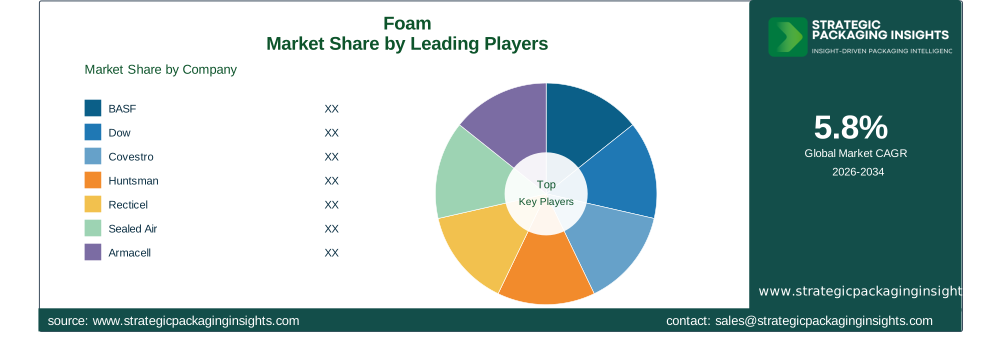
BASF is a leading player in the foam market, known for its comprehensive range of polyurethane and polystyrene foam products. The company focuses on sustainability and innovation, offering eco-friendly foam solutions that cater to various industries. Dow is another major player, with a strong presence in the polyurethane foam segment. The company's commitment to sustainability and its extensive research capabilities have enabled it to develop high-performance foam products that meet stringent environmental standards.
Covestro, a global leader in high-tech polymer materials, is renowned for its innovative foam solutions. The company's focus on sustainability and circular economy principles has positioned it as a key player in the foam market. Huntsman, known for its advanced polyurethane foam technologies, is also a significant player. The company's emphasis on research and development and its strategic acquisitions have strengthened its market position.
Other notable players in the foam market include Recticel, Sealed Air, Armacell, Zotefoams, Sekisui Chemical, and JSP Corporation. These companies are leveraging their technological expertise and global reach to expand their market presence. They are also focusing on developing sustainable and high-performance foam products to meet the growing demand from various end-use industries.
Key Highlights
- The foam market is projected to grow from $117.68 billion in 2025 to $194.75 billion by 2034, at a CAGR of 5.8%.
- Key drivers include demand from packaging, automotive, and construction industries.
- Challenges include regulatory restrictions and raw material price volatility.
- Opportunities lie in sustainable and eco-friendly foam product development.
- Asia Pacific is expected to lead the market due to rapid industrialization.
- Key players include BASF, Dow, Covestro, and Huntsman.
- Technological advancements are driving innovation in foam products.
- Environmental concerns are pushing demand for biodegradable foam solutions.
- The healthcare sector offers significant growth potential for foam applications.
- Strategic partnerships and acquisitions are common strategies among market leaders.
Top Countries Insights
In the foam market, the United States holds a significant share, driven by the robust demand from the automotive and construction industries. The market size in the U.S. is substantial, with a CAGR of 4%. The country's focus on energy-efficient building materials and lightweight automotive components is a key growth driver. However, regulatory challenges related to environmental standards pose a challenge for manufacturers.
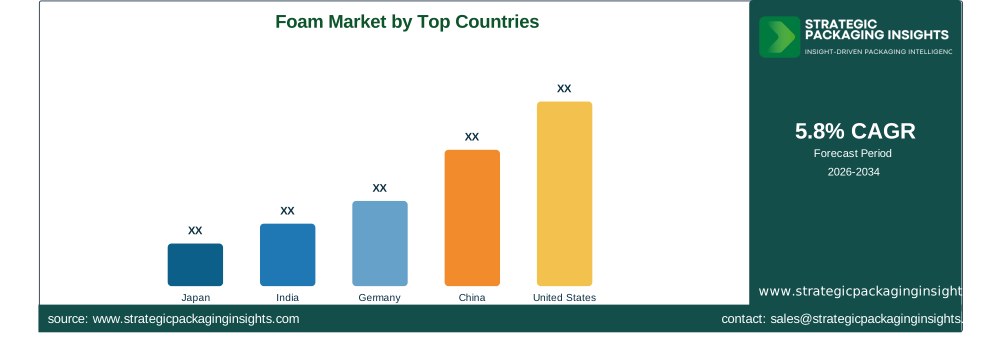
China is another major player in the foam market, with rapid industrialization and urbanization driving demand. The market in China is expected to grow at a CAGR of 7%, fueled by the booming construction and automotive sectors. Government initiatives promoting energy efficiency and sustainable building practices are further boosting the market. However, environmental concerns and regulatory pressures are challenges that manufacturers need to address.
Germany, known for its strong automotive industry, is a key market for foam products. The market is projected to grow at a CAGR of 3%, driven by the demand for lightweight and energy-efficient materials. The country's stringent environmental regulations and focus on sustainability are influencing market dynamics. Manufacturers are investing in research and development to create innovative and eco-friendly foam solutions.
India is witnessing significant growth in the foam market, with a CAGR of 8%. The country's expanding construction and automotive industries are major growth drivers. Government initiatives promoting affordable housing and infrastructure development are boosting demand for foam insulation products. However, the market faces challenges related to raw material availability and environmental regulations.
Japan, with its advanced technology and focus on innovation, is a prominent player in the foam market. The market is expected to grow at a CAGR of 2%, driven by demand from the automotive and electronics industries. The country's emphasis on energy efficiency and sustainable practices is shaping market trends. However, the aging population and economic challenges pose potential obstacles to market growth.
Foam Market Segments Insights

Material Type Analysis
The foam market is segmented by material type into polyurethane foam, polystyrene foam, polyethylene foam, and polypropylene foam. Polyurethane foam holds a significant share due to its versatility and wide range of applications, including furniture, automotive, and construction. Its excellent cushioning and insulating properties make it a preferred choice in these industries. Polystyrene foam, known for its lightweight and thermal insulation capabilities, is widely used in packaging and construction applications. The demand for eco-friendly and recyclable foam materials is driving innovation in this segment, with companies focusing on developing sustainable alternatives.
Polyethylene foam is gaining traction due to its durability and shock-absorbing properties, making it ideal for packaging and protective applications. The automotive industry's focus on lightweight materials is boosting demand for polyethylene foam. Polypropylene foam, known for its high strength-to-weight ratio and chemical resistance, is used in automotive and industrial applications. The growing emphasis on sustainability and environmental regulations is encouraging manufacturers to develop biodegradable and recyclable foam products, creating new growth opportunities in the material type segment.
Application Analysis
The foam market is segmented by application into packaging, furniture, automotive, and construction. The packaging segment holds a significant share due to the increasing demand for protective and efficient packaging solutions. Foam materials are widely used in packaging for their cushioning and shock-absorbing properties, making them ideal for e-commerce and logistics applications. The furniture industry is another major application area, with foam used for cushioning and comfort in seating and bedding products. The demand for high-quality and durable foam materials is driving growth in this segment.
The automotive industry is witnessing a surge in demand for foam materials due to their lightweight and insulating properties. Foam is used for seating, insulation, and noise reduction in vehicles, contributing to improved fuel efficiency and passenger comfort. The construction industry is also a key application area, with foam insulation products gaining popularity for their energy-saving benefits. As governments worldwide implement stricter building codes and energy efficiency standards, the demand for foam insulation is expected to rise significantly.
Density Analysis
The foam market is segmented by density into low-density, medium-density, and high-density foam. Low-density foam is widely used in packaging and cushioning applications due to its lightweight and cost-effective nature. The demand for low-density foam is driven by the rise of e-commerce and the need for efficient packaging solutions. Medium-density foam is used in furniture and automotive applications, offering a balance between comfort and durability. The growing demand for high-quality and durable foam materials is driving growth in this segment.
High-density foam is used in industrial and construction applications, where strength and durability are critical. The construction industry's focus on energy-efficient building materials is boosting demand for high-density foam insulation products. The automotive industry's emphasis on lightweight materials is also contributing to the growth of the high-density foam segment. Manufacturers are investing in research and development to create innovative foam products that meet evolving consumer demands and regulatory requirements.
End Use Analysis
The foam market is segmented by end use into consumer goods, industrial, building, and healthcare. The consumer goods segment holds a significant share due to the widespread use of foam in furniture, bedding, and packaging products. The demand for high-quality and durable foam materials is driving growth in this segment. The industrial segment is witnessing a surge in demand for foam materials due to their insulating and protective properties, making them ideal for various industrial applications.
The building industry is a key end-use segment, with foam insulation products gaining popularity for their energy-saving benefits. As governments worldwide implement stricter building codes and energy efficiency standards, the demand for foam insulation is expected to rise significantly. The healthcare sector offers significant growth potential for foam applications, with foam used in medical packaging, cushioning, and support products. The aging population and rising healthcare expenditure are expected to drive demand for foam products in this sector.
Foam Market Segments
The Foam market has been segmented on the basis ofBy Material Type
- Polyurethane Foam
- Polystyrene Foam
- Polyethylene Foam
- Polypropylene Foam
By Application
- Packaging
- Furniture
- Automotive
- Construction
By Density
- Low-Density
- Medium-Density
- High-Density
By End Use
- Consumer Goods
- Industrial
- Building
- Healthcare
Region
- Asia Pacific
- North America
- Latin America
- Europe
- Middle East & Africa




