


Expanded Polystyrene for Packaging Market Outlook
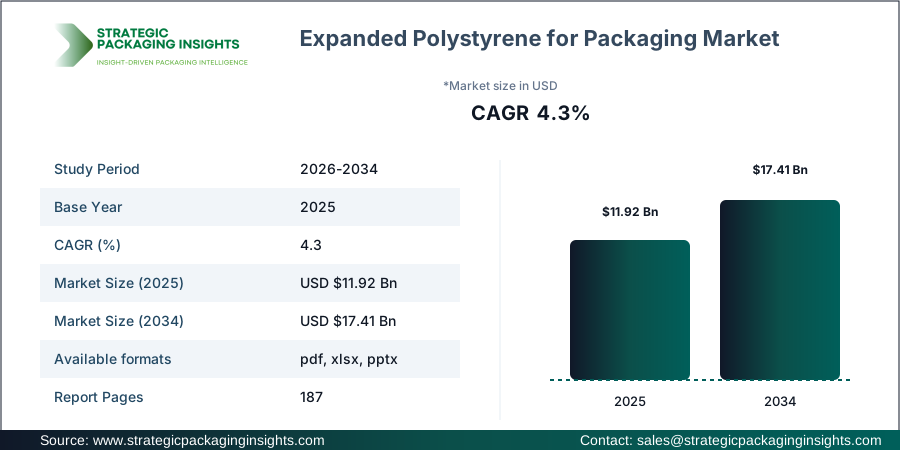
The Expanded Polystyrene for Packaging market size was valued at USD 11.92 billion in 2025 and is anticipated to reach USD 17.41 billion by 2034, growing at a CAGR of 4.3% during the forecast period according to Strategic Packaging Insights. The market is driven by the increasing demand for lightweight and cost-effective packaging solutions across various industries. Expanded polystyrene (EPS) is favored for its excellent insulation properties, making it ideal for applications in food packaging and cold chain logistics. Companies like Dart Container and BEWI are at the forefront, leveraging innovative technologies to enhance product performance and sustainability. The growing e-commerce sector further propels the demand for protective packaging solutions, contributing significantly to market growth.
One of the most impactful drivers of the Expanded Polystyrene for Packaging market is the rising emphasis on sustainable packaging solutions. Governments and environmental agencies worldwide are advocating for reduced carbon footprints and increased recycling rates, which has led to a surge in demand for recyclable and eco-friendly packaging materials. EPS, being lightweight and recyclable, aligns well with these sustainability goals. Companies such as BASF and Kaneka are investing in research and development to create more sustainable EPS products, which not only meet regulatory standards but also cater to the evolving consumer preferences for environmentally friendly packaging options.
Report Scope
| Attributes | Details |
| Report Title | Expanded Polystyrene for Packaging Market Size, Future Growth and Forecast 2034 |
| By Product Type | EPS Boxes, EPS Inserts, EPS Sheets, EPS Coolers |
| By Application | Protective Packaging, Food Packaging, Cold Chain, Electronics Packaging |
| By End Use | Food & Beverage, Healthcare, Electronics, Retail |
| By Density | Low Density, Medium Density, High Density |
| Region | Asia Pacific, North America, Latin America, Europe, Middle East & Africa |
| Base Year | 2025 |
| Historic Period | 2018-2024 |
| Forecast Period | 2026-2034 |
| Number of Pages | 187 |
| Customization Available | Yes* |
Sustainability & Circular Economy Analysis
Sustainability initiatives and circular economy practices are significantly influencing the Expanded Polystyrene for Packaging market. The push towards recyclable materials is reshaping the packaging landscape, with EPS being a key player due to its recyclability and lightweight nature. Companies are increasingly adopting eco-friendly material innovations to reduce waste and carbon footprints. For instance, the development of biodegradable EPS variants is gaining traction, offering a sustainable alternative without compromising on performance. These trends are driving packaging design and manufacturing processes towards more sustainable practices, ensuring long-term market competitiveness.
Extended Producer Responsibility (EPR) regulations are compelling manufacturers to take accountability for the entire lifecycle of their products, including post-consumer waste management. This has led to the adoption of waste reduction strategies and the integration of ESG initiatives into business models. As a result, companies are investing in advanced recycling technologies and collaborating with recycling networks to enhance the recyclability of EPS packaging. These efforts not only comply with regulatory requirements but also align with consumer sustainability preferences, thereby strengthening brand reputation and market position.
The influence of sustainability trends extends to investment decisions and supply chain strategies. Packaging manufacturers and brand owners are prioritizing investments in sustainable technologies and processes to meet regulatory compliance and consumer demands. This shift is fostering strategic partnerships and collaborations across the supply chain, enhancing supply chain resilience and efficiency. As a result, the Expanded Polystyrene for Packaging market is witnessing increased investments in sustainable packaging solutions, driving innovation and growth in the industry.
Packaging Value Chain & Supply Chain Analysis
The packaging value chain for Expanded Polystyrene involves several key components, starting from raw material sourcing to the final product delivery. Raw material availability plays a crucial role in determining the production capabilities and cost-effectiveness of EPS packaging solutions. Packaging converters and manufacturers are focusing on optimizing procurement strategies to ensure a steady supply of raw materials, thereby enhancing production efficiency and reducing costs. Strategic partnerships with raw material suppliers are essential to maintain a competitive edge in the market.
Logistics and distribution channels are integral to the supply chain ecosystem, influencing the overall market performance. Efficient transportation and inventory management are critical for ensuring timely delivery and reducing operational costs. Companies are adopting advanced logistics solutions and leveraging technology to streamline supply chain operations. This includes the use of real-time tracking systems and automated inventory management tools to enhance supply chain resilience and responsiveness. Such measures are vital for maintaining business competitiveness in the dynamic packaging market.
Recycling networks and global sourcing strategies are becoming increasingly important in the EPS packaging value chain. Companies are expanding their recycling capabilities and establishing partnerships with recycling firms to enhance the recyclability of EPS products. This not only supports sustainability goals but also aligns with regulatory compliance requirements. Global sourcing strategies are being adopted to diversify supply sources and mitigate risks associated with raw material shortages. These efforts are crucial for ensuring a sustainable and resilient supply chain, driving growth and innovation in the Expanded Polystyrene for Packaging market.
Opportunities & Threats
The Expanded Polystyrene for Packaging market presents numerous opportunities for growth and innovation. One significant opportunity lies in the increasing demand for sustainable packaging solutions. As consumers and businesses become more environmentally conscious, there is a growing preference for packaging materials that are recyclable and have a lower environmental impact. This trend is driving the development of eco-friendly EPS variants, offering companies the chance to differentiate themselves in the market by providing sustainable packaging options. Additionally, the expansion of e-commerce and online retailing is creating new avenues for EPS packaging, particularly in protective and cold chain applications.
Another opportunity is the advancement in recycling technologies, which is enhancing the recyclability of EPS products. Companies are investing in research and development to improve recycling processes and create closed-loop systems, where EPS waste is collected, processed, and reused in the production of new packaging materials. This not only supports sustainability goals but also reduces production costs and enhances resource efficiency. Furthermore, the growing emphasis on circular economy practices is encouraging collaborations between packaging manufacturers, recyclers, and brand owners, fostering innovation and driving market growth.
Despite the opportunities, the Expanded Polystyrene for Packaging market faces certain threats that could hinder its growth. One major threat is the increasing regulatory pressure to reduce plastic waste and promote sustainable packaging alternatives. Governments and environmental organizations are implementing stringent regulations and bans on single-use plastics, which could impact the demand for EPS packaging. Companies need to adapt to these regulatory changes by investing in sustainable packaging solutions and aligning their business strategies with evolving environmental standards. Failure to do so could result in reputational damage and loss of market share.
Drivers & Challenges
The Expanded Polystyrene for Packaging market is driven by several key factors, including the growing demand for lightweight and cost-effective packaging solutions. EPS is favored for its excellent insulation properties, making it ideal for applications in food packaging and cold chain logistics. The increasing popularity of e-commerce and online retailing is also driving the demand for protective packaging solutions, as businesses seek to ensure the safe delivery of products to consumers. Companies like Dart Container and BEWI are leveraging innovative technologies to enhance product performance and sustainability, further driving market growth.
Another significant driver is the rising emphasis on sustainability and environmental responsibility. Consumers and businesses are increasingly prioritizing eco-friendly packaging solutions, leading to a surge in demand for recyclable and biodegradable materials. EPS, being lightweight and recyclable, aligns well with these sustainability goals. Companies such as BASF and Kaneka are investing in research and development to create more sustainable EPS products, which not only meet regulatory standards but also cater to the evolving consumer preferences for environmentally friendly packaging options.
However, the market also faces several challenges that could impact its growth. One major challenge is the increasing regulatory pressure to reduce plastic waste and promote sustainable packaging alternatives. Governments and environmental organizations are implementing stringent regulations and bans on single-use plastics, which could impact the demand for EPS packaging. Companies need to adapt to these regulatory changes by investing in sustainable packaging solutions and aligning their business strategies with evolving environmental standards. Failure to do so could result in reputational damage and loss of market share.
Market Share Analysis
The Expanded Polystyrene for Packaging market is characterized by a competitive landscape with several key players vying for market share. Companies such as Dart Container, BEWI, and Styropack are leading the market with their innovative product offerings and strong distribution networks. These companies are focusing on expanding their product portfolios and enhancing their production capabilities to meet the growing demand for EPS packaging solutions. Strategic partnerships and collaborations are also playing a crucial role in strengthening their market position and driving growth.
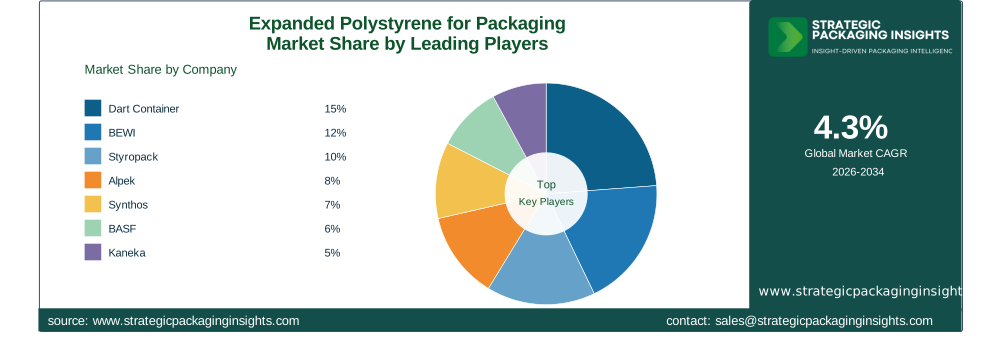
Dart Container is a prominent player in the EPS packaging market, known for its extensive range of products and strong focus on sustainability. The company is investing in research and development to create eco-friendly packaging solutions that align with consumer preferences and regulatory requirements. BEWI, another key player, is leveraging its expertise in EPS manufacturing to offer innovative and sustainable packaging solutions. The company is expanding its production facilities and enhancing its recycling capabilities to meet the increasing demand for sustainable packaging options.
Styropack is a leading provider of EPS packaging solutions, known for its high-quality products and strong customer relationships. The company is focusing on expanding its product offerings and enhancing its production capabilities to cater to the growing demand for EPS packaging. Alpek and Synthos are also key players in the market, leveraging their expertise in EPS manufacturing to offer innovative and sustainable packaging solutions. These companies are investing in research and development to create eco-friendly packaging options that meet regulatory standards and consumer preferences.
Other notable players in the market include BASF, Kaneka, ACH Foam Technologies, Sonoco ThermoSafe, and TotalEnergies. These companies are focusing on expanding their product portfolios and enhancing their production capabilities to meet the growing demand for EPS packaging solutions. Strategic partnerships and collaborations are also playing a crucial role in strengthening their market position and driving growth. The competitive landscape of the Expanded Polystyrene for Packaging market is characterized by innovation, sustainability, and strategic partnerships, driving growth and enhancing market competitiveness.
Key Highlights
- Market Size: USD 11.92 billion in 2025, projected to reach USD 17.41 billion by 2034.
- Growth Rate: CAGR of 4.3% during the forecast period.
- Leading Companies: Dart Container, BEWI, Styropack, Alpek, Synthos, BASF, Kaneka, ACH Foam Technologies, Sonoco ThermoSafe, TotalEnergies.
- Key Segments: EPS Boxes, EPS Inserts, EPS Sheets, EPS Coolers.
- Major Applications: Protective Packaging, Food Packaging, Cold Chain, Electronics Packaging.
- Regional Insights: Asia Pacific and North America are leading markets.
- Sustainability Focus: Increasing demand for recyclable and eco-friendly EPS variants.
Expanded Polystyrene for Packaging Market Segments Insights

By Product Type Analysis
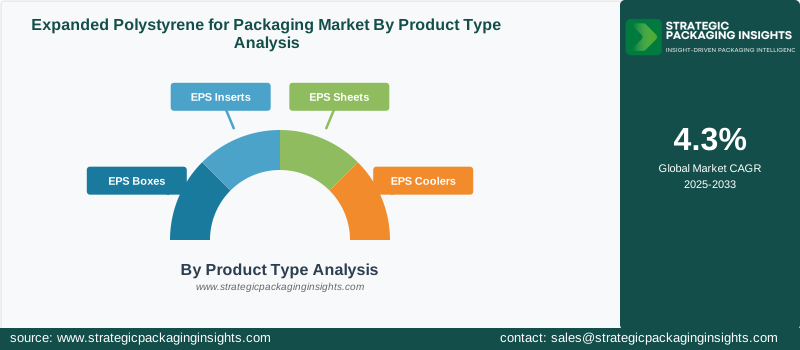
The Expanded Polystyrene for Packaging market is segmented by product type into EPS Boxes, EPS Inserts, EPS Sheets, and EPS Coolers. EPS Boxes are widely used in various industries due to their excellent insulation properties and lightweight nature, making them ideal for food packaging and cold chain logistics. The demand for EPS Inserts is driven by the need for protective packaging solutions in the electronics and healthcare sectors. EPS Sheets are gaining popularity in the construction industry for insulation purposes, while EPS Coolers are extensively used in the food and beverage industry for temperature-sensitive products.
Companies are focusing on expanding their product portfolios and enhancing their production capabilities to meet the growing demand for EPS packaging solutions. The development of eco-friendly EPS variants is gaining traction, offering companies the chance to differentiate themselves in the market by providing sustainable packaging options. Strategic partnerships and collaborations are also playing a crucial role in strengthening market position and driving growth. The competitive landscape of the Expanded Polystyrene for Packaging market is characterized by innovation, sustainability, and strategic partnerships, driving growth and enhancing market competitiveness.
By Application Analysis
The Expanded Polystyrene for Packaging market is segmented by application into Protective Packaging, Food Packaging, Cold Chain, and Electronics Packaging. Protective Packaging is a major segment, driven by the increasing demand for lightweight and cost-effective packaging solutions in the e-commerce and retail sectors. Food Packaging is another significant segment, with EPS being favored for its excellent insulation properties and ability to maintain product freshness. The Cold Chain segment is witnessing growth due to the rising demand for temperature-sensitive packaging solutions in the food and pharmaceutical industries.
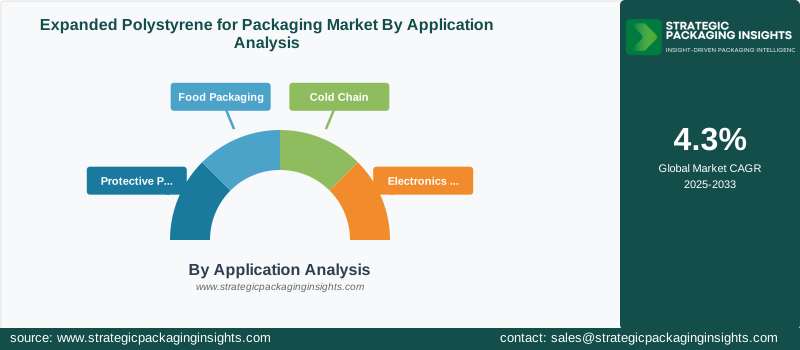
Electronics Packaging is also a key segment, with EPS being used to protect delicate electronic components during transportation. Companies are investing in research and development to create innovative and sustainable packaging solutions that meet the evolving needs of these industries. The development of biodegradable EPS variants is gaining traction, offering companies the chance to differentiate themselves in the market by providing sustainable packaging options. Strategic partnerships and collaborations are also playing a crucial role in strengthening market position and driving growth.
By End Use Analysis
The Expanded Polystyrene for Packaging market is segmented by end use into Food & Beverage, Healthcare, Electronics, and Retail. The Food & Beverage industry is a major end-user of EPS packaging, driven by the need for lightweight and cost-effective packaging solutions that maintain product freshness. The Healthcare sector is also a significant end-user, with EPS being used for protective packaging solutions in the transportation of medical devices and pharmaceuticals. The Electronics industry is another key end-user, with EPS being used to protect delicate electronic components during transportation.
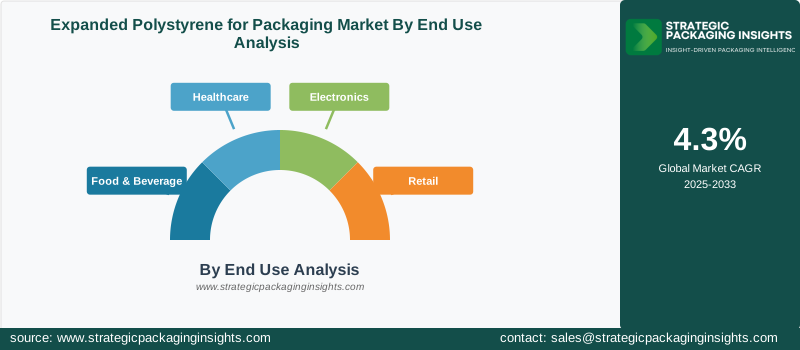
The Retail sector is witnessing growth due to the increasing popularity of e-commerce and online retailing, driving the demand for protective packaging solutions. Companies are focusing on expanding their product portfolios and enhancing their production capabilities to meet the growing demand for EPS packaging solutions. The development of eco-friendly EPS variants is gaining traction, offering companies the chance to differentiate themselves in the market by providing sustainable packaging options. Strategic partnerships and collaborations are also playing a crucial role in strengthening market position and driving growth.
By Density Analysis
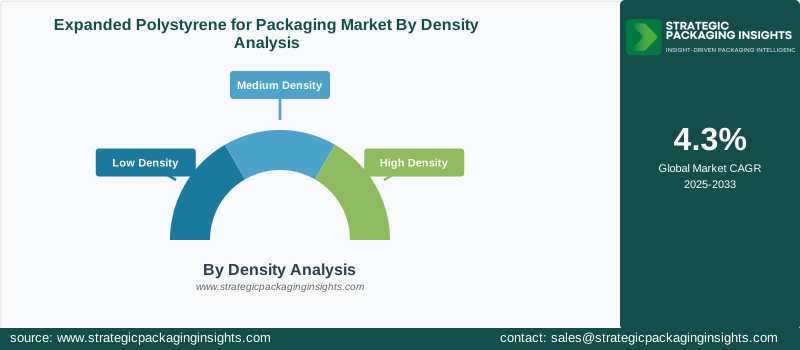
The Expanded Polystyrene for Packaging market is segmented by density into Low Density, Medium Density, and High Density. Low Density EPS is widely used in the packaging industry due to its lightweight nature and excellent insulation properties, making it ideal for food packaging and cold chain logistics. Medium Density EPS is gaining popularity in the construction industry for insulation purposes, while High Density EPS is extensively used in the electronics and healthcare sectors for protective packaging solutions.
Companies are focusing on expanding their product portfolios and enhancing their production capabilities to meet the growing demand for EPS packaging solutions. The development of eco-friendly EPS variants is gaining traction, offering companies the chance to differentiate themselves in the market by providing sustainable packaging options. Strategic partnerships and collaborations are also playing a crucial role in strengthening market position and driving growth. The competitive landscape of the Expanded Polystyrene for Packaging market is characterized by innovation, sustainability, and strategic partnerships, driving growth and enhancing market competitiveness.
Expanded Polystyrene for Packaging Market Segments
The Expanded Polystyrene for Packaging market has been segmented on the basis ofBy Product Type
- EPS Boxes
- EPS Inserts
- EPS Sheets
- EPS Coolers
By Application
- Protective Packaging
- Food Packaging
- Cold Chain
- Electronics Packaging
By End Use
- Food & Beverage
- Healthcare
- Electronics
- Retail
By Density
- Low Density
- Medium Density
- High Density
Region
- Asia Pacific
- North America
- Latin America
- Europe
- Middle East & Africa




