
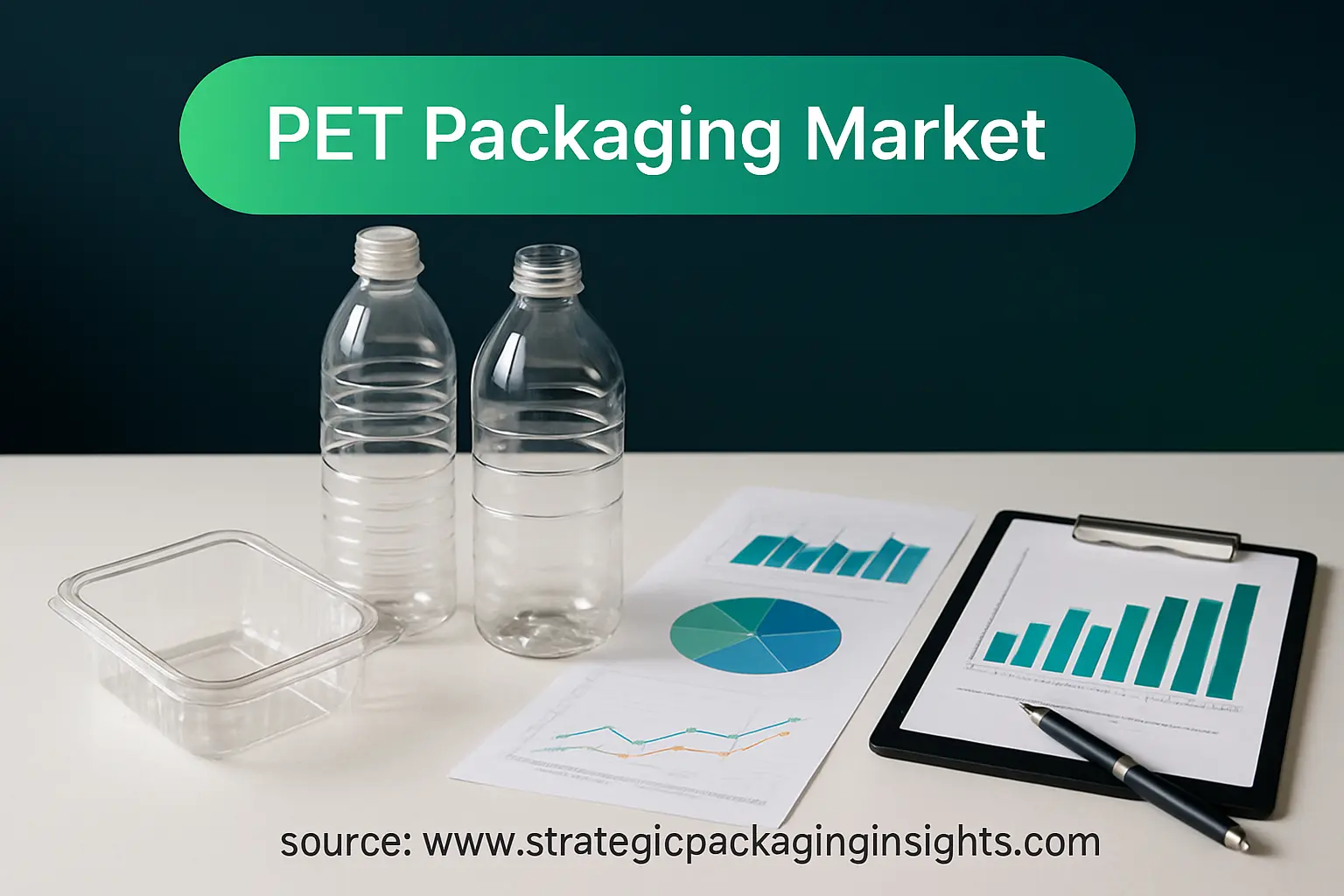
Explore the PET Packaging Market from 2017 to 2033, analyzing market size, CAGR, segment landscape, and strategic opportunities. Gain insights into technology, regulation, and sustainability impacts.
Strategic Market Overview
The PET Packaging Market is poised for significant growth, driven by increasing demand across various industries such as food and beverages, pharmaceuticals, and personal care. As consumer preferences shift towards sustainable and recyclable packaging solutions, PET packaging emerges as a preferred choice due to its lightweight, durability, and recyclability. This market is characterized by technological advancements, regulatory influences, and evolving consumer behaviors, which collectively shape its trajectory.
https://www.strategicpackaginginsights.com/report/pet-packaging-market
From 2017 to 2033: Evolution of the Market
Between 2017 and 2023, the PET Packaging Market experienced steady growth, fueled by the rising adoption of PET materials in diverse applications. The period saw significant investments in research and development, leading to innovations in packaging designs and materials. As we look towards the forecast period of 2025 to 2033, the market is expected to continue its upward trajectory, driven by increased demand for sustainable packaging solutions and the expansion of end-user industries.
Interpreting Market Size & CAGR
In 2024, the PET Packaging Market was valued at $68.4 billion. By 2033, it is projected to reach $104.5 billion, reflecting a compound annual growth rate (CAGR) of 4.9%. This growth is indicative of the market's resilience and adaptability to changing consumer preferences and regulatory landscapes. The increasing emphasis on sustainability and the circular economy is expected to further propel market expansion, as companies invest in eco-friendly packaging solutions.
Segment Landscape
| Segment | Details |
|---|---|
| Material Type | Amorphous PET, Crystalline PET |
| Packaging Type | Bottles & Jars, Trays, Bags & Pouches, Lids/Caps & Closures |
| End-User | Food & Beverages, Pharmaceuticals, Personal Care & Cosmetics, Industrial Goods, Household Products |
| Region | Asia Pacific, North America, Latin America, Europe, Middle East & Africa |
The segment landscape of the PET Packaging Market is diverse, with material types such as amorphous and crystalline PET catering to different packaging needs. Bottles and jars remain the dominant packaging type, driven by their widespread use in the food and beverage industry. The end-user segment is broad, with significant contributions from pharmaceuticals and personal care sectors, highlighting the versatility of PET packaging. Regionally, Asia Pacific leads the market, supported by rapid industrialization and urbanization.
Value Chain & Stakeholder Impact
The value chain of the PET Packaging Market encompasses raw material suppliers, manufacturers, distributors, and end-users. Each stakeholder plays a crucial role in ensuring the efficient production and distribution of PET packaging solutions. Raw material suppliers are focusing on sustainable sourcing, while manufacturers are investing in advanced technologies to enhance product quality and reduce environmental impact. Distributors are optimizing logistics to meet the growing demand, and end-users are increasingly prioritizing eco-friendly packaging options.
Opportunities vs Constraints
The PET Packaging Market presents numerous opportunities, particularly in the development of sustainable and innovative packaging solutions. The growing consumer awareness regarding environmental issues is driving demand for recyclable and biodegradable packaging. However, the market also faces constraints, such as fluctuating raw material prices and stringent regulatory requirements. Companies must navigate these challenges by adopting flexible strategies and investing in research and development to maintain competitiveness.
SWOT Analysis
| Strengths | Weaknesses | Opportunities | Threats |
|---|---|---|---|
| High recyclability and durability of PET materials | Dependence on petroleum-based raw materials | Rising demand for sustainable packaging solutions | Stringent environmental regulations |
| Wide application across diverse industries | Potential health concerns related to PET | Technological advancements in packaging design | Volatility in raw material prices |
The SWOT analysis of the PET Packaging Market reveals its strengths in recyclability and wide application, while highlighting weaknesses such as dependence on petroleum-based materials. Opportunities lie in the growing demand for sustainable solutions and technological advancements, whereas threats include regulatory challenges and raw material price volatility.
Technology, Regulation & Sustainability Impact
Technological advancements are pivotal in shaping the PET Packaging Market, with innovations in material science and packaging design enhancing product functionality and sustainability. Regulatory frameworks are increasingly focusing on reducing plastic waste and promoting recycling, compelling companies to adopt sustainable practices. Sustainability is at the forefront, with stakeholders across the value chain prioritizing eco-friendly solutions to meet consumer expectations and regulatory mandates.
Strategic Outlook to 2033
Looking ahead to 2033, the PET Packaging Market is expected to witness robust growth, driven by the increasing demand for sustainable and innovative packaging solutions. Companies are likely to focus on strategic partnerships, mergers, and acquisitions to expand their market presence and enhance their product portfolios. Emphasis on research and development will be crucial in addressing regulatory challenges and meeting evolving consumer preferences. As the market continues to evolve, stakeholders must remain agile and responsive to capitalize on emerging opportunities and mitigate potential risks.