
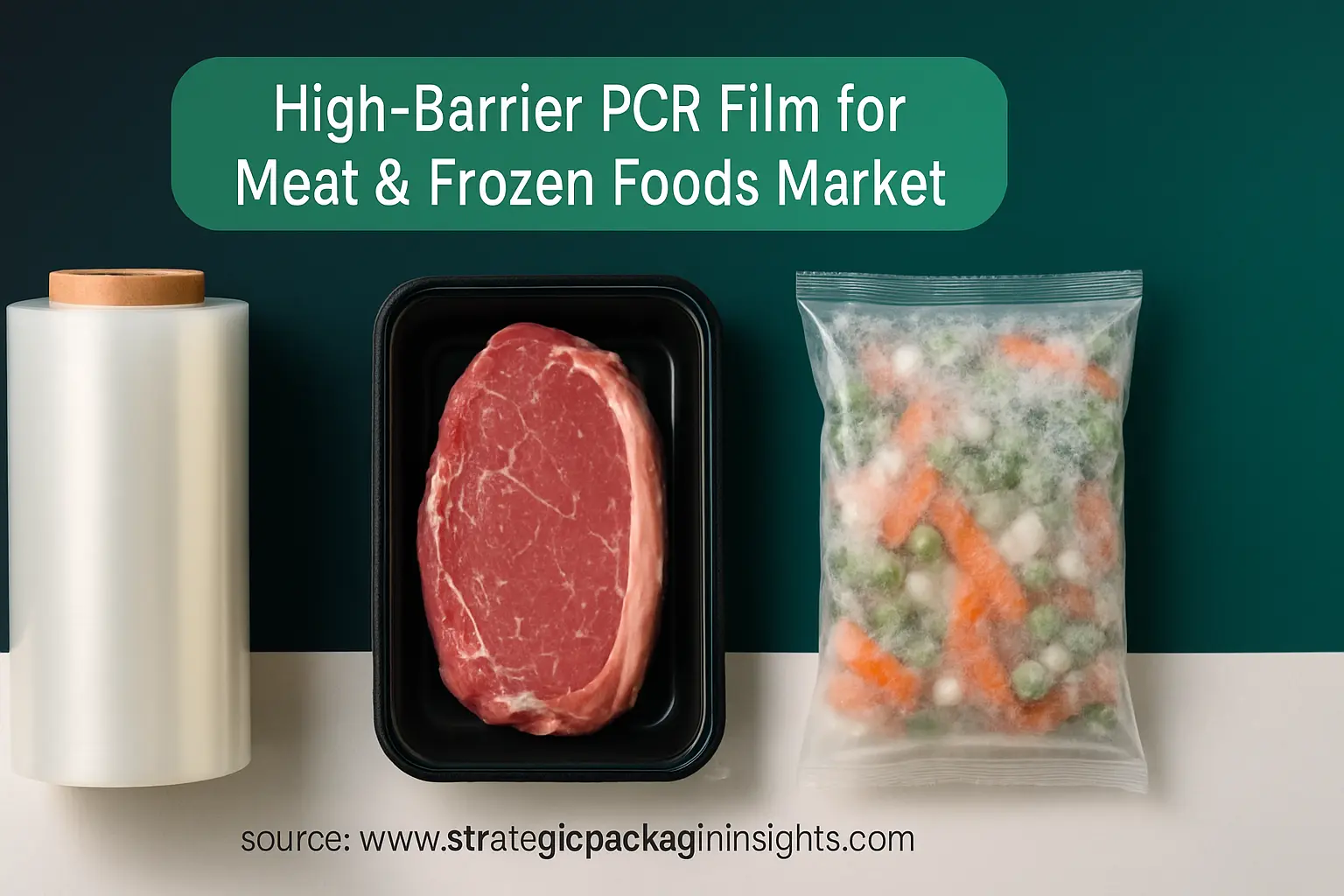
Dive into the High-Barrier PCR Film for Meat & Frozen Foods Market, analyzing growth drivers, market size, segment insights, and strategic recommendations from 2018 to 2034.
Market Storyline (Historic to Forecast)
The High-Barrier PCR Film for Meat & Frozen Foods Market has undergone significant transformation from 2018 to 2024, driven by increasing demand for sustainable packaging solutions. As we look towards the forecast period of 2026 to 2034, the market is poised for substantial growth, reflecting a shift in consumer preferences and regulatory pressures towards eco-friendly packaging. The historic period saw gradual adoption, but the forecast period anticipates accelerated growth due to technological advancements and heightened awareness of environmental impacts.
https://www.strategicpackaginginsights.com/report/high-barrier-pcr-film-for-meat-frozen-foods-market
What Drives Growth
The primary drivers of growth in this market include the rising consumer demand for sustainable and recyclable packaging solutions, stringent environmental regulations, and advancements in packaging technology. The increasing awareness of plastic waste and its environmental impact has led to a surge in demand for high-barrier PCR films, which offer both sustainability and functionality. Additionally, the food industry's need for extended shelf life and improved product protection further propels the market forward.
Market Size Interpretation
The base year market size of $2.17 billion in 2025 indicates a robust foundation for the High-Barrier PCR Film for Meat & Frozen Foods Market. By 2034, the market is expected to reach $5.67 billion, reflecting a compound annual growth rate (CAGR) of 11.2%. This significant growth trajectory underscores the increasing adoption of PCR films in the food packaging industry. The implications of this growth are profound, suggesting a shift towards more sustainable packaging practices and the potential for innovation in film technology to meet evolving consumer and regulatory demands.
Segment Intelligence
| Segment | Strategic Insights |
|---|---|
| By Material Type | rPET barrier films are gaining traction due to their superior recyclability and strength, making them a preferred choice for manufacturers aiming to enhance sustainability credentials. |
| By Packaging Type | Vacuum films are increasingly popular for their ability to extend shelf life, crucial for meat and seafood applications, while lidding films offer versatility in ready meal packaging. |
| By Application | The meat segment dominates due to the necessity for high-barrier properties to prevent spoilage, while the frozen foods segment benefits from the films' ability to withstand low temperatures. |
| By End Use | Food processors are the primary end-users, driven by the need for efficient packaging solutions that ensure product safety and quality during distribution. |
| Region | Asia Pacific is emerging as a key market due to rapid urbanization and increasing consumer awareness of sustainable packaging options. |
End-User Implications
For food processors, the adoption of high-barrier PCR films translates to enhanced product protection and extended shelf life, crucial for maintaining competitive advantage. Retailers benefit from reduced spoilage and waste, aligning with sustainability goals and consumer expectations. Converters, on the other hand, are presented with opportunities to innovate and differentiate their offerings by incorporating advanced barrier technologies into their product lines.
Investment & Strategy Lens
Investors should focus on companies that are at the forefront of sustainable packaging innovation, particularly those investing in R&D for advanced barrier technologies. Strategic partnerships between film manufacturers and food processors can drive mutual growth, leveraging shared expertise to develop tailored solutions that meet specific market needs. Additionally, expanding production capabilities in emerging markets like Asia Pacific can provide a competitive edge.
SWOT Matrix
| Strengths | Weaknesses | Opportunities | Threats |
|---|---|---|---|
| Strong demand for sustainable packaging solutions. | High production costs compared to traditional films. | Growing regulatory support for eco-friendly packaging. | Volatility in raw material prices. |
| Technological advancements in barrier properties. | Limited consumer awareness in certain regions. | Expansion into emerging markets. | Intense competition from alternative packaging solutions. |
Packaging Trends Shaping This Market
Key trends include the integration of smart packaging technologies that enhance consumer interaction and product traceability. The shift towards mono-material films for easier recyclability is also gaining momentum. Furthermore, the development of bio-based barrier films presents a promising avenue for reducing reliance on fossil fuels and enhancing the sustainability profile of packaging solutions.
Outlook & Strategic Recommendations
The outlook for the High-Barrier PCR Film for Meat & Frozen Foods Market is promising, with significant growth opportunities driven by sustainability trends and technological advancements. Companies should prioritize investment in R&D to develop innovative barrier solutions that meet evolving consumer and regulatory demands. Strategic collaborations and expansion into emerging markets will be crucial for capturing market share and driving long-term growth. Emphasizing consumer education on the benefits of sustainable packaging can further enhance market penetration and acceptance.