
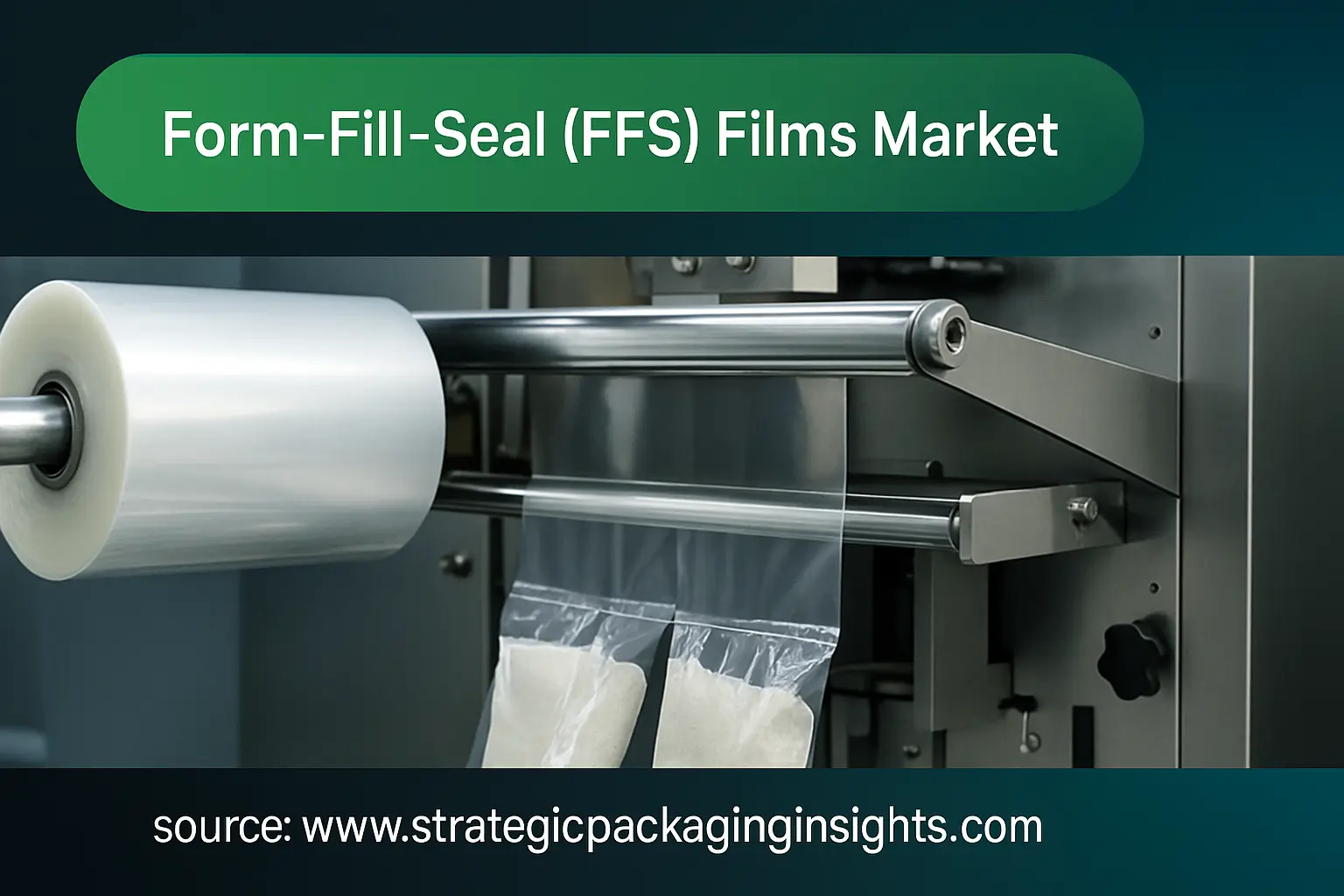
Explore the dynamic growth of the Form-Fill-Seal (FFS) Films Market from 2018 to 2034, driven by technological advancements and evolving consumer demands. Discover key segments, market size implications, and strategic recommendations for stakeholders.
Market Storyline (Historic to Forecast)
The Form-Fill-Seal (FFS) Films Market has undergone significant transformation from 2018 through 2024, driven by technological advancements and increasing demand for efficient packaging solutions. As we look towards the forecast period of 2026 to 2034, the market is poised for robust growth, with a projected CAGR of 6.2%. This growth trajectory is underpinned by the rising need for sustainable and cost-effective packaging solutions across various industries.
https://www.strategicpackaginginsights.com/report/form-fill-seal-ffs-films-market
Historically, the market has been influenced by the rapid expansion of the food and beverage sector, which has necessitated innovative packaging solutions to enhance product shelf life and reduce waste. The base year of 2025 marks a pivotal point, with the market valued at $14.97 billion, setting the stage for future expansion.
What Drives Growth
The growth of the Form-Fill-Seal (FFS) Films Market is primarily driven by the increasing demand for flexible packaging solutions that offer convenience and extended shelf life. The food and beverage industry, in particular, is a major contributor, as manufacturers seek to meet consumer preferences for fresh and safe products. Additionally, advancements in film technology, such as the development of multilayer films, have enhanced the barrier properties of FFS films, making them more attractive to end-users.
Environmental concerns and regulatory pressures are also significant growth drivers. The shift towards sustainable packaging solutions has led to increased adoption of recyclable and biodegradable FFS films. Furthermore, the rise of e-commerce and the need for efficient packaging solutions to ensure product safety during transit have further fueled market growth.
Market Size Interpretation
The base year market size of $14.97 billion in 2025 reflects the substantial demand for FFS films across various industries. By 2034, the market is expected to reach $25.81 billion, indicating a strong growth trajectory. The projected CAGR of 6.2% underscores the market's potential for expansion, driven by technological advancements and evolving consumer preferences.
This growth presents significant opportunities for stakeholders, including manufacturers, suppliers, and investors, to capitalize on the increasing demand for innovative and sustainable packaging solutions. The expanding market size also highlights the need for strategic investments in research and development to stay competitive and meet the evolving needs of end-users.
Segment Intelligence
| Segment | Strategic Insights |
|---|---|
| By Material Type | PE films dominate due to their versatility and cost-effectiveness, while multilayer films are gaining traction for their superior barrier properties. |
| By Application | The food segment leads, driven by the need for extended shelf life and freshness, with pharma applications growing due to stringent packaging standards. |
| By Film Type | Barrier films are increasingly preferred for their ability to protect against moisture and oxygen, crucial for food and pharma applications. |
| By End Use | FMCG companies are the largest end-users, leveraging FFS films for efficient and attractive packaging solutions. |
| Region | Asia Pacific is the fastest-growing region, driven by rapid industrialization and increasing consumer demand for packaged goods. |
End-User Implications
For end-users, the growth of the Form-Fill-Seal (FFS) Films Market presents opportunities to enhance product offerings through improved packaging solutions. Food and beverage manufacturers can leverage FFS films to extend product shelf life and reduce waste, while pharmaceutical companies can ensure compliance with stringent packaging standards. The rise of e-commerce also necessitates robust packaging solutions to protect products during transit, further driving demand for FFS films.
Investment & Strategy Lens
Investors and stakeholders should focus on strategic investments in research and development to drive innovation in FFS film technology. Emphasizing sustainability and recyclability will be crucial to meeting regulatory requirements and consumer preferences. Collaborations and partnerships with end-users can also provide valuable insights into evolving market needs and enhance competitive positioning.
SWOT Matrix
| Strengths | Weaknesses | Opportunities | Threats |
|---|---|---|---|
| Strong demand from food and beverage sector | High initial investment costs | Growing demand for sustainable packaging | Regulatory challenges and compliance costs |
| Technological advancements in film properties | Limited recyclability of certain films | Expansion in emerging markets | Intense competition from alternative packaging solutions |
Packaging Trends Shaping This Market
Several packaging trends are shaping the Form-Fill-Seal (FFS) Films Market, including the shift towards sustainable and eco-friendly materials. The development of biodegradable and recyclable films is gaining momentum, driven by consumer demand for environmentally responsible packaging solutions. Additionally, the rise of smart packaging, which incorporates features such as QR codes and sensors, is enhancing consumer engagement and product traceability.
Customization and personalization of packaging are also becoming increasingly important, as brands seek to differentiate themselves in a competitive market. This trend is driving demand for printed FFS films that offer vibrant graphics and branding opportunities.
Outlook & Strategic Recommendations
The outlook for the Form-Fill-Seal (FFS) Films Market is positive, with significant growth opportunities driven by technological advancements and evolving consumer preferences. To capitalize on these opportunities, stakeholders should focus on innovation and sustainability, investing in research and development to enhance film properties and recyclability.
Strategic partnerships with end-users can provide valuable insights into market needs and enhance competitive positioning. Additionally, expanding into emerging markets and leveraging digital technologies for smart packaging solutions can further drive growth and differentiation in this dynamic market.