
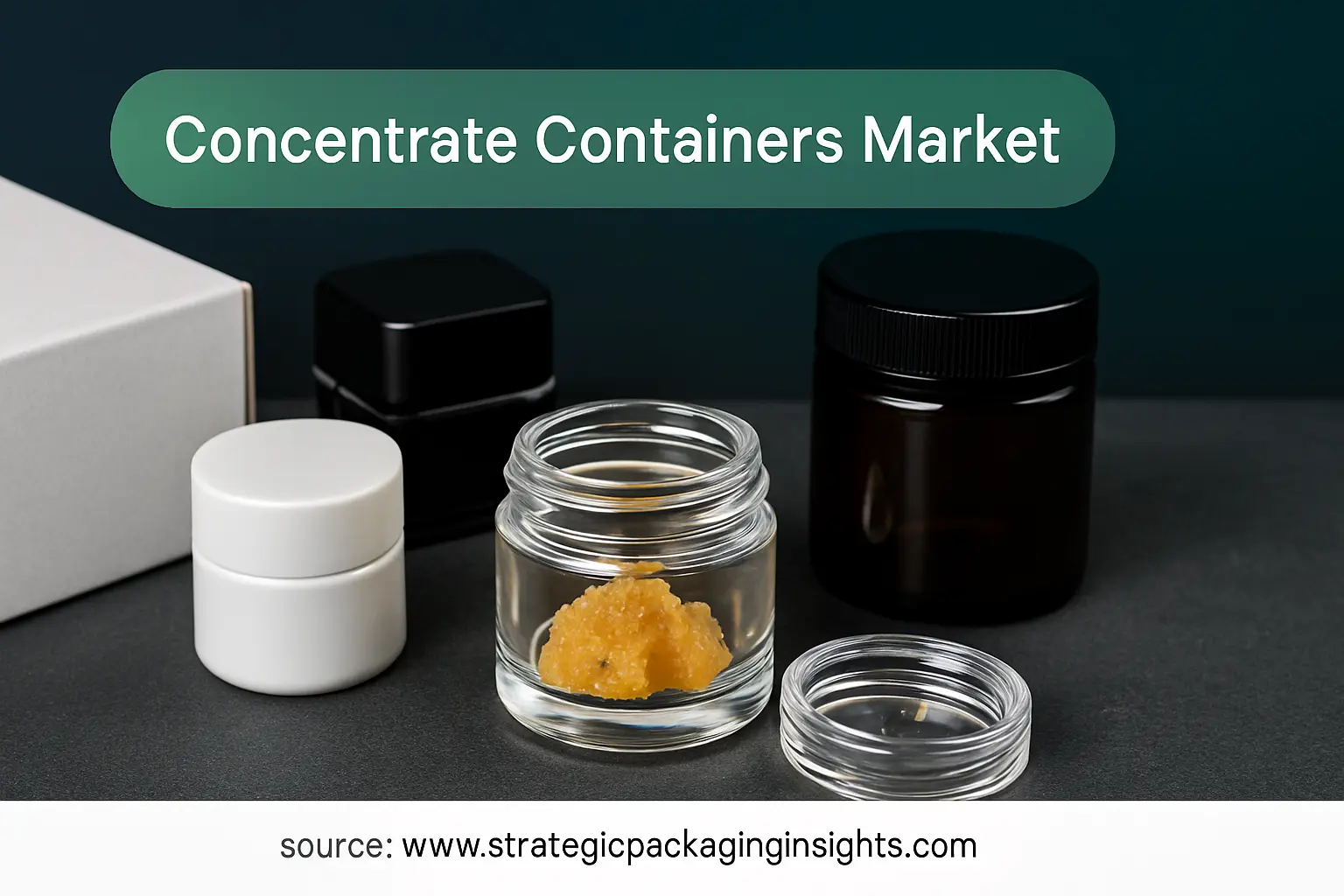
Explore the dynamic growth of the Concentrate Containers Market, its segments, applications, regional dynamics, and the balance of challenges and opportunities shaping its future.
Why This Market Is Gaining Attention
The Concentrate Containers Market is capturing significant attention due to its pivotal role in the efficient storage and transportation of concentrated products across various industries. As global trade and consumption patterns evolve, the demand for reliable and versatile packaging solutions has surged. This market is particularly crucial for sectors such as food and beverage, chemicals, and agriculture, where the integrity and safety of concentrated products are paramount. The increasing focus on sustainability and the need for cost-effective packaging solutions further amplify the market's relevance.
https://www.strategicpackaginginsights.com/report/concentrate-containers-market
Market Scale & Growth Momentum
In 2025, the Concentrate Containers Market was valued at $7.22 billion, and it is projected to reach $11.79 billion by 2034, reflecting a robust CAGR of 5.6%. This growth trajectory underscores the market's resilience and adaptability in meeting the evolving demands of end-users. The steady increase in market size is driven by technological advancements in packaging materials and the rising adoption of concentrate containers in emerging economies. The market's expansion is also fueled by the growing awareness of the benefits of using concentrate containers, such as reduced transportation costs and enhanced product shelf life.
Deep Dive into Segments
| Segment | Description |
|---|---|
| Product Type | Bottles, drums, pails, and IBCs (Intermediate Bulk Containers) are the primary product types, each catering to specific storage and transportation needs. Bottles are favored for smaller quantities, while drums and IBCs are ideal for bulk storage. |
| Material Type | HDPE, PET, PP, and metal are the key materials used. HDPE and PET are popular for their lightweight and recyclable properties, whereas metal offers durability for industrial applications. |
| Application | Beverage concentrates, chemicals, and food ingredients are the main applications. The versatility of concentrate containers makes them suitable for a wide range of liquid and semi-liquid products. |
| End Use | Food & beverage, industrial, chemical, and agriculture sectors are the primary end-users. Each sector demands specific container features to ensure product safety and compliance with industry standards. |
| Region | Asia Pacific, North America, Latin America, Europe, and the Middle East & Africa are the key regions. Each region presents unique growth opportunities and challenges based on local market dynamics and regulatory environments. |
Application & End-Use Relevance
The application of concentrate containers spans across multiple industries, with the food and beverage sector being a major contributor. These containers are essential for maintaining the quality and freshness of beverage concentrates and food ingredients during transportation and storage. In the chemical industry, concentrate containers are crucial for safely handling hazardous materials, ensuring compliance with stringent safety regulations. The agricultural sector also benefits from these containers for storing and transporting fertilizers and pesticides efficiently.
Regional & Industry Dynamics
Regionally, the Asia Pacific is poised to lead the market growth due to rapid industrialization and increasing demand for packaged goods. North America and Europe continue to be significant markets, driven by technological advancements and a strong focus on sustainability. Latin America and the Middle East & Africa are emerging markets with untapped potential, offering opportunities for market players to expand their footprint. Industry dynamics are shaped by the need for innovation in packaging solutions and the adoption of eco-friendly materials to meet regulatory requirements and consumer preferences.
Challenges vs Opportunities
The Concentrate Containers Market faces challenges such as fluctuating raw material prices and stringent environmental regulations. However, these challenges also present opportunities for innovation in sustainable packaging solutions. The growing emphasis on reducing carbon footprints and enhancing recyclability is driving manufacturers to explore new materials and technologies. Additionally, the increasing demand for customized packaging solutions tailored to specific industry needs offers lucrative opportunities for market expansion.
SWOT Overview
| Strengths | Weaknesses | Opportunities | Threats |
|---|---|---|---|
| Strong demand across diverse industries | High dependency on raw material availability | Innovation in sustainable packaging | Stringent environmental regulations |
| Technological advancements in materials | Price volatility of raw materials | Expansion in emerging markets | Intense competition from alternative packaging solutions |
Innovation & Sustainability Angle
Innovation in the Concentrate Containers Market is primarily focused on enhancing sustainability and functionality. Manufacturers are investing in research and development to create containers that are not only durable and efficient but also environmentally friendly. The use of biodegradable materials and the development of reusable container systems are gaining traction. These innovations not only address environmental concerns but also offer cost savings for businesses by reducing waste and improving logistics efficiency.
What This Means for Packaging Stakeholders
For stakeholders in the packaging industry, the growth of the Concentrate Containers Market presents both challenges and opportunities. Companies need to stay ahead of regulatory changes and consumer demands for sustainable solutions. By investing in innovative technologies and expanding their product offerings, packaging companies can capitalize on the growing demand for concentrate containers. Collaboration with end-users to develop customized solutions will be key to gaining a competitive edge in this dynamic market.