
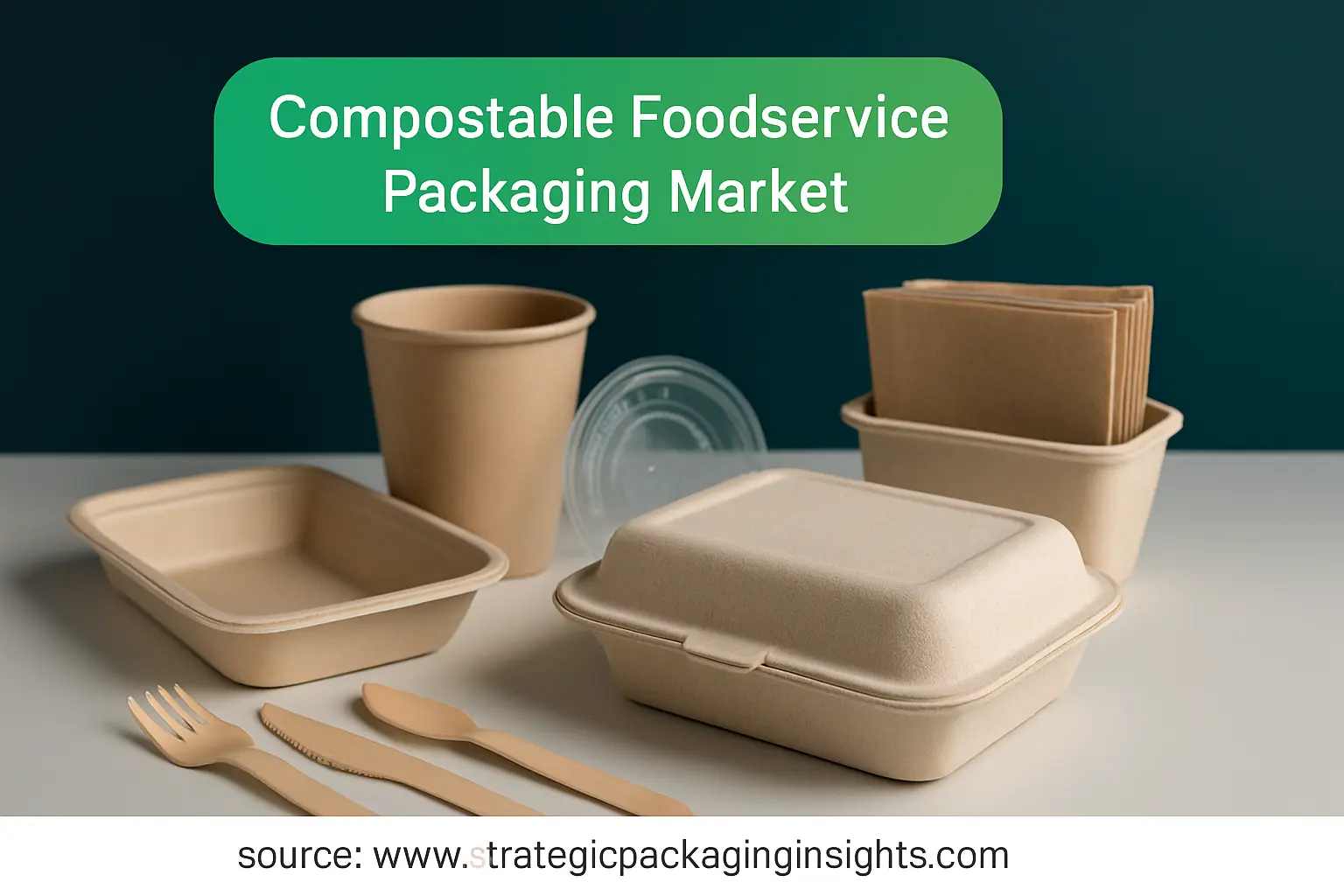
Dive into the Compostable Foodservice Packaging Market, analyzing growth drivers, market valuation, segment breakdowns, and strategic insights for 2025-2034.
In a world increasingly focused on sustainability, the Compostable Foodservice Packaging Market stands at the forefront of innovation. As consumers and businesses alike seek eco-friendly alternatives, the demand for compostable packaging solutions is surging, reshaping the landscape of the foodservice industry.
https://www.strategicpackaginginsights.com/report/compostable-foodservice-packaging-market
Market Context & Industry Relevance
The global shift towards sustainable practices has placed the Compostable Foodservice Packaging Market in a pivotal position. With environmental concerns driving consumer behavior, businesses are compelled to adopt packaging solutions that minimize ecological impact. This market is not just a response to regulatory pressures but a proactive step towards a circular economy, where waste is minimized, and resources are reused.
Demand Drivers Across Packaging
Several factors are propelling the demand for compostable foodservice packaging. Firstly, consumer awareness about environmental issues is at an all-time high, leading to increased preference for sustainable products. Secondly, regulatory frameworks across the globe are tightening, with many regions implementing bans on single-use plastics. Lastly, technological advancements in material science are making compostable packaging more viable and cost-effective, further driving adoption.
Market Valuation & Forecast
The Compostable Foodservice Packaging Market was valued at $19.67 billion in 2025 and is projected to reach $40.35 billion by 2034, growing at a CAGR of 8.3%. This robust growth is underpinned by the increasing shift towards sustainable packaging solutions and the expanding foodservice industry. The market's trajectory indicates a significant transformation in packaging practices, with compostable options becoming mainstream.
Segment Breakdown
| Segment | Details |
|---|---|
| Product Type | Cups, Trays, Plates, Bowls, Clamshells |
| Material Type | Bagasse, PLA, Molded Fiber, Paperboard |
| End Use | QSR, Catering, Institutional Foodservice |
| Distribution Channel | Foodservice Distributors, Retail, Online |
| Region | Asia Pacific, North America, Latin America, Europe, Middle East & Africa |
Each segment plays a crucial role in the market's dynamics. For instance, the rise of quick-service restaurants (QSR) is driving demand for compostable cups and trays, while the institutional foodservice sector is increasingly adopting molded fiber and bagasse products.
Application-Led Impact
The impact of compostable packaging is most pronounced in applications where environmental sustainability is a key concern. In the QSR segment, for example, the use of compostable packaging not only reduces waste but also enhances brand image, appealing to eco-conscious consumers. Similarly, in catering and institutional foodservice, compostable solutions are becoming a standard, driven by both consumer demand and regulatory compliance.
Risks, Barriers & Mitigation
Despite its growth potential, the market faces several challenges. High production costs and limited consumer awareness in certain regions can hinder market expansion. However, these barriers can be mitigated through technological innovation, economies of scale, and targeted awareness campaigns that highlight the benefits of compostable packaging.
Concise SWOT Snapshot
| Strengths | Weaknesses | Opportunities | Threats |
|---|---|---|---|
| Strong demand for sustainable solutions | Higher costs compared to traditional packaging | Expansion into emerging markets | Regulatory changes and competition |
Technology & Sustainability Influence
Technological advancements are pivotal in the evolution of the Compostable Foodservice Packaging Market. Innovations in material science are enhancing the performance and cost-effectiveness of compostable materials, making them more competitive with traditional options. Furthermore, sustainability initiatives are driving companies to invest in research and development, fostering a culture of continuous improvement and innovation.
Strategic Takeaways for 2025–2034
As we look towards 2025 and beyond, several strategic insights emerge for stakeholders in the Compostable Foodservice Packaging Market. Companies should focus on scaling production to reduce costs, invest in consumer education to drive demand, and leverage technological advancements to enhance product offerings. Additionally, expanding into emerging markets presents a significant growth opportunity, as these regions increasingly adopt sustainable practices.
In conclusion, the Compostable Foodservice Packaging Market is poised for substantial growth, driven by a confluence of consumer demand, regulatory pressures, and technological innovation. By strategically navigating these dynamics, businesses can capitalize on the opportunities presented by this transformative market.