
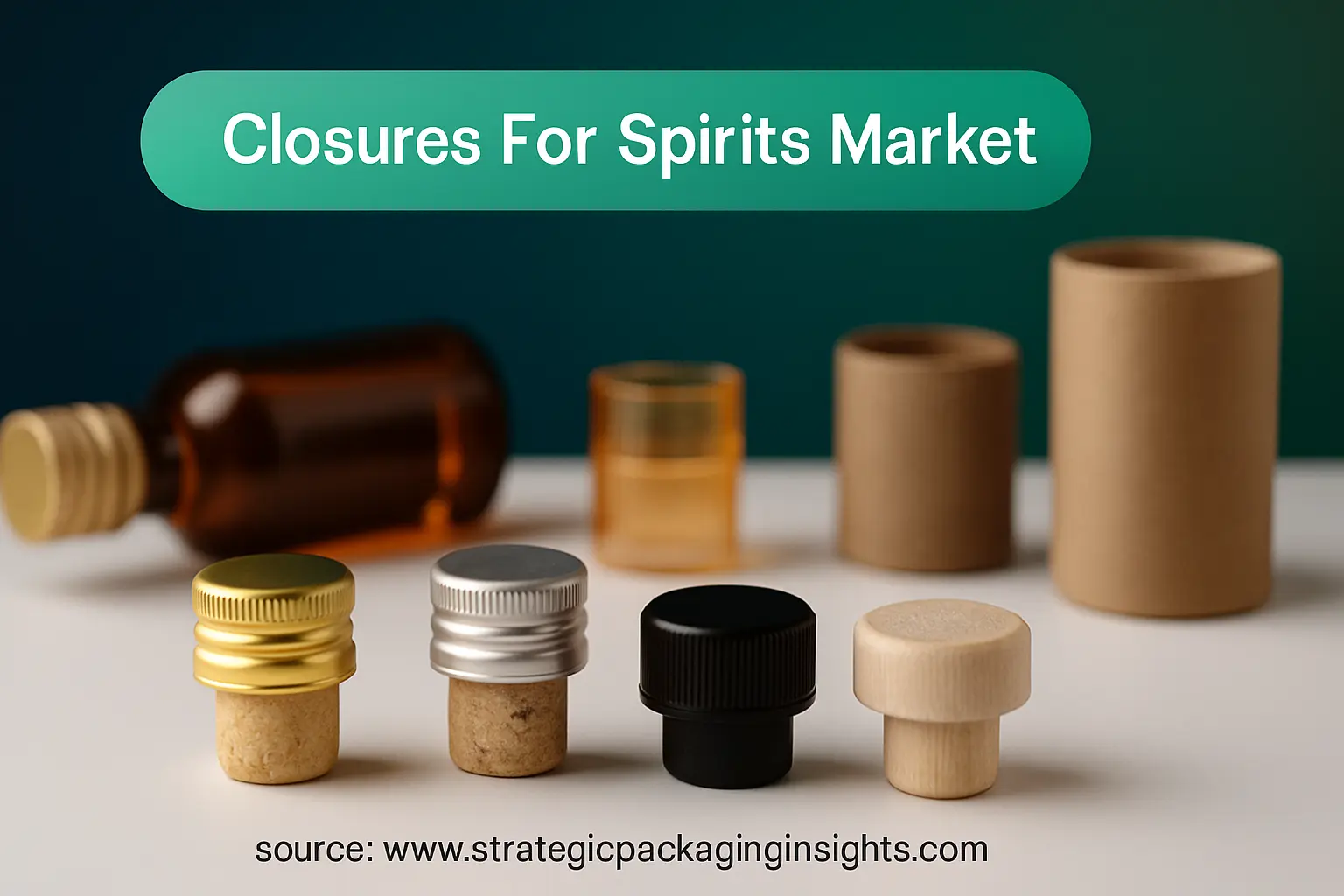
Explore the dynamic landscape of the Closures For Spirits Market from 2018 to 2034, analyzing market size, growth, segment trends, and strategic opportunities.
Strategic Market Overview
The Closures For Spirits Market is a critical component of the global spirits industry, providing essential packaging solutions that ensure product integrity, brand differentiation, and consumer convenience. As the spirits market continues to evolve, driven by changing consumer preferences and technological advancements, the demand for innovative and sustainable closure solutions is on the rise. This market is characterized by a diverse range of closure types, materials, and price tiers, each catering to specific segments of the spirits industry.
https://www.strategicpackaginginsights.com/report/closures-for-spirits-market
From 2018 to 2034: Evolution of the Market
Between 2018 and 2024, the Closures For Spirits Market experienced steady growth, driven by increasing global consumption of spirits and the rising demand for premium and luxury products. The market's evolution during this period was marked by significant advancements in closure technology, including the development of tamper-evident and resealable closures. As we look towards the forecast period of 2026 to 2034, the market is expected to continue its upward trajectory, fueled by the expansion of emerging markets and the growing emphasis on sustainability and eco-friendly materials.
Interpreting Market Size & CAGR
In 2025, the base year for our analysis, the Closures For Spirits Market was valued at $3.52 billion. By 2034, the market is projected to reach $5.46 billion, reflecting a compound annual growth rate (CAGR) of 5.00%. This growth is indicative of the increasing demand for high-quality closures that enhance product appeal and ensure safety. The market's expansion is also supported by the rising popularity of premium and luxury spirits, which require sophisticated closure solutions to maintain their brand image and consumer appeal.
Segment Landscape
| Segment | Details |
|---|---|
| By Closure Type | Screw Caps, Cork Closures, T-top Closures, Premium Decorative Closures |
| By End Use | Whisky, Vodka, Rum, Tequila |
| By Material | Aluminum, Cork, Synthetic, Wood-composite |
| By Price Tier | Mass, Premium, Luxury, Limited Edition |
| Region | Asia Pacific, North America, Latin America, Europe, Middle East & Africa |
The segment landscape of the Closures For Spirits Market is diverse, with each segment offering unique opportunities and challenges. Screw caps and cork closures dominate the market due to their widespread acceptance and versatility. However, premium decorative closures are gaining traction in the luxury segment, where brand differentiation is paramount. The choice of material is also crucial, with aluminum and synthetic materials offering durability and cost-effectiveness, while cork and wood-composite materials appeal to environmentally conscious consumers.
Value Chain & Stakeholder Impact
The value chain of the Closures For Spirits Market involves multiple stakeholders, including raw material suppliers, manufacturers, distributors, and end-users. Each stakeholder plays a vital role in ensuring the seamless production and distribution of closures. Manufacturers are increasingly focusing on innovation and sustainability, developing closures that not only meet functional requirements but also align with environmental standards. Distributors and retailers are tasked with educating consumers about the benefits of different closure types, while end-users demand closures that enhance the overall drinking experience.
Opportunities vs Constraints
The market presents numerous opportunities, particularly in the areas of product innovation and sustainability. The growing demand for eco-friendly closures made from renewable materials offers significant growth potential. Additionally, the expansion of the premium and luxury spirits segments provides opportunities for manufacturers to develop high-end closure solutions. However, the market also faces constraints, including the high cost of raw materials and the complexity of regulatory compliance across different regions.
SWOT Analysis
| Strengths | Weaknesses | Opportunities | Threats |
|---|---|---|---|
| Strong demand for premium closures | High production costs | Expansion in emerging markets | Regulatory challenges |
| Technological advancements | Limited raw material availability | Innovation in sustainable materials | Intense competition |
The SWOT analysis of the Closures For Spirits Market highlights the market's strengths, such as the strong demand for premium closures and technological advancements. However, weaknesses like high production costs and limited raw material availability pose challenges. Opportunities abound in emerging markets and sustainable material innovation, while threats include regulatory challenges and intense competition.
Technology, Regulation & Sustainability Impact
Technological advancements are reshaping the Closures For Spirits Market, with innovations such as smart closures and tamper-evident features enhancing product security and consumer engagement. Regulatory frameworks across different regions are becoming increasingly stringent, necessitating compliance with safety and environmental standards. Sustainability is a key focus, with manufacturers investing in eco-friendly materials and processes to reduce their environmental footprint and meet consumer expectations for sustainable products.
Strategic Outlook to 2034
Looking ahead to 2034, the Closures For Spirits Market is poised for continued growth, driven by the increasing demand for premium and sustainable closure solutions. Manufacturers are expected to focus on innovation, developing closures that not only meet functional requirements but also enhance brand value and consumer experience. Strategic partnerships and collaborations will be crucial in navigating regulatory complexities and expanding market reach. Overall, the market offers significant opportunities for stakeholders willing to invest in technology, sustainability, and consumer-centric solutions.