
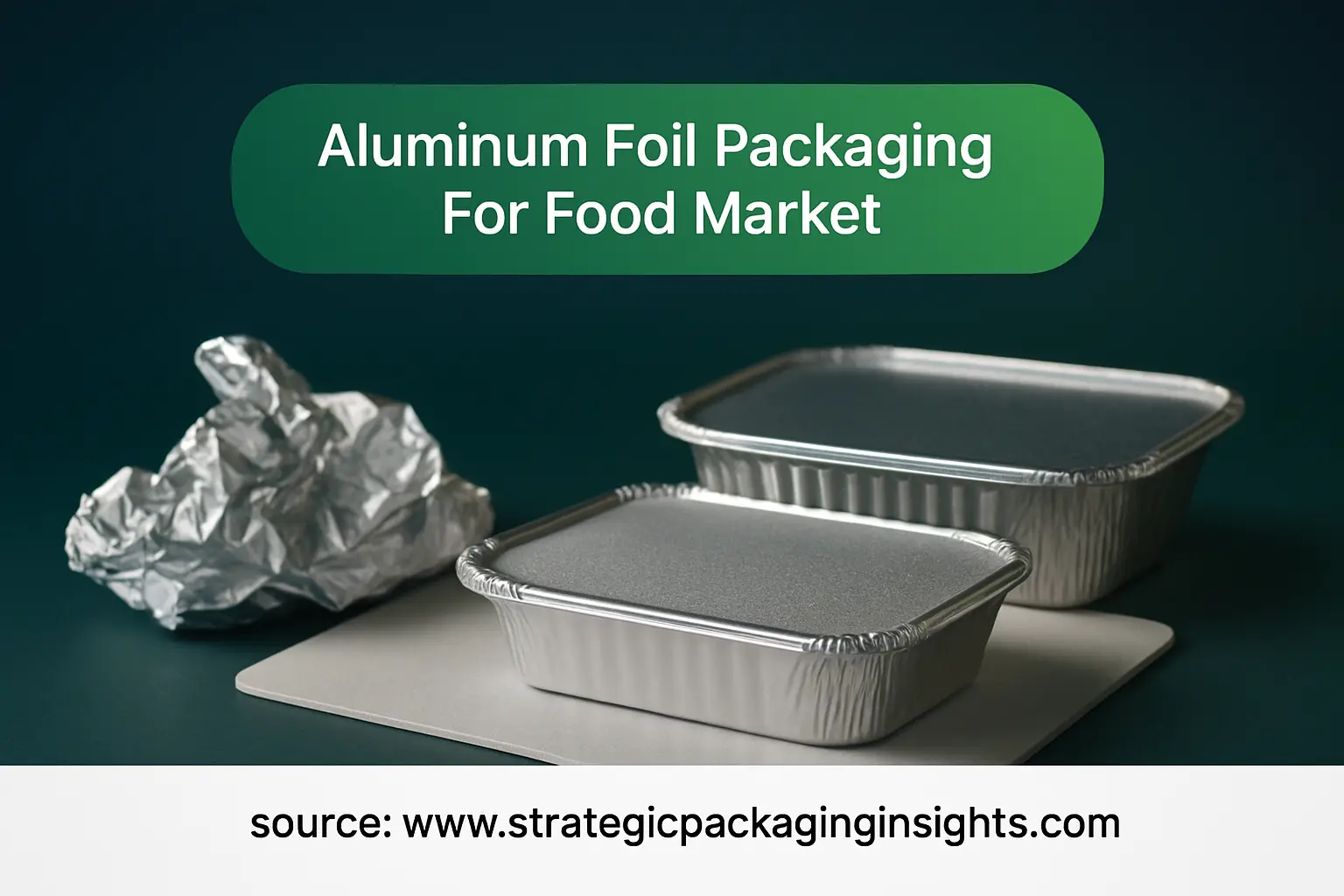
Explore the growth, segments, and dynamics of the Aluminum Foil Packaging For Food Market, highlighting its applications, regional influences, and future opportunities.
Why This Market Is Gaining Attention
The Aluminum Foil Packaging For Food Market is capturing significant attention due to its versatile applications and increasing demand for sustainable packaging solutions. As consumers become more environmentally conscious, the need for recyclable and efficient packaging options has surged. Aluminum foil, known for its excellent barrier properties and recyclability, is increasingly favored in the food industry. This market is also driven by the growing trend of convenience foods and the expansion of the food service industry, which requires reliable packaging solutions to maintain food quality and safety.
https://www.strategicpackaginginsights.com/report/aluminum-foil-packaging-for-food-market
Market Scale & Growth Momentum
In 2025, the market size was valued at $5.22 billion, and it is projected to reach $8.47 billion by 2034, reflecting a compound annual growth rate (CAGR) of 5.50%. This growth trajectory indicates a robust demand for aluminum foil packaging, driven by its adaptability across various food packaging needs. The market's expansion is supported by technological advancements in packaging materials and the increasing adoption of aluminum foil in emerging economies, where the food industry is rapidly evolving.
Deep Dive into Segments
| Segment | Description |
|---|---|
| Form Factor | Containers, rolls, and laminates are the primary forms, each catering to different packaging needs. Containers are popular for ready-to-eat meals, rolls are versatile for household use, and laminates offer enhanced barrier properties for longer shelf life. |
| Application Type | Aluminum foil is used for storage, cooking, and freezing. Its ability to withstand extreme temperatures makes it ideal for cooking and freezing, while its barrier properties ensure food remains fresh during storage. |
| End Use Sector | The household sector and HORECA (Hotels, Restaurants, and Catering) are the main end-users. Households use foil for everyday cooking and storage, while HORECA relies on it for bulk food preparation and preservation. |
| Recyclability | Mono-material and compatible options highlight the market's focus on sustainability. Mono-materials are easier to recycle, while compatible options integrate with other materials without compromising recyclability. |
| Region | Asia Pacific, North America, Latin America, Europe, and the Middle East & Africa each present unique growth opportunities, influenced by regional consumption patterns and regulatory environments. |
Application & End-Use Relevance
Aluminum foil packaging is indispensable in the food industry due to its versatility and efficiency. It is extensively used for packaging perishable goods, ready-to-eat meals, and snacks, ensuring product freshness and extending shelf life. In the household sector, aluminum foil is a staple for cooking and food storage, while in the HORECA sector, it is crucial for maintaining food quality during transportation and service. The market's growth is further propelled by the increasing demand for packaged and convenience foods, which require reliable and efficient packaging solutions.
Regional & Industry Dynamics
Regionally, the Asia Pacific market is experiencing rapid growth due to urbanization and increasing disposable incomes, leading to higher consumption of packaged foods. North America and Europe are mature markets with a strong focus on sustainability and recycling initiatives, driving demand for eco-friendly packaging solutions. Latin America and the Middle East & Africa are emerging markets with significant growth potential, driven by expanding food industries and increasing consumer awareness of packaging benefits.
Challenges vs Opportunities
While the market presents numerous opportunities, it also faces challenges such as fluctuating raw material prices and stringent environmental regulations. However, these challenges are counterbalanced by opportunities in developing innovative, sustainable packaging solutions and expanding into emerging markets. The industry's focus on reducing carbon footprints and enhancing recyclability aligns with global sustainability goals, offering a competitive edge to companies that prioritize eco-friendly practices.
SWOT Overview
| Strengths | Weaknesses | Opportunities | Threats |
|---|---|---|---|
| High recyclability and barrier properties | Price volatility of aluminum | Growing demand for sustainable packaging | Stringent environmental regulations |
| Versatility in applications | Limited awareness in emerging markets | Expansion in emerging economies | Competition from alternative packaging materials |
Innovation & Sustainability Angle
Innovation in the aluminum foil packaging market is centered around enhancing sustainability and functionality. Companies are investing in research and development to create thinner, stronger foils that reduce material usage without compromising performance. Additionally, there is a growing emphasis on developing mono-material solutions that simplify recycling processes. These innovations not only meet consumer demand for eco-friendly products but also help companies comply with increasingly stringent environmental regulations.
What This Means for Packaging Stakeholders
For stakeholders in the aluminum foil packaging industry, the market's growth presents both challenges and opportunities. Companies must navigate fluctuating raw material costs and regulatory pressures while capitalizing on the increasing demand for sustainable packaging solutions. By focusing on innovation and sustainability, stakeholders can enhance their competitive position and tap into new markets. Collaboration across the supply chain, from raw material suppliers to end-users, will be crucial in driving industry growth and meeting the evolving needs of consumers and businesses alike.