
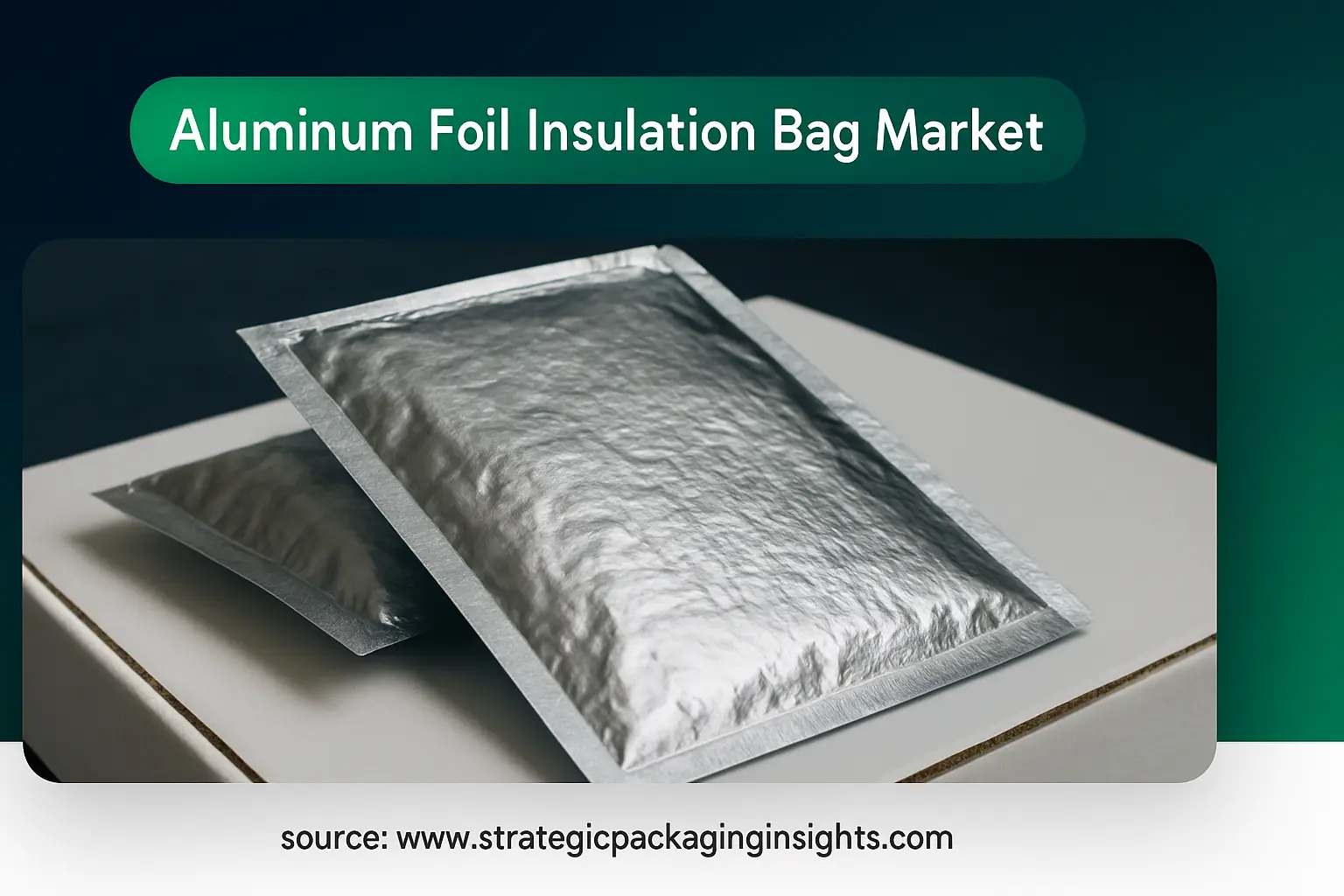
Explore the dynamic growth and strategic innovations in the Aluminum Foil Insulation Bag Market. Analyze market trends, demand drivers, and future forecasts up to 2034.
Market Context & Industry Relevance
The Aluminum Foil Insulation Bag Market is at the forefront of packaging innovation, driven by the increasing demand for efficient thermal management solutions across various industries. As global supply chains become more complex and consumer expectations for product quality rise, the role of advanced packaging solutions like aluminum foil insulation bags becomes increasingly critical. These bags offer superior thermal insulation, making them indispensable in sectors such as food delivery, medical transport, and cold chain logistics.
https://www.strategicpackaginginsights.com/report/aluminum-foil-insulation-bag-market
Demand Drivers Across Packaging
The demand for aluminum foil insulation bags is primarily driven by the need for temperature-sensitive packaging solutions. The food delivery industry, in particular, has seen exponential growth, fueled by the rise of online food delivery platforms. Similarly, the medical transport sector requires reliable packaging to maintain the integrity of pharmaceuticals and biological samples. Additionally, the cold chain logistics industry relies heavily on these bags to ensure the safe transport of perishable goods.
Market Valuation & Forecast
In 2025, the Aluminum Foil Insulation Bag Market was valued at $1.69 billion. By 2034, it is projected to reach $2.80 billion, growing at a compound annual growth rate (CAGR) of 5.80%. This growth is attributed to the increasing adoption of these bags in emerging markets, technological advancements in insulation materials, and the rising awareness of sustainable packaging solutions. The market's expansion is also supported by the growing e-commerce sector, which demands efficient and reliable packaging solutions.
Segment Breakdown
| Segment | Description |
|---|---|
| Type | Thermal Insulated, Reflective Barrier |
| Size Range | Small Pouch, Large Bag |
| End Use | Food Delivery, Medical Transport, Cold Chain |
| Closure | Zip-lock, Drawstring |
| Region | Asia Pacific, North America, Latin America, Europe, Middle East & Africa |
The market is segmented into various types, including thermal insulated and reflective barrier bags, each catering to specific insulation needs. Size ranges from small pouches to large bags, providing flexibility for different applications. End-use segments such as food delivery, medical transport, and cold chain logistics highlight the diverse applications of these bags. Closure types, including zip-lock and drawstring, offer convenience and security, while regional analysis shows significant growth potential in Asia Pacific and North America.
Application-Led Impact
The application of aluminum foil insulation bags in food delivery has revolutionized the industry by ensuring that meals arrive at the desired temperature, enhancing customer satisfaction. In medical transport, these bags play a crucial role in maintaining the efficacy of temperature-sensitive medications and vaccines. The cold chain sector benefits from the bags' ability to preserve the quality of perishable goods during transit, reducing spoilage and waste.
Risks, Barriers & Mitigation
Despite the promising growth, the market faces challenges such as fluctuating raw material prices and environmental concerns related to aluminum production. To mitigate these risks, manufacturers are investing in sustainable practices and exploring alternative materials that offer similar insulation properties. Additionally, regulatory compliance and standardization across regions pose barriers that require strategic navigation.
Concise SWOT Snapshot
| Strengths | Weaknesses | Opportunities | Threats |
|---|---|---|---|
| Superior insulation, Versatility | High production cost | Emerging markets, Technological advancements | Environmental regulations, Raw material volatility |
The SWOT analysis reveals that the market's strengths lie in its superior insulation capabilities and versatility across applications. However, high production costs remain a weakness. Opportunities abound in emerging markets and through technological advancements, while threats include stringent environmental regulations and raw material price volatility.
Technology & Sustainability Influence
Technological advancements are driving the development of more efficient and sustainable insulation materials. Innovations in nanotechnology and biodegradable materials are paving the way for eco-friendly packaging solutions. Sustainability is becoming a key focus, with companies striving to reduce their carbon footprint and meet consumer demand for environmentally responsible products.
Strategic Takeaways for 2025–2034
As we look towards 2025 and beyond, strategic priorities for stakeholders in the Aluminum Foil Insulation Bag Market should include investing in sustainable technologies, expanding into emerging markets, and enhancing product offerings to meet diverse consumer needs. Companies should also focus on building robust supply chains to mitigate risks associated with raw material volatility and regulatory changes. By aligning with these strategic imperatives, businesses can capitalize on the market's growth potential and drive innovation in packaging solutions.