
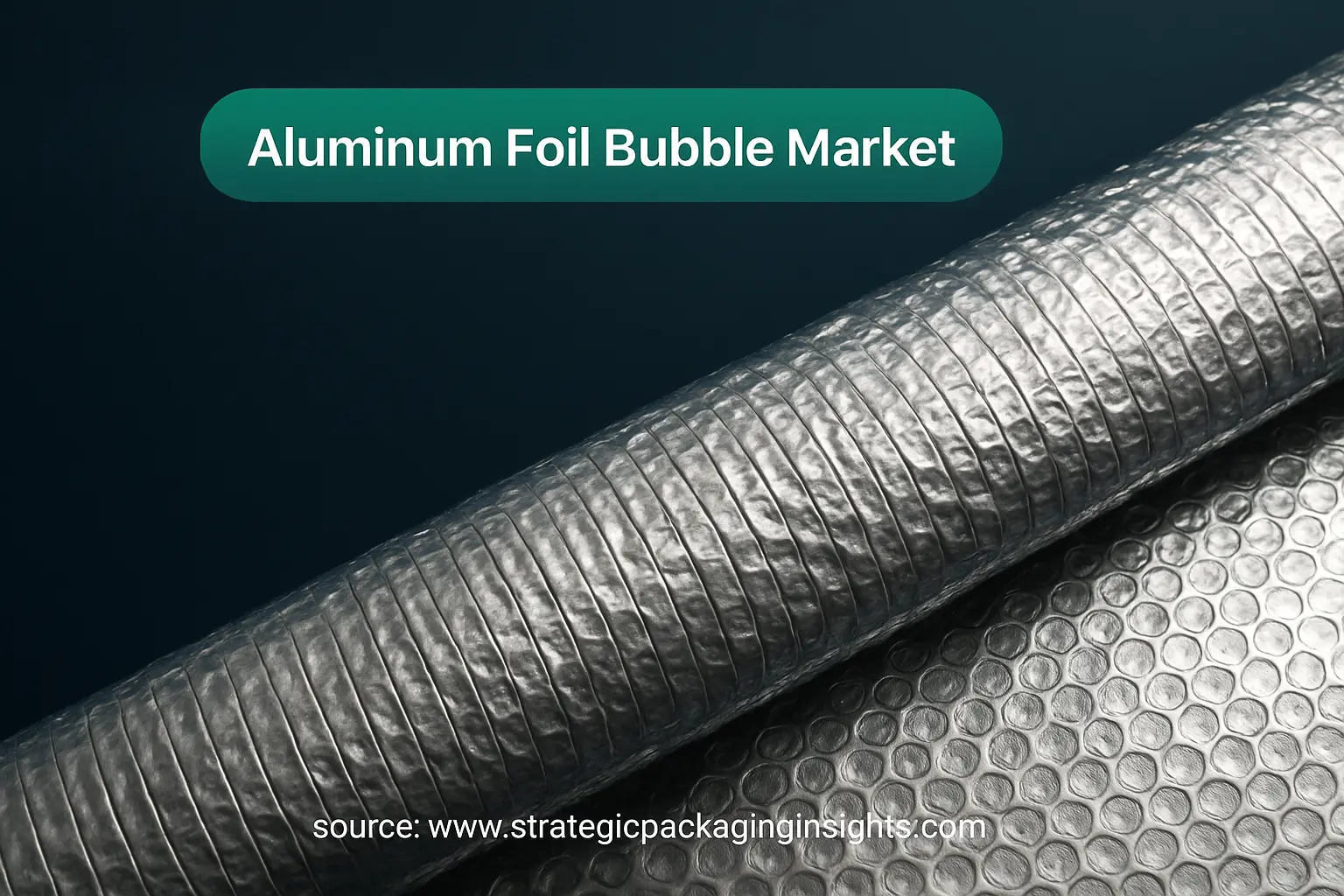
Dive into the Aluminum Foil Bubble Market's evolution, significance, and future trajectory. Understand its segmentation, industry applications, and strategic insights for packaging leaders.
Executive Market Narrative
The Aluminum Foil Bubble Market has undergone significant transformation over the past decade, driven by technological advancements and increasing demand for efficient insulation and protective packaging solutions. Initially, the market was dominated by basic single-layer structures, primarily used in residential insulation. However, as industries recognized the superior thermal and protective properties of aluminum foil bubbles, the market expanded into multi-layer structures, catering to diverse applications across various sectors.
https://www.strategicpackaginginsights.com/report/aluminum-foil-bubble-market
From 2018 to 2024, the market witnessed a steady growth trajectory, fueled by the construction boom in emerging economies and the rising awareness of energy-efficient building materials. The integration of aluminum foil bubbles in packaging solutions also gained momentum, particularly in the electronics and food sectors, where protection against temperature fluctuations and physical damage is crucial.
Why This Market Matters
The Aluminum Foil Bubble Market is pivotal in addressing global challenges related to energy efficiency and sustainable packaging. As governments and industries strive to reduce carbon footprints, the demand for materials that enhance thermal insulation and minimize energy consumption has surged. Aluminum foil bubbles offer a lightweight, cost-effective solution that meets these needs, making them indispensable in modern construction and packaging industries.
Moreover, the market's growth is indicative of broader trends in consumer preferences towards sustainable and efficient products. As such, it serves as a barometer for innovation in material science and packaging technology, influencing related markets and industries.
Market Size & Growth Trajectory
In 2025, the Aluminum Foil Bubble Market was valued at $348.92 million. By 2034, it is projected to reach $548.29 million, reflecting a compound annual growth rate (CAGR) of 5.20%. This growth trajectory underscores the increasing adoption of aluminum foil bubbles across various sectors, driven by their superior insulation properties and versatility in packaging applications.
The market's expansion is also supported by technological advancements that enhance the performance and application range of aluminum foil bubbles, making them more appealing to a broader array of industries.
Key Market Segmentation
| Segment | Description |
|---|---|
| Structure | Single Bubble: Basic structure for standard insulation needs; Multi-Layer: Enhanced thermal and protective properties for advanced applications. |
| Thickness | 80-120um: Standard thickness range offering a balance between flexibility and insulation efficiency. |
| Use | Insulation: Primarily used in construction for thermal efficiency; Protective Packaging: Used in various industries to safeguard products during transit. |
| Region | Asia Pacific, North America, Latin America, Europe, Middle East & Africa: Diverse regional markets with varying growth drivers and adoption rates. |
Industry Use-Case Mapping
The Aluminum Foil Bubble Market's segments align with specific industry applications, highlighting its versatility. In the construction sector, single and multi-layer structures are extensively used for insulation in residential and commercial buildings, contributing to energy savings and enhanced comfort. The packaging industry leverages the protective qualities of aluminum foil bubbles to ensure the safe transport of sensitive electronics and perishable goods, reducing spoilage and damage.
Regionally, the Asia Pacific market is driven by rapid urbanization and infrastructure development, while North America and Europe focus on sustainable building practices and advanced packaging solutions. Latin America and the Middle East & Africa are emerging markets, with growing awareness of energy-efficient materials.
Competitive & Value Chain Insights
The Aluminum Foil Bubble Market is characterized by a competitive landscape with key players focusing on innovation and strategic partnerships to enhance their market presence. The value chain involves raw material suppliers, manufacturers, distributors, and end-users, each playing a crucial role in delivering high-quality products to the market.
Manufacturers are investing in research and development to improve product performance and expand application areas, while distributors are enhancing their logistics capabilities to meet the growing demand across regions.
Short SWOT Analysis
| Strengths | Weaknesses | Opportunities | Threats |
|---|---|---|---|
| High insulation efficiency; Lightweight and cost-effective. | Limited awareness in emerging markets; Initial cost barriers. | Growing demand for sustainable materials; Expansion in emerging markets. | Competition from alternative materials; Regulatory challenges. |
Future Outlook (2034)
Looking ahead to 2034, the Aluminum Foil Bubble Market is poised for continued growth, driven by advancements in material technology and increasing demand for energy-efficient solutions. The market will likely see further diversification in applications, with new sectors adopting aluminum foil bubbles for their superior properties.
Innovation will remain a key driver, with manufacturers focusing on developing products that offer enhanced performance and sustainability. Additionally, strategic collaborations and partnerships will be crucial in expanding market reach and addressing regional demand variations.
Why This Matters for Packaging Leaders
For packaging leaders, understanding the dynamics of the Aluminum Foil Bubble Market is essential for strategic decision-making. As the market evolves, staying ahead of trends and technological advancements will enable companies to capitalize on growth opportunities and enhance their competitive edge.
By investing in research and development, fostering strategic partnerships, and focusing on sustainability, packaging leaders can not only meet current market demands but also anticipate future needs, ensuring long-term success in a rapidly changing industry landscape.