
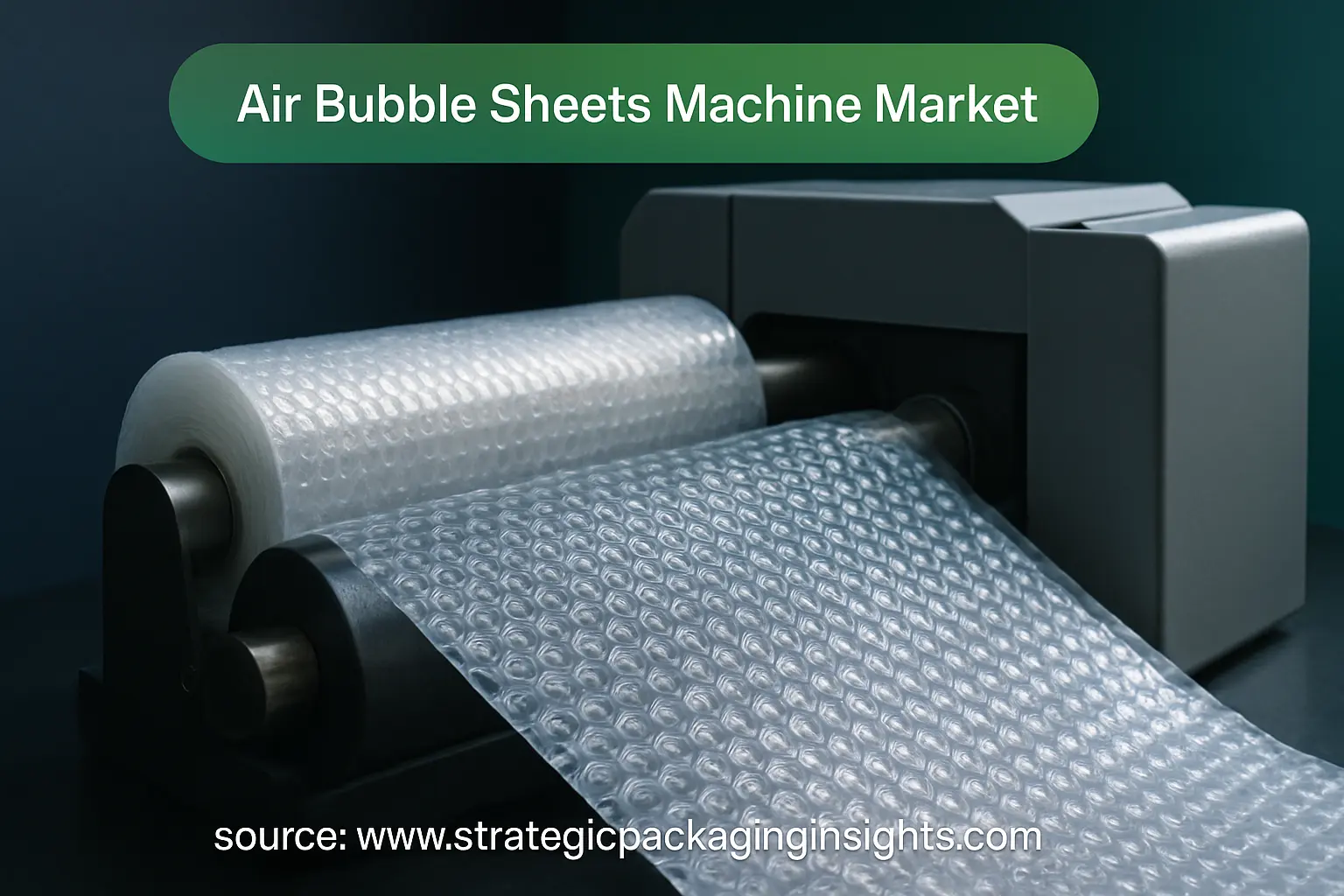
Explore the dynamic growth and strategic innovations in the Air Bubble Sheets Machine Market. Analyze market trends, demand drivers, and future forecasts to 2033.
Market Context & Industry Relevance
The Air Bubble Sheets Machine Market is witnessing a transformative phase driven by technological advancements and the burgeoning demand for protective packaging solutions. As industries pivot towards more sustainable and efficient packaging methods, air bubble sheets machines have emerged as a critical component in the packaging ecosystem. These machines are essential for producing bubble wrap, a staple in safeguarding goods during transit, thereby reducing damage and enhancing customer satisfaction.
https://www.strategicpackaginginsights.com/report/air-bubble-sheets-machine-market
In recent years, the market has seen a surge in innovation, with manufacturers focusing on enhancing machine efficiency, reducing energy consumption, and integrating smart technologies. This evolution is not just about meeting current demands but also about anticipating future needs in a rapidly changing global market.
Demand Drivers Across Packaging
The demand for air bubble sheets machines is primarily driven by the exponential growth of e-commerce, which necessitates robust packaging solutions to ensure product safety during shipping. Additionally, the rise in industrial shipping and logistics has further amplified the need for reliable packaging materials.
Another significant driver is the increasing awareness and regulatory push towards sustainable packaging. Consumers and businesses alike are seeking eco-friendly alternatives, prompting manufacturers to innovate in terms of recyclable and biodegradable materials. This shift is expected to propel the demand for advanced air bubble sheets machines capable of producing environmentally friendly packaging solutions.
Market Valuation & Forecast
In 2024, the Air Bubble Sheets Machine Market was valued at $296.40 million. With a projected CAGR of 5.90%, the market is anticipated to reach $496.53 million by 2033. This growth trajectory is underpinned by several key trends, including the integration of automation and IoT in manufacturing processes, which enhances operational efficiency and reduces costs.
The forecast period is expected to witness significant investments in R&D, aimed at developing machines that offer higher output with lower energy consumption. This focus on innovation is likely to attract new entrants and intensify competition, further driving market growth.
Segment Breakdown
| Segment | Description |
|---|---|
| Machine Type | Includes Compact, Inline, High Output, and Others, catering to diverse production needs from small-scale operations to large industrial setups. |
| Sheet Type | Comprises Bubble Sheets, Perforated Sheets, Laminated Sheets, and Others, offering versatility in packaging solutions for different applications. |
| Application | Encompasses Packaging Converters, E-commerce, Industrial Shipping, and Others, highlighting the broad applicability of air bubble sheets across sectors. |
| End Use | Targets Converters, Warehouses, Logistics, and Others, reflecting the end-user diversity and the critical role of these machines in supply chain operations. |
| Region | Covers Asia Pacific, North America, Latin America, Europe, and Middle East & Africa, indicating the global reach and regional market dynamics. |
Application-Led Impact
The application of air bubble sheets machines extends beyond traditional packaging. In the e-commerce sector, these machines are pivotal in ensuring that products reach consumers in pristine condition, thereby enhancing brand reputation and customer loyalty. In industrial shipping, the machines contribute to reducing product damage and associated costs, thus improving overall supply chain efficiency.
Moreover, the versatility of these machines allows for customization in packaging, catering to specific industry needs such as electronics, automotive, and pharmaceuticals, where precision and protection are paramount.
Risks, Barriers & Mitigation
Despite the promising growth prospects, the market faces several challenges. High initial investment costs and the need for skilled labor to operate advanced machines can be significant barriers for small and medium enterprises. Additionally, fluctuations in raw material prices and stringent environmental regulations pose risks to market stability.
To mitigate these risks, companies are focusing on developing cost-effective solutions and investing in training programs to upskill their workforce. Furthermore, strategic partnerships and collaborations are being explored to share resources and expertise, thereby reducing operational costs and enhancing market competitiveness.
Concise SWOT Snapshot
| Strengths | Weaknesses | Opportunities | Threats |
|---|---|---|---|
| Technological advancements and high demand in e-commerce. | High initial costs and dependency on skilled labor. | Growing demand for sustainable packaging solutions. | Regulatory challenges and raw material price volatility. |
Technology & Sustainability Influence
Technology plays a pivotal role in shaping the future of the Air Bubble Sheets Machine Market. The integration of IoT and AI in machine operations is enhancing efficiency, reducing downtime, and enabling predictive maintenance. These advancements not only improve productivity but also contribute to sustainability by minimizing waste and energy consumption.
Sustainability is at the forefront of industry innovation, with manufacturers exploring biodegradable materials and energy-efficient production processes. This focus aligns with global environmental goals and consumer preferences, positioning the market for long-term growth.
Strategic Takeaways for 2025–2033
As we look towards 2025 and beyond, the Air Bubble Sheets Machine Market is poised for significant transformation. Companies should prioritize investment in R&D to develop innovative and sustainable solutions that meet evolving consumer demands. Embracing digital technologies will be crucial in enhancing operational efficiency and gaining a competitive edge.
Furthermore, strategic collaborations and partnerships will be key in navigating market challenges and capitalizing on emerging opportunities. By focusing on sustainability and technological integration, businesses can ensure resilience and growth in a dynamic market landscape.