
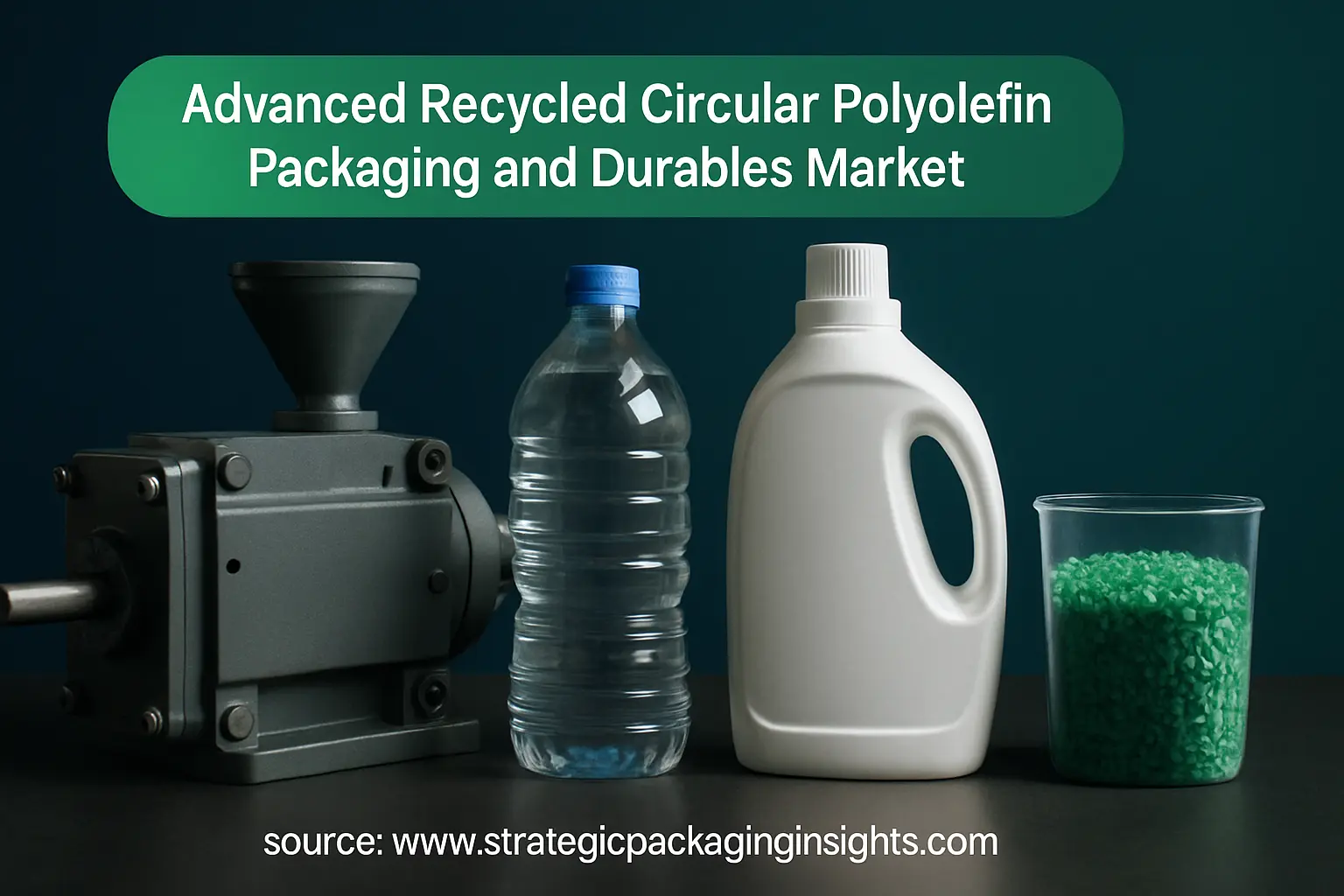
Delve into the Advanced Recycled Circular Polyolefin Packaging and Durables Market, examining its growth trajectory, segment analysis, regional dynamics, and the balance of challenges and opportunities.
Why This Market Is Gaining Attention
The Advanced Recycled Circular Polyolefin Packaging and Durables Market is capturing significant attention due to the increasing global emphasis on sustainability and circular economy principles. As industries strive to reduce their carbon footprint and enhance resource efficiency, the demand for recycled materials, particularly polyolefins, is on the rise. This market is pivotal in addressing environmental concerns by transforming waste into valuable resources, thus aligning with global sustainability goals.
Market Scale & Growth Momentum
The market, valued at $4.16 billion in 2025, is projected to double to $8.32 billion by 2034, reflecting a robust CAGR of 8.0%. This growth trajectory underscores the increasing adoption of recycled polyolefins across various industries. The market's expansion is driven by technological advancements in recycling processes and the rising demand for sustainable packaging solutions. The consistent growth rate indicates a strong momentum, suggesting that stakeholders are increasingly recognizing the economic and environmental benefits of recycled polyolefins.
Deep Dive into Segments
| Segment | Description |
|---|---|
| Resin Type | Includes rPE, rPP, and mixed polyolefins, each offering unique properties for different applications. rPE and rPP are particularly favored for their versatility and recyclability. |
| Process Type | Encompasses mechanical recycling, advanced recycling, and compatibilized recycling. Advanced recycling is gaining traction for its ability to handle complex waste streams. |
| Application | Spans films, rigid packaging, and durables. Films are widely used in flexible packaging, while rigid packaging is crucial for product protection. |
| End Use | Includes packaging, automotive, consumer goods, and construction. Packaging remains the largest segment, driven by the need for sustainable solutions. |
| Region | Asia Pacific, North America, Latin America, Europe, and Middle East & Africa. Asia Pacific leads due to its large manufacturing base and increasing environmental regulations. |
Application & End-Use Relevance
The application of recycled polyolefins is vast, with significant relevance in packaging, automotive, consumer goods, and construction sectors. In packaging, these materials offer a sustainable alternative to virgin plastics, reducing environmental impact. The automotive industry benefits from lightweight, durable components that enhance fuel efficiency. Consumer goods manufacturers are increasingly adopting recycled materials to meet eco-conscious consumer demands. In construction, recycled polyolefins provide durable, cost-effective solutions for various applications.
Regional & Industry Dynamics
Regionally, Asia Pacific dominates the market, driven by its robust manufacturing sector and stringent environmental regulations. North America and Europe are also significant players, with strong governmental support for recycling initiatives. Latin America and the Middle East & Africa are emerging markets, showing potential for growth as awareness and infrastructure for recycling improve. Industry dynamics are influenced by technological advancements, regulatory frameworks, and consumer preferences, all of which are steering the market towards sustainable practices.
Challenges vs Opportunities
While the market presents numerous opportunities, it also faces challenges. The primary challenges include the high cost of advanced recycling technologies and the complexity of recycling mixed polyolefins. However, these challenges are counterbalanced by opportunities such as increasing consumer demand for sustainable products, government incentives for recycling, and innovations in recycling technologies that enhance efficiency and reduce costs.
SWOT Overview
| Strengths | Weaknesses | Opportunities | Threats |
|---|---|---|---|
| Strong demand for sustainable materials | High initial investment costs | Growing consumer awareness | Regulatory hurdles |
| Technological advancements | Complexity in recycling processes | Government incentives | Volatile raw material prices |
Innovation & Sustainability Angle
Innovation is at the heart of the market's growth, with advancements in recycling technologies playing a crucial role. These innovations not only improve the efficiency of recycling processes but also enhance the quality of recycled materials, making them more competitive with virgin materials. Sustainability is a key driver, as companies and consumers alike prioritize eco-friendly solutions. The market is poised to benefit from ongoing research and development efforts aimed at improving the recyclability and performance of polyolefins.
What This Means for Packaging Stakeholders
For packaging stakeholders, the market presents both challenges and opportunities. Embracing recycled polyolefins can enhance brand reputation and meet consumer demand for sustainable products. However, stakeholders must navigate the complexities of recycling processes and invest in new technologies. Collaboration across the supply chain is essential to overcome these challenges and capitalize on the market's growth potential. By aligning with sustainability goals, packaging stakeholders can drive innovation and create long-term value in the evolving market landscape.