


UV-LED Curable Inks for Direct-to-Shape Packaging in FMCG Market Outlook
The UV-LED curable inks for direct-to-shape packaging in the FMCG market were valued at $565.70 million in 2025 and are projected to reach $1.29 billion by 2034, growing at a CAGR of 9.6% during the forecast period 2026-2034. This market is witnessing significant growth due to the increasing demand for sustainable and efficient packaging solutions in the fast-moving consumer goods (FMCG) sector. The shift towards eco-friendly packaging and the rising adoption of UV-LED technology, which offers advantages such as faster curing times and reduced energy consumption, are key drivers of this market. Additionally, the growing trend of personalized and direct-to-shape packaging is further propelling the demand for UV-LED curable inks, as they provide high-quality print finishes and are suitable for a variety of substrates including plastics, glass, and metals.
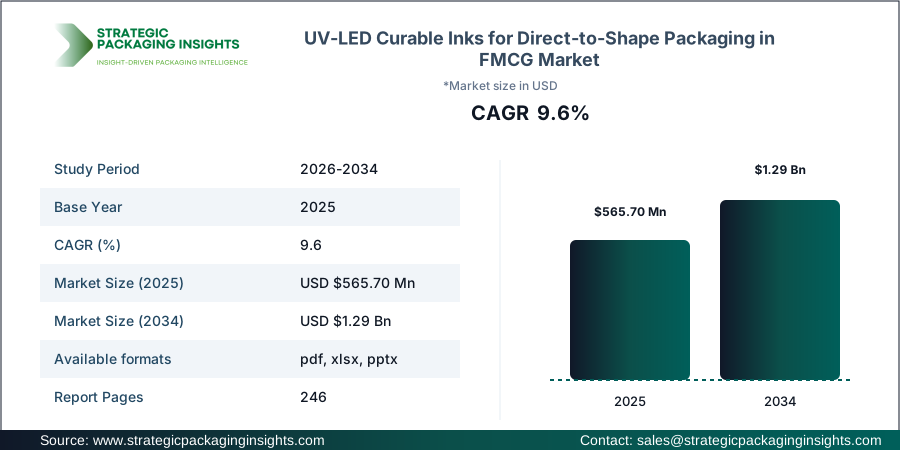
Despite the promising growth prospects, the market faces certain challenges that could hinder its expansion. Regulatory constraints related to the use of certain chemicals in inks and the need for compliance with environmental standards are significant restrainers. However, these challenges also present opportunities for innovation and development of new formulations that meet regulatory requirements while maintaining performance. The potential for growth is substantial, particularly in emerging markets where the FMCG sector is expanding rapidly. Companies are investing in research and development to create advanced ink formulations that offer improved adhesion, durability, and color vibrancy, which are crucial for maintaining brand integrity and consumer appeal in competitive markets.
Report Scope
| Attributes | Details |
| Report Title | UV-LED Curable Inks for Direct-to-Shape Packaging in FMCG Market Size, Future Growth and Forecast 2034 |
| Ink Type | UV-LED curable inks, Low-migration inks, Specialty inks |
| Substrate | Plastic containers, Glass bottles, Metal packs |
| Application | Direct-to-shape printing, Labels, Promotional packs |
| End Use | FMCG, Beverages, Cosmetics, Household care |
| Region | Asia Pacific, North America, Latin America, Europe, Middle East & Africa |
| Base Year | 2025 |
| Historic Period | 2018-2024 |
| Forecast Period | 2026-2034 |
| Number of Pages | 246 |
| Customization Available | Yes* |
Opportunities & Threats
The UV-LED curable inks market for direct-to-shape packaging in FMCG presents numerous opportunities, primarily driven by the increasing demand for sustainable packaging solutions. As consumers become more environmentally conscious, there is a growing preference for packaging that minimizes environmental impact. UV-LED curable inks, known for their low volatile organic compound (VOC) emissions and energy-efficient curing process, align well with this trend. Additionally, the versatility of these inks in printing on various substrates such as plastics, glass, and metals opens up new avenues for innovation in packaging design, allowing brands to differentiate themselves in a crowded marketplace.
Another significant opportunity lies in the technological advancements in UV-LED curing systems. These advancements have led to improved ink performance, including better adhesion, faster curing times, and enhanced print quality. As a result, manufacturers are increasingly adopting UV-LED curable inks for direct-to-shape packaging applications, particularly in the FMCG sector where speed and efficiency are critical. Furthermore, the growing trend of personalized packaging, driven by consumer demand for unique and customized products, is expected to boost the adoption of UV-LED curable inks, as they enable high-quality, vibrant prints that can be tailored to individual preferences.
However, the market is not without its threats. One of the primary challenges is the high initial cost associated with UV-LED curing equipment, which can be a barrier for small and medium-sized enterprises (SMEs) looking to adopt this technology. Additionally, the market faces competition from other ink technologies, such as water-based and solvent-based inks, which may offer cost advantages in certain applications. To overcome these threats, companies need to focus on educating potential customers about the long-term benefits and cost savings associated with UV-LED curable inks, as well as continuing to innovate and improve the performance and cost-effectiveness of their products.
Drivers & Challenges
The primary drivers of the UV-LED curable inks market for direct-to-shape packaging in FMCG include the increasing demand for eco-friendly packaging solutions and the advantages offered by UV-LED technology. As environmental concerns continue to rise, there is a growing emphasis on reducing the carbon footprint of packaging materials. UV-LED curable inks, with their low VOC emissions and energy-efficient curing process, are well-positioned to meet this demand. Additionally, the ability of these inks to provide high-quality, durable prints on a variety of substrates makes them an attractive option for FMCG companies looking to enhance their brand image and product appeal.
Another significant driver is the rapid growth of the FMCG sector, particularly in emerging markets. As disposable incomes rise and consumer preferences shift towards convenience and quality, there is an increasing demand for innovative packaging solutions that can capture consumer attention. UV-LED curable inks, with their ability to produce vibrant, eye-catching designs, are ideally suited to meet this demand. Furthermore, the trend towards personalized and customized packaging is expected to drive further adoption of UV-LED curable inks, as they enable brands to create unique, tailored packaging that resonates with consumers.
Despite these drivers, the market faces several challenges that could impact its growth. One of the primary challenges is the high cost of UV-LED curing equipment, which can be a barrier to adoption for smaller companies. Additionally, the market is subject to stringent regulatory requirements, particularly concerning the use of certain chemicals in ink formulations. Companies must navigate these regulations carefully to ensure compliance while maintaining product performance. To address these challenges, manufacturers are investing in research and development to create cost-effective, compliant ink formulations that meet the needs of the FMCG sector.
Market Share Analysis
The competitive landscape of the UV-LED curable inks market for direct-to-shape packaging in FMCG is characterized by the presence of several key players who are driving innovation and growth in the industry. Companies such as Sun Chemical, Siegwerk, Toyo Ink, INX International, Flint Group, DIC Corporation, Nazdar Ink Technologies, Marabu, Hubergroup, and Zeller+Gmelin are at the forefront of this market, leveraging their expertise and resources to develop advanced ink formulations that meet the evolving needs of the FMCG sector. These companies are focusing on expanding their product portfolios, enhancing their production capabilities, and strengthening their distribution networks to capture a larger share of the market.
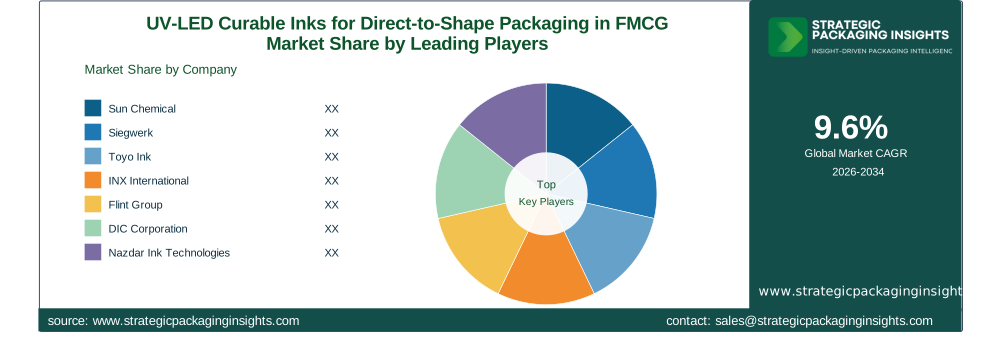
Sun Chemical, a leading player in the market, is known for its comprehensive range of UV-LED curable inks that offer superior performance and sustainability. The company is committed to innovation and has invested significantly in research and development to create inks that meet the highest standards of quality and environmental compliance. Similarly, Siegwerk is recognized for its focus on sustainability and has developed a range of low-migration inks that are ideal for food packaging applications. The company's commitment to sustainability and innovation has helped it maintain a strong position in the market.
Toyo Ink and INX International are also prominent players in the market, known for their high-quality ink formulations and strong customer relationships. Toyo Ink has a diverse product portfolio that includes UV-LED curable inks for a variety of applications, while INX International is recognized for its expertise in digital printing technologies. Both companies are focused on expanding their presence in emerging markets and are investing in new technologies to enhance their product offerings.
Flint Group and DIC Corporation are other key players in the market, known for their extensive range of ink products and strong global presence. Flint Group has a robust portfolio of UV-LED curable inks that are designed to meet the needs of the FMCG sector, while DIC Corporation is recognized for its commitment to innovation and sustainability. Both companies are focused on expanding their market share through strategic partnerships and acquisitions, as well as investing in research and development to create new and improved ink formulations.
Key Highlights
- The UV-LED curable inks market for direct-to-shape packaging in FMCG is projected to grow at a CAGR of 9.6% from 2026 to 2034.
- Increasing demand for sustainable and eco-friendly packaging solutions is a major driver of market growth.
- Technological advancements in UV-LED curing systems are enhancing ink performance and expanding application possibilities.
- The market is characterized by the presence of several key players, including Sun Chemical, Siegwerk, and Toyo Ink.
- High initial costs of UV-LED curing equipment pose a challenge to market adoption, particularly for SMEs.
- Regulatory constraints related to chemical use in inks are a significant restrainer, but also present opportunities for innovation.
- The trend towards personalized and customized packaging is expected to boost demand for UV-LED curable inks.
- Emerging markets offer significant growth potential due to the rapid expansion of the FMCG sector.
- Companies are investing in research and development to create advanced ink formulations that meet regulatory requirements.
- UV-LED curable inks offer advantages such as faster curing times, reduced energy consumption, and high-quality print finishes.
Top Countries Insights
In the UV-LED curable inks market for direct-to-shape packaging in FMCG, the United States stands out as a key player, with a market size of approximately $250 million and a CAGR of 8%. The country's strong focus on sustainability and innovation in packaging solutions drives demand for UV-LED curable inks. Government policies promoting eco-friendly practices and the presence of major FMCG companies further bolster market growth. However, regulatory challenges related to chemical use in inks remain a concern.
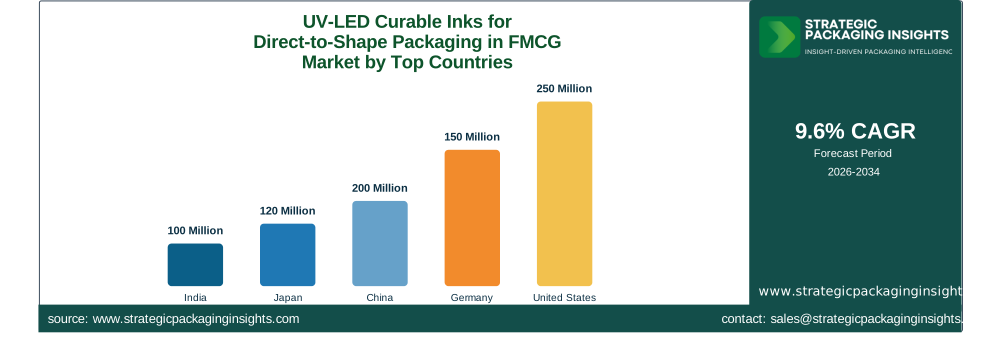
Germany is another significant market, valued at around $150 million with a CAGR of 7%. The country's advanced manufacturing capabilities and emphasis on high-quality packaging solutions contribute to the demand for UV-LED curable inks. The German market benefits from strong government support for sustainable practices and a well-established infrastructure for research and development. However, the high cost of UV-LED curing equipment poses a challenge to widespread adoption.
China, with a market size of approximately $200 million and a CAGR of 10%, is experiencing rapid growth in the UV-LED curable inks market. The country's expanding FMCG sector and increasing consumer demand for innovative packaging solutions drive market growth. Government initiatives to promote sustainable practices and reduce environmental impact further support the adoption of UV-LED curable inks. However, competition from other ink technologies and regulatory constraints are challenges that need to be addressed.
Japan, valued at around $120 million with a CAGR of 6%, is known for its technological advancements and focus on innovation in packaging solutions. The country's strong emphasis on quality and sustainability drives demand for UV-LED curable inks. Government policies supporting eco-friendly practices and the presence of leading ink manufacturers contribute to market growth. However, the high cost of UV-LED curing equipment and regulatory challenges are potential barriers to adoption.
India, with a market size of approximately $100 million and a CAGR of 12%, is emerging as a key market for UV-LED curable inks. The country's rapidly growing FMCG sector and increasing consumer awareness of sustainable packaging solutions drive demand. Government initiatives to promote environmental sustainability and support for the packaging industry further boost market growth. However, the high initial cost of UV-LED curing equipment and competition from other ink technologies are challenges that need to be addressed.
UV-LED Curable Inks for Direct-to-Shape Packaging in FMCG Market Segments Insights

Ink Type Analysis
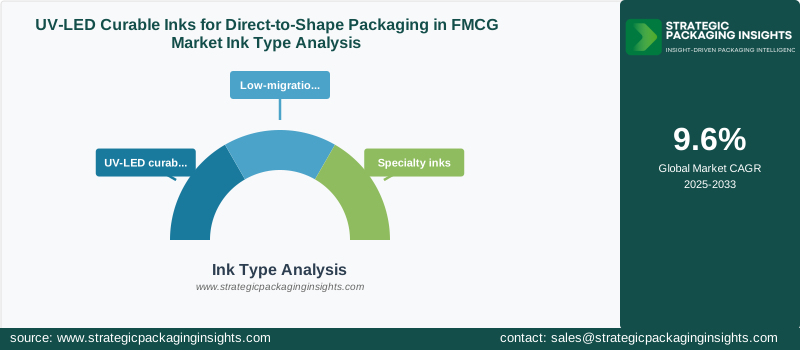
The UV-LED curable inks segment is witnessing significant growth due to its advantages over traditional ink types. These inks offer faster curing times, reduced energy consumption, and lower VOC emissions, making them an attractive option for environmentally conscious brands. The low-migration inks segment is also gaining traction, particularly in applications where food safety is a concern. These inks are designed to minimize the migration of ink components into packaged goods, ensuring compliance with stringent regulatory standards. Specialty inks, which include metallic and fluorescent options, are increasingly being used to create eye-catching designs that enhance brand visibility and consumer engagement.
In terms of competition, the market is characterized by the presence of several key players who are investing in research and development to create advanced ink formulations. Companies are focusing on expanding their product portfolios to include a wider range of ink types that cater to the diverse needs of the FMCG sector. The growing demand for personalized and customized packaging is driving innovation in ink formulations, with manufacturers developing inks that offer improved adhesion, durability, and color vibrancy. As a result, the ink type segment is expected to continue its strong growth trajectory, driven by the increasing adoption of UV-LED curable inks and the development of new specialty ink formulations.
Substrate Analysis
The substrate segment of the UV-LED curable inks market for direct-to-shape packaging in FMCG is dominated by plastic containers, which are widely used due to their versatility and cost-effectiveness. The ability of UV-LED curable inks to adhere to a variety of plastic substrates makes them an ideal choice for FMCG companies looking to enhance their packaging designs. Glass bottles are another significant substrate, particularly in the beverage and cosmetics industries, where high-quality, durable prints are essential for maintaining brand integrity. Metal packs, while less common, are gaining popularity due to their durability and recyclability, which align with the growing demand for sustainable packaging solutions.
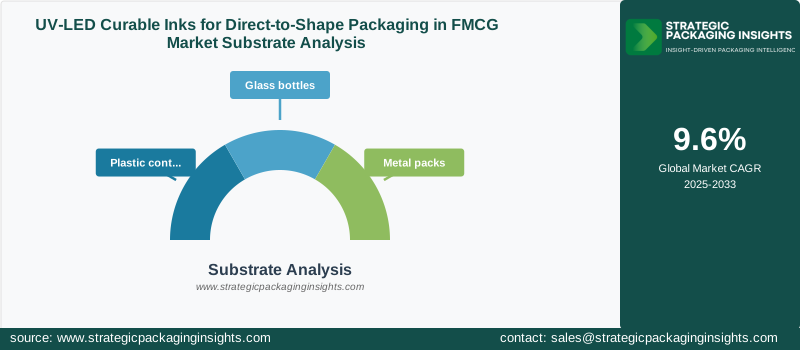
Trends in the substrate segment are driven by the increasing focus on sustainability and the need for packaging materials that minimize environmental impact. Companies are exploring new materials and technologies that offer improved performance and sustainability, such as biodegradable plastics and recyclable metals. The growing trend of personalized and customized packaging is also influencing substrate choices, with brands seeking materials that can accommodate unique designs and finishes. As a result, the substrate segment is expected to see continued growth, driven by the increasing adoption of UV-LED curable inks and the development of new, sustainable packaging materials.
Application Analysis
The application segment of the UV-LED curable inks market for direct-to-shape packaging in FMCG is led by direct-to-shape printing, which offers significant advantages in terms of design flexibility and efficiency. This application allows brands to create unique, high-quality prints directly on packaging substrates, eliminating the need for labels and reducing material waste. Labels, while still widely used, are increasingly being complemented by direct-to-shape printing techniques that offer greater design possibilities and cost savings. Promotional packs, which often require vibrant, eye-catching designs, are also driving demand for UV-LED curable inks, as they enable brands to create impactful packaging that captures consumer attention.
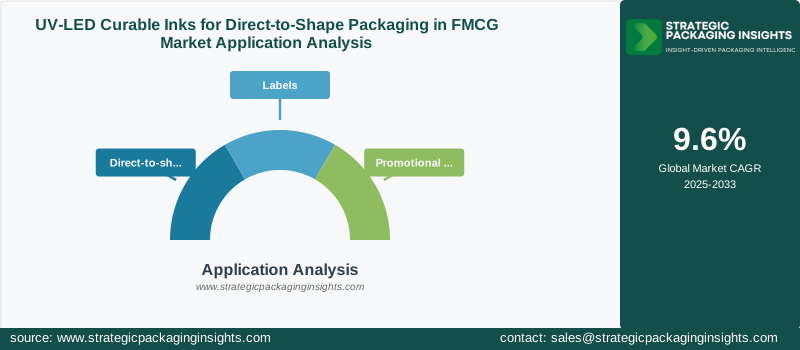
Trends in the application segment are influenced by the growing demand for personalized and customized packaging solutions. Brands are increasingly looking for ways to differentiate themselves in a crowded marketplace, and UV-LED curable inks offer the versatility and quality needed to achieve this. The ability to print directly on a variety of substrates, combined with the high-quality finishes offered by UV-LED curable inks, makes them an attractive option for FMCG companies looking to enhance their packaging designs. As a result, the application segment is expected to see continued growth, driven by the increasing adoption of direct-to-shape printing techniques and the development of new, innovative packaging solutions.
End Use Analysis
The end-use segment of the UV-LED curable inks market for direct-to-shape packaging in FMCG is dominated by the FMCG sector, which accounts for a significant share of the market. The demand for innovative, high-quality packaging solutions in this sector is driving the adoption of UV-LED curable inks, as they offer the performance and versatility needed to meet the diverse needs of FMCG companies. The beverages industry is another key end-use segment, where the ability to create vibrant, durable prints on glass and plastic bottles is essential for maintaining brand integrity and consumer appeal.
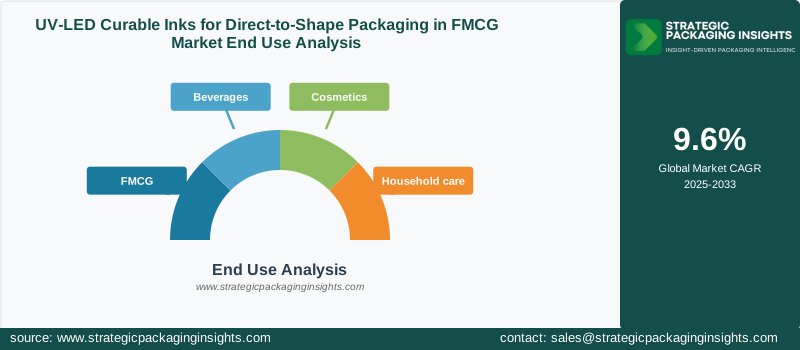
The cosmetics industry is also a significant end-use segment, with brands increasingly looking for packaging solutions that enhance product visibility and consumer engagement. UV-LED curable inks offer the high-quality finishes and design flexibility needed to achieve this, making them an attractive option for cosmetics companies. Household care products, while a smaller segment, are also driving demand for UV-LED curable inks, as brands seek packaging solutions that offer durability and sustainability. As a result, the end-use segment is expected to see continued growth, driven by the increasing adoption of UV-LED curable inks across a range of industries and the development of new, innovative packaging solutions.
UV-LED Curable Inks for Direct-to-Shape Packaging in FMCG Market Segments
The UV-LED Curable Inks for Direct-to-Shape Packaging in FMCG market has been segmented on the basis ofInk Type
- UV-LED curable inks
- Low-migration inks
- Specialty inks
Substrate
- Plastic containers
- Glass bottles
- Metal packs
Application
- Direct-to-shape printing
- Labels
- Promotional packs
End Use
- FMCG
- Beverages
- Cosmetics
- Household care
Region
- Asia Pacific
- North America
- Latin America
- Europe
- Middle East & Africa




