


Thermoformed Tubs Market Outlook
The thermoformed tubs market was valued at $11.28 billion in 2025 and is projected to reach $17.85 billion by 2034, growing at a CAGR of 5.2% during the forecast period 2026-2034. This market is witnessing significant growth due to the increasing demand for convenient and sustainable packaging solutions across various industries. The food and beverage sector, in particular, is driving the demand for thermoformed tubs as they offer excellent barrier properties, lightweight characteristics, and cost-effectiveness. The rising consumer preference for ready-to-eat meals and packaged food products is further propelling the market growth. Additionally, advancements in thermoforming technology and the introduction of bio-based materials are expected to create lucrative opportunities for market players.
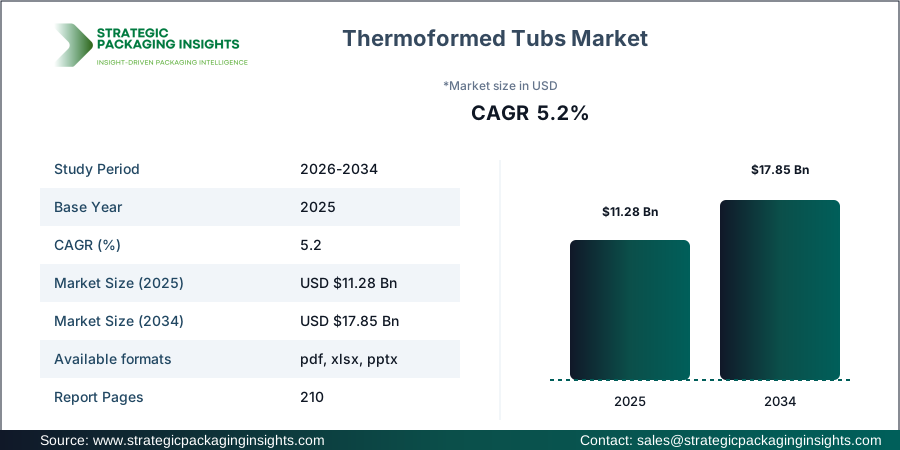
However, the market faces certain challenges that could hinder its growth potential. The volatility in raw material prices, particularly petroleum-based plastics, poses a significant restraint for manufacturers. Moreover, stringent regulations regarding plastic usage and disposal are compelling companies to invest in sustainable alternatives, which may increase production costs. Despite these challenges, the market holds immense growth potential due to the increasing focus on eco-friendly packaging solutions and the rising demand for customized packaging designs. The development of innovative closure types and the integration of smart packaging technologies are expected to further enhance the market's growth prospects.
Report Scope
| Attributes | Details |
| Report Title | Thermoformed Tubs Market Size, Future Growth and Forecast 2034 |
| By Material Type | PP Tubs, PET Tubs, PS Tubs, Bio-based Tubs |
| By Application | Dairy, Spreads, Desserts, Ready Meals |
| By Closure Type | Lidding Film, Snap-on Lid, Foil Lid |
| By End Use | Food Brands, Retailers, Converters |
| Region | Asia Pacific, North America, Latin America, Europe, Middle East & Africa |
| Base Year | 2025 |
| Historic Period | 2018-2024 |
| Forecast Period | 2026-2034 |
| Number of Pages | 210 |
| Customization Available | Yes* |
Opportunities & Threats
The thermoformed tubs market presents numerous opportunities for growth, driven by the increasing demand for sustainable packaging solutions. As consumers become more environmentally conscious, there is a growing preference for packaging materials that are recyclable and biodegradable. This trend is encouraging manufacturers to invest in the development of bio-based thermoformed tubs, which offer a sustainable alternative to traditional plastic tubs. Additionally, the rising demand for convenience foods and ready-to-eat meals is creating a significant opportunity for market players to expand their product offerings and cater to the evolving consumer preferences.
Another opportunity lies in the technological advancements in thermoforming processes. The introduction of advanced machinery and automation in the production process is enabling manufacturers to enhance their production efficiency and reduce costs. This, in turn, is allowing them to offer competitive pricing and gain a larger market share. Furthermore, the increasing focus on product differentiation and customization is driving the demand for innovative packaging designs, providing an opportunity for companies to develop unique and attractive thermoformed tubs that cater to specific consumer needs.
Despite the promising opportunities, the thermoformed tubs market faces certain threats that could impact its growth trajectory. The volatility in raw material prices, particularly petroleum-based plastics, poses a significant challenge for manufacturers. Fluctuations in crude oil prices can lead to increased production costs, affecting the profitability of market players. Additionally, stringent regulations regarding plastic usage and disposal are compelling companies to invest in sustainable alternatives, which may increase production costs and impact their competitiveness. Moreover, the growing competition from alternative packaging solutions, such as flexible packaging and rigid containers, could pose a threat to the market's growth.
Drivers & Challenges
The thermoformed tubs market is primarily driven by the increasing demand for convenient and sustainable packaging solutions. The food and beverage industry, in particular, is witnessing a surge in demand for thermoformed tubs due to their excellent barrier properties, lightweight characteristics, and cost-effectiveness. The rising consumer preference for ready-to-eat meals and packaged food products is further propelling the market growth. Additionally, the growing awareness about environmental sustainability is encouraging manufacturers to invest in the development of bio-based thermoformed tubs, which offer a sustainable alternative to traditional plastic tubs.
Another significant driver for the market is the advancements in thermoforming technology. The introduction of advanced machinery and automation in the production process is enabling manufacturers to enhance their production efficiency and reduce costs. This, in turn, is allowing them to offer competitive pricing and gain a larger market share. Furthermore, the increasing focus on product differentiation and customization is driving the demand for innovative packaging designs, providing an opportunity for companies to develop unique and attractive thermoformed tubs that cater to specific consumer needs.
However, the market faces certain challenges that could hinder its growth potential. The volatility in raw material prices, particularly petroleum-based plastics, poses a significant restraint for manufacturers. Fluctuations in crude oil prices can lead to increased production costs, affecting the profitability of market players. Additionally, stringent regulations regarding plastic usage and disposal are compelling companies to invest in sustainable alternatives, which may increase production costs and impact their competitiveness. Moreover, the growing competition from alternative packaging solutions, such as flexible packaging and rigid containers, could pose a threat to the market's growth.
Market Share Analysis
The competitive landscape of the thermoformed tubs market is characterized by the presence of several key players who are actively engaged in product innovation and strategic collaborations to strengthen their market position. Greiner Packaging, Berry Global, and Huhtamaki are among the leading companies in the market, holding significant market shares due to their extensive product portfolios and strong distribution networks. These companies are focusing on expanding their production capacities and investing in research and development to introduce innovative and sustainable packaging solutions.
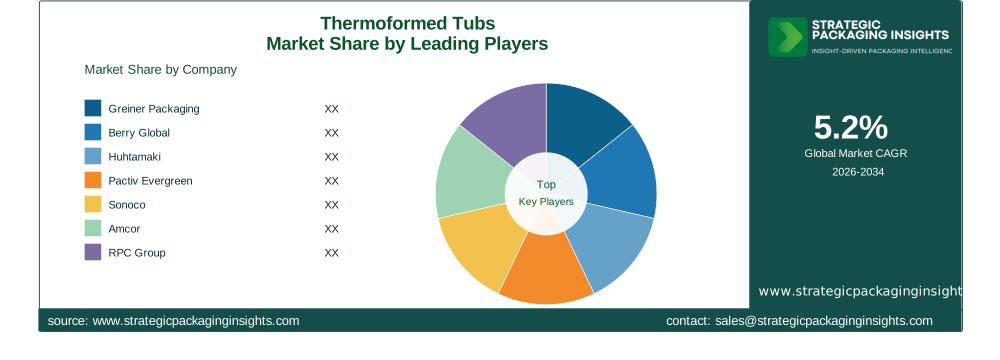
Berry Global, a prominent player in the thermoformed tubs market, is known for its wide range of packaging solutions catering to various industries. The company has a strong presence in North America and Europe, and it is continuously expanding its footprint in emerging markets. Berry Global's focus on sustainability and innovation has enabled it to maintain a competitive edge in the market. Similarly, Huhtamaki, a global leader in packaging solutions, is leveraging its expertise in sustainable packaging to cater to the growing demand for eco-friendly thermoformed tubs.
Pactiv Evergreen, another key player in the market, is known for its comprehensive range of foodservice and food packaging solutions. The company's focus on product innovation and customer-centric approach has helped it establish a strong presence in the market. Pactiv Evergreen is actively investing in the development of sustainable packaging solutions to meet the evolving consumer preferences and regulatory requirements. Sonoco, a global packaging solutions provider, is also a significant player in the thermoformed tubs market, offering a wide range of packaging products for various applications.
Amcor, RPC Group, and Sabert are other notable players in the market, known for their innovative packaging solutions and strong market presence. These companies are focusing on expanding their product portfolios and enhancing their production capabilities to cater to the growing demand for thermoformed tubs. Genpak and Coveris are also key players in the market, offering a diverse range of packaging solutions for the food and beverage industry. The competitive landscape of the thermoformed tubs market is expected to remain dynamic, with companies focusing on strategic collaborations and mergers and acquisitions to strengthen their market position.
Key Highlights
- The thermoformed tubs market is projected to grow at a CAGR of 5.2% from 2026 to 2034.
- Increasing demand for sustainable and eco-friendly packaging solutions is driving market growth.
- Advancements in thermoforming technology are enhancing production efficiency and reducing costs.
- The food and beverage industry is the largest end-user segment for thermoformed tubs.
- Volatility in raw material prices poses a significant challenge for market players.
- Key players are focusing on product innovation and strategic collaborations to strengthen their market position.
- North America and Europe are the leading regions in the thermoformed tubs market.
- Bio-based thermoformed tubs are gaining traction due to their environmental benefits.
- Stringent regulations regarding plastic usage are encouraging the development of sustainable alternatives.
- The market is witnessing increasing competition from alternative packaging solutions.
Top Countries Insights
In the thermoformed tubs market, the United States holds a significant share due to its well-established food and beverage industry and the increasing demand for convenient packaging solutions. The market in the U.S. is driven by the rising consumer preference for ready-to-eat meals and packaged food products. Additionally, the focus on sustainability and the development of bio-based materials are further propelling market growth. The U.S. market is expected to grow at a CAGR of 4% during the forecast period.
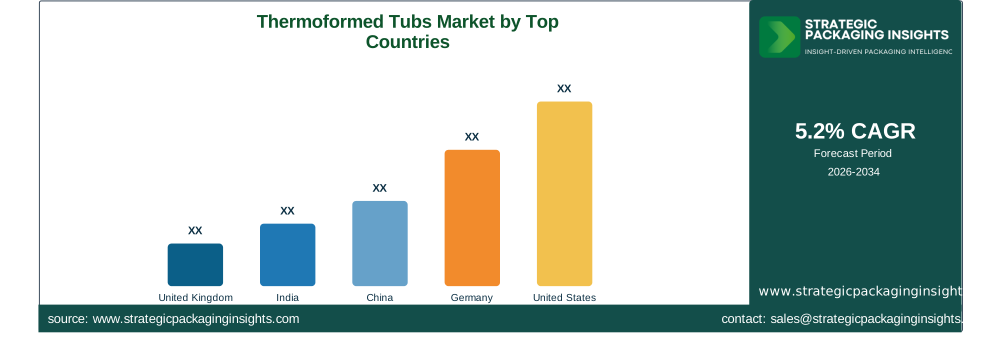
Germany is another key market for thermoformed tubs, driven by the strong presence of packaging manufacturers and the increasing demand for sustainable packaging solutions. The country's stringent regulations regarding plastic usage and disposal are encouraging manufacturers to invest in eco-friendly alternatives. The German market is expected to grow at a CAGR of 3% during the forecast period, supported by the rising demand for innovative packaging designs and the focus on product differentiation.
China is emerging as a lucrative market for thermoformed tubs, driven by the rapid growth of the food and beverage industry and the increasing demand for convenient packaging solutions. The country's large population and rising disposable incomes are contributing to the growing demand for packaged food products. Additionally, the focus on sustainability and the development of bio-based materials are further propelling market growth. The Chinese market is expected to grow at a CAGR of 6% during the forecast period.
In India, the thermoformed tubs market is witnessing significant growth due to the increasing demand for convenient and sustainable packaging solutions. The country's growing middle-class population and rising disposable incomes are driving the demand for packaged food products. Additionally, the focus on sustainability and the development of bio-based materials are further propelling market growth. The Indian market is expected to grow at a CAGR of 7% during the forecast period.
The United Kingdom is also a key market for thermoformed tubs, driven by the strong presence of packaging manufacturers and the increasing demand for sustainable packaging solutions. The country's stringent regulations regarding plastic usage and disposal are encouraging manufacturers to invest in eco-friendly alternatives. The UK market is expected to grow at a CAGR of 3% during the forecast period, supported by the rising demand for innovative packaging designs and the focus on product differentiation.
Thermoformed Tubs Market Segments Insights

By Material Type Analysis
The thermoformed tubs market is segmented by material type into PP tubs, PET tubs, PS tubs, and bio-based tubs. PP tubs are widely used due to their excellent barrier properties, lightweight characteristics, and cost-effectiveness. They are particularly popular in the food and beverage industry, where they are used for packaging dairy products, spreads, and desserts. PET tubs, on the other hand, are gaining traction due to their recyclability and transparency, which makes them an attractive option for packaging applications that require product visibility. The demand for bio-based tubs is also on the rise, driven by the increasing focus on sustainability and the development of eco-friendly packaging solutions.
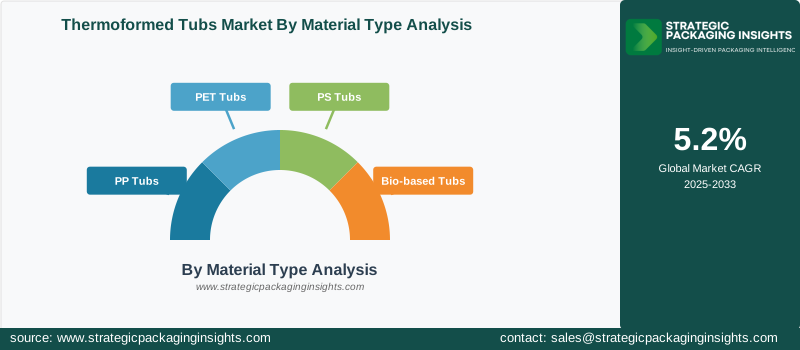
PS tubs are known for their rigidity and durability, making them suitable for packaging applications that require strength and stability. However, the demand for PS tubs is being impacted by the growing preference for sustainable alternatives, such as bio-based tubs. The development of innovative materials and the integration of smart packaging technologies are expected to further enhance the growth prospects of the thermoformed tubs market. Manufacturers are focusing on product differentiation and customization to cater to the evolving consumer preferences and regulatory requirements.
By Application Analysis
The thermoformed tubs market is segmented by application into dairy, spreads, desserts, and ready meals. The dairy segment is the largest application segment, driven by the increasing demand for convenient and sustainable packaging solutions for dairy products. Thermoformed tubs offer excellent barrier properties and are lightweight, making them an ideal choice for packaging dairy products such as yogurt, cheese, and butter. The spreads segment is also witnessing significant growth, driven by the rising consumer preference for convenient and easy-to-use packaging solutions.
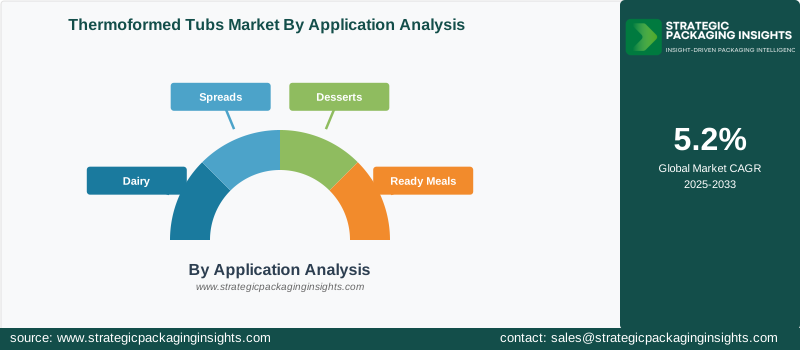
The desserts segment is gaining traction due to the increasing demand for packaged desserts and the growing popularity of ready-to-eat meals. Thermoformed tubs are widely used for packaging desserts such as puddings, custards, and ice creams, offering excellent protection and shelf-life extension. The ready meals segment is also experiencing significant growth, driven by the rising demand for convenient and time-saving meal solutions. Thermoformed tubs are an ideal choice for packaging ready meals, offering excellent barrier properties and the ability to withstand high temperatures during microwave heating.
By Closure Type Analysis
The thermoformed tubs market is segmented by closure type into lidding film, snap-on lid, and foil lid. Lidding films are widely used due to their excellent sealing properties and the ability to provide a tamper-evident seal. They are particularly popular in the food and beverage industry, where they are used for packaging dairy products, spreads, and desserts. Snap-on lids are gaining traction due to their convenience and ease of use, making them an attractive option for packaging applications that require frequent opening and closing.
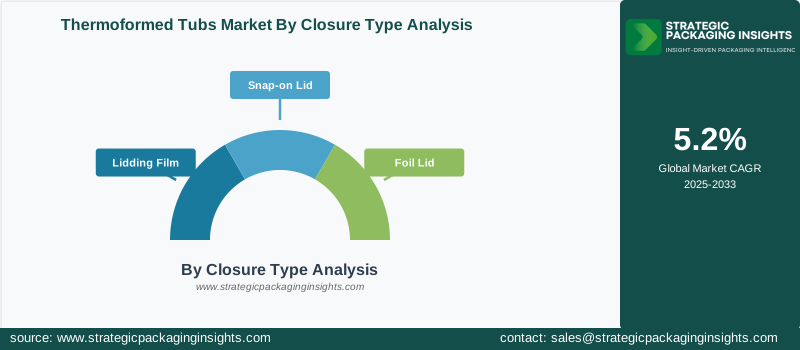
Foil lids are known for their excellent barrier properties and are widely used for packaging applications that require protection from moisture, oxygen, and light. They are particularly popular in the dairy industry, where they are used for packaging yogurt, cheese, and butter. The development of innovative closure types and the integration of smart packaging technologies are expected to further enhance the growth prospects of the thermoformed tubs market. Manufacturers are focusing on product differentiation and customization to cater to the evolving consumer preferences and regulatory requirements.
By End Use Analysis
The thermoformed tubs market is segmented by end use into food brands, retailers, and converters. Food brands are the largest end-user segment, driven by the increasing demand for convenient and sustainable packaging solutions for food products. Thermoformed tubs offer excellent barrier properties and are lightweight, making them an ideal choice for packaging food products such as dairy, spreads, desserts, and ready meals. Retailers are also significant end-users of thermoformed tubs, driven by the rising consumer preference for convenient and easy-to-use packaging solutions.
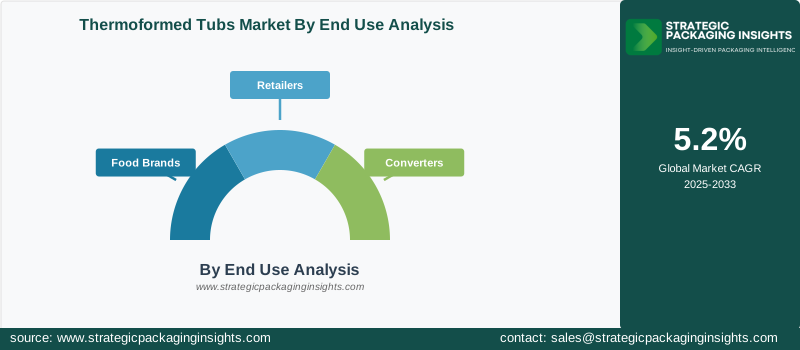
Converters are gaining traction as end-users of thermoformed tubs, driven by the increasing demand for customized packaging solutions. Converters are focusing on product differentiation and customization to cater to the evolving consumer preferences and regulatory requirements. The development of innovative materials and the integration of smart packaging technologies are expected to further enhance the growth prospects of the thermoformed tubs market. Manufacturers are focusing on expanding their product portfolios and enhancing their production capabilities to cater to the growing demand for thermoformed tubs.
Thermoformed Tubs Market Segments
The Thermoformed Tubs market has been segmented on the basis ofBy Material Type
- PP Tubs
- PET Tubs
- PS Tubs
- Bio-based Tubs
By Application
- Dairy
- Spreads
- Desserts
- Ready Meals
By Closure Type
- Lidding Film
- Snap-on Lid
- Foil Lid
By End Use
- Food Brands
- Retailers
- Converters
Region
- Asia Pacific
- North America
- Latin America
- Europe
- Middle East & Africa




