


Tamper-Evident Flexible Packaging Market Outlook
The Tamper-Evident Flexible Packaging market was valued at $15.2 billion in 2024 and is projected to reach $25.8 billion by 2033, growing at a CAGR of 6.2% during the forecast period 2025-2033. This market is driven by the increasing demand for secure packaging solutions across various industries, including food and beverages, pharmaceuticals, and personal care. The rise in consumer awareness regarding product safety and the need for packaging that ensures product integrity are significant factors propelling market growth. Additionally, advancements in packaging technologies and the integration of smart packaging solutions are expected to further boost the market during the forecast period.
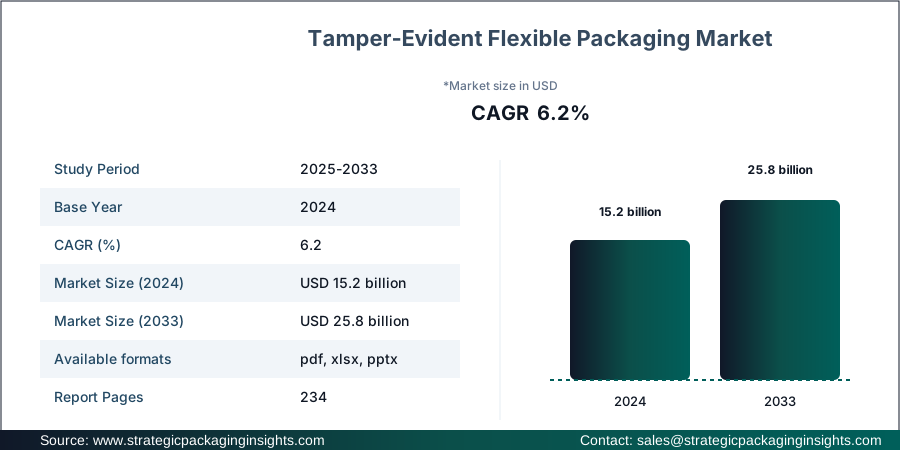
However, the market faces challenges such as stringent regulatory requirements and the high cost of advanced tamper-evident packaging solutions. Despite these restraints, the market holds significant growth potential due to the increasing adoption of flexible packaging in emerging economies and the growing trend of e-commerce, which demands secure packaging solutions to prevent tampering during transit. The market is also witnessing a shift towards eco-friendly packaging materials, which presents opportunities for manufacturers to innovate and offer sustainable tamper-evident solutions.
Report Scope
| Attributes | Details |
| Report Title | Tamper-Evident Flexible Packaging Market Size, Future Growth and Forecast 2033 |
| Material | Plastic, Paper, Aluminum |
| Application | Food & Beverages, Pharmaceuticals |
| End-User | Retail, Healthcare |
| Region | North America, Asia Pacific |
| Base Year | 2024 |
| Historic Period | 2017-2023 |
| Forecast Period | 2025-2033 |
| Number of Pages | 234 |
| Customization Available | Yes* |
Opportunities & Threats
The Tamper-Evident Flexible Packaging market presents numerous opportunities, particularly in the realm of technological advancements. The integration of smart packaging technologies, such as RFID tags and QR codes, offers enhanced security features that can significantly reduce the risk of tampering. These technologies not only provide real-time tracking and authentication but also enhance consumer engagement by offering additional product information. Furthermore, the growing trend of personalized packaging solutions is creating new avenues for market players to differentiate their products and cater to specific consumer needs. The increasing demand for sustainable packaging solutions also presents an opportunity for manufacturers to develop eco-friendly tamper-evident packaging options, which are gaining traction among environmentally conscious consumers.
Another significant opportunity lies in the expansion of e-commerce and online retailing, which has surged in recent years. The need for secure packaging solutions to prevent tampering during transit is paramount in this sector. Tamper-evident flexible packaging offers a reliable solution to ensure product integrity and build consumer trust. Additionally, the rising demand for packaged food and beverages, driven by changing consumer lifestyles and preferences, is expected to fuel the demand for tamper-evident packaging solutions. The pharmaceutical industry also presents a lucrative opportunity, as the need for secure packaging to prevent counterfeiting and ensure patient safety is critical.
Despite the promising opportunities, the market faces certain threats that could hinder its growth. One of the primary challenges is the stringent regulatory landscape governing packaging materials and processes. Compliance with these regulations can be costly and time-consuming for manufacturers, potentially impacting their profitability. Additionally, the high cost of advanced tamper-evident packaging solutions may deter small and medium-sized enterprises from adopting these technologies. The market also faces competition from alternative packaging solutions, which may offer similar security features at a lower cost. These factors could pose a threat to the widespread adoption of tamper-evident flexible packaging solutions.
Market Share Analysis
The competitive landscape of the Tamper-Evident Flexible Packaging market is characterized by the presence of several key players who hold significant market shares. These companies are actively engaged in research and development activities to innovate and offer advanced packaging solutions that meet the evolving needs of consumers and industries. The market is highly competitive, with companies focusing on strategic partnerships, mergers, and acquisitions to expand their product portfolios and geographical presence. The increasing demand for secure and sustainable packaging solutions is driving companies to invest in new technologies and materials to gain a competitive edge.
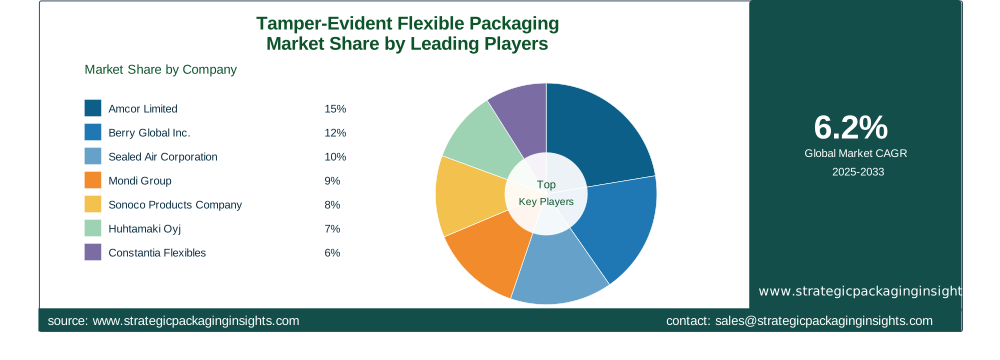
Among the major players in the market, Amcor Limited holds a substantial market share due to its extensive product portfolio and strong global presence. The company is known for its innovative packaging solutions and commitment to sustainability, which has helped it maintain a competitive position in the market. Another key player, Berry Global Inc., is recognized for its comprehensive range of tamper-evident packaging solutions and its focus on customer-centric product development. The company's strategic acquisitions have further strengthened its market position and expanded its reach in emerging markets.
Sealed Air Corporation is another prominent player in the market, known for its advanced packaging technologies and focus on enhancing product safety and integrity. The company's strong emphasis on research and development has enabled it to offer innovative solutions that cater to the specific needs of various industries. Mondi Group, with its extensive experience in the packaging industry, is also a key player in the market. The company's focus on sustainability and innovation has helped it capture a significant share of the market.
Other notable companies in the market include Sonoco Products Company, Huhtamaki Oyj, and Constantia Flexibles. These companies are actively investing in new technologies and expanding their product offerings to meet the growing demand for tamper-evident packaging solutions. The competitive landscape is further enriched by the presence of regional players who are leveraging their local expertise and customer relationships to gain a foothold in the market. Overall, the market is poised for growth, driven by the increasing demand for secure and sustainable packaging solutions across various industries.
Key Highlights
- The market is projected to grow at a CAGR of 6.2% from 2025 to 2033.
- Increasing demand for secure packaging solutions in the food and beverage industry.
- Rising adoption of smart packaging technologies for enhanced security features.
- Growing trend of personalized and eco-friendly packaging solutions.
- Expansion of e-commerce driving demand for tamper-evident packaging.
- Stringent regulatory requirements pose a challenge for manufacturers.
- High cost of advanced packaging solutions may deter small enterprises.
- Significant growth potential in emerging economies.
- Key players focusing on strategic partnerships and acquisitions.
- Innovation in sustainable packaging materials gaining traction.
Top Countries Insights
In the Tamper-Evident Flexible Packaging market, the United States holds a significant share, with a market size of $3.5 billion and a CAGR of 5%. The country's robust food and beverage industry, coupled with stringent regulations on packaging safety, drives the demand for tamper-evident solutions. Additionally, the growing e-commerce sector further fuels the need for secure packaging to prevent tampering during transit.
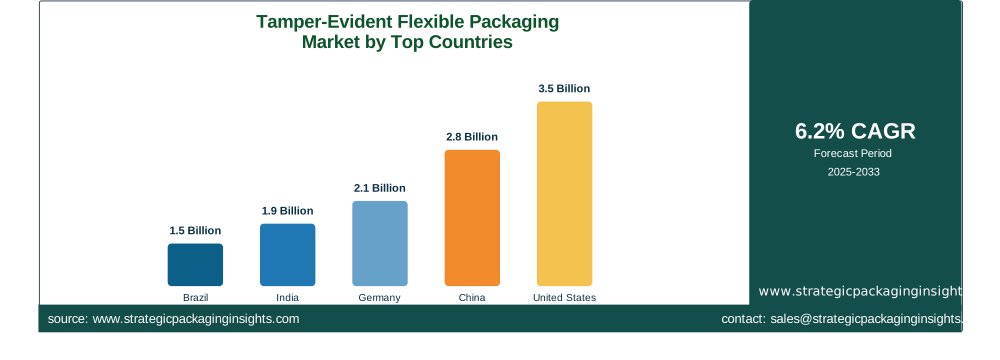
China is another key market, with a market size of $2.8 billion and a CAGR of 7%. The rapid growth of the pharmaceutical and food industries in the country, along with increasing consumer awareness regarding product safety, is driving the demand for tamper-evident packaging. The government's focus on improving packaging standards and regulations also supports market growth.
Germany, with a market size of $2.1 billion and a CAGR of 4%, is a prominent player in the European market. The country's strong manufacturing sector and emphasis on sustainability are key drivers for the adoption of tamper-evident packaging solutions. The increasing demand for eco-friendly packaging materials further boosts market growth in the region.
India, with a market size of $1.9 billion and a CAGR of 8%, presents significant growth opportunities. The country's expanding food and pharmaceutical industries, along with rising consumer awareness about product safety, are driving the demand for tamper-evident packaging. The government's initiatives to promote sustainable packaging solutions also contribute to market growth.
Brazil, with a market size of $1.5 billion and a CAGR of 6%, is a key market in Latin America. The country's growing food and beverage industry, coupled with increasing consumer demand for secure packaging solutions, drives market growth. The rising trend of e-commerce in the region further fuels the demand for tamper-evident packaging solutions.
Evolving Market Dynamics (2018-2024) and Strategic Foresight (2025-2033)
| Metrics | 2018-2024 | 2025-2033 |
|---|---|---|
| CAGR | 5.5% | 6.2% |
| Market Size Evolution | $12.8 billion to $15.2 billion | $15.2 billion to $25.8 billion |
| Segment Distribution Shifts | Food & Beverages dominant | Pharmaceuticals gaining share |
| Regional Contribution Changes | North America leading | Asia Pacific gaining momentum |
| Technological Impact Factors | Basic tamper-evident features | Integration of smart technologies |
| Client Demand Transformations | Focus on safety | Emphasis on sustainability |
Tamper-Evident Flexible Packaging Market Segments Insights

Material Analysis
The material segment of the Tamper-Evident Flexible Packaging market is primarily dominated by plastic, paper, and aluminum. Plastic remains the most widely used material due to its versatility, durability, and cost-effectiveness. It offers excellent barrier properties and can be easily molded into various shapes and sizes, making it ideal for tamper-evident packaging solutions. However, the growing environmental concerns and regulatory pressures are driving the shift towards more sustainable materials such as paper and aluminum. Paper-based packaging is gaining popularity due to its biodegradability and recyclability, aligning with the increasing demand for eco-friendly packaging solutions. Aluminum, known for its superior barrier properties and lightweight nature, is also witnessing increased adoption, particularly in the food and beverage industry.
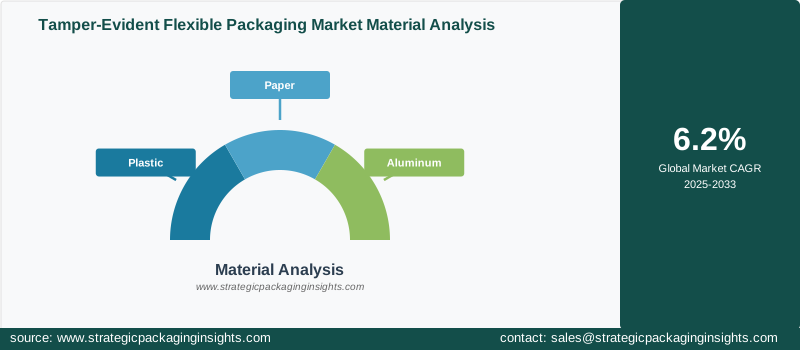
The demand for sustainable materials is further fueled by the rising consumer awareness regarding environmental issues and the need for packaging solutions that minimize environmental impact. Manufacturers are increasingly investing in research and development to innovate and offer sustainable tamper-evident packaging options that meet regulatory requirements and consumer preferences. The shift towards sustainable materials is expected to continue, driven by the increasing focus on sustainability and the need to reduce carbon footprints. As a result, the material segment is poised for significant growth, with paper and aluminum expected to gain market share at the expense of traditional plastic materials.
Application Analysis
The application segment of the Tamper-Evident Flexible Packaging market is diverse, encompassing food and beverages, pharmaceuticals, personal care, and industrial applications. The food and beverage industry is the largest application segment, driven by the increasing demand for packaged food products and beverages. The need for secure packaging solutions to prevent tampering and ensure product safety is paramount in this industry. The pharmaceutical industry is another significant application segment, where tamper-evident packaging is critical to prevent counterfeiting and ensure patient safety. The rising demand for over-the-counter drugs and the increasing focus on patient safety are driving the adoption of tamper-evident packaging solutions in this sector.
The personal care industry is also witnessing a growing demand for tamper-evident packaging solutions, driven by the increasing consumer awareness regarding product safety and the need for secure packaging to prevent contamination. The industrial sector, although smaller in comparison, is also adopting tamper-evident packaging solutions to ensure the integrity of products during transit and storage. The diverse application landscape presents significant growth opportunities for market players, with the food and beverage and pharmaceutical industries expected to remain the dominant application segments during the forecast period.
End-User Analysis
The end-user segment of the Tamper-Evident Flexible Packaging market includes retail, healthcare, food service, and industrial sectors. The retail sector is the largest end-user segment, driven by the increasing demand for packaged products and the need for secure packaging solutions to prevent tampering. The growing trend of e-commerce and online retailing further fuels the demand for tamper-evident packaging solutions in this sector. The healthcare sector is another significant end-user segment, where the need for secure packaging solutions to prevent counterfeiting and ensure patient safety is critical. The rising demand for pharmaceuticals and medical devices is driving the adoption of tamper-evident packaging solutions in this sector.
The food service industry is also witnessing a growing demand for tamper-evident packaging solutions, driven by the increasing consumer demand for safe and secure food packaging. The industrial sector, although smaller in comparison, is adopting tamper-evident packaging solutions to ensure the integrity of products during transit and storage. The diverse end-user landscape presents significant growth opportunities for market players, with the retail and healthcare sectors expected to remain the dominant end-user segments during the forecast period.
Region Analysis
The regional analysis of the Tamper-Evident Flexible Packaging market reveals significant growth opportunities across various regions. North America is the largest market, driven by the strong presence of key players and the increasing demand for secure packaging solutions in the food and beverage and pharmaceutical industries. The region's stringent regulatory landscape and focus on sustainability further support market growth. Europe is another significant market, with the increasing demand for eco-friendly packaging solutions and the strong presence of the food and beverage industry driving market growth.
Asia Pacific is expected to witness the highest growth rate during the forecast period, driven by the rapid industrialization and urbanization in countries such as China and India. The increasing demand for packaged food products and pharmaceuticals, coupled with the growing focus on product safety, is driving the adoption of tamper-evident packaging solutions in the region. Latin America and the Middle East & Africa are also witnessing significant growth, driven by the increasing demand for secure packaging solutions in the food and beverage and pharmaceutical industries. The diverse regional landscape presents significant growth opportunities for market players, with Asia Pacific expected to emerge as a key growth region during the forecast period.
Tamper-Evident Flexible Packaging Market Segments
The Tamper-Evident Flexible Packaging market has been segmented on the basis ofMaterial
- Plastic
- Paper
- Aluminum
Application
- Food & Beverages
- Pharmaceuticals
End-User
- Retail
- Healthcare
Region
- North America
- Asia Pacific




