


Sustainable Label Market Outlook
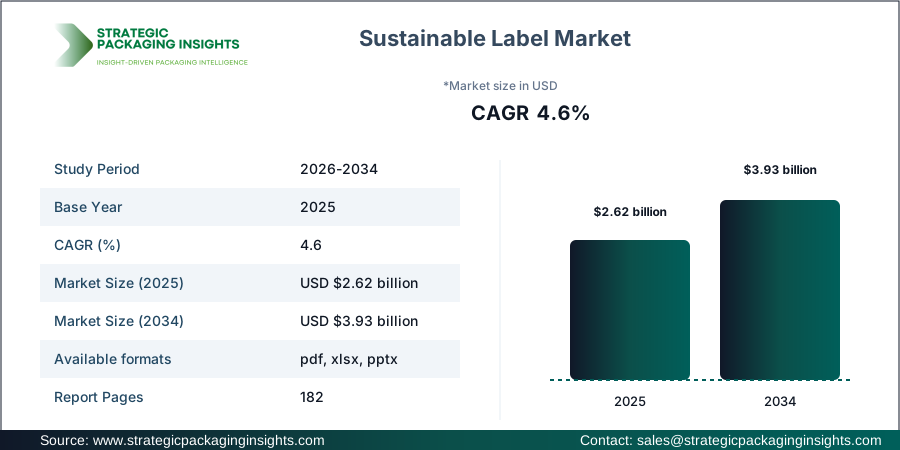
The Sustainable Label market was valued at $2.62 billion in 2025 and is projected to reach $3.93 billion by 2034, growing at a CAGR of 4.6% during the forecast period 2026-2034. This growth is driven by increasing consumer awareness and demand for eco-friendly packaging solutions. The market is witnessing a shift towards sustainable practices, with companies investing in innovative labeling technologies that reduce environmental impact. The rise in regulatory pressures and consumer demand for transparency in product sourcing and sustainability is further propelling the market. As industries across the globe strive to meet sustainability goals, the adoption of sustainable labels is expected to surge, offering significant growth opportunities for market players.
Report Scope
| Attributes | Details |
| Report Title | Sustainable Label Market Size, Future Growth and Forecast 2034 |
| Material Type | Recycled Paper Labels, Wash-Off Labels, Linerless Labels |
| Adhesive Type | Water-Based, Compostable, Removable |
| Application | Food, Beverages, Personal Care, Logistics |
| End Use | FMCG Brands, Retailers, Packaging Converters |
| Region | Asia Pacific, North America, Latin America, Europe, Middle East & Africa |
| Base Year | 2025 |
| Historic Period | 2018-2024 |
| Forecast Period | 2026-2034 |
| Number of Pages | 182 |
| Customization Available | Yes* |
Opportunities & Threats
The sustainable label market presents numerous opportunities, primarily driven by the growing consumer preference for environmentally friendly products. As consumers become more eco-conscious, there is a rising demand for products that are not only sustainable but also transparent in their sourcing and production processes. This trend is encouraging manufacturers to adopt sustainable labeling solutions that align with consumer values. Additionally, advancements in labeling technologies, such as the development of biodegradable and compostable labels, are opening new avenues for market growth. Companies that invest in research and development to create innovative, sustainable labeling solutions are likely to gain a competitive edge in the market.
Another significant opportunity lies in the regulatory landscape, which is increasingly favoring sustainable practices. Governments worldwide are implementing stringent regulations to reduce environmental impact, encouraging industries to adopt sustainable labeling solutions. This regulatory push is expected to drive the adoption of sustainable labels across various sectors, including food and beverages, personal care, and logistics. Furthermore, the rise of e-commerce and the need for efficient logistics solutions are creating a demand for sustainable labels that can withstand various environmental conditions while maintaining their integrity and readability.
However, the sustainable label market also faces certain threats, primarily related to the high cost of sustainable materials and technologies. The initial investment required for transitioning to sustainable labeling solutions can be substantial, posing a challenge for small and medium-sized enterprises. Additionally, the lack of standardized regulations across different regions can create complexities for companies operating in multiple markets. These challenges may hinder the widespread adoption of sustainable labels, particularly in price-sensitive markets. Companies need to navigate these challenges by developing cost-effective solutions and advocating for standardized regulations to ensure consistent implementation of sustainable practices.
Drivers & Challenges
One of the primary drivers of the sustainable label market is the increasing consumer demand for eco-friendly products. As awareness about environmental issues grows, consumers are becoming more conscious of their purchasing decisions, opting for products that align with their values. This shift in consumer behavior is encouraging manufacturers to adopt sustainable labeling solutions that not only reduce environmental impact but also enhance brand image. Additionally, the rise of the circular economy is driving the demand for sustainable labels, as companies strive to create closed-loop systems that minimize waste and maximize resource efficiency.
Technological advancements are also playing a crucial role in driving the sustainable label market. Innovations in labeling technologies, such as the development of water-based and compostable adhesives, are enabling the production of labels that are both functional and environmentally friendly. These advancements are making it easier for companies to transition to sustainable labeling solutions without compromising on quality or performance. Furthermore, the integration of digital technologies, such as QR codes and RFID tags, is enhancing the functionality of sustainable labels, providing consumers with valuable information about product sourcing and sustainability.
Despite these drivers, the sustainable label market faces several challenges. One of the main challenges is the high cost associated with sustainable materials and technologies. The production of sustainable labels often requires specialized materials and processes, which can be more expensive than traditional labeling solutions. This cost factor can be a significant barrier for small and medium-sized enterprises looking to adopt sustainable practices. Additionally, the lack of standardized regulations and certifications for sustainable labels can create confusion and inconsistency in the market, making it difficult for consumers to identify truly sustainable products. Companies need to address these challenges by investing in cost-effective solutions and advocating for standardized regulations to ensure the widespread adoption of sustainable labels.
Market Share Analysis
The competitive landscape of the sustainable label market is characterized by the presence of several key players who are actively investing in research and development to create innovative, eco-friendly labeling solutions. Companies such as Avery Dennison, CCL Industries, and UPM Raflatac are leading the market with their extensive product portfolios and strong focus on sustainability. These companies are leveraging their expertise in labeling technologies to develop solutions that meet the growing demand for sustainable products. Additionally, they are expanding their market presence through strategic partnerships and acquisitions, further strengthening their position in the market.
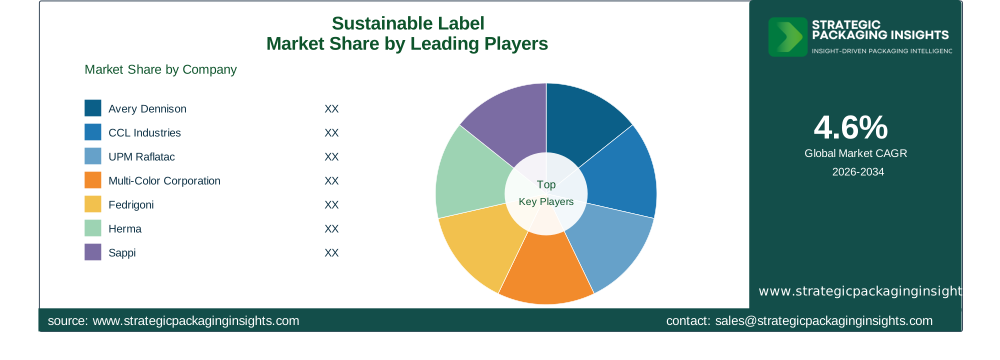
Avery Dennison, a global leader in labeling and packaging materials, holds a significant share of the sustainable label market. The company is known for its commitment to sustainability, offering a wide range of eco-friendly labeling solutions that cater to various industries. CCL Industries, another major player, is renowned for its innovative labeling technologies and strong focus on sustainability. The company has a diverse product portfolio that includes sustainable labels for food, beverages, personal care, and logistics applications.
UPM Raflatac is a key player in the sustainable label market, known for its extensive range of sustainable labeling solutions. The company is committed to reducing its environmental impact and has implemented various initiatives to promote sustainability across its operations. Multi-Color Corporation, Fedrigoni, and Herma are also prominent players in the market, offering a wide range of sustainable labeling solutions that cater to different industries. These companies are investing in research and development to create innovative, eco-friendly labeling solutions that meet the evolving needs of consumers and industries.
Other notable companies in the sustainable label market include Sappi, Mondi, 3M, and Coveris. These companies are actively investing in sustainable labeling technologies and expanding their market presence through strategic partnerships and acquisitions. Sappi, for instance, is known for its commitment to sustainability and offers a wide range of eco-friendly labeling solutions. Mondi, a global leader in packaging and paper, is also focusing on sustainability, offering innovative labeling solutions that reduce environmental impact. 3M and Coveris are leveraging their expertise in labeling technologies to develop sustainable solutions that cater to the growing demand for eco-friendly products.
Key Highlights
- The sustainable label market is projected to grow from $2.62 billion in 2025 to $3.93 billion by 2034, at a CAGR of 4.6%.
- Increasing consumer demand for eco-friendly products is driving the adoption of sustainable labeling solutions.
- Technological advancements in labeling technologies are enabling the production of functional and environmentally friendly labels.
- Regulatory pressures and the rise of the circular economy are encouraging industries to adopt sustainable labeling practices.
- The high cost of sustainable materials and technologies poses a challenge for small and medium-sized enterprises.
- Lack of standardized regulations and certifications for sustainable labels can create confusion in the market.
- Key players in the market include Avery Dennison, CCL Industries, UPM Raflatac, Multi-Color Corporation, and Fedrigoni.
Top Countries Insights
In the sustainable label market, the United States stands out as a key player, with a market size of approximately $1.2 billion and a CAGR of 5%. The country's strong regulatory framework and consumer demand for sustainable products are driving the market. The U.S. government has implemented various initiatives to promote sustainability, encouraging industries to adopt eco-friendly labeling solutions. Additionally, the rise of e-commerce and the need for efficient logistics solutions are creating a demand for sustainable labels that can withstand various environmental conditions.
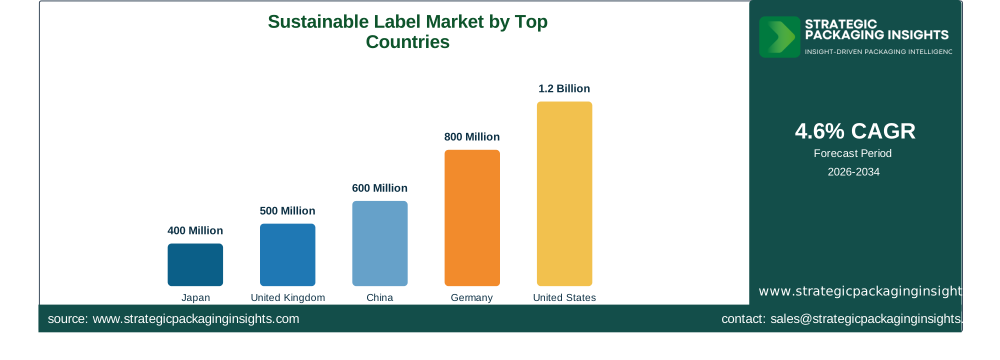
Germany is another significant market for sustainable labels, with a market size of around $800 million and a CAGR of 4%. The country's strong focus on sustainability and environmental protection is driving the adoption of sustainable labeling solutions. Germany's regulatory framework is among the most stringent in the world, encouraging industries to adopt sustainable practices. The country's strong manufacturing sector and emphasis on innovation are also contributing to the growth of the sustainable label market.
China is emerging as a key market for sustainable labels, with a market size of approximately $600 million and a CAGR of 6%. The country's rapid industrialization and growing consumer awareness about environmental issues are driving the demand for sustainable labeling solutions. The Chinese government is implementing various initiatives to promote sustainability, encouraging industries to adopt eco-friendly practices. Additionally, the rise of e-commerce and the need for efficient logistics solutions are creating a demand for sustainable labels in the country.
In the United Kingdom, the sustainable label market is valued at around $500 million, with a CAGR of 3%. The country's strong regulatory framework and consumer demand for sustainable products are driving the market. The UK government has implemented various initiatives to promote sustainability, encouraging industries to adopt eco-friendly labeling solutions. Additionally, the rise of e-commerce and the need for efficient logistics solutions are creating a demand for sustainable labels that can withstand various environmental conditions.
Japan is also a significant market for sustainable labels, with a market size of approximately $400 million and a CAGR of 4%. The country's strong focus on sustainability and environmental protection is driving the adoption of sustainable labeling solutions. Japan's regulatory framework is among the most stringent in the world, encouraging industries to adopt sustainable practices. The country's strong manufacturing sector and emphasis on innovation are also contributing to the growth of the sustainable label market.
Sustainable Label Market Segments Insights

Material Type Analysis
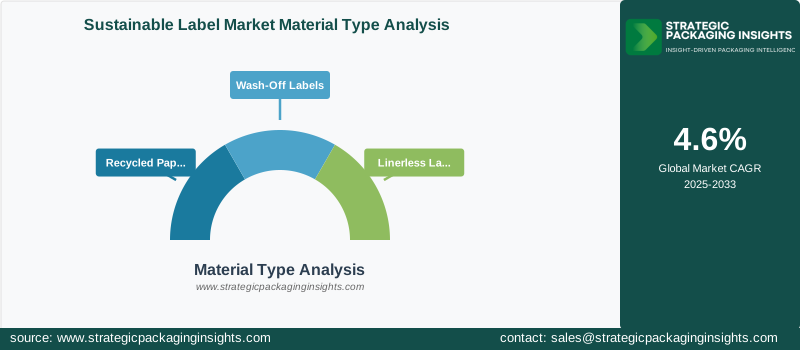
The material type segment in the sustainable label market is crucial, as it determines the environmental impact and functionality of the labels. Recycled paper labels are gaining popularity due to their eco-friendly nature and cost-effectiveness. These labels are made from post-consumer waste, reducing the need for virgin materials and minimizing environmental impact. Wash-off labels are also in demand, particularly in the beverage industry, as they allow for easy removal during the recycling process, enhancing the recyclability of containers. Linerless labels are another innovative solution, eliminating the need for a release liner and reducing waste. These labels are gaining traction in various industries, including logistics and retail, due to their cost-effectiveness and environmental benefits.
The demand for sustainable materials is driven by increasing consumer awareness and regulatory pressures. Companies are investing in research and development to create innovative materials that meet the growing demand for sustainable labeling solutions. The rise of the circular economy is also encouraging the adoption of sustainable materials, as companies strive to create closed-loop systems that minimize waste and maximize resource efficiency. Additionally, advancements in material technologies are enabling the production of labels that are both functional and environmentally friendly, further driving the growth of the material type segment in the sustainable label market.
Adhesive Type Analysis
The adhesive type segment is a critical component of the sustainable label market, as it determines the performance and environmental impact of the labels. Water-based adhesives are gaining popularity due to their eco-friendly nature and strong bonding capabilities. These adhesives are free from harmful solvents, making them a preferred choice for sustainable labeling solutions. Compostable adhesives are also in demand, particularly in the food and beverage industry, as they allow for easy disposal and reduce environmental impact. Removable adhesives are another innovative solution, offering flexibility and ease of use in various applications, including logistics and retail.
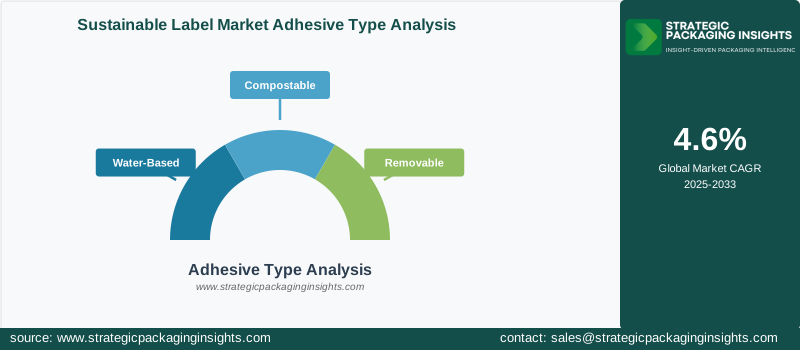
The demand for sustainable adhesives is driven by increasing consumer awareness and regulatory pressures. Companies are investing in research and development to create innovative adhesives that meet the growing demand for sustainable labeling solutions. The rise of the circular economy is also encouraging the adoption of sustainable adhesives, as companies strive to create closed-loop systems that minimize waste and maximize resource efficiency. Additionally, advancements in adhesive technologies are enabling the production of labels that are both functional and environmentally friendly, further driving the growth of the adhesive type segment in the sustainable label market.
Application Analysis
The application segment in the sustainable label market is diverse, encompassing various industries, including food, beverages, personal care, and logistics. The food industry is a significant driver of the sustainable label market, as consumers demand transparency and sustainability in food packaging. Sustainable labels in the food industry are designed to withstand various environmental conditions while maintaining their integrity and readability. The beverage industry is also a key market for sustainable labels, with a focus on recyclability and ease of removal during the recycling process.
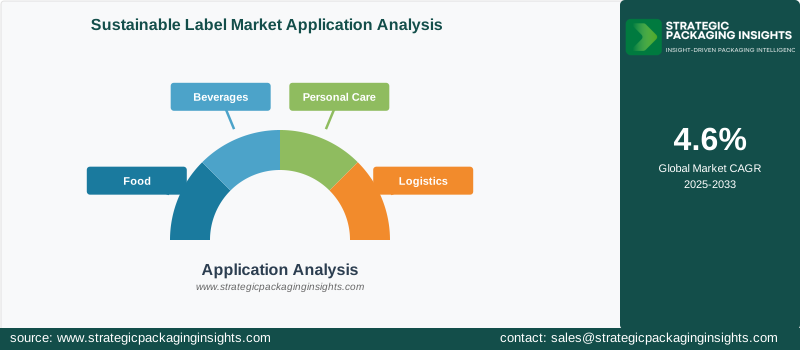
The personal care industry is another significant market for sustainable labels, as consumers demand eco-friendly products that align with their values. Sustainable labels in the personal care industry are designed to enhance brand image and provide valuable information about product sourcing and sustainability. The logistics industry is also a key market for sustainable labels, with a focus on efficiency and environmental impact. Sustainable labels in the logistics industry are designed to withstand various environmental conditions while maintaining their integrity and readability, ensuring efficient logistics operations.
End Use Analysis
The end-use segment in the sustainable label market is diverse, encompassing various industries, including FMCG brands, retailers, and packaging converters. FMCG brands are a significant driver of the sustainable label market, as they strive to meet consumer demand for eco-friendly products. Sustainable labels in the FMCG industry are designed to enhance brand image and provide valuable information about product sourcing and sustainability. Retailers are also a key market for sustainable labels, with a focus on transparency and sustainability in product packaging.
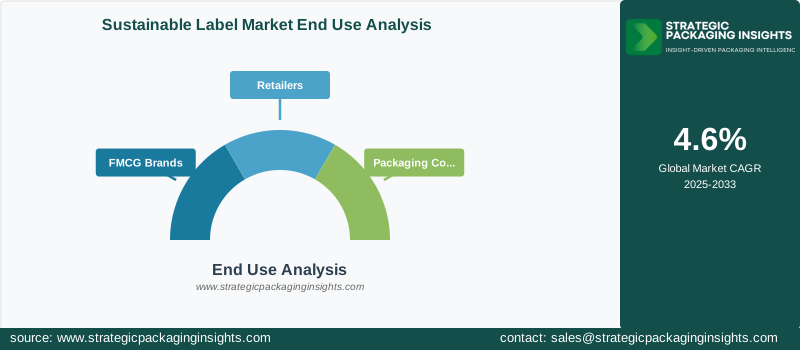
Packaging converters are another significant market for sustainable labels, as they strive to meet the growing demand for eco-friendly packaging solutions. Sustainable labels in the packaging industry are designed to enhance brand image and provide valuable information about product sourcing and sustainability. The rise of the circular economy is also encouraging the adoption of sustainable labels, as companies strive to create closed-loop systems that minimize waste and maximize resource efficiency. Additionally, advancements in labeling technologies are enabling the production of labels that are both functional and environmentally friendly, further driving the growth of the end-use segment in the sustainable label market.
Sustainable Label Market Segments
The Sustainable Label market has been segmented on the basis ofMaterial Type
- Recycled Paper Labels
- Wash-Off Labels
- Linerless Labels
Adhesive Type
- Water-Based
- Compostable
- Removable
Application
- Food
- Beverages
- Personal Care
- Logistics
End Use
- FMCG Brands
- Retailers
- Packaging Converters
Region
- Asia Pacific
- North America
- Latin America
- Europe
- Middle East & Africa




