


Retro-Reflective Label Market Outlook
The Retro-Reflective Label market was valued at $1.04 billion in 2025 and is projected to reach $1.81 billion by 2034, growing at a CAGR of 6.3% during the forecast period 2026-2034. This market is witnessing significant growth due to the increasing demand for safety and regulatory compliance across various industries. The need for enhanced visibility in low-light conditions is driving the adoption of retro-reflective labels in applications such as traffic signs, fleet marking, and safety labels. The market is also benefiting from technological advancements in material science, which are leading to the development of more durable and efficient reflective materials. Additionally, the rise in infrastructure projects and the expansion of the logistics sector are further propelling the demand for these labels.
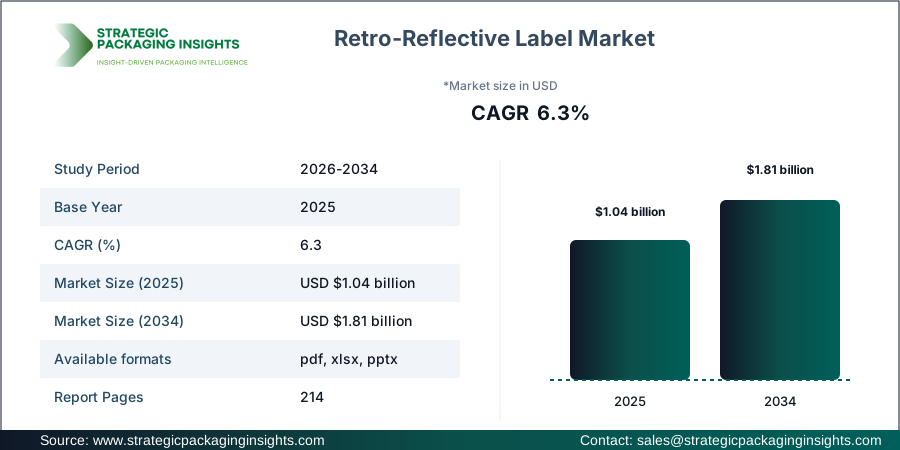
Despite the promising growth prospects, the Retro-Reflective Label market faces certain challenges. Regulatory constraints and the high cost of raw materials are some of the key restraining factors. However, the market holds significant potential for growth, driven by the increasing emphasis on safety and the growing adoption of advanced labeling technologies. The expansion of e-commerce and the need for efficient supply chain management are also expected to create new opportunities for market players. Furthermore, the development of eco-friendly and sustainable reflective materials is likely to open up new avenues for growth in the coming years.
Report Scope
| Attributes | Details |
| Report Title | Retro-Reflective Label Market Size, Future Growth and Forecast 2034 |
| By Product Type | High-Intensity Labels, Engineer-Grade Labels, Microprismatic Labels |
| By Material Type | Reflective Films, Vinyl, Polyester, Adhesive Laminates |
| By Application | Traffic Signs, Fleet Marking, Safety Labels, Industrial Equipment |
| By End Use | Transport Authorities, Logistics Firms, Construction, Manufacturing |
| Region | Asia Pacific, North America, Latin America, Europe, Middle East & Africa |
| Base Year | 2025 |
| Historic Period | 2018-2024 |
| Forecast Period | 2026-2034 |
| Number of Pages | 214 |
| Customization Available | Yes* |
Opportunities & Threats
The Retro-Reflective Label market presents numerous opportunities for growth, particularly in the area of safety and compliance. As industries across the globe prioritize safety, the demand for retro-reflective labels is expected to rise significantly. These labels are crucial for ensuring visibility and safety in low-light conditions, making them indispensable in applications such as traffic signs and safety labels. Additionally, the increasing adoption of smart labeling technologies is creating new opportunities for market players. Smart labels, which incorporate features such as RFID and QR codes, offer enhanced functionality and are gaining traction in various industries. This trend is expected to drive the demand for retro-reflective labels in the coming years.
Another significant opportunity lies in the development of eco-friendly and sustainable reflective materials. With growing environmental concerns and stringent regulations, there is a rising demand for sustainable labeling solutions. Companies are investing in research and development to create eco-friendly materials that offer the same level of performance as traditional reflective materials. This shift towards sustainability is expected to create new growth opportunities for market players. Furthermore, the expansion of the logistics and transportation sectors, driven by the growth of e-commerce, is likely to boost the demand for retro-reflective labels, particularly for fleet marking and safety applications.
However, the market also faces certain threats that could hinder its growth. One of the primary challenges is the high cost of raw materials, which can impact the profitability of market players. Additionally, regulatory constraints related to the use of certain materials and chemicals in reflective labels can pose challenges for manufacturers. These regulations can vary significantly across regions, making it difficult for companies to navigate the complex regulatory landscape. Moreover, the presence of counterfeit products in the market can undermine the credibility of genuine products and pose a threat to market growth.
Drivers & Challenges
The Retro-Reflective Label market is driven by several key factors, including the increasing emphasis on safety and regulatory compliance. As industries across the globe prioritize safety, the demand for retro-reflective labels is expected to rise significantly. These labels are crucial for ensuring visibility and safety in low-light conditions, making them indispensable in applications such as traffic signs and safety labels. Additionally, the growing adoption of smart labeling technologies is creating new opportunities for market players. Smart labels, which incorporate features such as RFID and QR codes, offer enhanced functionality and are gaining traction in various industries. This trend is expected to drive the demand for retro-reflective labels in the coming years.
Technological advancements in material science are also playing a significant role in driving the market. The development of more durable and efficient reflective materials is enabling manufacturers to offer high-performance products that meet the evolving needs of customers. Furthermore, the expansion of infrastructure projects and the growth of the logistics sector are contributing to the increasing demand for retro-reflective labels. As governments and private entities invest in infrastructure development, the need for effective signage and labeling solutions is expected to rise, thereby driving market growth.
Despite the promising growth prospects, the Retro-Reflective Label market faces certain challenges. One of the primary challenges is the high cost of raw materials, which can impact the profitability of market players. Additionally, regulatory constraints related to the use of certain materials and chemicals in reflective labels can pose challenges for manufacturers. These regulations can vary significantly across regions, making it difficult for companies to navigate the complex regulatory landscape. Moreover, the presence of counterfeit products in the market can undermine the credibility of genuine products and pose a threat to market growth.
Market Share Analysis
The Retro-Reflective Label market is characterized by a competitive landscape with several key players vying for market share. Companies such as 3M, Avery Dennison, ORAFOL, Reflexite, Nippon Carbide Industries, Reflomax, Brady Corporation, Tesa, Nikkalite, and DM Reflective are some of the prominent players in the market. These companies are focusing on product innovation, strategic partnerships, and mergers and acquisitions to strengthen their market position. The competitive landscape is further intensified by the presence of regional players who offer cost-effective solutions to cater to local demand.
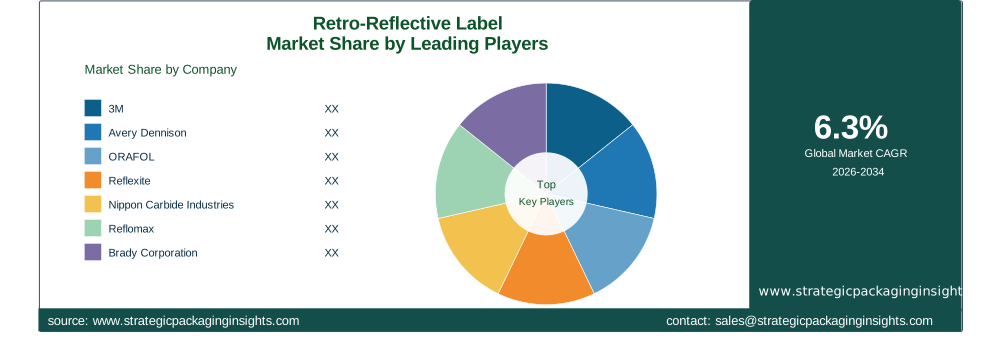
3M is a leading player in the Retro-Reflective Label market, known for its innovative products and strong brand reputation. The company offers a wide range of reflective materials and solutions for various applications, including traffic signs, safety labels, and fleet marking. Avery Dennison is another major player, offering a comprehensive portfolio of reflective films and labels. The company focuses on sustainability and innovation, investing in research and development to create eco-friendly and high-performance products.
ORAFOL is a key player in the market, known for its high-quality reflective films and materials. The company has a strong presence in the European market and is expanding its footprint in other regions through strategic partnerships and collaborations. Reflexite, a subsidiary of ORAFOL, specializes in microprismatic reflective materials and is a leading supplier of high-performance reflective solutions. Nippon Carbide Industries is a prominent player in the Asian market, offering a wide range of reflective materials for various applications.
Reflomax, Brady Corporation, Tesa, Nikkalite, and DM Reflective are other notable players in the market. These companies are focusing on expanding their product portfolios and enhancing their distribution networks to cater to the growing demand for retro-reflective labels. The competitive landscape is characterized by continuous innovation and the introduction of new products to meet the evolving needs of customers. As the market continues to grow, companies are likely to focus on strategic initiatives to strengthen their market position and gain a competitive edge.
Key Highlights
- The Retro-Reflective Label market is projected to grow at a CAGR of 6.3% from 2026 to 2034.
- Increasing demand for safety and regulatory compliance is driving market growth.
- Technological advancements in material science are leading to the development of more durable reflective materials.
- The expansion of infrastructure projects and the logistics sector is boosting demand for retro-reflective labels.
- Smart labeling technologies are creating new opportunities for market players.
- Eco-friendly and sustainable reflective materials are gaining traction in the market.
- High cost of raw materials and regulatory constraints are key challenges for market players.
- 3M, Avery Dennison, and ORAFOL are some of the leading players in the market.
- The presence of counterfeit products poses a threat to market growth.
- Strategic partnerships and mergers and acquisitions are common strategies among market players.
Top Countries Insights
In the Retro-Reflective Label market, the United States holds a significant share due to its advanced infrastructure and stringent safety regulations. The market size in the U.S. is substantial, with a CAGR of 5% driven by the demand for traffic signs and safety labels. The country's focus on road safety and regulatory compliance is a major growth driver. Additionally, the presence of key players such as 3M and Avery Dennison further strengthens the market position in the region.
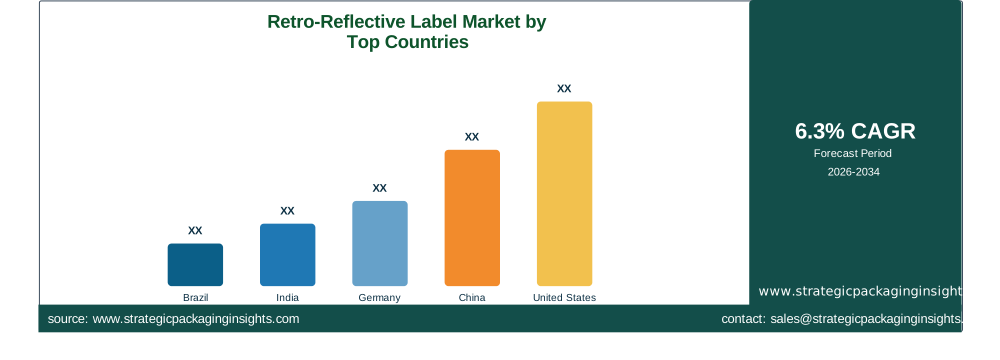
China is another major market for retro-reflective labels, with a CAGR of 8%. The rapid urbanization and expansion of infrastructure projects in the country are driving the demand for effective signage and labeling solutions. The government's emphasis on road safety and the growing logistics sector are key factors contributing to market growth. Moreover, the presence of local manufacturers offering cost-effective solutions is boosting the market in China.
Germany is a prominent market in Europe, with a CAGR of 6%. The country's strong automotive and manufacturing sectors are key drivers of demand for retro-reflective labels. The focus on safety and compliance in industrial applications is further propelling market growth. Additionally, the presence of leading players such as ORAFOL and Reflexite enhances the market's competitive landscape.
India is experiencing significant growth in the retro-reflective label market, with a CAGR of 9%. The country's expanding infrastructure and transportation sectors are driving the demand for traffic signs and safety labels. The government's initiatives to improve road safety and the growing e-commerce sector are key growth drivers. The presence of local manufacturers offering affordable solutions is also contributing to market expansion.
Brazil is a key market in Latin America, with a CAGR of 7%. The country's focus on infrastructure development and the expansion of the logistics sector are driving the demand for retro-reflective labels. The government's emphasis on safety and regulatory compliance is further boosting market growth. Additionally, the presence of regional players offering cost-effective solutions is enhancing the market's competitive landscape.
Retro-Reflective Label Market Segments Insights

Product Type Analysis
The Retro-Reflective Label market is segmented by product type into high-intensity labels, engineer-grade labels, and microprismatic labels. High-intensity labels are widely used in applications requiring superior visibility and durability, such as traffic signs and safety labels. These labels offer excellent reflectivity and are designed to withstand harsh environmental conditions. The demand for high-intensity labels is driven by the increasing emphasis on road safety and regulatory compliance. Engineer-grade labels, on the other hand, are commonly used in applications where moderate reflectivity is sufficient. These labels are cost-effective and are often used in fleet marking and industrial equipment labeling. The growing logistics sector and the need for efficient supply chain management are driving the demand for engineer-grade labels.
Microprismatic labels are gaining traction in the market due to their superior reflectivity and durability. These labels are designed to provide high visibility in low-light conditions and are commonly used in applications such as traffic signs and safety labels. The demand for microprismatic labels is driven by the increasing adoption of advanced labeling technologies and the need for enhanced safety and compliance. Additionally, the development of eco-friendly and sustainable microprismatic materials is expected to create new growth opportunities for market players. As the market continues to evolve, companies are likely to focus on product innovation and the introduction of new products to meet the evolving needs of customers.
Material Type Analysis
The Retro-Reflective Label market is segmented by material type into reflective films, vinyl, polyester, and adhesive laminates. Reflective films are widely used in applications requiring high visibility and durability, such as traffic signs and safety labels. These films offer excellent reflectivity and are designed to withstand harsh environmental conditions. The demand for reflective films is driven by the increasing emphasis on road safety and regulatory compliance. Vinyl is another popular material used in retro-reflective labels, offering flexibility and durability. Vinyl labels are commonly used in fleet marking and industrial equipment labeling, where moderate reflectivity is sufficient.
Polyester is gaining traction in the market due to its superior durability and resistance to environmental factors. Polyester labels are designed to provide high visibility in low-light conditions and are commonly used in applications such as traffic signs and safety labels. The demand for polyester labels is driven by the increasing adoption of advanced labeling technologies and the need for enhanced safety and compliance. Adhesive laminates are also widely used in retro-reflective labels, offering excellent adhesion and durability. These laminates are commonly used in applications where high reflectivity and durability are required. As the market continues to evolve, companies are likely to focus on material innovation and the development of eco-friendly and sustainable materials to meet the evolving needs of customers.
Application Analysis
The Retro-Reflective Label market is segmented by application into traffic signs, fleet marking, safety labels, and industrial equipment. Traffic signs are one of the largest application segments, driven by the increasing emphasis on road safety and regulatory compliance. Retro-reflective labels are crucial for ensuring visibility and safety in low-light conditions, making them indispensable in traffic sign applications. The demand for traffic signs is further boosted by the expansion of infrastructure projects and the growth of the transportation sector. Fleet marking is another significant application segment, driven by the need for efficient supply chain management and the expansion of the logistics sector.
Safety labels are gaining traction in the market due to the increasing emphasis on workplace safety and regulatory compliance. These labels are commonly used in industrial equipment and manufacturing applications, where visibility and safety are paramount. The demand for safety labels is driven by the growing adoption of advanced labeling technologies and the need for enhanced safety and compliance. Industrial equipment is another key application segment, driven by the expansion of the manufacturing sector and the need for effective labeling solutions. As the market continues to evolve, companies are likely to focus on application-specific innovations and the development of new products to meet the evolving needs of customers.
End Use Analysis
The Retro-Reflective Label market is segmented by end use into transport authorities, logistics firms, construction, and manufacturing. Transport authorities are one of the largest end-use segments, driven by the increasing emphasis on road safety and regulatory compliance. Retro-reflective labels are crucial for ensuring visibility and safety in low-light conditions, making them indispensable in transport authority applications. The demand for transport authority labels is further boosted by the expansion of infrastructure projects and the growth of the transportation sector. Logistics firms are another significant end-use segment, driven by the need for efficient supply chain management and the expansion of the logistics sector.
Construction is gaining traction in the market due to the increasing emphasis on workplace safety and regulatory compliance. Retro-reflective labels are commonly used in construction applications, where visibility and safety are paramount. The demand for construction labels is driven by the growing adoption of advanced labeling technologies and the need for enhanced safety and compliance. Manufacturing is another key end-use segment, driven by the expansion of the manufacturing sector and the need for effective labeling solutions. As the market continues to evolve, companies are likely to focus on end-use-specific innovations and the development of new products to meet the evolving needs of customers.
Retro-Reflective Label Market Segments
The Retro-Reflective Label market has been segmented on the basis ofBy Product Type
- High-Intensity Labels
- Engineer-Grade Labels
- Microprismatic Labels
By Material Type
- Reflective Films
- Vinyl
- Polyester
- Adhesive Laminates
By Application
- Traffic Signs
- Fleet Marking
- Safety Labels
- Industrial Equipment
By End Use
- Transport Authorities
- Logistics Firms
- Construction
- Manufacturing
Region
- Asia Pacific
- North America
- Latin America
- Europe
- Middle East & Africa




