


Polyester Labels Market Outlook
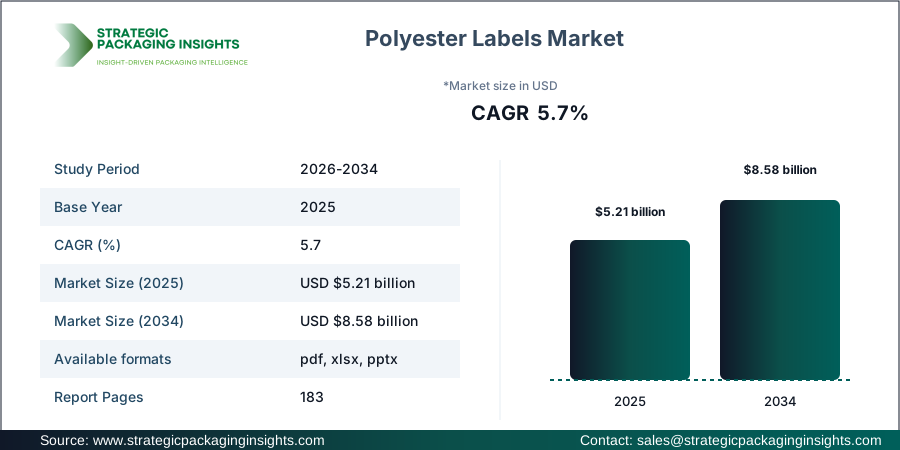
The polyester labels market was valued at $5.21 billion in 2025 and is projected to reach $8.58 billion by 2034, growing at a CAGR of 5.7% during the forecast period 2026-2034. Polyester labels are increasingly being adopted across various industries due to their durability, resistance to environmental factors, and versatility in applications. The market is driven by the growing demand for high-quality labeling solutions in sectors such as electronics, healthcare, and FMCG. The rise in e-commerce and the need for efficient supply chain management have further fueled the demand for polyester labels, as they offer excellent printability and adhesion properties, ensuring product information remains intact throughout the distribution process.
Despite the promising growth prospects, the polyester labels market faces certain challenges. Regulatory constraints related to environmental sustainability and the use of plastics in packaging are significant restraining factors. However, advancements in eco-friendly labeling technologies and the development of recyclable polyester materials present substantial growth opportunities. The market is also witnessing a shift towards digital printing technologies, which offer cost-effective and customizable labeling solutions, further enhancing the market's growth potential. As industries continue to prioritize sustainability and efficiency, the polyester labels market is poised for significant expansion in the coming years.
Report Scope
| Attributes | Details |
| Report Title | Polyester Labels Market Size, Future Growth and Forecast 2034 |
| By Label Type | Clear Polyester Labels, White Polyester Labels, Metallized Polyester Labels, Durable Labels |
| By Adhesive Type | Permanent, Removable, High-Tack |
| By Application | Industrial Labels, Electronics Labels, Food Labels, Pharma Labels |
| By End Use | Industrial, Electronics, Healthcare, FMCG |
| Region | Asia Pacific, North America, Latin America, Europe, Middle East & Africa |
| Base Year | 2025 |
| Historic Period | 2018-2024 |
| Forecast Period | 2026-2034 |
| Number of Pages | 183 |
| Customization Available | Yes* |
Opportunities & Threats
The polyester labels market is ripe with opportunities, particularly in the realm of technological advancements and sustainability initiatives. The increasing adoption of digital printing technologies is a significant opportunity, as it allows for more efficient and customizable label production. This technology not only reduces waste but also enables quick turnaround times, meeting the growing demand for personalized and short-run labels. Additionally, the development of eco-friendly polyester materials is gaining traction, driven by consumer demand for sustainable packaging solutions. Companies investing in research and development to create biodegradable and recyclable polyester labels are likely to gain a competitive edge, as environmental regulations become more stringent globally.
Another opportunity lies in the expanding e-commerce sector, which necessitates robust labeling solutions to ensure product information is accurately conveyed throughout the supply chain. Polyester labels, known for their durability and resistance to harsh conditions, are well-suited for this purpose. As online retail continues to grow, so does the demand for reliable labeling solutions that can withstand the rigors of shipping and handling. Furthermore, the healthcare and pharmaceutical industries present significant growth opportunities, as they require high-quality labels that can endure various environmental conditions while maintaining legibility and adhesion.
However, the market is not without its threats. One of the primary challenges is the increasing regulatory pressure to reduce plastic waste and promote sustainable packaging solutions. Polyester, being a plastic derivative, faces scrutiny from environmental agencies and consumer advocacy groups. Companies in the polyester labels market must navigate these regulatory landscapes carefully, balancing the need for durable labeling solutions with the demand for environmentally friendly practices. Additionally, fluctuations in raw material prices can impact production costs, posing a threat to market stability and profitability.
Drivers & Challenges
The polyester labels market is driven by several key factors, including the growing demand for durable and high-performance labeling solutions across various industries. The electronics and automotive sectors, in particular, require labels that can withstand extreme temperatures, moisture, and chemical exposure. Polyester labels, known for their robustness and resistance to environmental factors, are increasingly being adopted in these industries. Moreover, the rise of smart packaging solutions, which integrate technology with traditional packaging, is driving demand for polyester labels that can accommodate sensors and other electronic components.
Another significant driver is the increasing focus on brand differentiation and consumer engagement. Companies are leveraging advanced labeling technologies to create visually appealing and interactive labels that enhance brand visibility and customer experience. Polyester labels, with their excellent printability and versatility, are ideal for such applications. The trend towards premium packaging, particularly in the food and beverage and cosmetics industries, is further propelling the demand for high-quality polyester labels that can convey brand values and product information effectively.
Despite these drivers, the polyester labels market faces several challenges. One of the primary challenges is the environmental impact of polyester production and disposal. As sustainability becomes a critical concern for consumers and regulators alike, companies in the polyester labels market must innovate to develop eco-friendly alternatives. Additionally, the market is highly competitive, with numerous players vying for market share. This competition can lead to price wars and margin pressures, making it essential for companies to differentiate themselves through innovation and value-added services. Furthermore, the volatility in raw material prices can affect production costs and profitability, posing a challenge to market growth.
Market Share Analysis
The polyester labels market is characterized by a competitive landscape with several key players dominating the industry. Companies such as Avery Dennison, CCL Industries, and UPM Raflatac hold significant market shares, leveraging their extensive product portfolios and global distribution networks to maintain their competitive edge. These companies are continuously investing in research and development to innovate and expand their product offerings, catering to the evolving needs of various end-use industries. The competitive landscape is further intensified by the presence of regional players who offer cost-effective solutions, challenging the dominance of established market leaders.
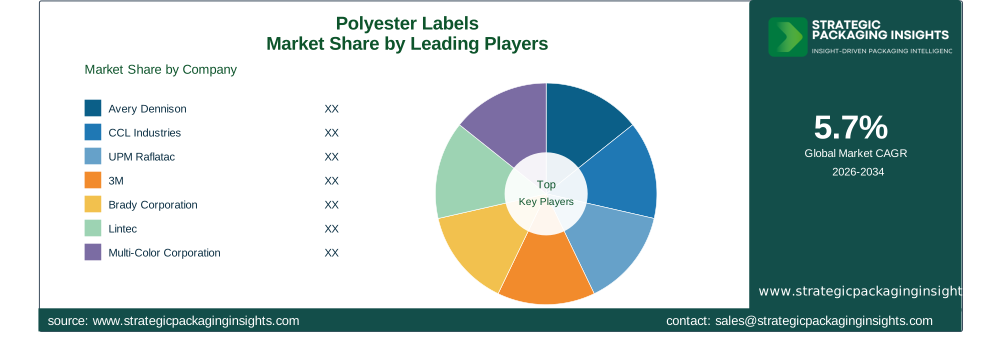
Avery Dennison is a prominent player in the polyester labels market, known for its innovative labeling solutions and commitment to sustainability. The company has a strong presence in the global market, with a diverse product portfolio that caters to various industries, including healthcare, electronics, and FMCG. CCL Industries, another major player, is renowned for its advanced labeling technologies and extensive global reach. The company's focus on innovation and customer-centric solutions has enabled it to capture a significant share of the market.
UPM Raflatac is a key player in the polyester labels market, offering a wide range of labeling solutions that emphasize sustainability and performance. The company's commitment to environmental responsibility and its investment in eco-friendly technologies have positioned it as a leader in the market. 3M, known for its expertise in adhesive technologies, is also a significant player in the polyester labels market. The company's innovative solutions and strong brand reputation have contributed to its substantial market share.
Other notable companies in the polyester labels market include Brady Corporation, Lintec, Multi-Color Corporation, Resource Label Group, SATO, and HERMA. These companies are actively expanding their product portfolios and enhancing their production capabilities to meet the growing demand for polyester labels. The competitive landscape is dynamic, with companies focusing on strategic partnerships, mergers, and acquisitions to strengthen their market positions and expand their global footprint.
Key Highlights
- The polyester labels market is projected to grow from $5.21 billion in 2025 to $8.58 billion by 2034, at a CAGR of 5.7%.
- Key drivers include the demand for durable labeling solutions in electronics and automotive industries.
- Technological advancements in digital printing are creating new opportunities for market growth.
- Environmental sustainability and regulatory pressures pose significant challenges to market expansion.
- Major players include Avery Dennison, CCL Industries, and UPM Raflatac, among others.
- The market is witnessing a shift towards eco-friendly and recyclable polyester materials.
- Smart packaging solutions are driving demand for technologically advanced polyester labels.
- The competitive landscape is characterized by innovation and strategic partnerships.
- Fluctuations in raw material prices can impact production costs and market stability.
- Brand differentiation and consumer engagement are key trends influencing market dynamics.
Top Countries Insights
In the polyester labels market, the United States stands out as a leading country, with a market size of approximately $1.5 billion and a CAGR of 6%. The growth in the U.S. is driven by the robust demand from the electronics and healthcare sectors, where durable and high-performance labeling solutions are essential. The country's focus on technological innovation and sustainability further propels market growth, as companies invest in eco-friendly labeling technologies to meet regulatory requirements and consumer expectations.
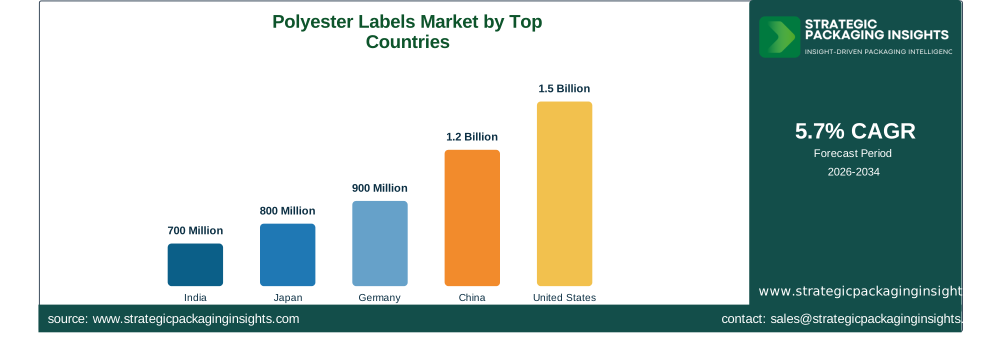
China is another significant player in the polyester labels market, with a market size of around $1.2 billion and a CAGR of 7%. The rapid industrialization and expansion of the e-commerce sector in China are key growth drivers, as they increase the demand for reliable and durable labeling solutions. Additionally, the government's emphasis on sustainable packaging practices and the development of recyclable polyester materials are contributing to market expansion.
Germany, with a market size of approximately $900 million and a CAGR of 5%, is a prominent market for polyester labels in Europe. The country's strong manufacturing base and focus on quality and innovation drive the demand for high-performance labeling solutions. The automotive and electronics industries, in particular, are significant contributors to market growth, as they require labels that can withstand harsh environmental conditions.
Japan, with a market size of about $800 million and a CAGR of 4%, is a key market for polyester labels in the Asia Pacific region. The country's advanced technological infrastructure and emphasis on precision and quality drive the demand for premium labeling solutions. The electronics and healthcare sectors are major growth drivers, as they require labels that offer excellent printability and durability.
India, with a market size of approximately $700 million and a CAGR of 8%, is an emerging market for polyester labels. The country's growing industrial base and expanding e-commerce sector are key growth drivers, as they increase the demand for efficient and durable labeling solutions. Additionally, the government's initiatives to promote sustainable packaging practices and the development of eco-friendly materials are contributing to market growth.
Polyester Labels Market Segments Insights

Label Type Analysis
The polyester labels market is segmented by label type into clear polyester labels, white polyester labels, metallized polyester labels, and durable labels. Clear polyester labels are gaining popularity due to their aesthetic appeal and ability to blend seamlessly with various packaging designs. These labels are particularly favored in the cosmetics and personal care industries, where product visibility and brand presentation are crucial. White polyester labels, on the other hand, are widely used in the food and beverage sector, offering excellent printability and contrast for product information and branding.
Metallized polyester labels are experiencing increased demand in the electronics and automotive industries, where they are valued for their durability and resistance to harsh environmental conditions. These labels provide a premium look and feel, enhancing brand perception and product differentiation. Durable labels, designed to withstand extreme temperatures, moisture, and chemical exposure, are essential in industrial and healthcare applications. The growing emphasis on product safety and regulatory compliance is driving the demand for durable polyester labels that can maintain legibility and adhesion under challenging conditions.
Adhesive Type Analysis
By adhesive type, the polyester labels market is categorized into permanent, removable, and high-tack adhesives. Permanent adhesives are the most commonly used, offering strong adhesion and long-lasting performance across various applications. These adhesives are ideal for products that require labels to remain intact throughout their lifecycle, such as in the automotive and electronics industries. Removable adhesives, on the other hand, are gaining traction in the retail and logistics sectors, where labels need to be easily removed without leaving residue or damaging the product surface.
High-tack adhesives are designed for challenging surfaces and environments, providing superior adhesion even on rough or low-energy surfaces. These adhesives are particularly useful in industrial applications, where labels must adhere to surfaces exposed to extreme conditions. The demand for high-tack adhesives is driven by the need for reliable labeling solutions in sectors such as construction, manufacturing, and logistics. As industries continue to seek innovative adhesive technologies, the polyester labels market is poised for growth, with companies investing in research and development to enhance adhesive performance and versatility.
Application Analysis
The application segment of the polyester labels market includes industrial labels, electronics labels, food labels, and pharma labels. Industrial labels are a significant segment, driven by the need for durable and reliable labeling solutions in manufacturing and logistics. These labels must withstand harsh conditions, including exposure to chemicals, moisture, and extreme temperatures, making polyester an ideal material choice. Electronics labels are also a key application area, as they require labels that can endure high temperatures and provide excellent printability for intricate designs and information.
Food labels are experiencing growth due to the increasing demand for clear and informative packaging in the food and beverage industry. Polyester labels offer excellent print quality and resistance to moisture and oils, ensuring product information remains legible and intact. Pharma labels are another critical application, as they require labels that can withstand various environmental conditions while maintaining adhesion and legibility. The growing emphasis on patient safety and regulatory compliance is driving the demand for high-quality polyester labels in the pharmaceutical industry.
End Use Analysis
The polyester labels market is segmented by end use into industrial, electronics, healthcare, and FMCG sectors. The industrial sector is a major end-user, driven by the need for durable labeling solutions that can withstand harsh environments and provide reliable performance. Polyester labels are favored in this sector for their resistance to chemicals, moisture, and extreme temperatures, ensuring product information remains intact and legible.
The electronics sector is another significant end-user, as it requires labels that can endure high temperatures and provide excellent printability for intricate designs and information. The healthcare sector is experiencing growth due to the increasing demand for high-quality labeling solutions that can withstand various environmental conditions while maintaining adhesion and legibility. The FMCG sector is also a key end-user, as it requires labels that offer excellent print quality and resistance to moisture and oils, ensuring product information remains legible and intact.
Polyester Labels Market Segments
The Polyester Labels market has been segmented on the basis ofBy Label Type
- Clear Polyester Labels
- White Polyester Labels
- Metallized Polyester Labels
- Durable Labels
By Adhesive Type
- Permanent
- Removable
- High-Tack
By Application
- Industrial Labels
- Electronics Labels
- Food Labels
- Pharma Labels
By End Use
- Industrial
- Electronics
- Healthcare
- FMCG
Region
- Asia Pacific
- North America
- Latin America
- Europe
- Middle East & Africa




